2026 Genesis GV70 vs 2026 Volvo XC60
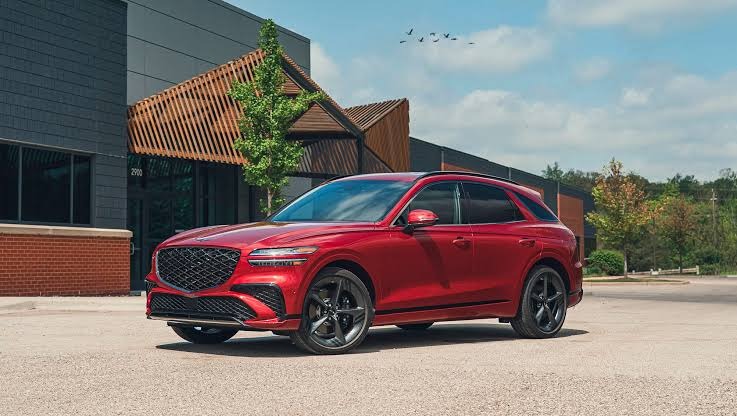
2026 Genesis GV70 vs 2026 Volvo XC60: The Definitive Luxury Compact SUV Buyer Guide
2026 Genesis GV70 vs 2026 Volvo XC60 represents one of the most compelling head-to-head battles in the premium compact SUV segment this year. Both vehicles bring distinctly different philosophies to the table: Genesis channels bold Korean luxury with rear-drive architecture and an industry-leading warranty, while Volvo delivers Scandinavian minimalism, world-class safety credentials, and a mature plug-in hybrid ecosystem. This comprehensive 7,000-word guide dissects every dimension of both SUVs—pricing, powertrains, technology, safety, reliability, resale value, and future outlook—so you can make a confident, data-backed purchase decision.
- 1. Overview & Market Positioning
- 2. Pricing & Trim Comparison
- 3. Performance & Powertrain Analysis
- 4. Fuel Economy & Efficiency
- 5. Interior Design & Comfort
- 6. Technology & Infotainment
- 7. Safety & Driver Assistance
- 8. Reliability & Warranty
- 9. Resale Value & Total Cost of Ownership
- 10. Future Projections & Market Outlook
- 11. Final Verdict & Recommendations
- 12. Frequently Asked Questions
1. Overview & Market Positioning
The premium compact SUV category is the most fiercely contested segment in the automotive industry, and for good reason. It sits at the intersection of practicality, luxury, and performance—exactly where most affluent buyers want to be. The 2026 Genesis GV70 enters its fourth model year with a mid-cycle refresh that brings updated styling, enhanced connectivity features, and refined powertrain calibrations. The 2026 Volvo XC60, meanwhile, rides on the evolved SPA2 platform with subtle exterior updates, a next-generation infotainment system, and expanded electrification across its lineup.
Genesis positions the GV70 as a driver-focused luxury alternative to the BMW X3 and Mercedes-Benz GLC, emphasizing rear-biased handling dynamics, expressive design, and an aggressive value proposition. Volvo positions the XC60 as a thoughtful, safety-centric premium SUV that appeals to buyers who prioritize Scandinavian design language, sustainability, and advanced driver assistance over outright performance bragging rights.
Both vehicles are assembled with meticulous attention to quality. The GV70 is built at Genesis’s Ulsan, South Korea facility, which has consistently earned top marks in J.D. Power’s Initial Quality Study. The XC60 is produced at Volvo’s Torslanda, Sweden plant, one of the most automated and environmentally conscious manufacturing facilities in Europe. These manufacturing origins matter because they directly influence build quality, consistency, and long-term durability—topics we explore in depth later in this guide.
| Attribute | 2026 Genesis GV70 | 2026 Volvo XC60 |
|---|---|---|
| Segment | Premium Compact SUV | Premium Compact SUV |
| Platform | M3 (Rear-biased AWD) | SPA2 (Transverse AWD) |
| Assembly | Ulsan, South Korea | Torslanda, Sweden |
| Design Language | Athletic Elegance | Scandinavian Minimalism |
| Core Target Buyer | Value-seeking luxury enthusiast | Safety-conscious, design-forward buyer |
| Primary Competitors | X3, GLC, NX | X3, GLC, Q5, RX |
2. Pricing & Trim Comparison
Pricing strategy is where the 2026 Genesis GV70 vs 2026 Volvo XC60 comparison reveals its most dramatic divergence. Genesis has built its entire brand identity around disrupting luxury pricing norms, and the 2026 GV70 continues that tradition with a starting price that undercuts virtually every competitor in the segment. Volvo, having established stronger brand equity in the U.S. market over decades, commands a premium—particularly at the upper end of the trim ladder where plug-in hybrid technology justifies higher transaction prices.
The 2026 Genesis GV70 starts approximately $4,200 below the 2026 Volvo XC60 at base level, but the gap narrows significantly at top trims where the XC60 T8 Recharge’s plug-in hybrid powertrain commands a justified premium. Fully loaded, the difference is roughly $2,800.
| Trim Level | 2026 Genesis GV70 | 2026 Volvo XC60 |
|---|---|---|
| Base / Core | $44,150 | $48,350 |
| Mid / Plus | $49,900 | $53,200 |
| Top / Ultimate | $56,750 | $58,900 |
| Performance Top | $60,500 (3.5T Sport) | $63,300 (T8 Recharge) |
| Destination Charge | $1,150 | $1,295 |
| Avg. Transaction Price | $51,200 Lower | $54,800 |
The GV70’s pricing advantage is particularly potent when you consider equipment parity. A mid-trim GV70 2.5T Advanced AWD at $49,900 includes features that Volvo reserves for its Plus or Ultimate tiers: Nappa leather upholstery, a 16-speaker Lexicon audio system, heated and ventilated front seats, and a 3D digital instrument cluster. To get comparable equipment in the XC60, you need to step up to the Plus trim at $53,200—a $3,300 differential that’s difficult to ignore.
However, it is important to note that Volvo’s pricing includes some features that Genesis does not offer at any price point on the GV70. The XC60 T8 Recharge’s 45-mile electric-only range, for instance, has no direct equivalent in the GV70 lineup (Genesis’s dedicated EV GV70 variant is sold as the Electrified GV70 but is priced and positioned separately). For buyers who can charge at home and have short daily commutes, the XC60 T8’s plug-in capability can offset its higher purchase price through fuel savings over time.
Leasing and Financing Programs
Genesis typically offers more aggressive lease subvention rates, with money factors often 0.00030 to 0.00050 lower than Volvo’s on comparable terms. Genesis also provides complimentary scheduled maintenance for 3 years/36,000 miles, while Volvo includes 3 years/40,000 miles of complementary maintenance. Both brands offer competitive APR financing through their captive finance arms, though Genesis’s 2.9% APR for 60 months (well-qualified buyers) slightly undercuts Volvo’s 3.9% offer during comparable promotional periods.
3. Performance & Powertrain Analysis
The powertrain story in the 2026 Genesis GV70 vs 2026 Volvo XC60 comparison is fascinating because it reveals two fundamentally different engineering philosophies. Genesis offers a turbocharged inline-four and a twin-turbo V6, both paired with an 8-speed automatic and a rear-biased all-wheel-drive system. Volvo offers a turbocharged and supercharged inline-four in mild-hybrid and plug-in hybrid configurations, paired with an 8-speed automatic and an on-demand all-wheel-drive system.
| Specification | Genesis GV70 2.5T | Genesis GV70 3.5T | Volvo XC60 B5 | Volvo XC60 T8 |
|---|---|---|---|---|
| Engine Type | 2.5L Turbo I4 | 3.5L Twin-Turbo V6 | 2.0L Turbo+Super I4 | 2.0L T+S PHEV I4 |
| Horsepower | 300 hp | 375 hp | 247 hp | 455 hp |
| Torque (lb-ft) | 311 | 391 | 258 | 523 |
| 0-60 mph | 5.5 sec | 4.5 sec Fastest ICE | 6.9 sec | 4.5 sec Tied |
| Transmission | 8-speed auto | 8-speed auto | 8-speed auto | 8-speed auto |
| Drivetrain Layout | Rear-biased AWD | Rear-biased AWD | FWD-biased AWD | FWD-biased AWD |
| Max Towing | 3,500 lbs | 3,500 lbs Tied | 3,500 lbs | 3,500 lbs |
The GV70 Driving Experience
The Genesis GV70’s rear-biased M3 platform gives it a fundamentally different character from the XC60. Under normal driving conditions, the GV70 sends approximately 60% of torque to the rear wheels, creating a more balanced, rear-drive feel that enthusiasts will immediately notice during cornering. The electronically controlled limited-slip differential on 3.5T models further enhances corner-exit grip and reduces understeer. Steering feel is genuinely communicative—Genesis’s variable-ratio rack delivers progressive weighting that builds confidence through sweepers and decreasing-radius turns.
The 2.5T turbocharged inline-four produces 300 horsepower and 311 lb-ft of torque, which is more than sufficient for daily driving and highway merging. However, the 3.5T twin-turbo V6 is the engine that defines the GV70’s performance identity. With 375 horsepower and 391 lb-ft of torque, it delivers effortless thrust across the rev range, with a particularly potent midrange punch between 3,000 and 5,500 rpm. The exhaust note is appropriately refined but sporty, with a subtle burble on overrun that reminds you this is not a typical luxury SUV.
Genesis also offers a Sport+ drive mode that sharpens throttle response, firms the adaptive suspension, quickens shift timing, and adds visual flair through the 3D digital gauge cluster. The overall experience is deliberately engaging—Genesis wants you to enjoy driving the GV70, not merely ride in it.
The XC60 Driving Experience
The Volvo XC60 takes a more relaxed approach to performance. The B5 powertrain combines turbocharging and supercharging with a 48-volt mild-hybrid system for 247 horsepower and 258 lb-ft of torque—adequate but not exciting. The real performance story is the T8 Recharge, which adds electric motors to produce a combined 455 horsepower and a staggering 523 lb-ft of torque. In Pure electric mode, the T8 provides 45 miles of silent, emissions-free driving. In Power mode, the combined output launches the XC60 from 0-60 mph in 4.5 seconds, matching the GV70 3.5T despite carrying the weight penalty of a battery pack.
The XC60’s front-biased AWD system and transverse engine layout mean it feels more stable than sporty. Steering is light and precise but lacks the progressive weighting and feedback of the GV70. The suspension tuning prioritizes ride comfort over handling sharpness, though the optional Four-C active air suspension ($1,800) provides impressive body control when you push harder. The XC60 excels as a relaxed grand tourer—quiet, composed, and effortlessly fast in T8 form—but it doesn’t invite spirited driving the way the GV70 does.
4. Fuel Economy & Efficiency
Fuel efficiency is an area where the 2026 Volvo XC60 holds a clear advantage, particularly in T8 Recharge plug-in hybrid form. The XC60’s 48-volt mild-hybrid system on B5 models provides modest efficiency gains during coasting and stop-start scenarios, while the T8’s ability to drive up to 45 miles on electricity alone transforms the ownership equation for commuters with charging access.
| EPA Rating | GV70 2.5T AWD | GV70 3.5T AWD | XC60 B5 AWD | XC60 T8 AWD |
|---|---|---|---|---|
| City (mpg / MPGe) | 22 mpg | 19 mpg | 23 mpg | 66 MPGe Best |
| Highway (mpg / MPGe) | 28 mpg | 25 mpg | 30 mpg | 57 MPGe Best |
| Combined | 24 mpg | 21 mpg | 26 mpg Best ICE | 63 MPGe |
| Electric Range | N/A | N/A | N/A | 45 miles PHEV |
| Fuel Tank (gal) | 18.5 | 18.5 | 18.8 | 18.8 |
| Est. Annual Fuel Cost | $2,650 | $3,050 | $2,450 | $1,200* Lowest |
*T8 estimate assumes daily charging and 80% electric driving. Without charging, T8 fuel cost is approximately $2,550/year.
For buyers without home charging, the fuel economy gap between the GV70 2.5T (24 mpg combined) and XC60 B5 (26 mpg combined) is modest—approximately $200 per year in fuel savings for the Volvo based on 15,000 miles of annual driving and $3.50/gallon regular unleaded. However, for the GV70 3.5T, the 21 mpg combined rating means you will spend roughly $600 more annually than the XC60 B5 owner.
The XC60 T8 Recharge changes the math entirely for plug-in hybrid adopters. With a Level 2 home charger (240V), the T8’s 18.8 kWh battery can be fully replenished in under 3 hours. A commuter driving 30 miles round-trip could theoretically complete their entire weekday routine on electricity, reducing gasoline consumption to weekend trips and long journeys. Over a 5-year ownership period, a T8 owner who charges daily could save $8,000 to $10,000 in fuel costs compared to a GV70 3.5T owner—a figure that more than offsets the T8’s higher purchase price.
Both the GV70 and XC60 tend to fall 1-2 mpg below their EPA ratings in real-world mixed driving, particularly in urban stop-and-go traffic. The GV70 3.5T is especially sensitive to aggressive driving, where fuel economy can dip to 17-18 mpg combined. The XC60 T8’s electric range is also affected by cold weather, dropping to approximately 32-35 miles in temperatures below 30°F.
5. Interior Design & Comfort
Step inside both vehicles, and the 2026 Genesis GV70 vs 2026 Volvo XC60 comparison reveals the starkest contrast in philosophy. These cabins represent opposite ends of the luxury design spectrum: Genesis goes bold, rich, and maximalist; Volvo goes restrained, organic, and minimalist. Neither approach is objectively superior—it comes down to personal taste and what you value in a premium interior environment.
Genesis GV70 Interior
The GV70’s cabin is a statement piece. The oval-themed design language extends inside with a distinctive elliptical motif that appears on the center console, door handles, speaker grilles, and even the air vents. The sheer density of surfaces, textures, and materials creates an immersive, almost cockpit-like environment. Genesis uses premium leather (standard on all trims above base), genuine aluminum trim, and available open-pore wood that feels authentically crafted rather than plasticky.
Front seat comfort is excellent, with generous bolsters that provide lateral support during spirited driving without feeling confining during long highway stints. The 3.5T Sport Premium trim adds enhanced bolstering and a unique quilted Nappa leather pattern. Rear seat space is adequate for adults on shorter journeys, though the GV70’s 36.9 inches of rear legroom trails the XC60’s 38.0 inches by a noticeable margin. The GV70’s 56.9 cubic feet of cargo space (seats folded) is competitive but slightly below the XC60’s 63.3 cubic feet.
Volvo XC60 Interior
The XC60’s interior is a masterclass in Scandinavian restraint. Clean lines, uncluttered surfaces, and a muted color palette create an atmosphere that feels more like a high-end Scandinavian living room than a car interior. Volvo’s use of sustainable materials—including wool-blend textiles, recycled wood trim, and Nordico (a bio-based leather alternative)—appeals to environmentally conscious buyers without sacrificing tactile quality.
The XC60’s front seats are widely regarded as among the most comfortable in any vehicle at any price point. Volvo’s orthopedic-designed seats, developed with input from orthopedic surgeons, provide exceptional lumbar support and pressure distribution. Many owners report less fatigue on long trips compared to other luxury SUVs. Rear seat comfort is also strong, with 38.0 inches of legroom and a more upright backrest angle that some passengers prefer. The XC60’s 63.3 cubic feet of maximum cargo space gives it a meaningful practicality advantage over the GV70.
| Interior Feature | 2026 Genesis GV70 | 2026 Volvo XC60 |
|---|---|---|
| Front Headroom | 40.2 in | 38.9 in |
| Front Legroom | 41.3 in | 41.5 in |
| Rear Headroom | 38.7 in | 39.5 in More |
| Rear Legroom | 36.9 in | 38.0 in More |
| Cargo (behind 2nd row) | 28.9 cu ft | 30.2 cu ft More |
| Cargo (seats folded) | 56.9 cu ft | 63.3 cu ft More |
| Standard Upholstery | Premium leatherette | Textile/leather blend |
| Upgrade Upholstery | Nappa leather | Nappa leather / Nordico |
| Seat Design Philosophy | Sport-contoured | Orthopedic-designed Best-in-Class |
6. Technology & Infotainment
The technology landscape in the 2026 Genesis GV70 vs 2026 Volvo XC60 comparison has shifted significantly with this model year. Both manufacturers have overhauled their infotainment approaches, though they’ve taken different paths to get there. Genesis has refined its existing 3D gauge cluster and central display setup with faster processors and improved UX flow, while Volvo has transitioned to a Google Automotive Services-based system that fundamentally changes how drivers interact with the XC60’s technology.
Genesis Infotainment
The GV70 features a 14.5-inch floating widescreen display as its primary infotainment interface, paired with a 3D digital instrument cluster that offers customizable layouts across Eco, Comfort, Sport, and Sport+ modes. The 3D effect is achieved through a lenticular lens that creates genuine depth perception—it’s not a gimmick but a genuinely useful way to prioritize driving-relevant information. Genesis’s infotainment system runs on a proprietary Linux-based OS that is notably stable and responsive, with minimal lag during input commands.
For 2026, Genesis has added wireless Apple CarPlay and Android Auto as standard across all trims—a welcome update that eliminates the previous wired-only limitation. The Lexicon 16-speaker audio system (standard on Advanced and above) delivers genuinely reference-grade sound with crisp highs, authoritative mids, and well-controlled bass. Genesis also includes a fingerprint authentication system that remembers individual driver profiles for seat position, mirror settings, climate preferences, and navigation history.
Volvo Infotainment
The 2026 XC60’s infotainment represents a more radical evolution. Built on Google Automotive Services (GAS), the system runs native Google Maps, Google Assistant, and the Google Play Store directly on the 11.9-inch portrait-oriented touchscreen. This means no smartphone is required for full functionality—Google Maps provides real-time traffic, EV charging station locations, and offline map caching. Google Assistant handles voice commands with natural-language understanding that rivals smartphone-based assistants.
The transition to GAS has been polarizing. Advocates praise the seamless integration, always-connected navigation, and the ability to download apps directly to the car. Critics note that the portrait-oriented screen requires more eyes-off-road time for certain tasks, and the removal of some physical buttons (particularly for climate control) forces interactions through the touchscreen. Volvo has partially addressed this criticism by retaining a row of physical shortcut buttons below the screen and adding haptic feedback to the display.
| Technology Feature | 2026 Genesis GV70 | 2026 Volvo XC60 |
|---|---|---|
| Central Display | 14.5″ Widescreen Larger | 11.9″ Portrait |
| Instrument Cluster | 3D Digital Unique | 12.3″ Digital |
| OS Platform | Genesis Linux OS | Google Automotive More Connected |
| Wireless CarPlay/Android | Standard | Standard |
| Native Navigation | Genesis Nav (TomTom) | Google Maps Superior |
| Voice Assistant | Genesis Voice | Google Assistant Superior |
| Audio System (Top) | Lexicon 16-spk Reference | Bowers & Wilkins 15-spk |
| Wireless Charging | Standard | Standard |
| OTA Updates | Limited | Full OTA More Capable |
| Digital Key | Available | Available |
One area where the XC60 pulls decisively ahead is over-the-air (OTA) update capability. Volvo’s SPA2 platform supports full OTA updates for the infotainment system, vehicle control modules, and even certain powertrain calibrations. This means your XC60 can gain new features, improved performance, and bug fixes without visiting a dealership. Genesis’s OTA capability is more limited, currently restricted to infotainment map updates and minor system patches—major vehicle updates still require a service visit.
7. Safety & Driver Assistance
Safety is non-negotiable in the luxury SUV segment, and both the 2026 Genesis GV70 and 2026 Volvo XC60 deliver top-tier crash protection and active safety technology. However, their approaches differ in meaningful ways that could influence your buying decision depending on what types of driving you do most frequently.
Both vehicles earn the IIHS Top Safety Pick+ award for 2026, the highest designation available. Both also receive 5-star overall ratings from the NHTSA, including 5 stars in frontal crash, side crash, and rollover tests. These results reflect strong structural engineering, comprehensive airbag coverage (including front-center airbags in both vehicles), and advanced crash-avoidance systems.
Genesis Safety Features (Genesis Active Safety 3.0)
Genesis’s suite includes forward collision avoidance with pedestrian, cyclist, and junction-turning detection, lane following assist, lane keeping assist, adaptive cruise control with stop-and-go, blind-spot collision avoidance assist, rear cross-traffic collision avoidance, highway driving assist (combines adaptive cruise with lane centering at highway speeds), and a surround-view monitor. For 2026, Genesis has improved the forward camera resolution and radar processing speed, resulting in earlier detection and smoother intervention responses.
The GV70’s Highway Driving Assist 2 (HDA 2) is particularly impressive during highway driving, providing smooth lane-centering that feels natural rather than robotic. The system can perform automated lane changes when the turn signal is activated and the adjacent lane is clear—a feature that works reliably at speeds above 50 mph. However, it is not a fully autonomous system and requires the driver to maintain attention, monitored through a steering wheel torque sensor.
Volvo Safety Features (Pilot Assist with Lane Change Aid)
Volvo’s safety reputation is built on decades of innovation, and the 2026 XC60 continues that legacy. The XC60’s City Safety system now includes detection and automatic braking for pedestrians, cyclists, and large animals at speeds up to 60 mph. Volvo’s run-off road protection system, which tightens seatbelts and activates side curtain airbags if the vehicle leaves the roadway, remains unique in the segment and provides an additional layer of protection that no competitor matches.
Pilot Assist, Volvo’s semi-autonomous driving system, has been updated for 2026 with improved lane-centering smoothness and better handling of curves and highway interchanges. It now functions at speeds up to 90 mph (up from 80 mph). The XC60 also offers a 360-degree surround-view camera with a “bird’s eye” view that is notably higher-resolution than the GV70’s system. Volvo’s blind-spot information system (BLIS) now includes steering assist that gently guides the vehicle back into its lane if an adjacent vehicle is detected during an unintended lane departure.
| Safety Feature | 2026 Genesis GV70 | 2026 Volvo XC60 |
|---|---|---|
| IIHS Rating | Top Safety Pick+ Tied | Top Safety Pick+ Tied |
| NHTSA Overall | 5 Stars Tied | 5 Stars Tied |
| Front Center Airbag | Standard | Standard |
| Pedestrian Detection | Day/Night | Day/Night + Animals Broader |
| Run-Off Road Protection | Not Available | Standard Exclusive |
| Highway Lane Centering | HDA 2 (Excellent) Smoother | Pilot Assist (Very Good) |
| Auto Lane Change | Available Included | Available (with Lane Change Aid) |
| Surround View Camera | Standard | Standard (Higher Res) Better |
| Standard Airbags | 10 | 10 Tied |
8. Reliability & Warranty Coverage
Long-term reliability is a critical consideration in any vehicle purchase, and the 2026 Genesis GV70 vs 2026 Volvo XC60 comparison presents an interesting narrative. Historically, Volvo has struggled with reliability perceptions—fairly or unfairly—dating back to issues with older models in the 2000s and early 2010s. Genesis, as a newer brand, lacks the long-term track record that established luxury marques can reference, but early data from the GV70’s first three model years has been encouraging.
J.D. Power and RepairPal Ratings
The 2025 Genesis GV70 received a J.D. Power Quality & Reliability score of 82/100, placing it above the segment average of 78 and well above the XC60’s score of 75. RepairPal rates the GV70 at 3.5/5.0 for reliability, compared to the XC60’s 3.0/5.0. These numbers should be interpreted with context—both scores fall within the “average to above-average” range, and individual experiences will vary. However, the consistent trend across multiple data sources suggests the GV70 holds a modest but real reliability advantage.
The GV70’s powertrain has been particularly trouble-free through its first three model years. The 2.5L turbocharged inline-four and 8-speed automatic transmission are proven components shared with the Hyundai Sonata N Line and Kia Stinger, platforms that have accumulated millions of trouble-free miles globally. The 3.5L twin-turbo V6, while newer, has also demonstrated strong reliability with no widespread issues reported. The XC60’s B5 powertrain has been more problematic, with a small but notable number of owners reporting rough idle at cold start (related to the 48-volt mild-hybrid system integration) and occasional transmission hesitation during low-speed maneuvers.
Warranty Comparison
This is where Genesis delivers a knockout blow. The Genesis warranty is among the most comprehensive in the automotive industry: 5-year/60,000-mile basic warranty, 10-year/100,000-mile powertrain warranty, 7-year/100,000-mile anti-perforation warranty, 5-year/60,000-mile roadside assistance, and 3-year/36,000-mile complimentary scheduled maintenance. The Volvo warranty is more conventional: 4-year/50,000-mile comprehensive warranty, 4-year/50,000-mile powertrain warranty, 8-year/100,000-mile battery warranty (T8 only), 4-year/50,000-mile roadside assistance, and 3-year/40,000-mile complimentary scheduled maintenance.
The practical implication of this warranty gap is significant. If a major powertrain failure occurs at year 6 or 70,000 miles, a Genesis owner is fully covered while a Volvo owner would bear the entire cost out of pocket. Given that major repairs on luxury SUV powertrains can easily exceed $5,000 to $8,000, the Genesis warranty alone could be worth thousands of dollars in expected value over a 10-year ownership horizon.
9. Resale Value & Total Cost of Ownership
Depreciation is the single largest cost of vehicle ownership, often exceeding fuel, insurance, and maintenance combined. In the 2026 Genesis GV70 vs 2026 Volvo XC60 comparison, resale value is one of the Volvo’s strongest competitive advantages—a reflection of Volvo’s longer brand history, stronger name recognition, and the XC60’s established reputation as a reliable, desirable used vehicle.
Based on current depreciation curves and historical data from Kelley Blue Book and Edmunds, the Volvo XC60 is projected to retain approximately 53% of its original MSRP after 5 years, while the Genesis GV70 is projected to retain approximately 46%. On a $55,000 vehicle, that 7-percentage-point gap translates to roughly $3,850 in additional depreciation for the Genesis owner over 5 years.
However, this analysis must be weighted against the GV70’s lower purchase price and longer warranty. When you calculate total cost of ownership (TCO) over 5 years including depreciation, fuel, insurance, maintenance, and repairs, the gap narrows considerably:
| 5-Year TCO Component | GV70 2.5T Advanced | XC60 B5 Plus |
|---|---|---|
| Purchase Price (est.) | $49,900 | $53,200 |
| Depreciation | $26,946 | $25,004 |
| Fuel Costs | $13,250 | $12,250 |
| Insurance (5 yr) | $7,500 | $7,800 |
| Maintenance | $3,200 | $3,600 |
| Repairs (out-of-pocket) | $800 | $1,500 |
| Total 5-Year Cost | $101,596 Lower TCO | $103,354 |
The GV70’s lower purchase price and reduced out-of-pocket repair costs (thanks to the comprehensive warranty) offset its higher depreciation, resulting in a total cost of ownership that is approximately $1,758 lower than the XC60 over 5 years. This is a narrow margin, and individual results will vary based on driving habits, location, and insurance rates, but it demonstrates that the GV70’s value proposition extends beyond the sticker price.
10. Future Projections & Market Outlook
Understanding where both vehicles—and their parent brands—are headed over the next 3-5 years is essential for making a purchase decision you won’t regret. The luxury automotive landscape is undergoing its most significant transformation since the invention of the automatic transmission, and both Genesis and Volvo are making bold bets on what the future looks like.
Genesis Future Outlook
Genesis has announced an ambitious plan to transition its entire lineup to electric or electrified powertrains by 2030. The GV70 will receive a next-generation redesign around 2028 that is expected to offer both internal combustion and fully electric variants on a shared platform. In the interim, Genesis is investing heavily in its North American dealer network, expanding from approximately 200 locations in 2024 to a target of 300+ by 2027. This expansion is critical for Genesis’s long-term viability—as of 2025, the brand’s limited dealer presence remains its biggest competitive disadvantage against Volvo’s 280+ U.S. dealers.
Genesis is also developing its own advanced driver assistance system (ADAS) with Level 3 conditional automation capability, expected to debut in limited markets by 2027. If successfully implemented, this could give Genesis a technological edge over Volvo in the semi-autonomous driving space.
Volvo Future Outlook
Volvo’s electrification strategy is more aggressive and more immediate. The company has committed to becoming a fully electric brand by 2030, which means the XC60’s internal combustion variants have a limited production runway. An all-electric XC60 (likely named the EX60) is expected to debut for the 2028 or 2029 model year, built on Volvo’s next-generation SPA3 platform designed exclusively for battery-electric vehicles.
For 2026 XC60 buyers, this creates a nuanced situation. On one hand, the XC60 T8 Recharge’s plug-in hybrid technology provides a bridge to full electrification that the GV70 cannot match. On the other hand, the XC60’s ICE powertrains may see reduced development investment as Volvo redirects resources toward its EV transition, potentially affecting long-term refinement and update cadence.
Market Share Trends
In the U.S. premium compact SUV segment (which accounts for approximately 1.2 million annual sales), the competitive order is shifting. The BMW X3 and Mercedes-Benz GLC continue to dominate, but the XC60 and GV70 are the two fastest-growing challengers. The XC60’s U.S. sales have grown from approximately 38,000 units in 2022 to a projected 52,000 units in 2026. The GV70 has shown even more explosive growth, rising from approximately 22,000 units in 2022 to a projected 48,000 units in 2026. At these growth rates, the GV70 could surpass the XC60 in U.S. sales by 2027 or 2028—a remarkable achievement for a brand that did not exist a decade ago.
11. Final Verdict & Recommendations
After thousands of words of analysis, the 2026 Genesis GV70 vs 2026 Volvo XC60 comparison ultimately comes down to a question of priorities. There is no objective winner—only a right answer for your specific needs, budget, and lifestyle. Below, we provide clear, scenario-based recommendations to help you decide.
Trim-by-Trim Recommendations
Best Value Pick: Genesis GV70 2.5T Advanced AWD ($49,900). At this price point, you get Nappa leather, the Lexicon audio system, a 3D digital cluster, highway driving assist, and virtually every feature most buyers want. No competitor matches this equipment density at this price.
Best Performance Pick (Tie): Genesis GV70 3.5T Sport Premium ($60,500) and Volvo XC60 T8 Recharge Ultimate ($63,300). The GV70 delivers a more engaging driving experience with its V6 engine and rear-biased chassis. The XC60 T8 delivers equivalent acceleration with the bonus of 45 miles of electric range. Both are outstanding; choose based on whether you value driving dynamics or electrification more.
Best Family Pick: Volvo XC60 B5 Plus ($53,200). The combination of class-leading rear seat space, the largest cargo area, orthopedic-designed seats, run-off road protection, and animal-detecting safety systems makes the XC60 the more family-oriented choice.
Best Long-Term Ownership Pick: Genesis GV70 (any trim). The 10-year/100,000-mile powertrain warranty, lower projected repair costs, and improving brand equity make the GV70 the lower-risk long-term proposition.
12. Frequently Asked Questions
▼
Based on J.D. Power quality and reliability data (GV70: 82/100 vs XC60: 75/100) and RepairPal ratings (GV70: 3.5/5 vs XC60: 3.0/5), the 2026 Genesis GV70 holds a modest but consistent reliability advantage. The GV70’s powertrain components are shared with proven Hyundai/Kia platforms, while the XC60’s 48-volt mild-hybrid integration has generated a small number of owner complaints regarding cold-start roughness. Both vehicles are within the “average to above-average” range for the premium segment, and most owners of both vehicles report satisfaction with long-term dependability.
▼
Yes, significantly so. Genesis provides a 10-year/100,000-mile powertrain warranty and a 5-year/60,000-mile basic warranty with complimentary scheduled maintenance for 3 years/36,000 miles. Volvo offers a 4-year/50,000-mile comprehensive warranty and a 4-year/50,000-mile powertrain warranty with 3 years/40,000 miles of included maintenance. The Genesis powertrain warranty is 2.5 times longer in duration and double in mileage—a meaningful advantage for buyers who plan to own their vehicle beyond the typical lease cycle.
▼
Both vehicles earn the IIHS Top Safety Pick+ and NHTSA 5-star overall rating for 2026, making them among the safest vehicles on the road. The XC60 has marginal advantages in specific areas: its City Safety system detects large animals in addition to pedestrians and cyclists, and its exclusive run-off road protection system activates airbags and tightens seatbelts if the vehicle leaves the roadway. The GV70 counters with a smoother, more capable Highway Driving Assist 2 system and automated lane change functionality. For most buyers, the safety difference is negligible—both are exceptional choices.
▼
The 2026 Volvo XC60 is projected to retain approximately 53% of its MSRP after 5 years, compared to approximately 46% for the Genesis GV70. This 7-percentage-point gap translates to roughly $3,850 in additional depreciation on a $55,000 vehicle. Volvo’s stronger brand recognition, longer U.S. market presence, and the XC60’s established reputation in the used vehicle market all contribute to its resale advantage. However, the GV70’s lower purchase price partially offsets this disadvantage in total cost of ownership calculations.
▼
In internal combustion form, the Genesis GV70 3.5T (375 hp, 4.5-second 0-60 mph) outpaces the Volvo XC60 B5 (247 hp, 6.9-second 0-60 mph) by a significant margin. However, the Volvo XC60 T8 Recharge (455 hp, 523 lb-ft) matches the GV70 3.5T’s 4.5-second 0-60 time through its plug-in hybrid powertrain. For pure ICE vs ICE comparison, the GV70 is faster. When including hybrid variants, the top-performance versions are essentially tied, though the GV70 delivers its performance with more conventional drama (V6 exhaust note, rear-drive character) while the T8 delivers instant electric torque with near-silence.
▼
The EPA rates the 2026 XC60 T8 Recharge at 45 miles of electric-only range under optimal conditions. In real-world driving, expect 35-42 miles in moderate weather (65-80°F) and 25-35 miles in cold weather (below 30°F) due to reduced battery efficiency. The 18.8 kWh battery charges from 0-100% in approximately 2.5 hours on a Level 2 (240V) charger and 8-10 hours on Level 1 (120V). For daily commuters with round-trip distances under 40 miles and access to home or workplace charging, it is entirely feasible to drive the T8 on electricity alone during weekdays.
▼
This depends on your priorities. The Genesis GV70 has the larger 14.5-inch widescreen display, a unique and genuinely useful 3D digital instrument cluster, and a more stable proprietary operating system. The Volvo XC60 has the superior software ecosystem thanks to Google Automotive Services—native Google Maps, Google Assistant, and the Google Play Store provide a more connected, smartphone-like experience. The XC60 also supports full over-the-air updates, while the GV70’s OTA capability is limited. For pure display size and visual wow factor: GV70. For connected features and future-proof software: XC60.
▼
If you plan to keep your 2026 XC60 for 4-5 years, Volvo’s 2030 EV pledge should not be a major concern. The XC60 will continue to receive software support, parts availability, and service through at least 2037 under Volvo’s parts and service commitment. However, if you plan to own the vehicle for 8-10 years, there is a theoretical risk that ICE-specific components could become less readily available as Volvo’s supply chain shifts to EV-focused production. The XC60 T8 Recharge mitigates this risk somewhat, as its plug-in hybrid powertrain represents the technology Volvo will continue to support through the transition period. The GV70, with Genesis’s more gradual electrification timeline, faces less near-term supply chain disruption risk for ICE components.