The Complete Guide to Phone Scams in America (2026)
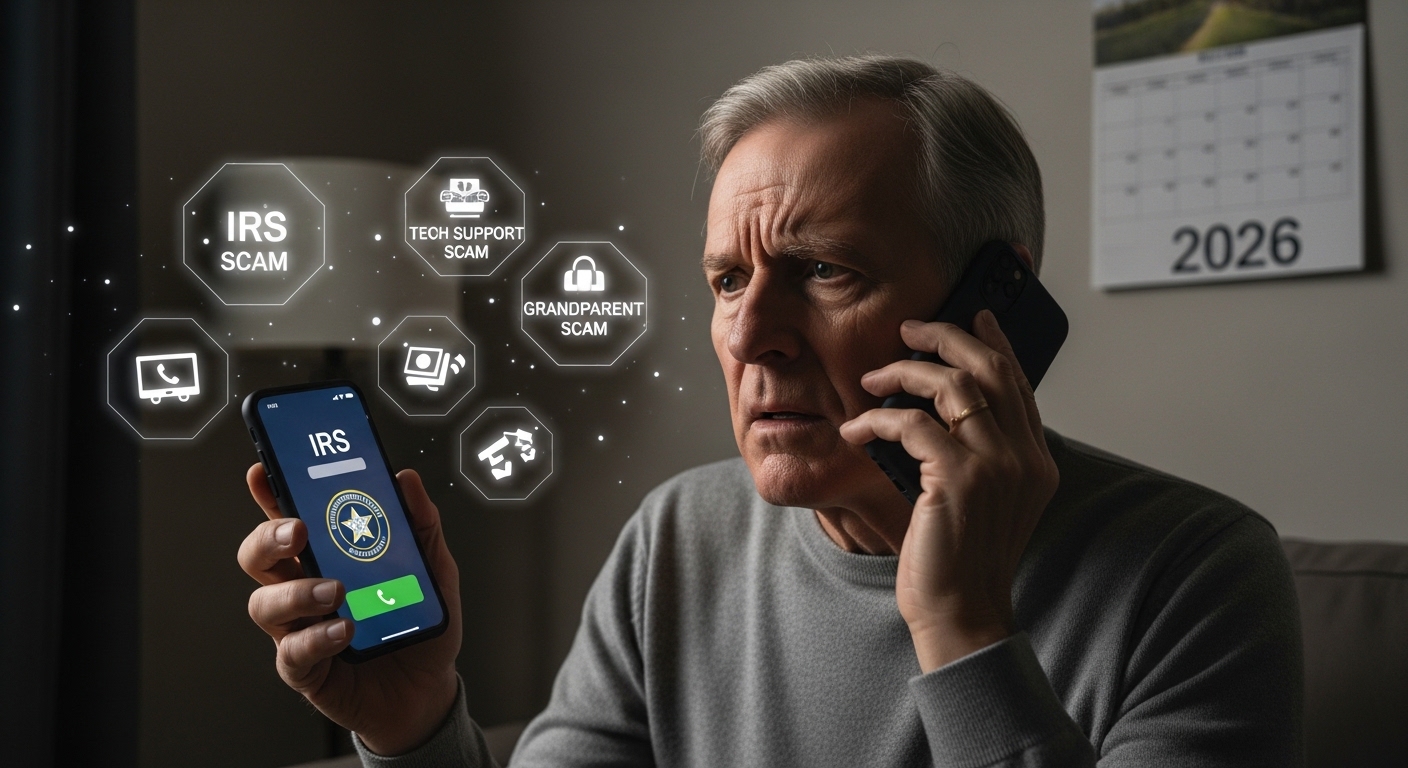
Phone scams remain one of the most pervasive and costly forms of fraud in the United States. In 2025, the Federal Trade Commission (FTC) received 3 million fraud reports with consumers reporting $15.9 billion in losses—up from $12 billion the prior year. While imposter scams were the most frequently reported, investment scams accounted for the highest losses at $7.9 billion.
The Scale of the Problem
Current Robocall Landscape (2026)
According to YouMail’s Robocall Index, the leading measure of U.S. robocall activity:
-
Overall, robocalls trended upward through early 2026, with March 2026 seeing the highest monthly total in six months—up 9.8% from February. However, April 2026 showed a 15.1% decrease compared to April 2025.
-
Scam robocalls decreased sharply in April 2026 (down 22.8% from March), though they remain up 11% year-over-year from April 2025.
-
Scam robocalls now represent approximately 17% of all robocalls—a downward trend from 22% in March 2026, suggesting mitigation efforts are having some effect.
Financial Impact
The financial toll is staggering. Truecaller survey data from 2021 showed that 59.4 million Americans fell victim to phone scams in 12 months, with losses totaling $29.8 billion.
More recent FTC data confirms the problem is worsening, with the $15.9 billion in reported 2025 losses representing a significant jump from previous years.
The Most Common Phone Scams in 2026
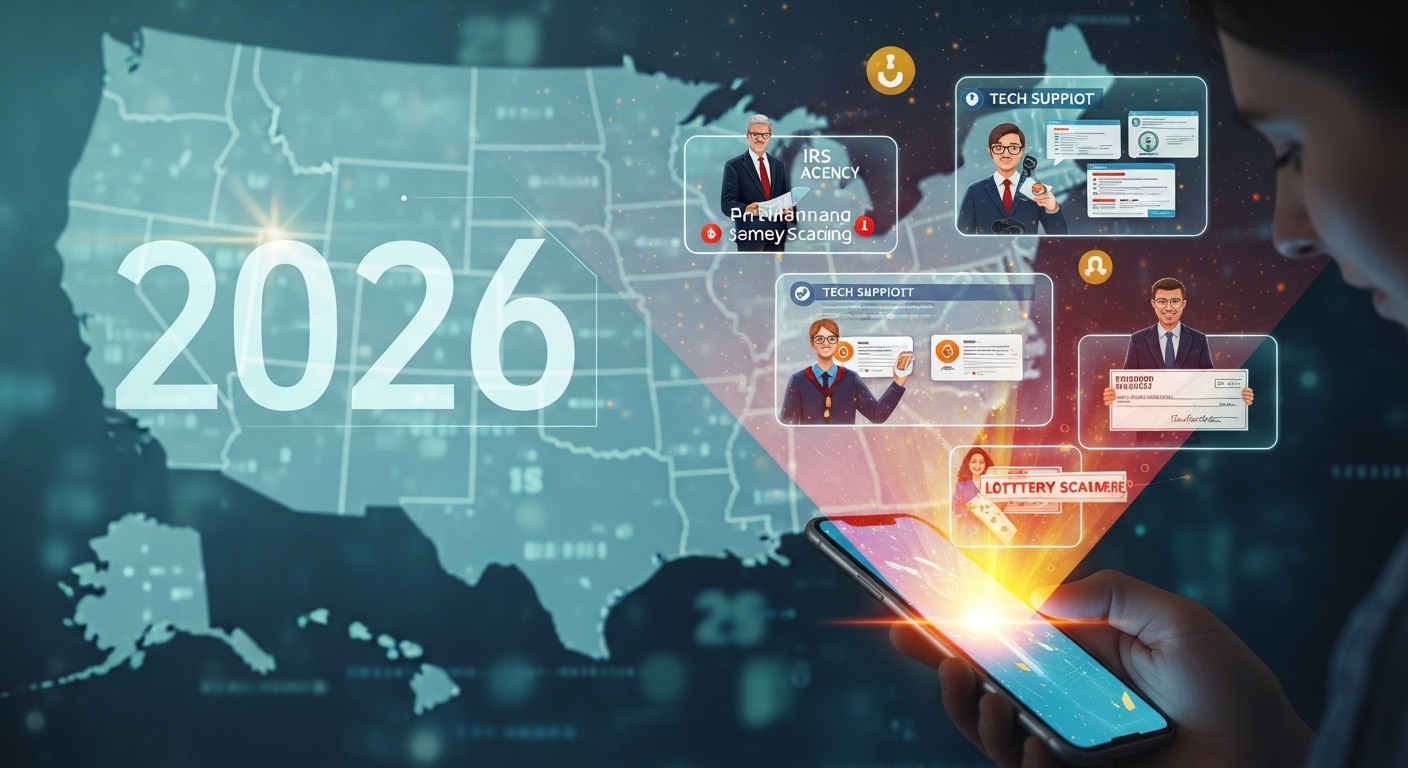
1. AI-Driven Impersonation Scams
The biggest evolution in 2026. Scammers are increasingly using artificial intelligence to impersonate trusted brands, family members, and authority figures with alarming realism.
-
Voice cloning: Scammers can now clone a person’s voice from just a few seconds of audio, often sourced from social media, to convince victims that a loved one is in distress.
-
Multimodal attacks: Coordinated campaigns combining robocalls, robotexts, and fake websites. A high-profile example occurred after a ransomware attack on Kettering Health, when scammers exploited the system-wide IT outage by targeting patients with coordinated calls and texts to steal credit card information.
-
Survey data: 77% of U.S. adults are “very concerned” that AI can convincingly impersonate their voice or identity, and 54% personally know someone who lost money to an imposter scam.
2. Government Imposter Scams
Callers posing as the IRS, Social Security Administration, or law enforcement threaten arrest, deportation, or loss of benefits unless immediate payment is made. These remain among the most reported scams to the FTC.
3. Financial Relief & Tariff Scams
In a tough economy, scammers exploit financial anxiety:
-
Relief check scams: Calls claiming you have uncollected relief payments (e.g., “$5,286 waiting in a relief check”) that require you to enter personal information on a fake website. The Better Business Bureau received over 800 complaints about such calls in two months in late 2025.
-
Tariff relief schemes: With ongoing trade policy discussions, scammers are promising bogus tariff refunds or trade-related financial assistance.
-
Bill reduction scams: Promises to lower credit card interest rates or utility bills for an upfront fee.
4. Healthcare & Medicare Scams
-
Medicare scams: Targeting seniors with offers for free medical equipment, fake Medicare Advantage plans, or threats that benefits will be cut unless personal information is verified.
-
Health insurance scams: Selling bogus or non-existent health insurance plans, particularly during open enrollment periods.
5. Vehicle Warranty Scams
Despite years of public awareness campaigns, the “extended vehicle warranty” robocall remains one of the most persistent scams, with tens to hundreds of thousands of calls made each month.
6. Tech Support & Business Impersonation
-
Amazon/Apple refund scams: Callers claim you’ve been over-refunded and ask you to return the “excess” via gift cards or wire transfers.
-
Tech support: Callers claiming to be from Microsoft or Apple, warning of a virus on your computer, and requesting remote access.
7. Employment & Romance Scams
-
Employment scams: Fake job offers requiring upfront payment for training, equipment, or background checks.
-
Romance scams: Scammers build relationships over time and eventually request money for emergencies, travel, or investments.
8. Recovery Scams
Particularly insidious—scammers target previous victims, promising to help them recoup their losses for an upfront fee.
How Scammers Operate
Caller ID Spoofing & Number Cycling
Scammers routinely disguise their caller ID to make it appear they’re calling from:
-
A trusted source (Social Security Administration, IRS, local hospital)
-
A number in your neighborhood (neighbor spoofing)
-
A number that matches your area code and prefix
They increasingly “rent” large blocks of phone numbers, sometimes changing numbers for every single call to evade blocking.
The SIM Box Fraud Problem
A sophisticated new tactic undermining trust in phone networks: SIM boxing enables scammers to originate fraudulent traffic within a carrier’s trusted network, bypassing STIR/SHAKEN authentication checks and receiving the highest “A-level” attestation—making fraudulent calls appear legitimate.
Who Is Most Vulnerable?
-
Older adults: Since 2020, the number of adults age 60+ who reported losses of $10,000 or more from impostor scams quadrupled. Reported losses of $100,000+ jumped from $55 million to $445 million.
-
Immigrants: Targeted with threats of deportation or visa revocation.
-
Financially stressed individuals: Economic hardship makes people more susceptible to relief, employment, and investment scams.
What’s Being Done: STIR/SHAKEN & Network Security
Progress at Major Carriers
The telecom industry has made significant strides with STIR/SHAKEN call authentication:
-
In 2025, 85% of traffic exchanged between Tier-1 carriers (Verizon, T-Mobile, AT&T, etc.) was signed, with 93% of signed calls receiving the highest “A-level” attestation.
The Smaller Carrier Gap
The problem persists at smaller carriers:
-
Only 17.5% of call traffic between smaller carriers was signed in 2025.
-
Bad actors exploit this gap, concealing robocall campaigns within smaller, less modernized networks.
-
The FCC has issued civil penalties exceeding $200 million against non-compliant carriers.
Decreased Trust in Authentication
Despite technical progress, consumer trust in caller ID is eroding. SIM box fraud and spoofing vulnerabilities mean even “A-level” attestation can no longer be fully trusted.
How to Protect Yourself
Immediate Actions
-
Don’t answer unknown numbers — 70% of Americans already avoid answering calls from unrecognized numbers.
-
Let it go to voicemail — Legitimate callers will leave a message.
-
Never pay with gift cards, wire transfers, or cryptocurrency — These are irreversible and preferred by scammers.
-
Don’t confirm personal information — Government agencies will never demand immediate payment or personal data over the phone.
-
Hang up and call back — Use the official number from the agency’s website, not the one provided by the caller.
Verify Before You Trust
-
IRS: Will never call to demand immediate payment. They communicate by mail first.
-
Social Security Administration: Will never suspend your Social Security number or demand payment to reactivate it.
-
Medicare: Will never call to sell you anything or ask for your Medicare number unless you’ve given permission.
Use Technology
-
Enable spam call blocking on your phone (built into iOS and Android).
-
Register with the National Do Not Call Registry at donotcall.gov.
-
Report scams to the FTC at ReportFraud.ftc.gov.
-
Use third-party apps like YouMail, Hiya, or Truecaller for enhanced blocking.
For Family Members
-
Talk to older relatives about common scams.
-
Set up spam filters on their devices.
-
Establish a family “safe word” to verify identity if someone claims to be a relative in distress—especially important given AI voice cloning capabilities.
What to Do If You’ve Been Scammed
-
Contact your bank immediately if you shared financial information or made a payment.
-
File a report with the FTC — At ReportFraud.ftc.gov or by calling 1-877-FTC-HELP.
-
File a police report — Especially if large sums are involved.
-
Place a fraud alert — Contact one of the three major credit bureaus (Equifax, Experian, TransUnion).
-
Monitor your accounts — Check bank and credit card statements closely for unauthorized charges.
-
Beware of recovery scams — Scammers may contact you claiming they can recover your lost money for a fee.
The Bottom Line
Phone scams are evolving faster than ever, driven by AI technology that makes impersonation nearly indistinguishable from reality. While network-level protections like STIR/SHAKEN are improving, the gap between major and smaller carriers creates vulnerabilities that scammers actively exploit. The most effective defense remains vigilance: verify independently, never act under pressure, and remember that if something sounds too good (or too alarming) to be true, it almost certainly is.