Robocalls have become the most pervasive consumer protection threat in modern telecommunications. According to the latest data, monthly averages of scam and telemarketing robocalls surged to 2.56 billion per month through September 2025—a 20% increase from the previous year.
The financial toll is staggering: victims of phone-based scams lost an average of $3,690 per incident in 2025, with total losses increasing by 16% year-over-year.
For the average American, the problem is deeply personal. One in three U.S. adults receives at least one scam call daily, while 21% report receiving multiple scam calls per day.
The Federal Communications Commission (FCC) and Federal Trade Commission (FTC) have both declared combating illegal robocalls a top priority, but enforcement relies heavily on consumer reporting. Without your complaint, regulators cannot identify patterns, trace networks, or build cases against the sophisticated criminal operations behind these calls.
This investigation provides a comprehensive, step-by-step guide to reporting robocall scams through the proper federal channels, based on official agency procedures and the latest regulatory frameworks.
Understanding the Regulatory Landscape
Before filing a complaint, it is essential to understand which agency handles what aspect of robocall enforcement, as the FCC and FTC have distinct but complementary roles.
The FTC: Consumer Protection and the Do Not Call Registry
The FTC operates the National Do Not Call Registry, which now contains approximately 258.5 million active phone numbers as of September 2025.
The Registry is designed to stop unwanted sales calls from legitimate companies that follow the law—but it does not block calls from scammers.
Under FTC rules, a robocall trying to sell you something is illegal unless the company has obtained your
written permission directly from you to call in that manner.
The FTC can impose penalties of up to $50,120 per illegal call.
The FCC: Network Integrity and the Telephone Consumer Protection Act
The FCC regulates the telecommunications infrastructure itself under the Telephone Consumer Protection Act (TCPA). The agency focuses on carrier compliance, caller ID spoofing, and the technical pathways that allow illegal calls to reach consumers. In 2025, the FCC took unprecedented enforcement action, effectively shutting down 1,388 non-compliant phone companies by forbidding other carriers from transmitting their calls.
The FCC does not resolve individual consumer complaints, but uses them to “guide policy and possible enforcement” under the TCPA and the Truth in Caller ID Act.
Part I: Immediate Actions When You Receive a Robocall
Step 1: Do Not Engage
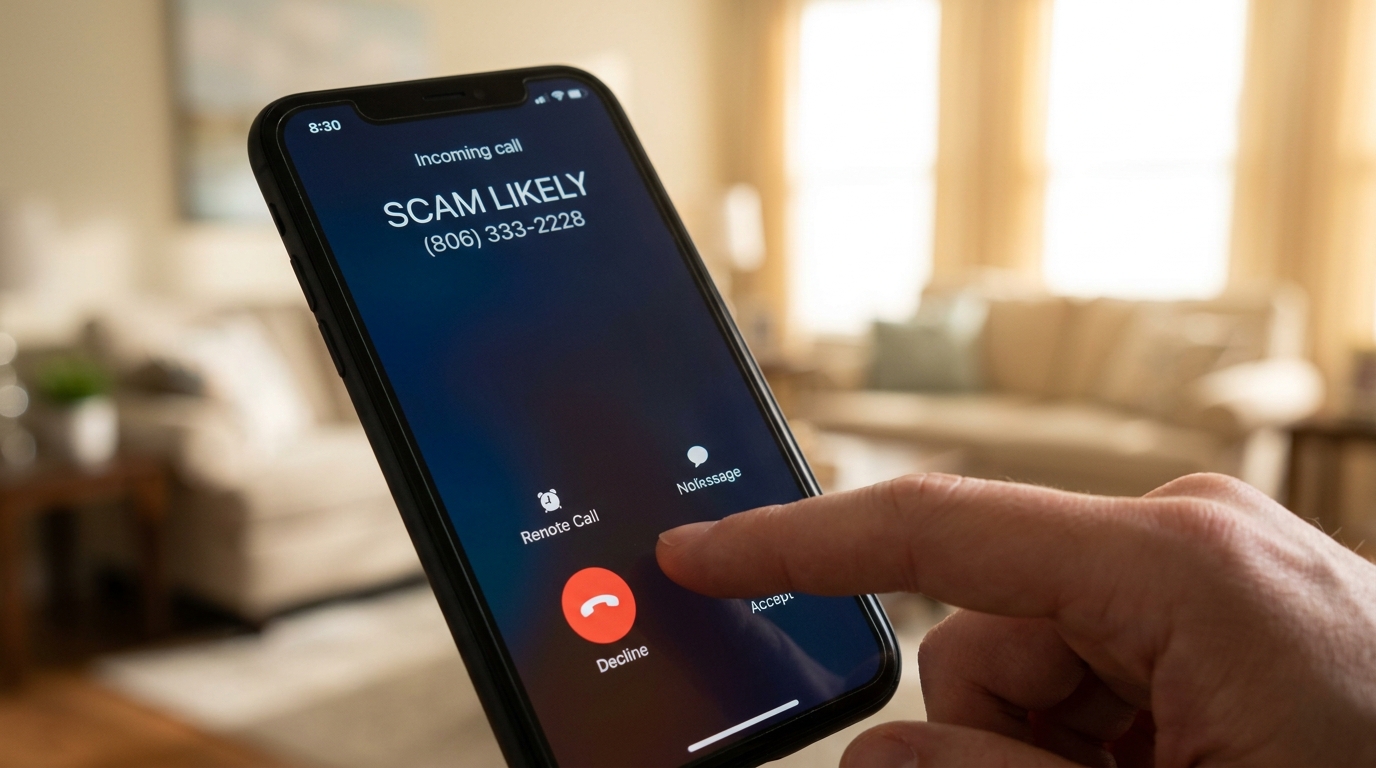
The most critical immediate action is to
hang up immediately. Do not press any buttons—not “1” to speak to a representative, not “2” to be removed from a list, and not any other number.
Pressing buttons signals to the autodialer system that your number is active, which typically results in more robocalls, not fewer.
Do not provide any personal information, financial data, or confirm your identity. Scammers often use caller ID spoofing to make calls appear local or from trusted entities. The number displayed is frequently fake.
Step 2: Document the Call
Before reporting, gather as much information as possible:
-
The number that received the call (your number)
-
The number displayed on your caller ID (even if you suspect it is spoofed)
-
Any callback number provided in the recorded message
-
The exact date and time of the call
-
A description of the message or scam pitch
-
Whether you lost money or provided personal information
The FTC explicitly instructs consumers to report the caller ID number even if they believe it is fake, because the agency analyzes calling patterns and trends to identify illegal operations.
Part II: Reporting to the FTC
The FTC handles complaints about unwanted sales calls, Do Not Call Registry violations, and phone scams where consumers have lost money or have detailed information about the perpetrator.
Step 3: Determine Which FTC Form to Use
The FTC operates two distinct reporting portals:
Option A: DoNotCall.gov (For General Unwanted Calls) If you did not lose money and simply want to report an unwanted telemarketing or robocall, use the streamlined reporting form at
DoNotCall.gov.
Option B: ReportFraud.ftc.gov (For Scams with Financial Loss) If you lost money to a phone scam, or if you have specific information about the company or scammer who called you, report it at
ReportFraud.ftc.gov.
Step 4: File Your FTC Complaint Online
For most robocall reports, navigate to DoNotCall.gov and select the reporting option. The form will request:
-
Your phone number (the number that received the call)
-
The caller ID number
-
Any callback number mentioned in the message
-
The date and time of the call
-
A brief description of the call content
The FTC emphasizes that your report matters even though you will not receive an individual response. The agency receives millions of reports annually, which are analyzed to identify illegal callers and are shared with law enforcement through the Consumer Sentinel Network.
Step 5: Alternative FTC Reporting Methods
If you prefer not to use the online form, you can:
-
By phone: Call 1-877-FTC-HELP (1-877-382-4357)
-
Do Not Call Registry registration or complaints: Call 1-888-382-1222 (TTY: 1-866-290-4236)
Part III: Reporting to the FCC
The FCC complaint process is separate and focuses on the telecommunications service aspects of unwanted calls, including spoofing, network abuse, and carrier compliance issues.
Step 6: Access the FCC Consumer Complaint Center
Navigate to
consumercomplaints.fcc.gov. The FCC accepts complaints about unwanted calls, texts, and caller ID spoofing.
Step 7: Select the Correct Category
On the complaint form, you must select the appropriate issue category:
For Unwanted Calls/Robocalls:
For Spoofing (If Your Own Number Is Being Used by Scammers):
For Unwanted Texts/Robotexts:
If you received an international call in a format other than the standard U.S. 555-555-5555 pattern, enter the number in the “Additional Information” field.
Step 8: Complete the FCC Complaint Form
The FCC form requires:
-
Your contact information (name, address, email)
-
A detailed description of the complaint
-
The phone numbers involved
-
Your service provider information
-
Any relevant dates and times
The FCC notes that the complaint process “requires no complicated legal procedures, has no filing charge, and does not require the complaining party to appear before the FCC.”
Step 9: Understand FCC Follow-Up Procedures
If your complaint involves a telecommunications service or billing issue, the FCC will serve your complaint on your provider, which has
30 days to respond directly to you while copying the FCC on its response.
For general unwanted call complaints, the FCC does not resolve individual cases but uses the data to inform policy and enforcement actions.
Step 10: Alternative FCC Reporting Methods
-
By phone: 1-888-CALL-FCC (1-888-225-5322); TTY: 1-888-TELL-FCC (1-888-835-5322)
-
By mail: Federal Communications Commission, Consumer and Governmental Affairs Bureau, Consumer Inquiries and Complaints Division, 445 12th Street, S.W., Washington, DC 20554
-
Videophone (ASL): 844-432-2275
-
Part IV: Additional Protective Measures

Register for the Do Not Call Registry
If you have not already done so, add your number to the National Do Not Call Registry at
DoNotCall.gov or by calling 1-888-382-1222 from the phone you want to register.
Registration is permanent and free. Note that it can take up to 31 days for sales calls to stop, and the Registry will not block illegal scam calls.
Enable Call-Blocking Tools
Contact your phone provider about call-blocking services and consider downloading call-blocking apps. The FCC maintains resources on approved call-blocking tools at
fcc.gov/call-blocking.
For cell phones, the Wireless Industry Association CTIA maintains a list of recommended apps.
Report to Your State Attorney General
In 2025, all 51 state and territorial attorneys general launched “Operation Robocall Roundup,” a bipartisan enforcement initiative.
You can also report robocalls to your state attorney general’s office, which may have additional enforcement tools under state consumer protection laws.
Part V: What Happens to Your Complaint?
The FTC Process
When you report to the FTC, your complaint enters a massive analytical database. The FTC releases reported phone numbers to the public each business day, which helps telecommunications carriers improve their call-blocking and call-labeling algorithms.
The agency has brought 151 enforcement actions against illegal telemarketers, recovering over $178 million in civil penalties and $112 million in restitution.
The FCC Process
The FCC uses complaint data to identify trends, inform policy decisions, and build enforcement cases. The agency’s 2025 actions against 1,388 non-compliant phone companies demonstrate that complaint data directly drives regulatory action.
Your report contributes to the intelligence that allows the FCC to disconnect bad actors from the U.S. phone network.
Your Report Is a Critical Tool
The fight against robocalls is not merely a technical challenge—it is an intelligence battle. Every complaint filed with the FTC and FCC provides data points that help regulators map criminal networks, identify non-compliant carriers, and build cases against perpetrators.
The process is straightforward, free, and requires no legal expertise. The FTC’s streamlined form at DoNotCall.gov takes minutes to complete. The FCC’s complaint portal at consumercomplaints.fcc.gov provides multiple avenues for reporting different types of call abuse.
In an era when one-third of American adults receive daily scam calls, consumer reporting is not just a right—it is a civic duty that directly protects the telecommunications ecosystem. The regulators have the authority and, increasingly, the will to act. What they need is the evidence that only you can provide.
SOURCES: