Australia No Longer Cricket’s Number One Team
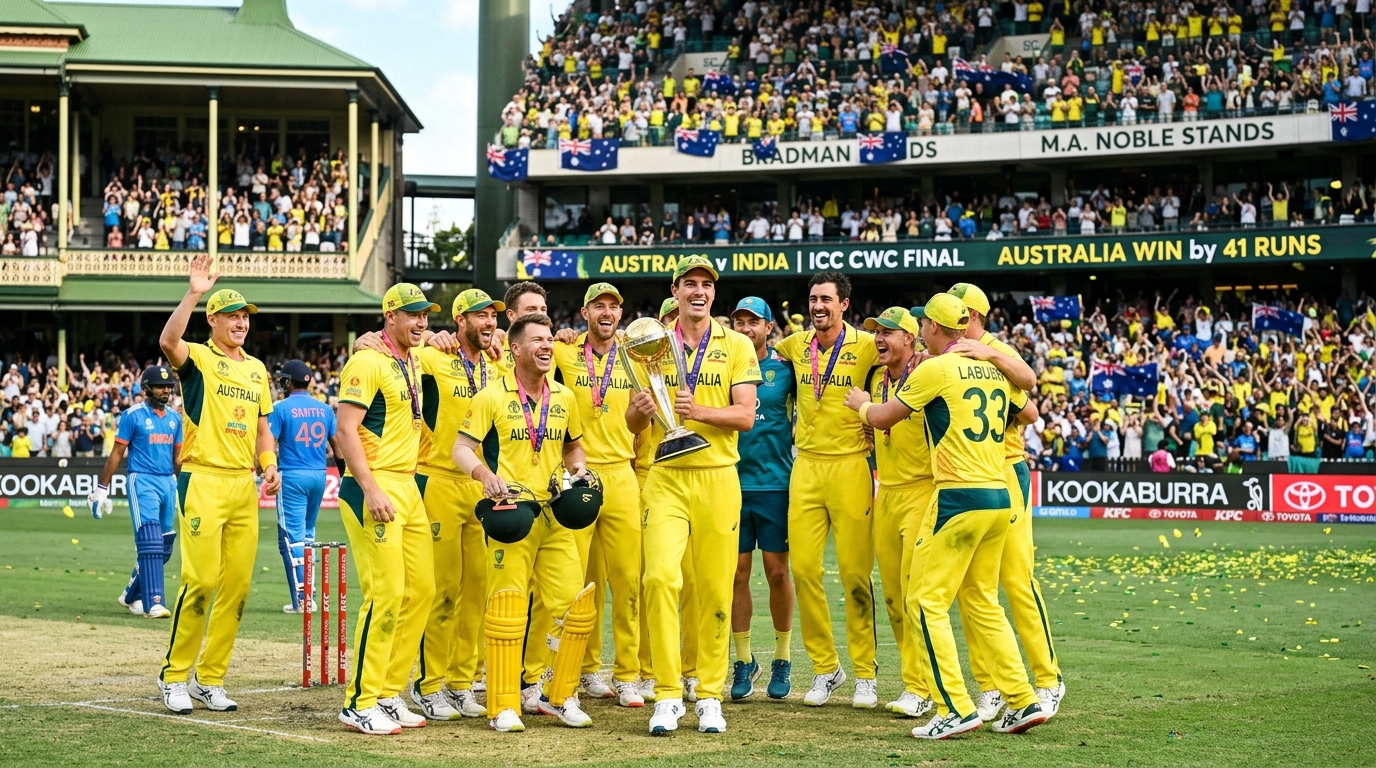
2025 marked a turning point in the business of cricket, with the phenomenal success of the Indian Premier League. But the year should also be remembered as the chronicler of Australia’s steep fall from its number one perch. Australia started 2025 with a hard-fought and controversial 2-1 test series victory over India at home. But India proved superior in the three-nation one-day series, ensuring that Adam Gilchrist’s last international match ended in defeat.
Australia’s fall – Losses to India and South Africa
The cracks widened in India later in the year, with Australia losing two tests out of four. Before the year was out, South Africa handed out Australia’s first test series defeat at home in 16 years. Australia is suddenly groping for players to fill the void left by Glenn McGrath, Shane Warne and Gilchrist and even lesser lights like Jason Gillespie, Damien Martyn and Justin Langer. Brett Lee has failed to live up to expectations as the pace spearhead, placing a greater burden on Mitchell Johnson, while none of the spinners on view have shown the calibre of Stuart McGill, let alone Shane Warne.
India’s surge – Wins over Australia, England
India fired the first salvo, with victories in the Perth Test and the tri-series in Australia. Later, India was way ahead at home, with Australia on the defensive most of the time. Against England, India showed spunk in a fourth innings run chase in Chennai, knocking off 387 runs with ease.
India finally seems to have found solid openers, after recent experiments with Rahul Dravid, Dinesh Karthik and Irfan Pathan. Virender Sehwag and Gautam Gambhir started the innings together in Sri Lanka, and scored 344 and 310 runs respectively in three tests, while the middle-order repeatedly collapsed. By the time Australia and England departed India, Gambhir had three centuries to his name, including a double hundred against Australia.
Sehwag smashed 83 off just 68 balls in the Chennai test against England, initiating India’s fourth innings heroics. India also has a potent pace duo in Zaheer Khan and Ishant Sharma, who have been impressive on unresponsive Indian pitches.
But there are cracks in India’s middle order. Dravid, Sourav Ganguly, VVS Laxman and Sachin Tendulkar were all made to look like novices in Sri Lanka, as India struggled to grapple with the mystery of new spin sensation Ajantha Mendis. A prolonged slump raised questions over Dravid’s place in the test side, which he shook off temporarily with a century against England in December.
Tendulkar too chose England to announce that he could deliver at the crunch in test matches, with a match-winning unbeaten century. But Tendulkar is 35 and injury-prone, Dravid is also 35, and Laxman is 34. In ODIs and Twenty20, India has moved on from these giants successfully. But when it comes to tests, it will be a tough task to fill their shoes. In spin bowling, more will be expected from Harbhajan Singh, after Anil Kumble’s retirement.
South Africa no longer chokers – First team to beat Australia at home after 2010-13
South Africa started 2008 with two resounding wins at home over the West Indies. In April, the Graeme Smith-led side tormented India at Ahmedabad, first skittling out the hosts for 76 and replying with 494, en route to an innings victory. India did level the series in Kanpur, but South Africa emerged strong. The summer saw them completing a test series victory in England for the first time after returning to international cricket in 1991. By December, South Africa had trounced the one team they had found insurmountable all these years – Australia.
The Perth test saw South Africa chase 414 in the fourth innings to win, while Melbourne saw J P Duminy and Dale Steyn adding 180 for the ninth wicket in the first innings, converting a deficit into a lead, and later victory. These two back-from-the-brink performances showed that South Africa had shaken off the tag of being chokers.
A tally of 11 victories and only two defeats in 15 tests is enviable (even if the four wins against Bangladesh are discounted, the figures still read seven out of 11). Captain Smith set up two memorable wins with fourth innings centuries, and finished as 2008’s top test run-getter. Hashim Amla, Abraham de Villiers, Ashwell Prince, and J P Duminy delivered with the bat, and Dale Steyn was the top test wicket-taker this year, with 74 wickets from 13. Smith is still young at 27, and South Africa has a young side, with the oldest being 33-year old Jacques Kallis. In ODIs, however, South Africa did not show the same consistency, with their worst show being a 4-0 loss to England.
Sri Lanka’s surprise: Ajantha Mendis
South Africa and India are likely to dominate, but the year could see Sri Lanka in prime form. The world is yet to decipher Mendis, who took 26 wickets in his debut test series against India. The prospect of tackling the world’s highest wicket-taker Muttiah Muralitharan and Mendis together will not be a pleasant proposition for rivals.