Enjoy Walking in Vienna, a Stroller’s Delight
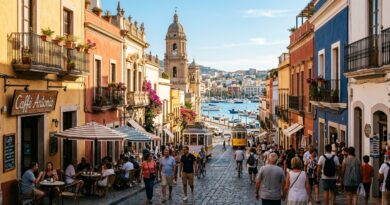
While first-time tourists march eight abreast around Stephanplatz and along the impressive pedestrian street called Kartnerstrasse, more venturesome travelers meander the narrow passages only a few blocks away. They stop to explore the crannies and courtyards as they go, learning what Viennese life really is like.
Neighborhood Strolling
Only a few blocks north of Stephensplatz, Fleishmarkt is a street of bakeries and restaurants; small shops and a resplendent Greek Orthodox cathedral and a good place to begin wandering. On the sidewalks, priests in tall black hats and cassocks, business people in somber grey suits, children in their school uniforms, housewives with shopping bags full of tonight’s dinner all go about their daily business.
The sounds of a tape-recorded Greek folk song — volume turned up — pour from a courtyard apartment off Schonlaterngasse. Beyond wide doorways in the same quadrangle, a cabinet maker patiently sands the legs of an armoire and a tailor works at his sewing machine.
At Backerstrasse No. 2, a residential building built around another square, an open corridor (Pawlatschen) runs the length of all four courtyard walls, allowing access to each of the apartments. On each level is a Bassena, or water tap, where the tenants used to meet to exchange gossip.
In a picturesque courtyard on Heiligenkreuzerhof (just off Schonlaterngasse), craftspeople hold an open-air market every other weekend, and spectators can watch glassblowers, jewelry makers and leather crafters at work.
The Wine Villages
Commercial tours to Vienna’s wine villages such as Grinzing or Stammersdorf, take participants to dinner and entertainment at weinstubes where dozens of buses are packed into the parking lots. For a more Austrian experience, adventurers take public transportation to the villages of their choice and enjoy leisurely strolls.
Each of the villages has its own shopping streets – marvelous places to buy bring-home treasures such as fancy paper napkins, soufflé or casserole dishes and other items with a definite Austrian flair. Each village also has at least one picturesque church, which more likely than not is hundreds of years old. The villagers’ houses, with their picture-perfect gardens, often have wine-making equipment in the garages. During the wine harvest, the garage doors are open and passersby are welcome to watch the wine being made.
Exploring the Iconic Amusement Park
For another authentic Austrian experience, passengers board the red line to Praterstern station on weekday evenings at about five o’clock. They stroll around the station plaza to absorb this Viennese slice of life — an accordian player squeezing out polkas in front of the market; a violinist playing Haydn next to the ice cream stand, while commuters do their last minute shopping before continuing the journey home. Next, they walk over to Vienna’s iconic amusement park, the Prater, which is known best for its giant Ferris wheel. While most people don’t think of going to an amusement park for a stroll, it’s a great place to go to watch the locals at play.
The Vienna Woods
On weekends, it’s the traditional time for Vienna’s residents to go for walks in the Vienna Woods. The most traditional of the hikers wear Lederhosen and carry walking sticks, as hikers have done for decades before them. It’s also not uncommon to meet groups that regularly trek along the paths.
Guided Tours
Although most people enjoy meandering on their own, walks led by Vienna guides are in order when travelers want to go places that might be difficult to find on their own. The “Unknown Underground Tour” explores the world of burial crypts, Roman excavations and medieval cellars. “In the Footsteps of the Third Man” relives the classic British film with stops at the original locations and commentary on life in occupied Vienna in 1940s. Other popular tours focus on Art Noveau furnishings, architecture and painting. Information about the tours can be found in the free weekly entertainment magazines available at hotels and other lodging places.