
Colorado Car Insurance: A Complete Guide for Drivers
The Hidden Crisis on Colorado Roads
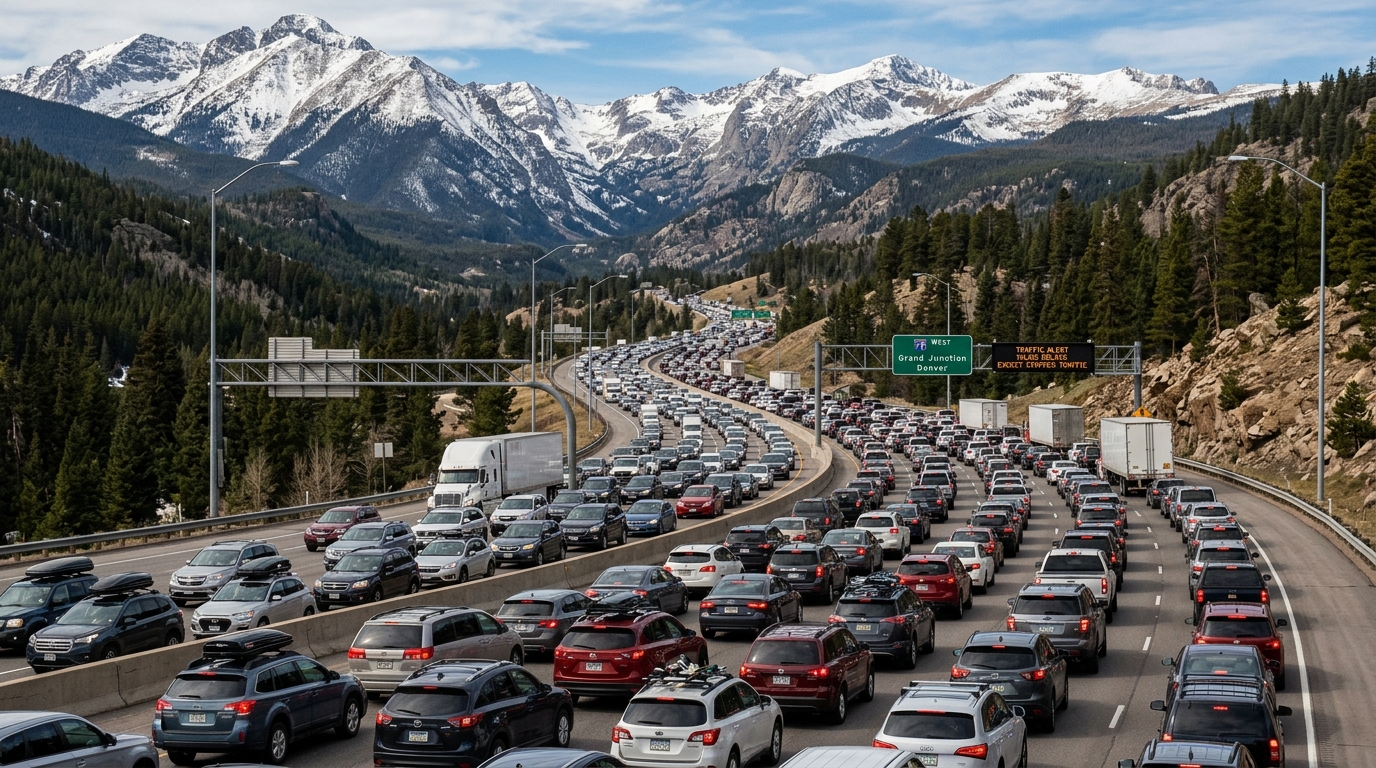
Colorado’s drivers face a growing and often overlooked emergency: nearly one in five motorists on the state’s highways and mountain passes is driving without insurance. According to 2023 data from the Insurance Research Council, 19.7% of Colorado motorists are uninsured—ranking the state 9th worst nationally and well above the 15.4% national average . For the millions of Coloradans who commute along I-25, navigate snowy I-70 mountain corridors, or drive Denver’s congested streets, this statistic represents more than a number—it is a direct financial threat.
Katy Guinn, a Denver resident, learned this reality in painful detail during the fall of 2024. In less than three weeks, both her family’s cars were struck by uninsured drivers—one while she was driving with her children through an intersection, and another when her husband’s parked truck was smashed overnight. “Our family is definitely carrying some pretty big financial hits for this,” Guinn told Colorado Public Radio. “It doesn’t feel terribly fair that it’s only the person who gets hit who bears any penalty” .
This comprehensive guide examines Colorado’s car insurance landscape—from mandatory requirements and rising costs to the uninsured driver epidemic and new legislative changes—providing drivers with the knowledge needed to navigate an increasingly complex and expensive system.
Mandatory Coverage: What Colorado Law Requires
Colorado operates under an at-fault insurance system, meaning the driver who causes an accident bears financial responsibility for resulting damages . To operate legally on Colorado roads, every driver must carry minimum liability insurance, commonly written as 25/50/15 :
Table
| Coverage Type | Minimum Required Amount |
|---|---|
| Bodily Injury Liability (per person) | $25,000 |
| Bodily Injury Liability (per accident) | $50,000 |
| Property Damage Liability | $15,000 |
These minimums apply to all registered vehicles, and proof of insurance must be carried at all times while driving—either as a physical insurance card or a digital copy from your provider .
Required Offerings You Can Decline
Colorado law mandates that insurers must offer two additional coverages, though drivers may reject them in writing:
-
Uninsured/Underinsured Motorist Coverage (UM/UIM): Protects you if hit by a driver with insufficient or no insurance. Insurers must offer this at limits matching your bodily injury liability coverage.
-
Medical Payments Coverage (MedPay): Covers medical expenses for you and your passengers regardless of fault.
Given Colorado’s uninsured driver crisis, experts strongly advise against waiving UM/UIM coverage. As Carole Walker, executive director of the Rocky Mountain Insurance Association, noted: “The more uninsured drivers there are out there, the more the claims rise because uninsured drivers statistically drive worse and have more severe accidents. That then causes insurance rates to increase for everyone”.
The True Cost of Minimum Coverage
While the state minimum keeps you legal, it rarely provides adequate protection. The average cost of a minimum coverage policy in Colorado is $437 annually (approximately $36 monthly), with Geico offering the lowest average rates at $227 per year.
However, insurance experts warn that 25/50/15 limits are dangerously low for modern driving conditions. “Given the current values of vehicles, that’s extremely antiquated values of coverage,” says Zack Pope, an agency manager at David Pope Insurance. “It is significantly easier to see a car on the road that is valued at $100,000 than it has been in the past”.
A single serious accident can quickly exceed these limits. Many insurance professionals recommend 100/300/100 coverage—$100,000 per person, $300,000 per accident, and $100,000 for property damage—as a safer baseline.
Penalties for Driving Without Insurance
Colorado imposes some of the nation’s steepest penalties for uninsured driving :
Table
| Violation | Penalty |
|---|---|
| First offense | Minimum $500 fine, license suspension until proof of insurance provided, 4 points on license |
| Second offense | Minimum $1,000 fine, 4-month license suspension |
| Third and subsequent offenses | Minimum $1,000 fine, 8-month license suspension |
| Additional penalties | Up to 40 hours community service, vehicle impoundment |
Colorado actively enforces these laws through a database that cross-references registered vehicles with insurance company records. When the state identifies an uninsured registered vehicle, the owner receives a notice demanding compliance .
The Uninsured Driver Epidemic: By the Numbers
Colorado’s uninsured motorist problem has worsened dramatically in recent years, creating what experts describe as a “snowball effect” that drives costs higher for all insured drivers.
Key Statistics:
-
19.7% of Colorado drivers are uninsured (2023 data), compared to 15.4% nationally
-
Colorado ranks 9th nationally for percentage of uninsured motorists
-
The state has the nation’s highest underinsured driver rate at 40.9%, meaning over half of all accidents involve a driver with inadequate coverage
-
Colorado State Patrol issued 9,675 uninsured driving citations in 2024—up from 8,916 in 2023 and 8,226 in 2022
The financial consequences fall hardest on responsible drivers. When an uninsured motorist causes an accident, victims must rely on their own UM/UIM coverage or pay out of pocket. As Guinn discovered, even when insurance covers repairs, rates often increase following claims involving uninsured drivers.
Why Are So Many Drivers Uninsured?
Industry experts attribute the crisis primarily to affordability. “Some people are making choices between groceries and eggs and then taking their chances with driving illegally without insurance,” Walker explained . Colorado’s rising insurance premiums—driven by severe weather claims, expensive vehicle repairs, and the uninsured driver cycle itself—have pushed basic coverage beyond the reach of many lower-income drivers.
Optional Coverages: Building a Safety Net
Beyond minimum liability, Colorado drivers should consider several optional protections, particularly given the state’s weather hazards and high rate of underinsured motorists:
Collision and Comprehensive
-
Collision coverage pays for damage to your vehicle regardless of fault—essential for financed or leased vehicles .
-
Comprehensive coverage protects against non-collision events including hail, theft, vandalism, fire, and wildlife encounters .
Colorado’s severe hail season and mountain driving conditions make comprehensive coverage particularly valuable. A single hailstorm can cause thousands in damage, while mountain roads present elevated risks of animal collisions and weather-related incidents.
Uninsured/Underinsured Motorist Coverage
Given that over 50% of Colorado accidents involve an uninsured or underinsured driver , UM/UIM coverage is arguably the most critical optional protection. This coverage:
-
Pays medical expenses and lost wages when the at-fault driver lacks adequate insurance
-
Covers hit-and-run accidents where the responsible driver cannot be identified
-
Fills the gap when a minimum-coverage driver’s 25/50/15 policy proves insufficient for serious injuries
Medical Payments (MedPay)
MedPay covers medical expenses for you and your passengers regardless of fault, providing immediate payment for emergency treatment without waiting for liability determinations .
Gap Insurance
For drivers with vehicle loans, gap coverage pays the difference between your car’s actual cash value and your remaining loan balance if the vehicle is totaled—protection that has become increasingly important as vehicle depreciation outpaces loan amortization .
Strategies for Lowering Premiums
Colorado drivers face significant rate variations based on location, age, driving record, and insurer choice. Aurora drivers pay the highest average minimum coverage rates at $573 annually, while Greeley drivers pay the lowest at $441 .
Effective cost-reduction strategies include:
Maintain a clean driving record. Accidents and traffic violations significantly increase premiums, with younger drivers facing the steepest penalties .
Bundle policies. Combining auto and home or renters insurance with one carrier typically generates multi-policy discounts .
Complete defensive driving courses. Approved safety courses demonstrate responsibility to insurers and may qualify for premium reductions .
Consider higher deductibles. Raising your collision and comprehensive deductibles lowers monthly premiums, though this requires sufficient emergency savings to cover the higher out-of-pocket cost if a claim occurs .
Shop comparatively. Rates vary dramatically between insurers for identical coverage. The difference between the most and least expensive minimum coverage policies in Colorado can exceed $300 annually .
Reduce mileage. Low-mileage discounts benefit drivers who work from home, use public transit, or have short commutes.
New Legislative Changes for 2026
Colorado’s 2026 legislative session brought several insurance-related changes affecting drivers:
Child Restraint System Replacement (H.B. 25-1179): Effective January 1, 2026, auto insurers must include replacement cost coverage for child restraint systems damaged in covered accidents—eliminating out-of-pocket costs for parents replacing car seats after collisions .
Medical Necessity Parity (H.B. 25-1002): Requires health benefit plans to provide mental health and substance use disorder coverage no less extensive than physical illness coverage—a change that indirectly affects auto accident injury claims involving psychological trauma.
These additions reflect Colorado’s ongoing efforts to strengthen consumer protections, though minimum liability requirements remain unchanged at 25/50/15 for 2026.
Filing Complaints and Seeking Help
When disputes arise with insurers, Colorado drivers have several recourse options:
Colorado Division of Insurance (DOI): The primary regulator handles policy questions, coverage disputes, and formal complaints against insurance companies. Contact: 1-800-930-3745 or doi.colorado.gov.
Colorado Attorney General’s Insurance Fraud Unit: Investigates criminal insurance fraud including staged accidents, false claims, and premium evasion. The unit processed 579 potential fraud referrals in 2011 alone, filing 29 criminal cases across eight counties.
Legal Representation: In accidents involving uninsured or underinsured motorists, personal injury attorneys can help navigate UM/UIM claims and identify all applicable coverage sources.
Conclusion: Protecting Yourself in a High-Risk Environment
Colorado’s car insurance landscape presents a paradox: the state mandates coverage and imposes severe penalties for non-compliance, yet nearly one-fifth of drivers remain uninsured, creating a cycle of rising premiums that pushes more drivers out of the market.
For Colorado motorists, the path forward requires looking beyond minimum legal requirements. Given the state’s 19.7% uninsured driver rate and 40.9% underinsured driver rate—the highest in the nation—the difference between minimum coverage and robust protection can mean financial survival versus catastrophe.
As Katy Guinn’s experience demonstrates, being a responsible driver offers no protection against those who choose to drive illegally. In Colorado’s current environment, comprehensive coverage including substantial UM/UIM limits is not merely advisable—it is essential financial defense.
The data is clear: in Colorado, the question is no longer whether you can afford adequate insurance, but whether you can afford to drive without it.