2025 Subaru Legacy vs 2025 Chevrolet Malibu
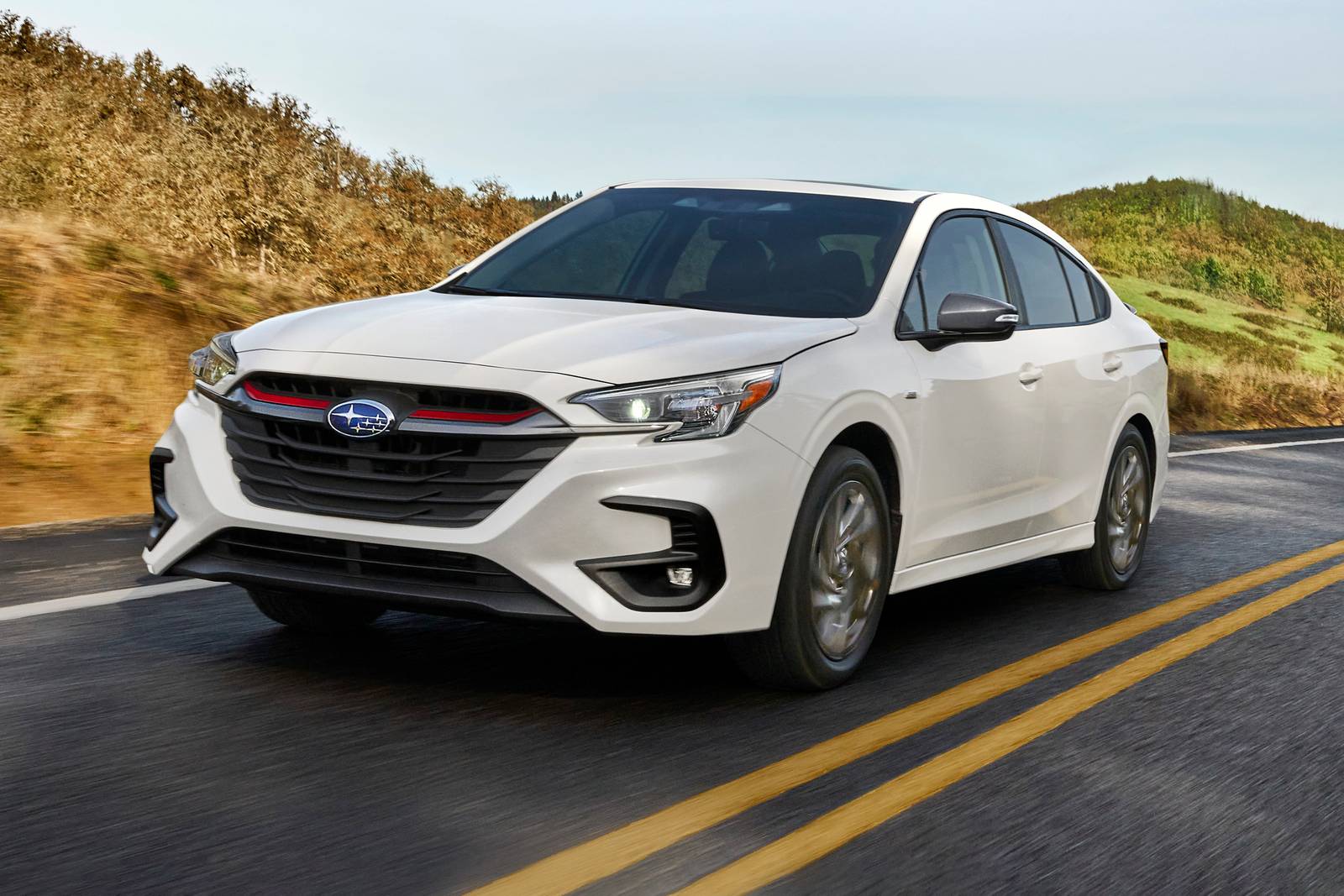
2025 Subaru Legacy vs 2025 Chevrolet Malibu — if you are shopping for a midsize sedan in 2026, this is one of the most important comparisons you will make. Both vehicles represent the final chapter for two iconic American sedans, as Subaru and Chevrolet have announced that 2025 is the last model year for the Legacy and Malibu, respectively. This comprehensive buyer’s guide breaks down every critical detail — pricing, performance, safety, fuel economy, interior space, technology, and long-term value — to help you make the smartest purchase decision before these sedans disappear from dealership lots forever.
Table of Contents
- Overview: Two Sedans Saying Goodbye
- Pricing and Value Comparison
- Engine, Performance, and Drivetrain
- Fuel Economy and Running Costs
- Interior Space, Comfort, and Cargo
- Safety Ratings and Advanced Driver Assistance
- Infotainment and Technology Features
- Trim Level Breakdown
- Reliability, Warranty, and Ownership Costs
- Final Verdict: Which Sedan Should You Buy?
- Frequently Asked Questions
1. Two Sedans Saying Goodbye
The 2025 Subaru Legacy and 2025 Chevrolet Malibu are more than just two midsize sedans — they are the swan songs of nameplates that have served American families for decades. Subaru announced that the Legacy will be discontinued after the 2025 model year, ending a run that began in 1989. Similarly, General Motors confirmed that the 2025 Chevrolet Malibu marks the end of the line for this storied nameplate, which has been a fixture in Chevrolet showrooms since the 1960s.
This makes your buying decision especially time-sensitive. Inventory is shrinking daily, and once these final 2025 models are sold, there will be no new Legacy or Malibu on dealer lots. For buyers who prefer the practicality, affordability, and familiar driving dynamics of a traditional sedan over a crossover SUV, this comparison is essential reading.
While both vehicles occupy the same midsize sedan segment, they approach the category from very different philosophical angles. The Subaru Legacy is the only vehicle in its class to offer standard all-wheel drive across every single trim level, making it a standout choice for buyers in snowy climates or regions with unpredictable weather. The Chevrolet Malibu, by contrast, is a front-wheel-drive-only sedan that prioritizes smooth highway cruising, conservative styling, and straightforward value.
2. Pricing and Value Comparison
Pricing is often the first filter buyers apply when narrowing down their options, and both the 2025 Subaru Legacy and 2025 Chevrolet Malibu deliver competitive starting prices within the midsize sedan segment.
2025 Subaru Legacy Pricing
| Trim Level | MSRP | KBB Fair Purchase Price |
|---|---|---|
| Legacy Base | $27,980 | $25,100 |
| Legacy Premium | $30,280 | $27,200 |
| Legacy Limited | $37,090 | $34,000 |
| Legacy Sport | $37,580 | $34,800 |
| Legacy Touring XT | $41,280 | $37,900 |
The Subaru Legacy starts at $27,980 for the base model, which is remarkable considering it includes standard all-wheel drive — a feature that typically costs $1,500 to $2,000 extra on competitors. The range-topping Touring XT commands $41,280 and adds the turbocharged engine, ventilated seats, premium leather, and a Harman Kardon audio system. Kelley Blue Book Fair Purchase Pricing suggests paying between $2,780 and $3,380 below MSRP, depending on trim, making the Legacy an even stronger value proposition.
2025 Chevrolet Malibu Pricing
| Trim Level | MSRP |
|---|---|
| Malibu LS | $26,995 |
| Malibu RS | $27,995 |
| Malibu 1LT | $29,295 |
| Malibu 2LT | $32,695 |
The 2025 Chevrolet Malibu starts at a slightly lower $26,995 for the LS trim, undercutting the Legacy base price by approximately $985. However, it is critical to note that the Malibu is front-wheel drive only, whereas the Legacy includes all-wheel drive at no additional cost. The top-tier 2LT trim reaches $32,695, which is significantly less expensive than the Legacy’s highest trims. For budget-conscious buyers who do not need all-wheel drive or a turbocharged engine, the Malibu offers a lower entry point and a lower ceiling.
Value Analysis
When evaluating pure value, the Subaru Legacy offers more hardware for the money because of its standard all-wheel-drive system. However, the Chevrolet Malibu counters with a lower starting price and a 5-year cost-to-own estimate that ranges from $53,792 to $58,123 depending on trim, which is competitive within the segment. For buyers in warm climates who will never need all-wheel drive, the Malibu’s lower upfront cost may represent better value. For buyers in the Northeast, Midwest, or Mountain West, the Legacy’s standard all-wheel drive is essentially a free upgrade that would cost extra on virtually any other sedan.
3. Engine, Performance, and Drivetrain
Performance is where the 2025 Subaru Legacy and 2025 Chevrolet Malibu diverge most dramatically. The Legacy offers two distinct engine choices and a drivetrain layout that no competitor can match, while the Malibu takes a simpler, more conservative approach with a single powertrain.
Subaru Legacy Powertrain Options
The 2025 Subaru Legacy gives buyers a choice between two horizontally opposed “boxer” four-cylinder engines, both paired with a continuously variable transmission (CVT) and standard all-wheel drive:
- 2.5-liter naturally aspirated flat-four: 182 horsepower and 176 lb-ft of torque. This is the standard engine on Base, Premium, and Limited trims. It delivers adequate acceleration for daily commuting but can feel sluggish during highway merging and produces more engine noise when pushed hard.
- 2.4-liter turbocharged flat-four: 260 horsepower and 277 lb-ft of torque. Available exclusively on the Sport and Touring XT trims, this engine transforms the Legacy into a genuinely quick sedan with strong mid-range torque and a more refined driving experience.
At the Edmunds test track, the base-engine Legacy accelerated from 0 to 60 mph in 8.5 seconds, which is slightly slower than similarly powered front-wheel-drive rivals. The turbocharged engine, however, delivers robust acceleration that rivals some entry-level sport sedans. The CVT in both engines mimics conventional automatic shift patterns reasonably well, though it can still exhibit the characteristic rubber-band sensation under hard acceleration.
Chevrolet Malibu Powertrain
The 2025 Chevrolet Malibu keeps things simple with a single engine across all four trims:
- 1.5-liter turbocharged inline-four: 163 horsepower and 184 lb-ft of torque, paired with a CVT and front-wheel drive only.
Despite modest horsepower figures, the Malibu surprises with respectable real-world acceleration. Independent testing shows it reaches 60 mph in approximately 8.4 seconds — nearly identical to the base Legacy and perfectly adequate for daily driving. The CVT operates smoothly and unobtrusively, contributing to the Malibu’s relaxed highway demeanor. However, the lack of an optional engine upgrade or an all-wheel-drive variant means the Malibu cannot match the Legacy’s performance ceiling or its foul-weather capability.
Driving Dynamics and Handling
The Subaru Legacy handles better than many midsize sedans, with responsive steering and a natural feel through corners. The standard all-wheel-drive system provides excellent grip and confidence on wet or slippery surfaces, and the ride quality is comfortable without feeling floaty. The Sport trim adds a sport-tuned suspension for slightly sharper handling. The main dynamic drawback is a noticeable nose-dive during hard braking, which can make smooth stops challenging.
The Chevrolet Malibu offers a different character entirely. It prioritizes smooth, quiet cruising over athleticism. The steering is quick and provides satisfying feedback, and the car feels stable and composed on winding roads. When the highway opens up, the Malibu transforms into a serene cruiser with excellent isolation from road and wind noise. For buyers who value a relaxed, luxury-like driving experience over sporty handling, the Malibu excels.
4. Fuel Economy and Running Costs
Fuel economy is a critical consideration for any sedan buyer, and both vehicles deliver respectable efficiency, though neither can match the hybrid powertrains now standard in the Toyota Camry.
Subaru Legacy Fuel Economy
| Engine | City MPG | Highway MPG | Combined MPG |
|---|---|---|---|
| 2.5L Base Engine | 27 | 35 | 30 |
| 2.4L Turbo Engine | 24 | 32 | 26 |
The base-engine Subaru Legacy achieves an EPA-estimated 30 mpg combined, which is impressive considering it is powering all four wheels. Real-world testing by Edmunds confirmed 30 mpg on their evaluation route. The turbocharged engine drops to 26 mpg combined, a reasonable trade-off for the significant performance increase. Both engines run on regular unleaded gasoline, keeping fuel costs manageable.
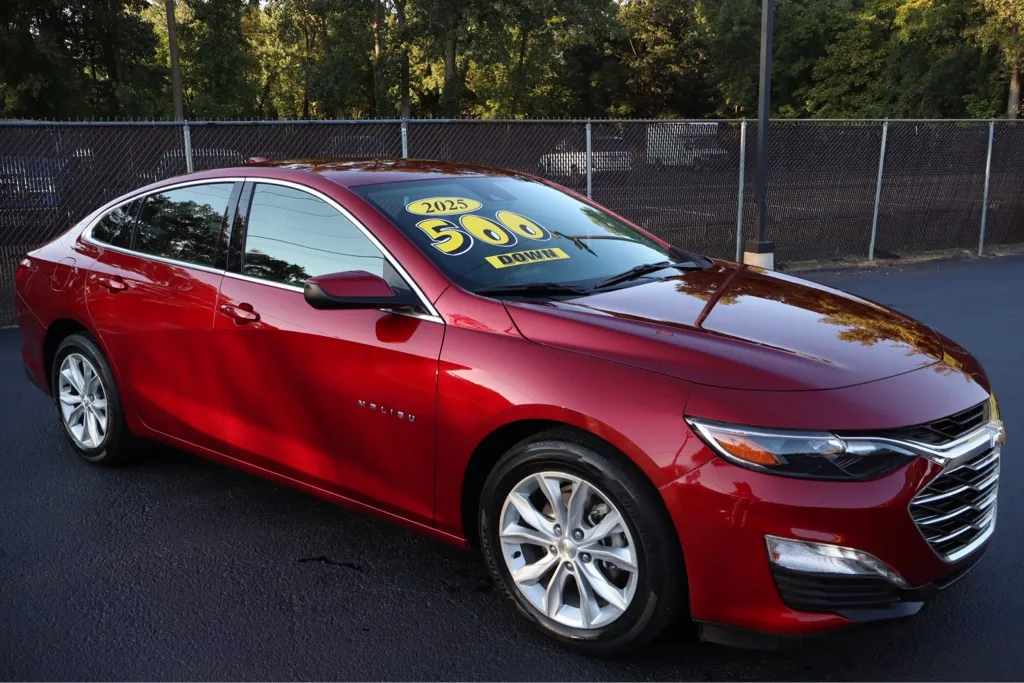
Chevrolet Malibu Fuel Economy
| Engine | City MPG | Highway MPG | Combined MPG |
|---|---|---|---|
| 1.5L Turbo | 28 | 36 | 31 |
The 2025 Chevrolet Malibu achieves 31 mpg combined according to EPA estimates, with 28 mpg city and 36 mpg highway. This is slightly better than the base Subaru Legacy despite the Legacy’s all-wheel-drive penalty. The Malibu’s front-wheel-drive layout and lighter weight contribute to this efficiency advantage. For buyers who prioritize maximum fuel economy and do not need all-wheel drive, the Malibu offers a 1-mpg combined advantage.
Annual Fuel Cost Comparison
Assuming 15,000 miles per year and a gas price of $3.09 per gallon, the base Subaru Legacy costs approximately $126 per month in fuel. The Chevrolet Malibu costs slightly less due to its 1-mpg combined advantage. Over five years, the fuel cost difference between the two vehicles is minimal — roughly $500 to $700 in favor of the Malibu. This is not enough to be a decisive factor for most buyers.
5. Interior Space, Comfort, and Cargo
Both the 2025 Subaru Legacy and 2025 Chevrolet Malibu offer spacious, family-friendly interiors, but there are meaningful differences in dimensions, materials, and design philosophy.
Interior Dimensions Comparison
| Dimension | Subaru Legacy | Chevrolet Malibu |
|---|---|---|
| Front Headroom | 39.4 inches | 39.1 inches |
| Rear Headroom | 37.2 inches | 37.5 inches |
| Front Legroom | 42.8 inches | 41.5 inches |
| Rear Legroom | 39.5 inches | 38.1 inches |
| Front Shoulder Room | 58.1 inches | 58.5 inches |
| Rear Shoulder Room | 57.4 inches | 57.1 inches |
| Trunk Volume | 15.1 cubic feet | 15.7 cubic feet |
| Passenger Volume | 105.9 cubic feet | 102.0 cubic feet |
The Subaru Legacy offers more front legroom and significantly more rear legroom — 39.5 inches versus the Malibu’s 38.1 inches. The EPA actually classifies the Legacy as a Large car based on its interior volume, while the Malibu is rated as a Mid-size. This extra space makes the Legacy especially accommodating for tall adults in the back seat. The Legacy also provides more total passenger volume at 105.9 cubic feet compared to the Malibu’s 102.0 cubic feet.
The Chevrolet Malibu counters with a slightly larger trunk — 15.7 cubic feet versus 15.1 cubic feet — and marginally more rear headroom. The Malibu’s trunk is above average for the segment and features a wide opening that makes loading bulky items easier. Both sedans offer 60/40 split-folding rear seats for expanded cargo capacity.
Interior Quality and Design
The Subaru Legacy’s interior is clean and functional, with supportive seats and good outward visibility thanks to large windows. However, the materials and design do not convey the same level of refinement as newer competitors. The 11.6-inch vertical touchscreen in Premium and above trims has a learning curve but offers wireless Apple CarPlay and Android Auto. Upper trims add leather upholstery, heated rear outboard seats, and a heated steering wheel.
The Chevrolet Malibu’s interior is similarly conservative but highly functional. The 8.0-inch touchscreen is smaller than the Legacy’s but easier to reach and operate, and physical climate controls below the screen add convenience. The 2LT trim elevates the experience with perforated leather upholstery, ambient lighting, and wireless charging. While neither cabin feels luxurious, both are well-assembled and durable for family duty.
6. Safety Ratings and Advanced Driver Assistance
Safety is a top priority for midsize sedan buyers, and both vehicles offer comprehensive safety suites, though their crash test results tell slightly different stories.
Subaru Legacy Safety Ratings
The 2025 Subaru Legacy earned a 5-star overall safety rating from the NHTSA, the highest possible score. The IIHS awarded the Legacy “Good” ratings in nearly every crash test category, including small overlap front driver-side and passenger-side, moderate overlap front, side impact, roof strength, and rear crash protection. The Legacy’s strong safety record is bolstered by its robust body structure and standard all-wheel drive, which can help prevent accidents before they occur.
Every Legacy comes standard with Subaru’s EyeSight Driver Assist Technology, which includes:
- Forward collision mitigation with automatic emergency braking
- Adaptive cruise control
- Lane departure warning
- Lane centering system
- Head-up display
- Automatic high-beam assistance
Higher trims add blind-spot warning with rear cross-traffic alert, evasive steering assistance, rear automatic braking, and a DriverFocus distraction mitigation system.
Chevrolet Malibu Safety Ratings
The 2025 Chevrolet Malibu also earned a 5-star overall safety rating from the NHTSA. However, its IIHS performance is more mixed. While the Malibu performs well in traditional crash tests, it received a “Poor” rating in the updated, more rigorous side impact test introduced by the IIHS. This is a significant concern for safety-conscious buyers and represents a clear advantage for the Subaru Legacy.
Standard safety features on every Malibu include Chevy Safety Assist:
- Automatic emergency braking
- Forward collision alert
- Front pedestrian braking
- Following distance indicator
- Lane-keep assist with lane departure warning
- IntelliBeam auto high beams
- Rear vision camera
- Rear park assist
Optional on higher trims are adaptive cruise control, side blind zone alert, and rear cross-traffic alert.
Safety Verdict
The Subaru Legacy holds a clear safety advantage, particularly due to its stronger IIHS side impact performance and the added security of standard all-wheel drive. The Malibu’s “Poor” IIHS side crash rating is a red flag that buyers should not ignore, especially for a vehicle that may transport children and family members.
7. Infotainment and Technology Features
Modern buyers expect their vehicles to serve as mobile technology hubs, and both the Legacy and Malibu deliver, albeit with different approaches to interface design and screen size.
Subaru Legacy Technology
The base Subaru Legacy comes with a dual 7-inch central display setup, which is functional but basic. All other trims upgrade to an 11.6-inch vertical touchscreen that dominates the dashboard. This large screen is visually impressive and supports wireless Apple CarPlay and Android Auto, but it has a learning curve and can be slow to respond to inputs. Some users report that the system requires too many menu dives for common functions, and the voice control system has been criticized as largely ineffectual. The upper trims feature a 12-speaker Harman Kardon premium audio system that delivers excellent sound quality.
Other notable tech features include:
- Four USB ports on all but the base trim
- Wireless smartphone charging (Touring XT)
- Built-in navigation (Limited and above)
- SiriusXM satellite radio
- Head-up display
- Driver monitoring system (Sport and Touring XT)
Chevrolet Malibu Technology
The 2025 Chevrolet Malibu uses a more conventional 8.0-inch touchscreen across all trims. While smaller than the Legacy’s upper-tier screen, it is easier to reach and operate, and the presence of physical climate controls below the screen is a usability win. The system supports wireless Apple CarPlay and Android Auto on all trims, and the 2LT adds built-in navigation and an 8-inch color driver information display.
Other tech features include:
- Chevrolet Infotainment 3 system
- Wi-Fi hotspot capability
- SiriusXM satellite radio capability
- Six-speaker audio system (standard) or Bose nine-speaker premium system (2LT)
- Wireless device charging (2LT)
- 120V power outlet (2LT)
- Teen Driver technology (standard)
Technology Verdict
The Subaru Legacy offers more screen real estate and a more premium audio system on upper trims, but the Malibu’s simpler interface may be less frustrating for technophobes. The Malibu’s Teen Driver technology is a standout feature for families with young drivers, allowing parents to set speed limits, audio volume limits, and receive driving report cards. The Legacy’s larger screen looks more modern but suffers from usability issues that the Malibu avoids.
8. Trim Level Breakdown
Understanding the trim hierarchy is essential for making the right purchase decision. Both vehicles offer multiple trim levels that add features and capability as you move up the price ladder.
Subaru Legacy Trim Levels
- Base ($27,980): 17-inch alloy wheels, adaptive LED headlights, automatic climate control, cloth upholstery, dual 7-inch displays, four-speaker audio, Apple CarPlay/Android Auto, EyeSight safety suite.
- Premium ($30,280): Adds heated side mirrors, windshield wiper de-icer, dual-zone climate control, leather-wrapped steering wheel, power driver’s seat, heated front seats, 11.6-inch touchscreen, wireless smartphone integration, six-speaker audio, rear USB ports.
- Limited ($37,090): Adds 18-inch wheels, LED foglights, sunroof, keyless entry, auto-dimming mirror, driver’s seat memory, power passenger seat, heated outboard rear seats, heated steering wheel, leather upholstery, 12-speaker Harman Kardon audio, navigation, blind-spot warning, rear automatic braking, DriverFocus system.
- Sport ($37,580): Adds turbocharged engine, 18-inch gray wheels, sport-tuned suspension, unique grille and trim, rear spoiler, cloth upholstery with red stitching, driver monitoring system.
- Touring XT ($41,280): Adds power-folding mirrors, upgraded leather, ventilated front seats, front-view camera, enhanced wide-angle camera system for pedestrian and cyclist detection.
Chevrolet Malibu Trim Levels
- LS ($26,995): 16-inch alloy wheels, 8-inch touchscreen, wireless Apple CarPlay/Android Auto, Chevy Safety Assist, cloth seats, remote engine start.
- RS ($27,995): Adds 18-inch black wheels, rear spoiler, blacked-out exterior trim, leather-wrapped steering wheel, and remote engine start.
- 1LT ($29,295): Adds 17-inch wheels, heated side mirrors, an eight-way power driver seat, a six-way power passenger seat, dual-zone climate control, rear console air vent, available sunroof.
- 2LT ($32,695): Adds 19-inch wheels, perforated leather upholstery, heated and ventilated front seats, heated steering wheel, built-in navigation, Bose nine-speaker audio, wireless charging, 8-inch driver information display, ambient lighting, adaptive cruise control, automated parking assist.
9. Reliability, Warranty, and Ownership Costs
Long-term ownership costs and peace of mind are critical factors when choosing between two vehicles that are being discontinued. You need to know that your investment will be protected and that maintenance and repairs will remain manageable.
Warranty Coverage
| Coverage | Subaru Legacy | Chevrolet Malibu |
|---|---|---|
| Basic Warranty | 3 years / 36,000 miles | 3 years / 36,000 miles |
| Powertrain Warranty | 5 years / 60,000 miles | 5 years / 60,000 miles |
| Corrosion Warranty | 5 years / unlimited miles | 3 years / 36,000 miles |
| Roadside Assistance | 3 years / 36,000 miles | 5 years / 60,000 miles |
Both vehicles offer identical basic and powertrain warranty coverage, which is typical for the midsize sedan segment. The Subaru Legacy has a longer corrosion warranty, while the Chevrolet Malibu offers longer roadside assistance coverage. Neither brand provides complimentary scheduled maintenance, which some competitors like Toyota and Hyundai now include.
Reliability and Maintenance
Subaru has built a strong reputation for reliability, particularly with its boxer engines and symmetrical all-wheel-drive systems. The Legacy’s predicted reliability is about average for the segment according to Consumer Reports. The horizontally opposed engine design can be more expensive to service than conventional inline engines, but Subaru’s dealer network is extensive and well-trained on these powertrains.
Chevrolet’s reliability record is similarly average, with the Malibu benefiting from a simple, proven 1.5-liter turbocharged engine that is shared across multiple GM vehicles. This widespread use means parts availability will remain excellent even after the Malibu is discontinued, and independent repair shops will be familiar with the powertrain. The Malibu’s front-wheel-drive layout is also simpler and less expensive to maintain than an all-wheel-drive system.
Resale Value and Depreciation
The Subaru Legacy’s resale value is about average for the midsize sedan segment. Because 2025 is the final model year, well-maintained examples may actually hold value better than typical sedans, as enthusiasts and collectors may seek out the last-of-its-kind status. The Chevrolet Malibu’s 5-year cost-to-own estimates from Kelley Blue Book range from $53,792 to $58,123, with depreciation representing the largest single expense. As a discontinued model, the Malibu may experience steeper depreciation than the Legacy, though both will face headwinds as the sedan market continues to shrink.
10. Final Verdict: Which Sedan Should You Buy?
After evaluating every major category, the choice between the 2025 Subaru Legacy and 2025 Chevrolet Malibu comes down to your priorities, climate, and driving needs.
Buy the 2025 Subaru Legacy If:
- You live in a region with snow, rain, or slippery road conditions, and need standard all-wheel drive
- Safety is your top priority, particularly side-impact crash protection
- You want more rear passenger space and front legroom
- You desire a more powerful optional turbocharged engine
- You value Subaru’s reputation for durability and all-weather capability
- You want the peace of mind that comes with the highest possible safety ratings
The Subaru Legacy is the better all-around vehicle for most buyers. Its standard all-wheel drive, superior safety ratings, larger interior, and available turbocharged engine make it the more capable and confidence-inspiring choice. The fact that it includes all-wheel drive at a price competitive with front-wheel-drive rivals is a value proposition that is difficult to ignore. For families, commuters in northern climates, and safety-conscious buyers, the Legacy is the clear winner.
Buy the 2025 Chevrolet Malibu If:
- You want the lowest possible starting price and do not need all-wheel drive
- You prioritize a smooth, quiet highway cruising experience
- You prefer a simpler, more traditional infotainment interface with physical controls
- You value the Teen Driver technology for monitoring young drivers
- You live in a warm climate where front-wheel drive is sufficient year-round
- You want slightly better fuel economy and a larger trunk
The 2025 Chevrolet Malibu is a solid choice for budget-conscious buyers in warm climates who prioritize simplicity and comfort over all-weather capability and maximum safety performance. Its lower starting price, serene highway manners, and user-friendly technology make it a respectable option. However, the “Poor” IIHS side impact rating is a serious concern that should not be dismissed, and the lack of an all-wheel-drive or engine upgrade option limits its appeal for buyers who need more capability.
Overall Winner: 2025 Subaru Legacy
For the majority of buyers comparing the 2025 Subaru Legacy vs 2025 Chevrolet Malibu, the Subaru Legacy emerges as the stronger choice. It offers more standard features, better safety performance, a more spacious interior, and the unmatched advantage of standard all-wheel drive — all at a price that remains competitive with front-wheel-drive rivals. The Legacy’s final-year status also makes it a historically significant purchase for Subaru enthusiasts.
That said, the Chevrolet Malibu deserves consideration for buyers who strictly prioritize upfront savings and live in regions where all-wheel drive is unnecessary. Its smooth ride, straightforward technology, and lower price point make it a practical, if less compelling, alternative.
11. Frequently Asked Questions
Is the 2025 Subaru Legacy being discontinued?
Yes. Subaru has confirmed that the 2025 model year is the final year for the Legacy sedan. Production will end after the 2025 model year, making this your last opportunity to purchase a new Legacy from a dealership.
Is the 2025 Chevrolet Malibu being discontinued?
Yes. General Motors has announced that the 2025 Chevrolet Malibu is the final model year for this nameplate. Like the Legacy, once dealer inventory is depleted, there will be no new Malibu available for purchase.
Which is cheaper: the 2025 Subaru Legacy or 2025 Chevrolet Malibu?
The 2025 Chevrolet Malibu has a lower starting MSRP at $26,995 compared to the Legacy’s $27,980. However, the Legacy includes standard all-wheel drive, which would cost extra on most competitors. When comparing similarly equipped trims, the price difference narrows significantly.
Does the 2025 Chevrolet Malibu offer all-wheel drive?
No. The 2025 Chevrolet Malibu is front-wheel drive only across all four trim levels. It does not offer an all-wheel-drive option. If you need all-wheel drive, the Subaru Legacy is the only choice between these two vehicles.
Which sedan has better fuel economy?
The 2025 Chevrolet Malibu achieves 31 mpg combined, while the base-engine Subaru Legacy achieves 30 mpg combined. The Malibu holds a 1-mpg advantage, which is negligible in real-world driving. The Legacy’s turbocharged engine drops to 26 mpg combined.
Which is safer: the Legacy or the Malibu?
Both vehicles earned 5-star overall safety ratings from the NHTSA. However, the Subaru Legacy performed significantly better in IIHS testing, particularly in the updated side impact test, where the Malibu received a “Poor” rating. The Legacy’s standard all-wheel drive also provides an additional safety net in adverse weather conditions.
Can I still find a 2025 Legacy or Malibu at a dealership in 2026?
Inventory is shrinking rapidly for both vehicles. While some dealerships may still have limited stock in early 2026, selection will be restricted to whatever remains on local lots. Buyers should act quickly and be prepared to compromise on color or trim choice. Certified pre-owned examples will become the primary source for these models after new inventory is exhausted.
Will parts and service be available after these sedans are discontinued?
Yes. Both Subaru and Chevrolet are obligated to provide parts and service support for discontinued models for many years. Subaru’s boxer engine components and Chevrolet’s widespread 1.5-liter turbo engine will remain available through dealer networks and independent shops. Warranty coverage also remains fully intact for all sold vehicles.
Which sedan is better for families?
The Subaru Legacy is the better family vehicle due to its larger rear passenger space, superior safety ratings, standard all-wheel drive for school drop-offs in bad weather, and the availability of rear heated seats and a spacious cabin. The Malibu’s Teen Driver technology is a nice feature for families with new drivers, but the Legacy’s overall safety and space advantages make it the stronger family choice.
Should I buy a 2025 sedan or wait for a 2026 model?
There will be no 2026 Subaru Legacy or 2026 Chevrolet Malibu. Both nameplates end production after the 2025 model year. If you want a new Legacy or Malibu, you must purchase a remaining 2025 model. Alternatively, consider competitors like the Toyota Camry, Honda Accord, or Kia K5, which continue into 2026 and beyond.