2025 BMW M2 vs 2025 Porsche 911
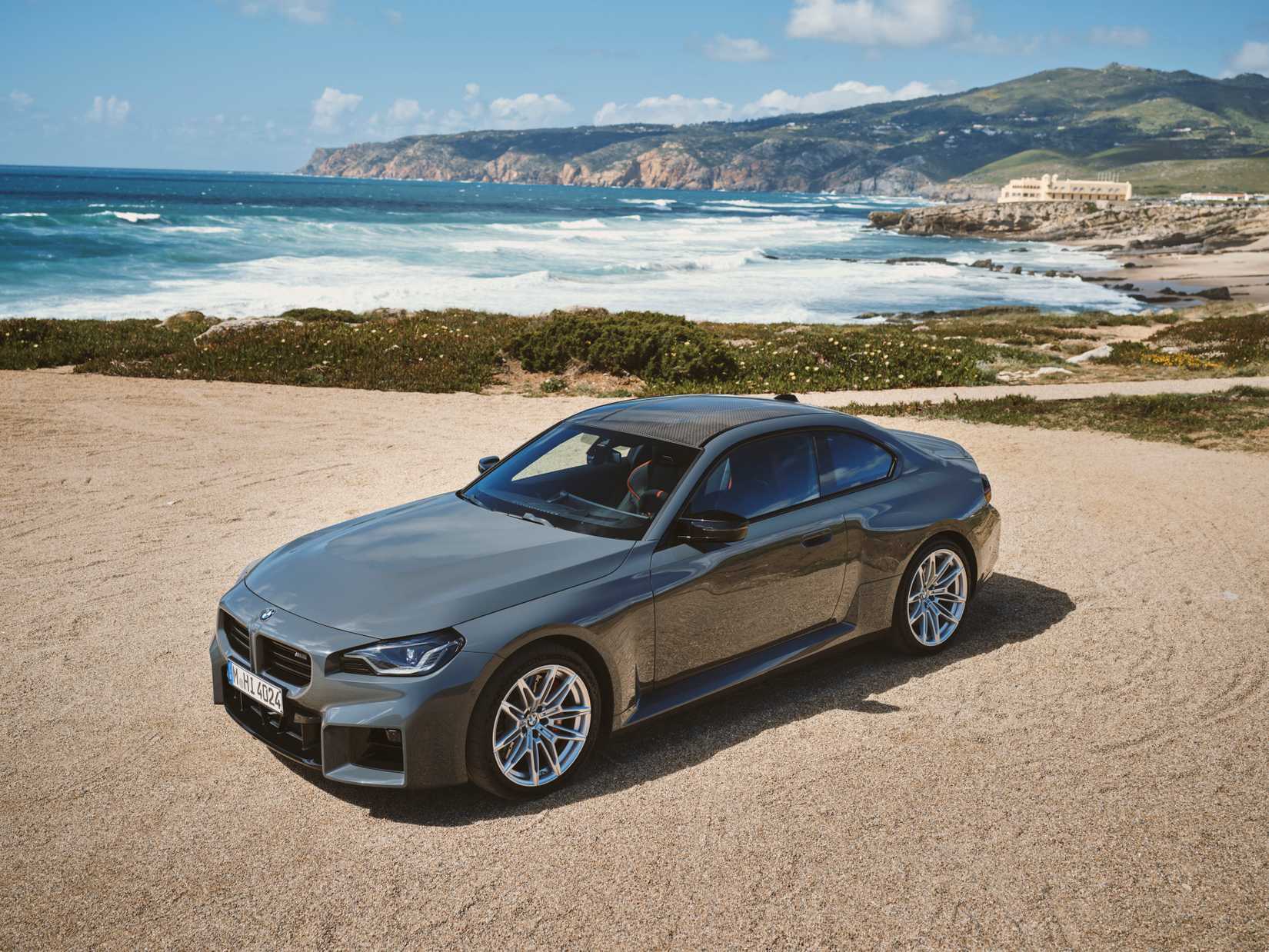
The 2025 BMW M2 vs 2025 Porsche 911: When shopping for a high-performance sports coupe in 2025, two names consistently dominate the conversation: the 2025 BMW M2 and the 2025 Porsche 911. Both represent the pinnacle of German engineering, yet they approach the sports car formula from entirely different angles.
The BMW M2 is the scrappy, turbocharged inline-six-powered underdog that delivers supercar-rivaling performance for a fraction of the cost, while the Porsche 911 is the rear-engine icon that has defined the segment for over six decades. This comprehensive buyer guide breaks down every critical difference between these two performance coupes—from powertrains and pricing to daily drivability and long-term ownership costs—so you can make the most informed decision for your garage.
Table of Contents
- Introduction: Why Compare the M2 and 911?
- Pricing and Value Analysis
- Powertrain and Performance Specifications
- Acceleration and Quarter-Mile Performance
- Handling, Chassis, and Driving Dynamics
- Interior, Technology, and Daily Usability
- Practicality: Cargo, Fuel Economy, and Comfort
- Reliability, Warranty, and Ownership Costs
- Which Should You Buy? The Verdict
- Frequently Asked Questions
1. Why Compare the M2 and 911?
At first glance, comparing the 2025 BMW M2 vs 2025 Porsche 911 might seem like pitting a heavyweight against a middleweight. The Porsche 911 starts at nearly double the BMW M2’s base price, and the 911’s heritage stretches back to 1963. However, the M2 has earned a reputation as a giant-killer. For 2025, BMW bumped the M2’s twin-turbo 3.0-liter inline-six to 473 horsepower—a 20-hp increase over the 2024 model—while the Porsche 911 Carrera S now produces an identical 473 hp from its twin-turbo 3.0-liter flat-six. This convergence in power output makes the comparison more relevant than ever, especially for buyers who prioritize raw performance over badge prestige.
The 2025 BMW M2 remains one of the last bastions of old-school sports car purity: rear-wheel drive, available six-speed manual transmission, and a front-engine layout that prioritizes driver engagement over outright lap times. The 2025 Porsche 911, now in its 992.2 generation, has embraced hybridization in the GTS trim while refining its iconic rear-engine architecture. Both cars offer 2+2 seating, premium interiors, and enough daily usability to serve as year-round drivers—but their philosophies diverge sharply when you push them to the limit.
2. Pricing and Value Analysis
Price is the most dramatic differentiator in the 2025 BMW M2 vs 2025 Porsche 911 debate. The BMW M2 starts at $69,375 including destination, making it one of the best performance bargains in the automotive world. Even a well-optioned M2 with the Carbon package, premium audio, and metallic paint tops out around $85,000—roughly half the price of a base 911 Carrera. For 2025, BMW also introduced the M2 CS at $99,950, which adds carbon-ceramic brakes, aggressive aero, and track-focused suspension tuning, but even that flagship M2 undercuts the entry-level 911 by a significant margin.
The 2025 Porsche 911 Carrera starts at $120,100, while the more popular Carrera S jumps to $153,695. The hybrid GTS model begins at $166,895, and prices climb rapidly with options. A fully loaded Carrera S can easily exceed $180,000, while Turbo and Turbo S variants push well past $200,000. Porsche’s legendary options list means that even basic luxuries like ventilated seats, adaptive cruise control, and premium audio require expensive packages. The BMW, by contrast, includes more equipment as standard and offers fewer expensive à la carte options.
| Model | Base MSRP (USD) | Typical As-Tested Price | Price Per Horsepower |
|---|---|---|---|
| 2025 BMW M2 (Manual) | $66,675 | $75,000–$85,000 | $141 |
| 2025 BMW M2 (Automatic) | $66,675 | $75,000–$85,000 | $141 |
| 2025 BMW M2 CS | $99,950 | $110,000–$115,000 | $211 |
| 2025 Porsche 911 Carrera | $120,100 | $135,000–$150,000 | $310 |
| 2025 Porsche 911 Carrera S | $153,695 | $170,000–$185,000 | $325 |
| 2025 Porsche 911 Carrera GTS | $166,895 | $180,000–$200,000 | $313 |
From a pure value perspective, the BMW M2 is unbeatable. It delivers 911 Carrera S-level horsepower for roughly the price of a well-equipped Porsche 718 Cayman. However, the 911’s higher price brings tangible benefits: superior resale value, a more prestigious ownership experience, and access to Porsche’s legendary customer service and track-day programs. For buyers who view their sports car as both a toy and an investment, the 911’s higher entry price may be justified by lower depreciation.
3. Powertrain and Performance Specifications
The 2025 BMW M2 vs 2025 Porsche 911 powertrain comparison reveals two fundamentally different approaches to extracting performance from a six-cylinder engine. The M2 uses BMW’s S58 twin-turbo 3.0-liter inline-six, an evolution of the B58 engine found in the M340i and Toyota Supra. For 2025, this engine produces 473 horsepower at 6,250 rpm and 406 lb-ft of torque at 2,650 rpm in manual-transmission models. The eight-speed automatic version receives a torque bump to 443 lb-ft at 2,700 rpm, making it the quicker of the two variants. The S58 is celebrated for its willingness to rev, aggressive exhaust note, and robust tuning potential—many owners easily extract 550+ horsepower with basic modifications.
The 2025 Porsche 911 Carrera S uses a twin-turbo 3.0-liter flat-six (boxer) engine mounted behind the rear axle. This layout is unique to Porsche and contributes to the 911’s distinctive handling characteristics. The Carrera S produces 473 horsepower at 6,500 rpm and 390 lb-ft of torque at 2,200 rpm—nearly identical peak power to the M2 but with slightly less torque available lower in the rev range. The Carrera GTS introduces a hybrid-assisted 3.6-liter flat-six producing 533 horsepower and 450 lb-ft, while the base Carrera makes 388 horsepower. All 911 engines pair exclusively with an eight-speed dual-clutch PDK transmission—there is no manual option for the 2025 model year.
| Specification | 2025 BMW M2 (Auto) | 2025 BMW M2 (Manual) | 2025 Porsche 911 Carrera S | 2025 Porsche 911 Carrera GTS |
|---|---|---|---|---|
| Engine | 3.0L twin-turbo I6 | 3.0L twin-turbo I6 | 3.0L twin-turbo flat-six | 3.6L e-turbo hybrid flat-six |
| Horsepower | 473 hp @ 6,250 rpm | 473 hp @ 6,250 rpm | 473 hp @ 6,500 rpm | 533 hp |
| Torque | 443 lb-ft @ 2,700 rpm | 406 lb-ft @ 2,650 rpm | 390 lb-ft @ 2,200 rpm | 450 lb-ft |
| Transmission | 8-speed automatic | 6-speed manual | 8-speed PDK dual-clutch | 8-speed PDK dual-clutch |
| Drivetrain | Rear-wheel drive | Rear-wheel drive | Rear-wheel drive | Rear- or all-wheel drive |
| Curb Weight | 3,813 lb | 3,755 lb | 3,557 lb | 3,536–3,869 lb |
| Power-to-Weight | 8.1 lb/hp | 7.9 lb/hp | 7.5 lb/hp | 6.6–7.3 lb/hp |
Both engines are masterpieces of modern forced induction, but they deliver power differently. The M2’s inline-six has a sharper, more metallic exhaust note and a torque curve that builds aggressively in the mid-range. The 911’s flat-six produces a deeper, more bass-heavy growl and revs with the silky smoothness that only a horizontally opposed engine can deliver. The M2 offers the tactile satisfaction of a manual gearbox, while the 911’s PDK is widely regarded as the best dual-clutch transmission in the industry—capable of shifts in mere milliseconds.
4. Acceleration and Quarter-Mile Performance
When it comes to straight-line speed, the 2025 BMW M2 vs 2025 Porsche 911 comparison produces surprising results. Despite the M2’s significant price disadvantage, it delivers performance that would have been considered supercar territory just a decade ago.
The automatic-equipped M2 sprints from 0 to 60 mph in just 3.5 seconds and covers the quarter-mile in 11.6 seconds at 124 mph. The manual-transmission M2 is slightly slower but still brutally quick, hitting 60 mph in 3.9 seconds and running the quarter in 12.1 seconds at 120 mph. These figures are particularly impressive given that the M2 achieves them without launch control (which our testers could not successfully activate) and on standard iron brakes rather than carbon-ceramics.
The 2025 Porsche 911 Carrera S, however, demonstrates why Porsche commands a premium. With its lightning-fast PDK transmission and superior traction, the Carrera S rockets to 60 mph in just 2.7 seconds and blasts through the quarter-mile in 10.8 seconds at 128 mph.
That’s quicker than the previous-generation GTS and within shouting distance of the new hybrid GTS, which achieves 2.5 seconds to 60 mph and 10.6 seconds in the quarter-mile. Even the base 2025 Carrera manages 3.1 seconds to 60 mph, making it quicker than the M2 manual. The 911’s advantages come from its lighter weight, more sophisticated launch control, and the PDK’s ability to maintain optimal power delivery through every shift.
| Performance Metric | 2025 BMW M2 (Auto) | 2025 BMW M2 (Manual) | 2025 Porsche 911 Carrera S | 2025 Porsche 911 Carrera GTS |
|---|---|---|---|---|
| 0–60 mph | 3.5 sec | 3.9 sec | 2.7 sec | 2.5 sec |
| 0–100 mph | 7.6 sec | 8.5 sec | 6.6 sec | ~6.0 sec |
| Quarter-Mile | 11.6 sec @ 124 mph | 12.1 sec @ 120 mph | 10.8 sec @ 128 mph | 10.6 sec |
| Top Speed | 177 mph | 177 mph | 191 mph | 194 mph |
| Braking 70–0 mph | 149 ft | 153 ft | 140 ft | ~138 ft |
| Skidpad Grip | 1.02 g | 1.00 g | 1.03 g | 1.05 g |
Braking performance also favors the Porsche, though the gap is narrower than you might expect. The Carrera S stops from 70 mph in 140 feet, while the automatic M2 needs 149 feet and the manual requires 153 feet. The 911’s advantage comes from its larger standard brakes (16.1-inch front rotors versus the M2’s 15.0-inch units) and slightly lower curb weight. However, both cars offer exceptional stopping power for street use, and neither showed brake fade during repeated hard stops in testing.
5. Handling, Chassis, and Driving Dynamics
This is where the 2025 BMW M2 vs 2025 Porsche 911 comparison becomes truly fascinating. The M2 follows the classic front-engine, rear-wheel-drive sports car formula, while the 911 persists with its rear-engine layout that Porsche has spent 60 years refining. Both approaches yield extraordinary results, but they feel distinctly different from behind the wheel.
The 2025 BMW M2 is a playful, tail-happy machine that encourages driver involvement. Its 54/46 front-to-rear weight distribution and standard limited-slip differential make it eager to rotate under throttle, and the 2025 model’s revised suspension tuning—borrowed from the larger M3 and M4—provides sharper turn-in and better mid-corner stability than the first-generation F87 M2.
The M2’s steering is heavy and communicative, if not quite as telepathic as the best hydraulic racks of yesteryear. On the skidpad, the automatic M2 pulled 1.02 g, while the manual managed 1.00 g—figures that would embarrass many dedicated track cars. The M2’s greatest dynamic strength is its accessibility; it allows average drivers to feel like heroes while still challenging experts to master its limits.
The 2025 Porsche 911 Carrera S, with its 1.03 g skidpad performance, operates at a higher level of precision. The rear-engine layout concentrates mass over the driven wheels, providing phenomenal traction out of corners that the M2 simply cannot match. The 911’s steering is lighter but more nuanced, communicating subtle changes in road surface and tire load with uncanny clarity.
Porsche’s optional rear-axle steering (available on the S and standard on higher trims) further sharpens low-speed agility and high-speed stability. The 911 feels more planted and less prone to sudden oversteer than the M2, but it also demands more commitment to drive at the limit. Where the M2 will slide its tail with a gentle throttle lift, the 911 requires deliberate provocation to break traction—and when it does, the consequences arrive more suddenly due to the rearward weight bias.
For track-day enthusiasts, both cars are exceptional, but the 911’s superior brakes, lighter weight, and more sophisticated aerodynamics give it a clear lap-time advantage. The M2 counters with a lower cost of consumables and a more forgiving nature that won’t punish minor mistakes with an expensive trip to the tire wall. The M2 CS, with its carbon-ceramic brakes and track-tuned suspension, narrows the gap but still can’t match the 911’s overall composure at ten-tenths.
6. Interior, Technology, and Daily Usability
Inside the cabin, the 2025 BMW M2 vs 2025 Porsche 911 comparison reveals two different philosophies on luxury and technology. The M2’s interior is essentially a scaled-down version of the M3 and M4’s cabin, featuring BMW’s latest curved display that combines a 12.3-inch digital instrument cluster with a 14.9-inch infotainment touchscreen running iDrive 8.5.
Materials are excellent for the price point, with standard leather upholstery, carbon-fiber trim options, and newly available flat-bottom steering wheels wrapped in Alcantara. The M2’s carbon bucket seats (part of the Carbon package) provide outstanding lateral support for track days while remaining comfortable enough for long highway stints. However, the protruding carbon trim between the legs can be awkward for some drivers.
The 2025 Porsche 911’s interior is a masterclass in understated luxury. Where the BMW assaults you with screens and ambient lighting, the 911 wraps you in high-quality leather, metal, and optional wood trim that feels more bespoke. The 911’s infotainment system is less flashy than BMW’s iDrive but more intuitive, with physical buttons for critical climate controls that the M2 has frustratingly migrated to the touchscreen. The 911’s standard 8-speaker audio system is outgunned by the M2’s 12-speaker Harman Kardon surround-sound system, but Porsche offers a premium Bose system (part of the expensive Premium package) that rivals it.
Both cars offer 2+2 seating, but the 911’s rear seats are essentially decorative for anyone over the age of ten, while the M2’s rear accommodations are slightly more usable for short trips. The M2 also wins on technology value: Apple CarPlay and Android Auto are standard, as are navigation, a Wi-Fi hotspot, and wireless charging. Porsche charges extra for many of these features and bundles them into expensive option packages. The 911 does offer one unique feature the M2 lacks: a front-axle lift system that raises the nose to clear steep driveways and speed bumps—a lifesaver for daily use in urban environments.
7. Practicality: Cargo, Fuel Economy, and Comfort

Practicality is often an afterthought in sports car comparisons, but for buyers considering these vehicles as daily drivers, the 2025 BMW M2 vs 2025 Porsche 911 practical differences matter. The M2 offers a surprisingly usable 14 cubic feet of trunk space—nearly three times the 911’s 4.8 cubic feet (5.0 cubic feet in the front trunk). The M2’s rear seats can also fold down to accommodate longer items, while the 911’s fixed rear seats and rear-mounted engine limit cargo flexibility. For weekend getaways or grocery runs, the M2 is the clear winner.
Fuel economy is surprisingly comparable between the two, given their performance levels. The automatic M2 is rated at 19 mpg combined (16 city/23 highway), while the manual drops slightly to 19 mpg combined (16 city/23 highway). The Porsche 911 Carrera S achieves 20 mpg combined (17 city/24 highway), with the base Carrera matching those figures. The hybrid GTS actually improves on this, returning 20 mpg combined despite its significant power advantage. Real-world observed economy from Car and Driver testing showed 21 mpg for the automatic M2 and 19 mpg for the Carrera S—differences that are negligible in the context of six-figure car ownership.
| Practicality Metric | 2025 BMW M2 | 2025 Porsche 911 Carrera S |
|---|---|---|
| Trunk Volume | 14.0 cu ft | 4.8 cu ft (front) |
| Rear Seats | Usable for short trips | Minimal legroom; best for children |
| EPA Combined MPG | 19 mpg | 20 mpg |
| Highway MPG | 23 mpg | 24 mpg |
| Fuel Tank Capacity | ~14.0 gal | 16.9 gal (standard) / 22.1 gal (optional) |
| Estimated Highway Range | ~320 miles | ~400–500 miles |
| Ride Quality | Firm but compliant | Slightly more refined; PASM adjustable |
Ride quality favors the Porsche, though both cars are remarkably civilized for their performance capabilities. The 911’s Porsche Active Suspension Management (PASM) system offers a wider range of adjustability, from plush comfort mode to track-ready stiffness. The M2’s fixed suspension (non-adaptive on base models) is firm but well-damped, with enough compliance to handle broken pavement without punishing occupants. The M2’s slightly taller ride height and shorter front overhang also make it less prone to scraping on steep driveways than the low-slung 911.
8. Reliability, Warranty, and Ownership Costs
Long-term ownership costs are a critical consideration in the 2025 BMW M2 vs 2025 Porsche 911 comparison, especially given the six-figure price gap. Both BMW and Porsche offer 4-year/50,000-mile basic warranties and powertrain coverage, with BMW providing 4 years of roadside assistance versus Porsche’s 2 years. However, the real cost differences emerge once the warranty expires and routine maintenance begins.
The BMW M2 benefits from shared components with the higher-volume M3, M4, and even standard 3 Series, which keeps parts costs reasonable and ensures widespread technician familiarity. An oil change at a BMW dealer runs roughly $150–$200, while brake pads and rotors for the standard iron brakes cost about $800–$1,200 per axle. The M2’s S58 engine has proven robust in early reliability surveys, with no widespread issues reported in the G87 generation’s first two years. BMW’s included maintenance plan covers scheduled service for the first 3 years or 36,000 miles, reducing out-of-pocket costs during the critical early ownership period.
The Porsche 911, while exceptionally well-built, carries the maintenance costs of a low-volume luxury sports car. An annual oil change typically costs $300–$400 at a Porsche dealer, and brake service for the standard steel rotors runs $1,500–$2,000 per axle. The PDK transmission requires fluid changes every 40,000 miles at roughly $800–$1,000. However, the 911’s legendary resale value offsets these higher running costs. A well-maintained 911 typically retains 60–70% of its value after three years, while the M2 depreciates more rapidly, retaining roughly 50–55% over the same period. For buyers who plan to sell or trade within five years, the 911’s stronger residuals may actually make it the cheaper car to own.
Insurance costs also favor the BMW, with average annual premiums for the M2 running $2,500–$3,200 depending on location and driver history. The 911 Carrera S typically commands $3,500–$4,500 annually due to its higher replacement value and more expensive repair costs. Both cars qualify for most standard auto insurance policies, though high-performance variants like the M2 CS and 911 Turbo may require specialized coverage.
9. Which Should You Buy? The Verdict
Choosing between the 2025 BMW M2 vs 2025 Porsche 911 ultimately comes down to your priorities, budget, and intended use. The BMW M2 is the rational choice for enthusiasts who want maximum driving thrills per dollar. It offers 90% of the 911’s performance for roughly half the price, with a more usable interior, larger cargo capacity, and the irreplaceable joy of a manual transmission. The M2 is also the better daily driver for those who regularly carry passengers or cargo, and its lower running costs make it less stressful to rack up high-mileage road trips. If you’re a track-day regular on a budget, the M2’s cheaper consumables and more forgiving handling limits make it the smarter choice.
The 2025 Porsche 911 is the emotional choice—and often the right one for buyers who can afford it. Its acceleration, braking, and handling precision are simply on another level, and the PDK transmission delivers performance that no manual gearbox can match. The 911’s interior feels more special, its resale value protects your investment, and the ownership experience carries a prestige that the BMW cannot replicate. For buyers who view their sports car as a long-term keeper or a weekend trophy, the 911’s higher price is justified by its timeless design and legendary status. The hybrid GTS, in particular, represents the future of the 911, offering electrified torque fill that makes it quicker and more responsive than any non-hybrid competitor.
Our recommendation: Buy the BMW M2 if you want the best sports car value on the market, plan to drive it hard and often, and appreciate the analog charm of a manual transmission. Buy the Porsche 911 if you prioritize outright performance, long-term value retention, and the intangible satisfaction of owning an automotive icon. If budget is no object, the 911 Carrera S or GTS is the superior machine in nearly every measurable metric. But if you’re shopping with a cap of $85,000, the M2 is not a compromise—it’s a triumph.
10. Frequently Asked Questions
Is the 2025 BMW M2 faster than the 2025 Porsche 911?
No. The 2025 Porsche 911 Carrera S accelerates from 0 to 60 mph in 2.7 seconds, while the automatic BMW M2 needs 3.5 seconds and the manual M2 requires 3.9 seconds. The 911 also has a higher top speed (191 mph vs. 177 mph) and superior braking performance. However, the M2 delivers exceptional performance for its price point and is quicker than many cars costing twice as much.
Can the BMW M2 beat a Porsche 911 on a track?
In raw lap times, the 911 Carrera S and GTS will generally outpace the base M2 due to superior traction, lighter weight, and more advanced aerodynamics. However, the M2 CS narrows the gap significantly with its carbon-ceramic brakes and track-focused suspension. For amateur track-day drivers, the M2’s more forgiving handling limits may actually result in faster consistent laps than the 911’s higher but more precarious limits.
Does the 2025 BMW M2 hold its value?
The BMW M2 depreciates faster than the Porsche 911, typically retaining 50–55% of its value after three years compared to the 911’s 60–70% retention. However, the M2’s lower initial purchase price means the absolute dollar loss may be similar. Limited-production variants like the M2 CS may hold value better than standard models.
Is the 2025 Porsche 911 worth the premium over the M2?
For buyers who prioritize prestige, resale value, and the absolute best performance, the 911 is worth the premium. It is faster, handles better, and offers a more refined ownership experience. However, for pure driving enjoyment on public roads, the M2 delivers 90% of the experience for roughly half the price, making it the better value proposition for budget-conscious enthusiasts.
Does the 2025 BMW M2 have a manual transmission?
Yes. The 2025 BMW M2 is one of the few remaining performance cars that offer a six-speed manual transmission as a no-cost option. The manual M2 produces 406 lb-ft of torque (versus 443 lb-ft in the automatic) and is slightly slower in acceleration tests, but it provides a more engaging driving experience that many enthusiasts prefer.
What is the 2025 BMW M2 CS?
The 2025 BMW M2 CS is a limited-production, track-focused variant starting at $99,950. It adds carbon-ceramic brakes, aggressive aerodynamics, a carbon-fiber hood and roof, and suspension tuning derived from BMW’s racing programs. The CS is expected to produce around 500+ horsepower and represents the ultimate expression of the M2 platform before a potential next-generation model arrives.
Is the 2025 Porsche 911 hybrid?
The 2025 Porsche 911 Carrera GTS features a hybrid powertrain that combines a 3.6-liter flat-six with an electric motor integrated into the turbocharger system. This “e-turbo” setup produces 533 horsepower and 450 lb-ft of torque. The base Carrera and Carrera S remain non-hybrid, using traditional twin-turbo 3.0-liter flat-six engines.
Which is better for daily driving, the M2 or the 911?
The BMW M2 is more practical for daily use due to its larger trunk (14.0 cu ft vs. 4.8 cu ft), more usable rear seats, and lower running costs. The 911 offers a more refined ride and better fuel range (especially with the optional 22.1-gallon tank), but its limited cargo space and higher maintenance costs make it less ideal as a sole daily driver. Both are comfortable enough for commuting, but the M2’s practicality gives it the edge for everyday usability.