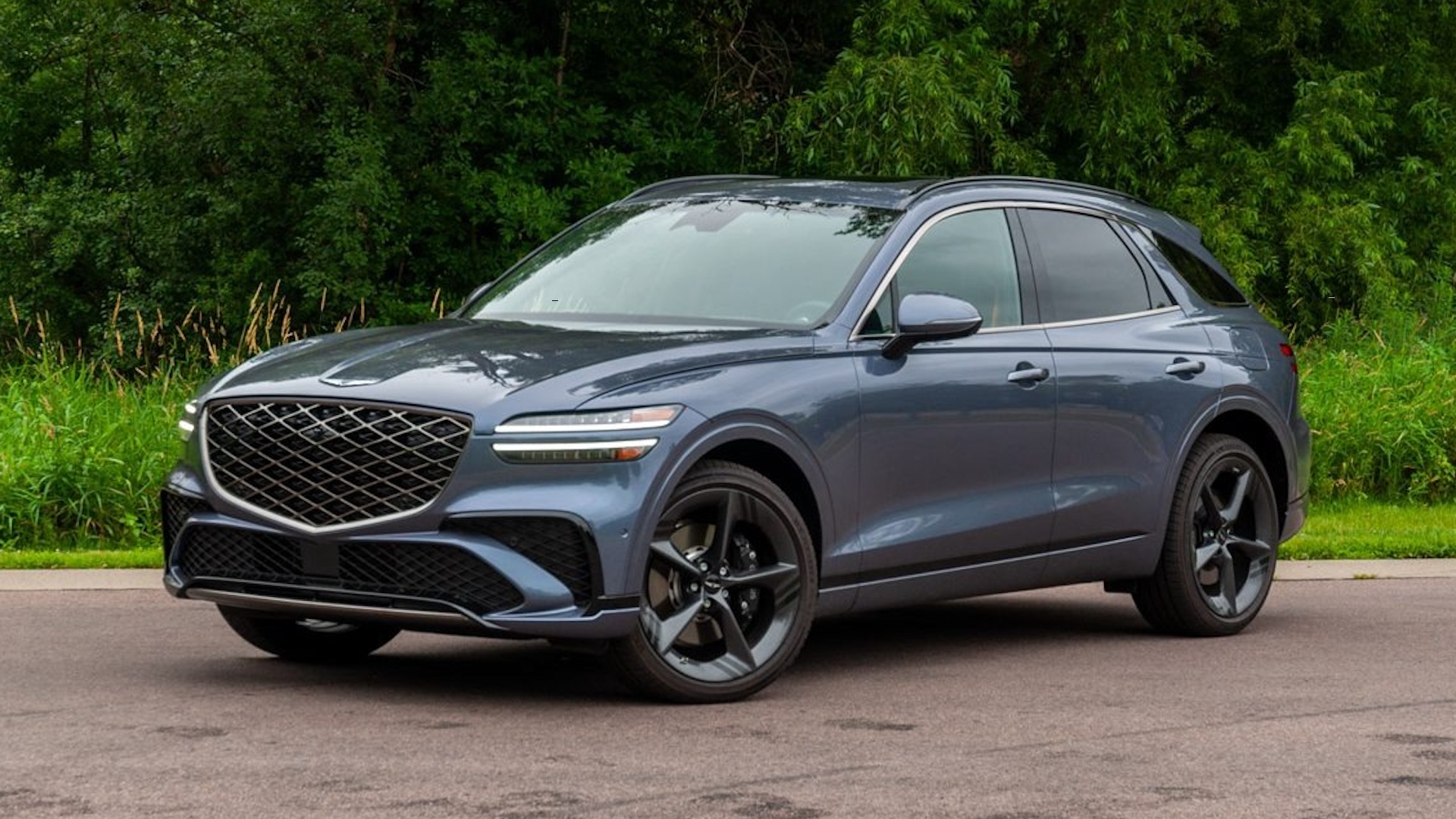
2025 Porsche Boxster vs 2025 BMW M2

2025 Porsche Boxster vs 2025 BMW M2 is one of the most compelling matchups in the modern sports car landscape, pitting a legendary mid-engine convertible against a turbocharged coupe that punches well above its weight. Both vehicles occupy the premium performance segment, yet they cater to fundamentally different driving philosophies. The Porsche 718 Boxster delivers the purity of a mid-engine roadster with the wind in your hair, while the BMW M2 offers brute-force straight-six power in a practical, everyday package. If you are cross-shopping these two icons in 2026, this buyer guide will break down every specification, feature, price point, and real-world ownership consideration to help you make the right decision.
Table of Contents
- Introduction: Two Icons, One Decision
- Pricing and Value Proposition
- Engine and Performance Comparison
- Handling, Chassis, and Driving Dynamics
- Transmission Options: Manual vs Automatic
- Interior Quality, Technology, and Cabin Experience
- Practicality: Space, Cargo, and Daily Usability
- Fuel Economy and Running Costs
- Safety Features and Ratings
- Reliability, Warranty, and Ownership Costs
- Which One Should You Buy? A Scenario-Based Guide
- Final Verdict
1. Introduction: Two Icons, One Decision
The 2025 Porsche Boxster vs 2025 BMW M2 debate is not just about numbers on a spec sheet. It is about identity. The Porsche 718 Boxster traces its lineage back to the original Boxster of 1996, a car that saved Porsche during its darkest financial hour. Today, the 718 generation represents the culmination of decades of mid-engine refinement. It is a car built for drivers who value balance, precision, and the sensory experience of open-air motoring.
On the other side of the garage sits the BMW M2, the spiritual successor to the legendary 1M Coupe. The G87-generation M2, introduced for the 2023 model year, received significant updates for 2025, including a 20-horsepower bump and the latest iDrive 8.5 software. It is BMW’s entry-level M car, but do not let that label fool you. With 473 horsepower on tap and a chassis derived from the larger M3 and M4, the M2 is a genuine performance weapon that rivals cars costing twice as much.
Both cars are rear-wheel drive. Both offer manual transmissions. Both are two-door performance machines that prioritize the driver above all else. Yet they could not be more different in execution. This guide will explore every dimension of this comparison so you can determine which machine deserves your garage space.
2. Pricing and Value Proposition
Price is often the first filter in any car-buying decision, and the gap between these two vehicles is significant. Understanding what you get for your money is essential.
2025 Porsche 718 Boxster Pricing
The 2025 Porsche 718 Boxster starts at $76,895 for the base model, which features a 2.0-liter turbocharged flat-four producing 300 horsepower. The range climbs through several trims: the Style Edition at $83,295, the S at $88,895, and the GTS 4.0 at $103,795. At the very top sits the 718 Spyder RS, a near-$165,000 collector’s piece with 493 horsepower from a 4.0-liter naturally aspirated flat-six.
It is important to note that Porsche’s options list is famously extensive. A base Boxster can easily balloon past $90,000 with desirable add-ons like the Sport Chrono Package, Porsche Active Suspension Management (PASM), premium audio, and upgraded wheels. The GTS 4.0, while expensive, is widely considered the sweet spot of the lineup, offering the glorious naturally aspirated six-cylinder engine that enthusiasts crave.
2025 BMW M2 Pricing
The 2025 BMW M2 starts at $69,375, including destination, making it roughly $7,500 less expensive than the base Boxster. For that price, you receive a 3.0-liter twin-turbo inline-six producing 473 horsepower and 406 lb-ft of torque (with the manual transmission). The automatic variant produces 443 lb-ft of torque.
Even a well-optioned M2 typically lands in the low-$80,000 range, which is still below the starting price of a Boxster S. The M2’s value proposition is undeniable: you get supercar-rivaling acceleration, a usable back seat, a large trunk, and a fixed roof for less money than the entry-level Porsche convertible. For buyers who prioritize raw performance per dollar, the M2 is difficult to beat.
Value Verdict
If your budget is tight and you want maximum horsepower for minimum spend, the BMW M2 wins decisively. However, the Porsche Boxster offers something the M2 cannot: a mid-engine chassis, a convertible top, and the cachet of the Porsche badge. Whether that is worth the premium depends entirely on your priorities.
3. Engine and Performance Comparison
The engine is the heart of any sports car, and these two machines could not be more different under the hood.
Porsche 718 Boxster Powertrains
The 2025 Porsche 718 Boxster offers a range of engines, each with a distinct character:
- Base / Style Edition: 2.0-liter turbocharged flat-four, 300 hp, 280 lb-ft, 0-60 mph in 4.7 seconds, top speed 171 mph
- Boxster S: 2.5-liter turbocharged flat-four, 350 hp, 309 lb-ft, 0-60 mph in 4.2 seconds, top speed 177 mph
- GTS 4.0: 4.0-liter naturally aspirated flat-six, 394 hp, 317 lb-ft, 0-60 mph in 3.8 seconds (with Sport Chrono), top speed 179-182 mph
- Spyder RS: 4.0-liter naturally aspirated flat-six, 493 hp, 331 lb-ft, 0-60 mph in 3.2 seconds, top speed 191 mph
The base and S engines are turbocharged four-cylinders, which have drawn criticism from purists for lacking the soulful soundtrack of Porsche’s legendary flat-six. However, they are efficient, torque-rich, and provide excellent real-world performance. The GTS 4.0’s naturally aspirated 4.0-liter six-cylinder is the enthusiast’s choice, revving to 7,800 rpm with a mechanical symphony that no turbocharged engine can replicate.
BMW M2 Powertrain
The 2025 BMW M2 uses a single powertrain across all trims: a 3.0-liter twin-turbo inline-six (S58) producing 473 horsepower at 6,250 rpm and 406 lb-ft of torque at 2,650 rpm (manual) or 443 lb-ft (automatic). This is the same basic engine found in the M3 and M4, detuned slightly for the smaller M2.
Performance figures are impressive regardless of transmission:
- 0-60 mph: 4.1 seconds (manual), 3.9 seconds (automatic)
- Quarter mile: 12.1 seconds at 120 mph
- Top speed: 155 mph (standard), 177 mph (with M Driver’s Package)
The S58 engine is a masterpiece of modern turbocharging. It delivers massive mid-range torque, a linear power band, and a soundtrack that, while synthesized through the speakers, is genuinely thrilling at wide-open throttle. The manual transmission variant produces slightly less torque (406 vs. 443 lb-ft) but revs higher before dropping off, making it the choice for purists.
Performance Verdict
In a straight line, the BMW M2 demolishes the base and S variants of the Boxster. Only the GTS 4.0 and Spyder RS can compete with the M2’s acceleration, and both cost significantly more. However, performance is about more than 0-60 times. The Boxster’s naturally aspirated engines offer a connection to the machine that turbocharged powertrains struggle to match. If you value revs, sound, and linear throttle response, the GTS 4.0 is worth every penny. If you want brute force and everyday usability, the M2’s S58 is unbeatable.
4. Handling, Chassis, and Driving Dynamics
This is where the 2025 Porsche Boxster vs 2025 BMW M2 comparison becomes truly fascinating. Both cars are rear-wheel drive, and both prioritize driver engagement, but their architectures tell very different stories.
Porsche 718 Boxster: Mid-Engine Mastery
The Boxster’s defining characteristic is its mid-engine layout. With the engine mounted behind the driver and ahead of the rear axle, the Boxster achieves a near-perfect weight distribution. This results in:
- Exceptional balance through corners
- Remarkable steering feel and precision
- Controllable, predictable limit behavior
- A lower center of gravity, thanks to the flat engine design
The Boxster’s curb weight ranges from approximately 3,097 lbs (base) to around 3,200 lbs (GTS 4.0), making it significantly lighter than the M2. This lightness translates to agility. The Boxster changes direction with an immediacy that heavier cars cannot replicate. The optional Porsche Active Suspension Management (PASM) lowers the ride height by 10mm and adds adaptive damping, further sharpening the responses.
On a winding road or racetrack, the Boxster is in its element. The steering is hydraulic (on base models) or electromechanical with exceptional feedback. The chassis communicates exactly what the tires are doing, allowing the driver to place the car with millimeter precision. It is a car that rewards skill and punishes ham-fisted inputs, which is exactly what a proper sports car should do.
BMW M2: Front-Engine, Rear-Drive Muscle

The BMW M2 is a front-engine, rear-wheel-drive coupe with a strut front and multi-link rear suspension. It shares its fundamental architecture with the M3 and M4, meaning it benefits from BMW’s decades of motorsport expertise. However, the M2 is heavy. At 3,755 lbs (manual) to 3,814 lbs (automatic), it carries roughly 700 more pounds than a base Boxster.
Despite the weight, the M2 handles remarkably well. Car and Driver recorded 1.00 g on the 300-foot skidpad, a figure that would embarrass many dedicated sports cars. The M2’s adaptive M suspension and electronically controlled limited-slip differential help manage the mass, and the car’s wider track (74.3 inches vs. the Boxster’s 70.9 inches) provides tremendous stability.
Where the M2 differs from the Boxster is in its character. The M2 is a muscle car in a compact package. It wants to power out of corners, to slide its tail, to reward aggressive throttle inputs. The steering, while accurate, lacks the Boxster’s intimate feedback. The M2 is more about grip and grunt than finesse and flow.
Handling Verdict
For pure driving purity, the Porsche Boxster wins. Its mid-engine layout, lower weight, and superior steering feel make it the more rewarding car on a challenging road. The M2, however, is no slouch. It offers tremendous grip, explosive corner exits, and a playful, tail-happy attitude that many drivers find more entertaining. If you prefer surgical precision, choose the Boxster. If you prefer muscular aggression, choose the M2.
5. Transmission Options: Manual vs Automatic
In an era of dual-clutch automatics and lightning-fast paddle shifters, both Porsche and BMW continue to offer manual transmissions. This is worth celebrating.
Porsche 718 Boxster Transmissions
For 2025, Porsche made a significant change: the 7-speed PDK dual-clutch automatic is now standard across the lineup, while the 6-speed manual is offered as a no-cost option. Crucially, choosing the manual also includes the Sport Chrono package, which adds launch control (on automatics) or automatic rev-matching (on manuals), plus active driveline mounts.
The PDK is widely regarded as one of the best automatic transmissions in the world. It shifts with rifle-bolt precision, never gets flustered, and actually improves fuel economy and acceleration times. However, the 6-speed manual in the Boxster is a gem: short throws, a mechanical feel, and perfectly spaced ratios. For enthusiasts, the manual is the obvious choice, especially since it now comes with Sport Chrono at no extra charge.
Note: The 718 Spyder RS is PDK-only, as Porsche deemed the high-revving engine too specialized for a manual gearbox.
BMW M2 Transmissions
The 2025 BMW M2 offers two transmissions: a 6-speed manual and an 8-speed automatic (ZF-sourced). Both are excellent, but they serve different purposes.
The manual M2 weighs 53 pounds less than the automatic and offers a direct, mechanical connection to the drivetrain. The clutch is heavy but manageable, and the shift action is precise if not quite as tactile as the Porsche’s. The manual is the choice for purists who want to row their own gears.
The 8-speed automatic, however, is the performance choice. It shifts faster than any human can, offers more torque (443 vs. 406 lb-ft), and drops the 0-60 time from 4.1 to 3.9 seconds. In real-world driving, the automatic feels significantly quicker thanks to its shorter ratios and abundant mid-range torque.
Transmission Verdict
Both cars offer excellent manual and automatic options. The Porsche PDK is the more sophisticated automatic, while the BMW 8-speed is the quicker real-world performer. For manuals, the Porsche’s 6-speed has a slight edge in tactility, but the BMW’s is more robust and better suited to the engine’s torque. You cannot go wrong with either choice, but if you want the ultimate in shift quality, the PDK is the benchmark.
6. Interior Quality, Technology, and Cabin Experience
The interior of a sports car should be a special place. It should make you feel like you are piloting something extraordinary, not just commuting to work. How do these two compare?
Porsche 718 Boxster Interior
The Boxster’s cabin is driver-focused in the truest sense. The ascending center console, the three-round instrument cluster with the tachometer front and center, and the high-quality materials all reinforce the sports car mission. Leather, Alcantara, and brushed aluminum are available, and the build quality is exceptional.
However, the Boxster’s technology is showing its age. The Porsche Communication Management (PCM) system features a 7-inch touchscreen that feels small by 2025 standards. Apple CarPlay is standard, but the interface is not as intuitive as BMW’s iDrive. The optional Burmester sound system ($4,700) is spectacular, while the standard Bose system ($990) is merely adequate.
Where the Boxster excels is in its ergonomics. The seats are supportive, the driving position is perfect, and every control falls readily to hand. It is a cockpit designed for driving, not for scrolling through apps.
BMW M2 Interior
The 2025 BMW M2 received the latest iDrive 8.5 software, displayed on a curved display that combines a 12.3-inch digital instrument cluster with a 14.9-inch infotainment touchscreen. The graphics are crisp, the responses are quick, and the system is packed with features.
However, iDrive 8.5 has drawn criticism for burying essential controls, like climate settings, within touchscreen menus. This can be frustrating while driving. The M2’s cabin materials are excellent, with leather, carbon fiber, and Alcantara available. The optional carbon bucket seats provide tremendous support but can be uncomfortable for larger drivers due to the protruding carbon fiber trim between the legs.
The M2’s Harman Kardon sound system is standard and sounds great. The rear seats, while cramped, are usable for short trips or children, giving the M2 a practicality advantage.
Interior Verdict
The BMW M2 wins on technology and screen real estate, but the Porsche Boxster wins on driving-focused ergonomics and material quality. If you value cutting-edge infotainment, the M2 is the better choice. If you want a cabin that feels like a proper sports car cockpit, the Boxster delivers.
7. Practicality: Space, Cargo, and Daily Usability
Sports cars are not bought for practicality, but some degree of everyday usability can make or break the ownership experience.
Porsche 718 Boxster Practicality
The Boxster is a strict two-seater. There is no back seat, no pretense of carrying more than one passenger. Cargo space is split between a front trunk (5.3 cubic feet) and a rear trunk (4.4 cubic feet), for a total of approximately 9.7 cubic feet. This is enough for a weekend getaway but not much more.
The convertible soft top can be operated at speeds up to 31 mph and takes about 10 seconds to raise or lower. It is well-insulated and does not significantly compromise refinement when up. The Boxster’s compact dimensions (172.4 inches long, 70.9 inches wide) make it easy to park and maneuver in tight spaces.
One practical consideration: the Boxster’s production is expected to end in October 2025. This makes the 2025 model year one of the last opportunities to buy a new 718 Boxster before the all-electric 718 successor arrives. For collectors and enthusiasts, this adds a layer of urgency.
BMW M2 Practicality
The M2 is a 2+2 coupe, meaning it has a usable back seat for children or very accommodating adults. The trunk offers 13.8 cubic feet of cargo space, significantly more than the Boxster’s combined capacity. The rear seats can also fold down to accommodate larger items.
The M2 is larger than the Boxster in every dimension: 180.3 inches long, 74.3 inches wide, and 55.2 inches tall. It feels like a bigger car on the road, which can be a positive or negative depending on your preferences. The fixed roof provides better security and insulation than a convertible, and the M2’s daily drivability is exceptional for a car with this level of performance.
Practicality Verdict
The BMW M2 is the clear winner for practicality. It offers more cargo space, a usable back seat, and a fixed roof that makes it a more sensible daily driver. The Boxster is a weekend toy, a special-occasion car. If you can only own one vehicle, the M2 is the more rational choice.
8. Fuel Economy and Running Costs
Performance comes at a cost, and fuel economy is part of that equation.
| Vehicle | City MPG | Highway MPG | Combined MPG |
|---|---|---|---|
| 2025 Porsche 718 Boxster (Base) | 21 | 27 | 23 |
| 2025 Porsche 718 Boxster S | 20 | 26 | 22 |
| 2025 Porsche 718 Boxster GTS 4.0 | 17 | 24 | 19 |
| 2025 BMW M2 (Manual) | 16 | 24 | 19 |
| 2025 BMW M2 (Automatic) | 16 | 23 | 19 |
The base Boxster is the most efficient of the bunch, thanks to its smaller 2.0-liter engine and lighter weight. The GTS 4.0 and the M2 are roughly equivalent in fuel consumption, with both returning around 19 mpg combined in real-world driving. Car and Driver observed 17 mpg during their yearlong M2 test, which is consistent with enthusiastic driving.
Insurance costs will be high for both vehicles, though the Porsche badge typically commands higher premiums. Maintenance costs at Porsche dealerships are also notoriously expensive, while BMW’s Service Inclusive package (approximately $1,600) covers routine maintenance for four years.
9. Safety Features and Ratings
Neither the 2025 Porsche 718 Boxster nor the 2025 BMW M2 has been specifically crash-tested by the NHTSA or IIHS. However, both vehicles come with a comprehensive suite of safety features.
Porsche 718 Boxster Safety
- Front and rear parking sensors (standard)
- Rearview camera (standard)
- Lane Change Assist (optional, $690)
- Adaptive Cruise Control (optional, $1,670)
- Porsche Stability Management (PSM) (standard)
- High-strength safety chassis (standard)
The Boxster’s safety cell is engineered to protect occupants in the event of a rollover, and the supplemental safety bars (available in various finishes) add structural rigidity.
BMW M2 Safety
- Back-up camera (standard)
- Blind Spot Monitoring (standard)
- Lane Departure Warning (standard)
- Front collision warning (standard)
- Post-collision safety system (standard)
- Stability control (standard)
- Adaptive Cruise Control (optional)
The regular BMW 2 Series (on which the M2 is based) received a four-out-of-five-star rating from Euro NCAP, with strong scores for adult and child occupant protection but a disappointing 64% rating for safety assist systems.
10. Reliability, Warranty, and Ownership Costs
Both Porsche and BMW offer a 4-year / 50,000-mile basic and powertrain warranty. Porsche adds a 12-year/unlimited-mile corrosion warranty, while BMW includes roadside assistance for the warranty period.
In terms of reliability, both brands have mixed reputations. Porsche engines are generally robust, but the turbocharged four-cylinders in the base and S Boxsters have had some reported issues with oil consumption and coolant leaks in earlier model years. The naturally aspirated 4.0-liter six-cylinder in the GTS 4.0 is considered more reliable and is derived from the proven 911 engine.
The BMW S58 engine in the M2 is a well-engineered powerplant with no widespread issues reported to date. However, BMW’s complex electronics and iDrive systems can be prone to glitches. BMW ranked eighth out of 31 manufacturers in the 2025 Driver Power survey for owner satisfaction.
Depreciation is a key consideration. Porsche Boxsters hold their value exceptionally well, often retaining 60-70% of their original price after three years. The M2 also depreciates more slowly than average, but not at Porsche levels. If you plan to sell or trade in within a few years, the Boxster is the safer financial bet.
11. Which One Should You Buy? A Scenario-Based Guide
Still undecided? Here are some common buyer profiles and our recommendations for each.
Scenario 1: The Weekend Warrior
You own a practical daily driver and want a second car for canyon runs and track days.
Recommendation: Porsche 718 Boxster GTS 4.0. The naturally aspirated flat-six, mid-engine balance, and open-air experience make this the ultimate weekend toy. It is a car that will make you smile every time you turn the key.
Scenario 2: The One-Car Owner
You can only own one vehicle and need it to handle commuting, road trips, and occasional backroad blasts.
Recommendation: BMW M2. The back seat, large trunk, fixed roof, and brutal acceleration make it the more versatile choice. It is a sports car you can live with every day.
Scenario 3: The Budget-Conscious Enthusiast
You want maximum performance for minimum spend.
Recommendation: BMW M2. At $69,375, it undercuts the base Boxster by over $7,000 while offering 173 more horsepower. The value proposition is undeniable.
Scenario 4: The Collector
You are buying a car to hold onto for the long term, with an eye on future appreciation.
Recommendation: Porsche 718 Boxster GTS 4.0 or Spyder RS. With production ending in October 2025, these final internal-combustion Boxsters will likely become sought-after classics. The naturally aspirated engines and manual transmissions are the ones collectors will covet.
Scenario 5: The Track Rat
You plan to spend significant time at the racetrack.
Recommendation: Tie. The Boxster’s mid-engine balance and lower weight make it more rewarding on a technical track. The M2’s power and grip make it faster on straights and easier to drive at the limit. Both are capable, but the Boxster rewards precision while the M2 rewards aggression.
12. Final Verdict
The 2025 Porsche Boxster vs 2025 BMW M2 comparison does not have a single winner. It has two winners, each appealing to a different type of driver.
The Porsche 718 Boxster is the choice for purists. It offers a mid-engine chassis that is the envy of the industry, a range of engines from efficient to exhilarating, and a convertible top that transforms every drive into an event. It is lighter, more balanced, and more communicative than the M2. It is also more expensive, less practical, and about to be discontinued. If you want the last of the internal-combustion Boxsters, the clock is ticking.
The BMW M2 is the choice for realists. It offers supercar-rivaling acceleration, a usable interior, a large trunk, and a price tag that undercuts the Porsche by thousands. It is heavier and less delicate than the Boxster, but it is also more powerful, more practical, and easier to live with on a daily basis. For the money, nothing else offers this combination of performance and usability.
Ultimately, the decision comes down to a simple question: Do you want a car that makes every drive feel special, or do you want a car that makes every drive feel fast?
If you value balance, sound, and the purity of a mid-engine roadster, buy the Porsche 718 Boxster GTS 4.0. If you value power, practicality, and performance per dollar, buy the BMW M2. Either way, you will own one of the finest sports cars of this generation.
Frequently Asked Questions
Is the 2025 BMW M2 faster than the 2025 Porsche Boxster?
Yes, the BMW M2 is faster in a straight line than the base and S variants of the Porsche Boxster. The M2’s 0-60 time of 3.9 seconds (automatic) beats the Boxster base (4.7 seconds) and Boxster S (4.2 seconds). Only the Boxster GTS 4.0 (3.8 seconds) and Spyder RS (3.2 seconds) can match or beat the M2, and both cost significantly more.
Which is better for daily driving, the Boxster or the M2?
The BMW M2 is better for daily driving due to its larger trunk (13.8 cu-ft vs. 9.7 cu-ft), usable back seat, fixed roof, and more modern infotainment system. The Boxster is a strict two-seater convertible with limited cargo space, making it more of a weekend toy.
Does the 2025 Porsche Boxster come with a manual transmission?
Yes, the 2025 Porsche 718 Boxster offers a 6-speed manual transmission as a no-cost option on all trims except the Spyder RS. Choosing the manual also includes the Sport Chrono package. The 7-speed PDK dual-clutch automatic is standard.
How much does a fully loaded 2025 BMW M2 cost?
A well-optioned 2025 BMW M2 typically costs between $80,000 and $85,000. The base price is $69,375, and popular options include the M Driver’s Package, carbon bucket seats, upgraded wheels, and premium paint colors.
Is the Porsche 718 Boxster being discontinued?
Yes, production of the internal-combustion 718 Boxster and Cayman is expected to end in October 2025. An all-electric successor is planned. The 2025 model year represents one of the last opportunities to buy a new gasoline-powered Boxster.
Which car holds its value better, the Boxster or the M2?
The Porsche 718 Boxster typically holds its value better than the BMW M2. Porsche sports cars have strong resale values, often retaining 60-70% of their original price after three years. The M2 depreciates more slowly than average but not at Porsche levels.