2026 Honda Accord vs 2025 Subaru Legacy
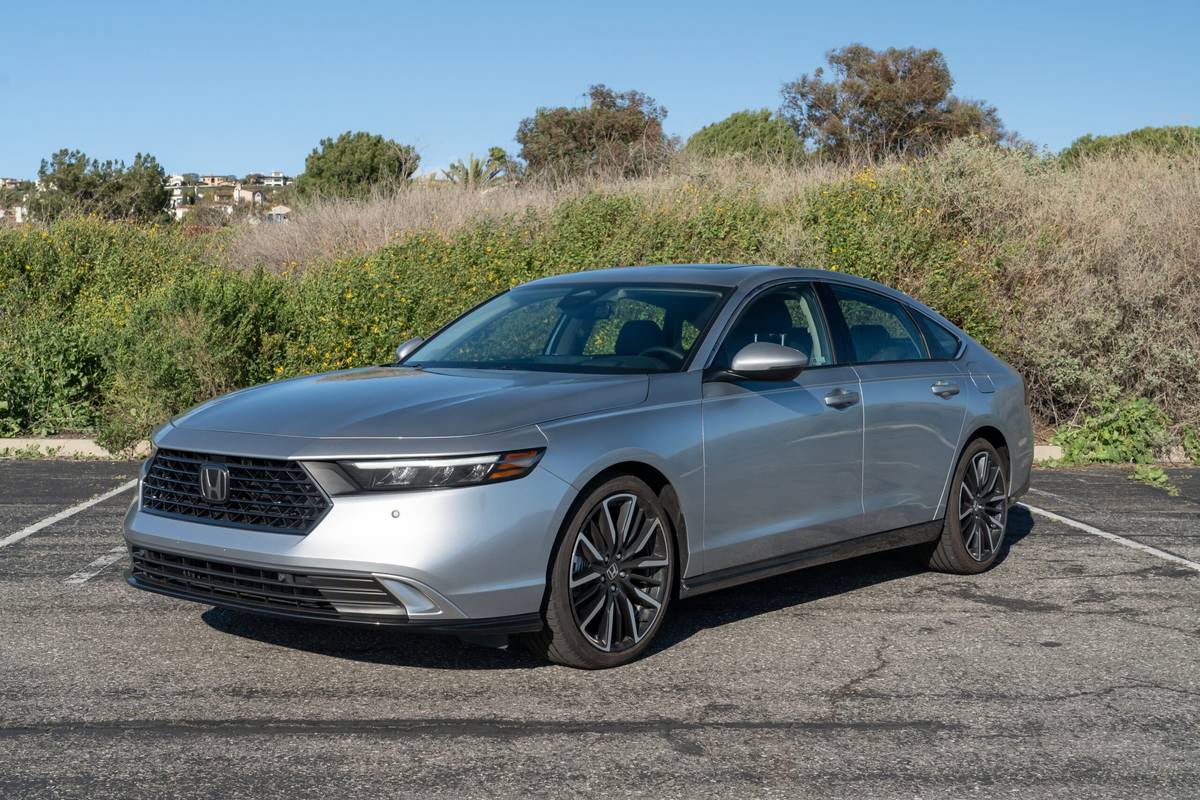
The 2026 Honda Accord vs 2025 Subaru Legacy is one of the most debated matchups in the midsize sedan segment as the 2026 model year arrives. If you are shopping for a new family sedan and torn between these two popular options, this comprehensive buyer guide breaks down every critical detail—from pricing and performance to safety, technology, and real-world value—so you can make the most informed decision possible.
Why Compare the 2026 Honda Accord and 2025 Subaru Legacy?
The midsize sedan market remains fiercely competitive even as SUVs dominate American driveways. The 2026 Honda Accord represents a refreshed iteration of Honda’s legendary 11th-generation platform, while the 2025 Subaru Legacy marks the final production year for Subaru’s long-running sedan. With Subaru officially discontinuing the Legacy after the 2025 model year, buyers face a unique decision: invest in Honda’s latest tech-forward refresh or grab one of the last new Subaru Legacy sedans while they remain available.
Both vehicles appeal to practical buyers who prioritize reliability, safety, and efficiency over flash. However, they approach the segment from fundamentally different philosophies. Honda doubles down on front-wheel-drive efficiency, hybrid electrification, and cutting-edge infotainment. Subaru, meanwhile, leverages its signature Symmetrical All-Wheel Drive and horizontally opposed BOXER engines to deliver confident handling in adverse weather conditions. Understanding these philosophical differences is essential before stepping onto a dealership lot.
Quick Overview: At-a-Glance Comparison
| Specification | 2026 Honda Accord | 2025 Subaru Legacy |
|---|---|---|
| Starting MSRP | $28,395 (LX) / $29,590 (with destination) | $27,980 (Base) |
| Engine (Base) | 1.5L turbocharged inline-4 | 2.5L naturally aspirated BOXER-4 |
| Horsepower (Base) | 192 hp | 182 hp |
| Torque (Base) | 192 lb-ft | 176 lb-ft |
| Transmission | CVT (front-wheel drive) | CVT (all-wheel drive standard) |
| Fuel Economy (Base) | 29 city / 37 highway / 32 combined | 27 city / 35 highway / 30 combined |
| Rear Legroom | 40.8 inches | 39.5 inches |
| Trunk Capacity | 16.7 cubic feet | 15.1 cubic feet |
| Infotainment (Base) | 9.0-inch touchscreen | Dual 7.0-inch displays |
| Availability | Newly refreshed, arriving at dealers | Final model year, limited remaining inventory |
Pricing and Trim Levels: What You Actually Pay
Pricing often serves as the primary filter for sedan shoppers, and both the 2026 Honda Accord and 2025 Subaru Legacy occupy similar territory. However, their trim strategies and value propositions differ significantly.
2026 Honda Accord Pricing
Honda structures the 2026 Accord into two distinct powertrain families. The turbocharged gasoline models include the LX and SE trims, while the hybrid-electric lineup expands to Sport, EX-L, Sport-L, and Touring variants. The well-equipped Accord LX carries a manufacturer’s suggested retail price of $28,395 (excluding the $1,195 destination charge), bringing the effective starting price to approximately $29,590. The Accord SE opens at $31,890, including destination, and adds 19-inch alloy wheels, blind-spot monitoring, and an upgraded eight-speaker audio system. Hybrid models command a roughly $3,000 premium, with the Accord Sport Hybrid starting at $33,795 (plus destination) and delivering up to 48 mpg combined.
2025 Subaru Legacy Pricing
The 2025 Subaru Legacy starts at $27,980 for the base trim, making it marginally less expensive than the Accord’s entry point. However, Subaru’s trim walk climbs quickly through Premium, Limited, and Touring XT levels. The range-topping Touring XT, which features the 260-horsepower turbocharged engine, leather upholstery, and a 12-speaker Harman/Kardon audio system, approaches $37,000 when equipped. Because Subaru announced the Legacy’s discontinuation after the 2025 model year, dealers may offer incentives on remaining inventory, potentially narrowing the price gap or even undercutting the Accord, depending on local market conditions.
Performance and Powertrain: How They Drive
Performance expectations for a midsize sedan typically center on adequate acceleration, smooth highway cruising, and predictable handling. Both vehicles deliver on these basics, but their mechanical personalities diverge sharply.
2026 Honda Accord Engine and Transmission
Every gasoline-powered 2026 Honda Accord utilizes a 1.5-liter turbocharged inline-4 producing 192 horsepower and 192 lb-ft of torque. A continuously variable transmission (CVT) routes power exclusively to the front wheels. This powertrain prioritizes efficiency and refinement over excitement. In independent testing, the Accord’s acceleration proves adequate for merging and passing, though it lacks the urgency of the Subaru’s optional turbocharged engine. Honda’s CVT mimics stepped gear ratios under hard acceleration to reduce the elastic sensation common to continuously variable units, resulting in a more natural driving feel.
For buyers seeking stronger performance without sacrificing efficiency, the Accord Hybrid pairs a 2.0-liter Atkinson-cycle engine with dual electric motors to generate a combined 204 horsepower. The hybrid system delivers superior low-end torque and smoother power delivery than the gasoline model, making it the preferred choice for urban commuters.
2025 Subaru Legacy Engine and Transmission
The 2025 Subaru Legacy offers two distinct BOXER engines. The standard 2.5-liter naturally aspirated flat-4 produces 182 horsepower and 176 lb-ft of torque. Like the Accord, it pairs with a CVT and delivers sufficient but uninspiring acceleration. Independent testing recorded a 0-60 mph time of 8.0 seconds for this powertrain, which lags behind the Accord’s slightly quicker sprint.
Where the Legacy distinguishes itself is the available 2.4-liter turbocharged BOXER-4 found in Sport and Touring XT trims. This engine generates a robust 260 horsepower and 277 lb-ft of torque, dropping the 0-60 mph time to approximately 6.1 seconds. The turbocharged Legacy delivers genuine passing power and highway confidence that the base Accord cannot match. However, this performance comes with a significant fuel economy penalty and a higher purchase price.
Crucially, every Legacy includes Symmetrical All-Wheel Drive as standard equipment. This mechanical advantage provides superior traction on wet, snowy, or gravel surfaces compared to the Accord’s front-wheel-drive layout. For buyers in northern climates or mountainous regions, the Legacy’s all-weather capability represents a compelling functional advantage.
Fuel Economy: Real-World Efficiency Compared
Fuel economy remains a decisive factor for sedan buyers, particularly with fluctuating gas prices. The 2026 Honda Accord and 2025 Subaru Legacy both offer competitive efficiency, but Honda holds a clear advantage in base-model comparisons.
2026 Honda Accord MPG Ratings
The EPA rates the 2026 Accord LX at 29 mpg city, 37 mpg highway, and 32 mpg combined. The SE trim’s larger 19-inch wheels reduce each figure by 1 mpg. These numbers position the gasoline Accord near the top of the non-hybrid midsize sedan class. The Accord Hybrid dramatically extends this advantage, achieving up to 48 mpg combined depending on trim level. For commuters covering significant daily mileage, the hybrid’s fuel savings can offset its higher purchase price within a few years.
2025 Subaru Legacy MPG Ratings
Despite standard all-wheel drive, the 2025 Legacy delivers respectable efficiency. The base 2.5-liter engine achieves 27 mpg city, 35 mpg highway, and 30 mpg combined. The turbocharged 2.4-liter engine drops these figures to 24 mpg city, 32 mpg highway, and 27 mpg combined. In real-world highway testing at a steady 75 mph, the non-turbo Legacy returned 34 mpg—just 1 mpg shy of the Accord turbo’s result. The turbocharged Legacy managed 31 mpg under identical conditions.
While the Legacy’s base engine trails the Accord by 2 mpg combined, the gap narrows significantly when accounting for the Subaru’s all-wheel-drive capability. No front-wheel-drive Accord can match the Legacy’s traction in adverse weather, making the slight efficiency penalty a worthwhile trade-off for many buyers in snow-belt states.
Interior Space, Comfort, and Cargo Capacity
Family sedans must accommodate passengers and cargo without compromise. Both the 2026 Honda Accord and 2025 Subaru Legacy provide spacious cabins, but Honda’s packaging efficiency yields measurable advantages.
Passenger Room
The 2026 Accord stretches 195.7 inches in length, creating exceptional interior volume. Rear legroom measures a class-leading 40.8 inches, allowing tall adults to sit comfortably behind equally tall front occupants. The Accord’s rear seat also features a flat floor, improving middle-seat comfort.
The 2025 Legacy, measuring 190.6 inches overall, offers 39.5 inches of rear legroom. While slightly less accommodating than the Accord, the Legacy still qualifies as roomy by midsize sedan standards. Both vehicles seat five passengers, though the Legacy’s cabin design feels more upright and utilitarian compared to the Accord’s sleek, low-profile interior architecture.
Trunk and Cargo Space
Honda’s packaging advantage extends to cargo capacity. The Accord provides 16.7 cubic feet of trunk space, among the largest in the segment. The Legacy offers 15.1 cubic feet, tying the Toyota Camry but falling short of the Accord and Kia K5. In practical testing, the Legacy’s trunk held eight carry-on suitcases—one more than the Accord’s seven—suggesting that real-world utility may vary depending on cargo shape. Both sedans feature 60/40 split-folding rear seats to accommodate longer items.
Technology and Infotainment: Screens, Connectivity, and Features
Modern buyers expect seamless smartphone integration, intuitive interfaces, and generous standard technology. The 2026 Honda Accord receives significant upgrades in this area, while the 2025 Subaru Legacy carries over familiar but aging hardware.
2026 Honda Accord Technology
For 2026, Honda equips every Accord with a larger 9.0-inch color touchscreen, replacing the previous 8.0-inch base display. More importantly, wireless Apple CarPlay and Android Auto are now standard across all trims, eliminating cable clutter. A wireless phone charger also joins the standard equipment list. The LX includes four speakers and four USB ports, while the SE upgrades to an eight-speaker audio system. Higher hybrid trims offer premium audio and additional charging ports.
Wi-Fi capability is standard, and the Accord’s interface prioritizes responsive touch inputs and logical menu structures. The system lacks the physical volume knobs that some enthusiasts prefer, but the overall user experience represents a meaningful improvement over the 2025 model.
2025 Subaru Legacy Technology

The 2025 Legacy employs a tiered infotainment strategy. Base models utilize dual 7.0-inch displays that feel dated compared to the Accord’s single large screen. The Premium trim and above upgrade to Subaru’s 11.6-inch vertically oriented touchscreen, which resembles Volvo’s tablet-style interface. While visually impressive, this screen has a learning curve and can frustrate users seeking quick adjustments while driving.
Apple CarPlay and Android Auto are standard, though wireless connectivity is not universally available across all trims. The base audio system uses four speakers, while Premium models get six speakers. Limited and Touring XT trims feature a 12-speaker Harman/Kardon premium audio system that outperforms the Accord’s standard offerings. In-dash navigation is standard only on Limited and Touring XT, whereas it remains optional on lower trims.
Safety Features and Crash Test Ratings
Safety technology has become a non-negotiable priority for family sedan buyers. Both Honda and Subaru equip their sedans with comprehensive driver-assistance suites, though Honda’s 2026 refresh adds several previously optional features to the standard list.
2026 Honda Accord Safety
Every 2026 Accord includes the Honda Sensing suite as standard equipment. This comprehensive package encompasses adaptive cruise control with low-speed follow, lane-keeping assist, road departure mitigation, traffic sign recognition, traffic jam assist, automatic high beams, and automatic emergency braking with pedestrian detection. The SE trim adds blind-spot monitoring with rear cross-traffic alert. Honda’s Advanced Compatibility Engineering (ACE) body structure and advanced front airbags—featuring a donut-shaped driver’s airbag and three-chamber passenger airbag—target brain trauma reduction in angled collisions. Rear seat reminder and rear seatbelt reminder are also standard across the lineup.
2025 Subaru Legacy Safety
The 2025 Legacy comes standard with EyeSight Driver Assist Technology, Subaru’s suite of camera-based safety systems. EyeSight includes adaptive cruise control, lane-keeping assist, pre-collision braking, and lane departure warning. The Limited trim adds a DriverFocus Distraction Mitigation System that monitors driver attention and issues alerts when it detects drowsiness or distraction. The Legacy has earned top overall safety scores from government testing agencies, reinforcing its reputation as a secure family vehicle.
Both vehicles offer comparable levels of active safety protection, but Honda’s inclusion of blind-spot monitoring on the mid-grade SE (rather than reserving it for top trims) gives the Accord a slight accessibility advantage.
Reliability, Warranty, and Ownership Costs
Long-term ownership costs often determine whether a sedan purchase proves wise or regrettable. Both Honda and Subaru enjoy strong reliability reputations, but their warranty coverage and maintenance requirements differ.
Reliability Expectations
The Honda Accord consistently ranks among the most reliable vehicles in its class. The 11th-generation platform, introduced for the 2023 model year, has demonstrated few significant mechanical issues. The 1.5-liter turbocharged engine and CVT transmission are proven units shared across the Honda lineup. The Accord Hybrid’s complex powertrain adds additional components but carries a strong track record in prior hybrid applications.
The Subaru Legacy similarly benefits from Subaru’s reputation for durability, particularly its all-wheel-drive systems and BOXER engines. However, because the 2025 model represents the final production year, long-term parts availability and resale value trajectory remain uncertain. Historically, discontinued sedans experience steeper depreciation than continuously produced rivals, a factor that potential Legacy buyers should weigh carefully.
Warranty Coverage
Both manufacturers provide comparable warranty protection:
- Honda Accord: 3-year/36,000-mile basic warranty; 5-year/60,000-mile powertrain warranty
- Subaru Legacy: 3-year/36,000-mile basic warranty; 5-year/60,000-mile powertrain warranty
Neither brand includes complimentary maintenance in their standard warranty packages, though dealers may offer promotional service plans at purchase.
Design and Styling: Exterior and Interior Aesthetics
Visual appeal influences purchasing decisions more than many buyers admit. The 2026 Honda Accord and 2025 Subaru Legacy adopt markedly different aesthetic approaches.
2026 Honda Accord Design
The 2026 Accord carries forward the 11th-generation’s fastback-inspired silhouette, which evokes a premium European sedan more than a traditional family four-door. The refreshed model adds black exterior accents on Sport Hybrid variants and new five-spoke 19-inch wheels on the SE trim. The overall effect is sleek, modern, and slightly athletic—an aesthetic that resonates with younger buyers and professionals seeking an understated executive presence.
2025 Subaru Legacy Design
The 2025 Legacy maintains a conservative, upright sedan profile that prioritizes function over fashion. Its design language is safe and inoffensive but lacks the visual drama of the Accord or the Hyundai Sonata. The Legacy’s restrained styling appeals to buyers who prefer anonymity and practicality over head-turning presence. Interior materials, while durable, do not convey the same level of refinement found in the Accord’s upper trims or the Mazda6 (now discontinued).
Driving Dynamics and Handling Characteristics
How a sedan behaves on winding roads and during emergency maneuvers matters as much as straight-line acceleration. Here, the two vehicles reveal their engineering priorities.
The 2026 Honda Accord delivers the segment’s benchmark for balanced handling. Its low center of gravity, precise steering calibration, and well-tuned suspension provide confidence-inspiring cornering ability without sacrificing ride comfort. The Accord feels more connected to the road than the Legacy, with quicker turn-in response and less body roll during aggressive transitions. Honda’s chassis tuning remains a class highlight, earning praise from automotive journalists for its near-luxury composure.
The 2025 Subaru Legacy prioritizes stability and all-weather security over athleticism. Its all-wheel-drive system and softer suspension tuning create a relaxed, isolated driving experience. While the Legacy handles competently, it lacks the Accord’s sharpness and feedback. The CVT transmission in both engines can exacerbate the sensation of lethargic response, particularly in the base 182-horsepower configuration. Buyers seeking driving enjoyment will prefer the Accord; those valuing a plush, stress-free commute will appreciate the Legacy’s relaxed demeanor.
Which Sedan Should You Buy? Decision Framework
Choosing between the 2026 Honda Accord and 2025 Subaru Legacy ultimately depends on your geographic location, driving conditions, and personal priorities.
Buy the 2026 Honda Accord If:
- You prioritize fuel efficiency and hybrid technology
- You want the most spacious rear seat and the largest trunk in the class
- You prefer front-wheel-drive dynamics and sharper handling
- You value the latest infotainment technology with wireless smartphone integration
- You want a vehicle with strong projected resale value and long-term parts availability
- You live in a mild climate where all-wheel drive is unnecessary
Buy the 2025 Subaru Legacy If:
- You require standard all-wheel drive for snow, rain, or gravel roads
- You want the optional 260-horsepower turbocharged engine for stronger acceleration
- You can secure dealer incentives on the final model year inventory
- You prefer a softer, more isolated ride quality
- You value Subaru’s safety reputation and EyeSight technology
- You are willing to accept potentially higher depreciation due to model discontinuation
Frequently Asked Questions (FAQ)
Is the 2025 Subaru Legacy being discontinued?
Yes. Subaru officially announced that the 2025 model year will be the final production year for the Legacy sedan in North America. No direct replacement sedan is planned, though the Subaru Outback wagon continues with similar mechanical underpinnings.
Does the 2026 Honda Accord offer all-wheel drive?
No. The 2026 Honda Accord remains exclusively front-wheel drive across all gasoline and hybrid trims. Buyers requiring all-wheel drive must consider the Subaru Legacy, Toyota Camry (AWD available on select trims), or Kia K5.
Which sedan has better resale value?
The Honda Accord historically retains value better than the Subaru Legacy due to stronger brand demand and continuous production. The Legacy’s discontinuation may accelerate depreciation for the 2025 model year, making the Accord the safer long-term financial choice.
Is the Accord Hybrid worth the extra cost?
For buyers driving 15,000 miles annually or more, the Accord Hybrid’s 48 mpg combined rating can recover its approximately $3,000 premium within three to four years, depending on local fuel prices. The hybrid also delivers superior acceleration and refinement compared to the gasoline model.
Can I still find a new 2025 Subaru Legacy?
As of mid-2026, the remaining 2025 Legacy inventory is limited to dealer stock. Subaru ceased production after the 2025 model year, so availability depends on your local dealership’s unsold units. Buyers interested in the Legacy should act quickly and negotiate aggressively on price.
Final Verdict: 2026 Honda Accord vs 2025 Subaru Legacy
The 2026 Honda Accord vs 2025 Subaru Legacy comparison ultimately favors the Accord for most buyers, but with important caveats. Honda’s refreshed sedan delivers superior fuel economy, more interior space, cutting-edge technology, sharper handling, and stronger long-term value prospects. The addition of standard wireless connectivity, a larger touchscreen, and hybrid efficiency make the 2026 Accord the rational choice for the majority of midsize sedan shoppers.
However, the 2025 Subaru Legacy retains a specific and compelling niche. Its standard all-wheel drive remains unmatched by the Accord, and the available 260-horsepower turbocharged engine provides performance that no gasoline Accord can equal. For buyers in harsh winter climates or those who simply prefer the security of all-wheel traction, the Legacy’s final model year represents a last opportunity to purchase a new Subaru sedan.
If you do not require all-wheel drive, the 2026 Honda Accord is the superior all-around vehicle. Its blend of efficiency, technology, space, and driving enjoyment defines the modern midsize sedan benchmark. If all-wheel drive is non-negotiable and you find an attractive deal on the remaining 2025 Legacy inventory, the Subaru remains a respectable alternative—just enter the purchase with realistic expectations about future resale value and parts availability.
Before making your final decision, test drive both vehicles at local dealerships. Specifications and reviews provide essential context, but seat time reveals the intangible qualities—seat comfort, road noise, visibility, and intuitive control placement—that determine daily driving satisfaction. Whether you choose the forward-looking Honda Accord or the capable farewell-edition Subaru Legacy, both sedans represent the enduring appeal of practical, well-engineered family transportation in an SUV-dominated marketplace.


