2025 Audi A4 vs 2026 BMW 2-Series Buyer’s Guide

2025 Audi A4 vs 2026 BMW 2-Series: When shopping for a compact luxury vehicle in 2026, two standout options dominate the conversation: the refined 2025 Audi A4 sedan and the athletic 2026 BMW 2-Series coupe. Both vehicles represent the pinnacle of German engineering, yet they cater to distinctly different buyer profiles. This comprehensive buyer’s guide breaks down every critical detail—from performance specs and pricing to interior technology and long-term value—helping you make an informed decision between these two premium contenders.
Table of Contents
- Overview: Two Different Philosophies
- Pricing and Value Comparison
- Performance and Powertrain Options
- Fuel Economy and Efficiency
- Interior Design and Technology
- Safety Features and Ratings
- Dimensions and Practicality
- Driving Dynamics and Handling
- Reliability and Ownership Costs
- Final Verdict: Which One Should You Buy?
1. Two Different Philosophies
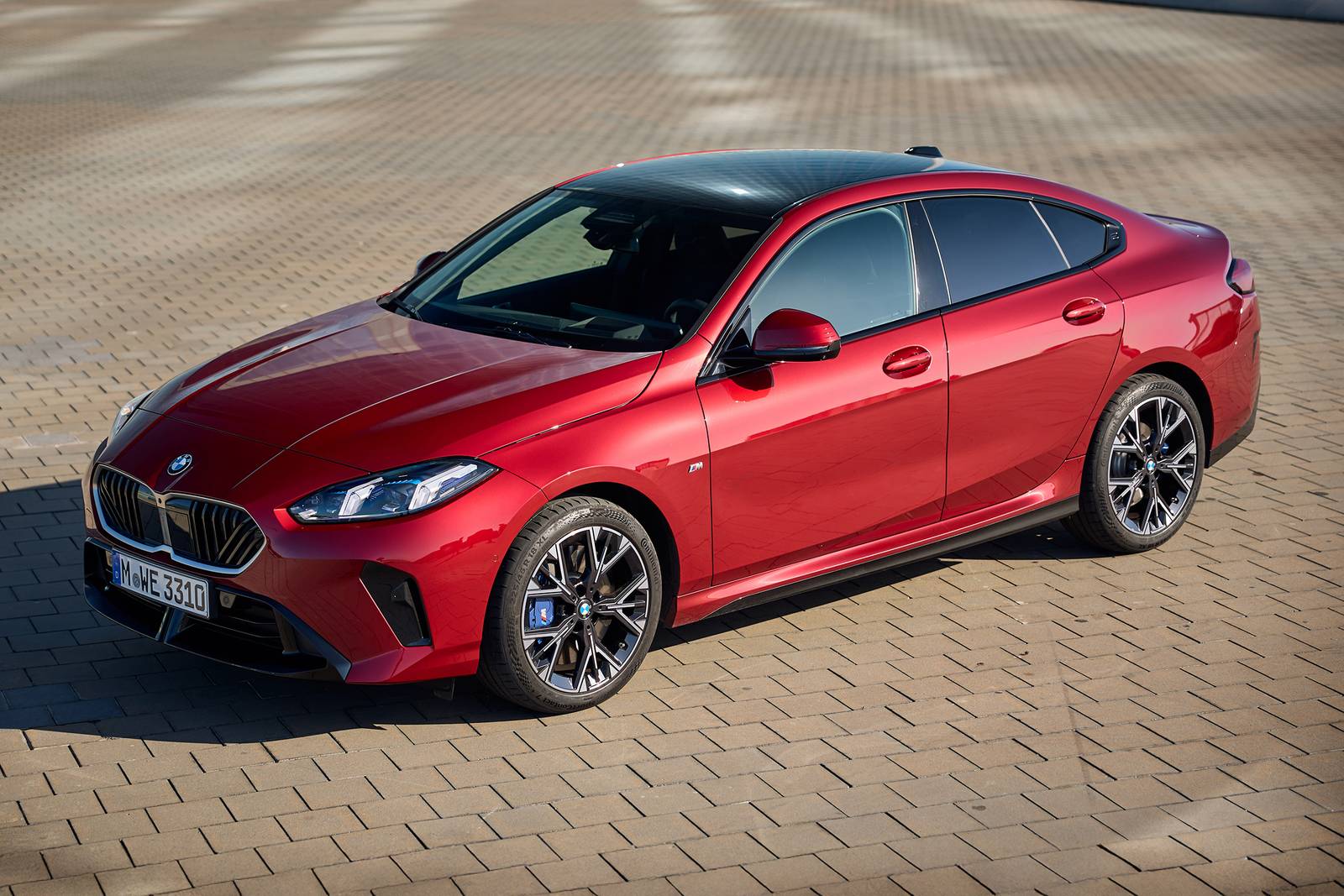
The 2025 Audi A4 and 2026 BMW 2-Series represent fundamentally different approaches to the entry-level luxury segment. The Audi A4 is a four-door sedan designed for buyers who prioritize all-weather capability, refined comfort, and everyday practicality. As Audi’s best-selling sedan, the A4 has earned a reputation for understated elegance and sophisticated technology. Meanwhile, the 2026 BMW 2-Series coupe is a two-door sports car that harkens back to BMW’s golden era of driver-focused machines. It is the brand’s smallest and lightest coupe, offering pure rear-wheel-drive dynamics (with optional all-wheel drive) in a compact, agile package.
Where the A4 appeals to professionals and families seeking a do-it-all luxury sedan, the 2-Series targets enthusiasts who value driving engagement above all else. The A4 seats five passengers comfortably, while the 2-Series accommodates four with a notably tighter rear seat. Body style is the most obvious differentiator—sedan versus coupe—, but the divergence runs much deeper into engineering philosophy, daily usability, and brand identity.
2. Pricing and Value Comparison
Understanding the price positioning of these two vehicles is essential for budget-conscious luxury buyers. The 2025 Audi A4 starts at $43,295 for the 40 TFSI Premium trim, with the more powerful 45 TFSI variants beginning around $45,395. The top-tier Prestige trim reaches approximately $53,840 when fully equipped. The 2026 BMW 2-Series coupe opens at $43,550 for the 230i, while the performance-oriented M240i commands $54,950. Adding xDrive all-wheel drive to the M240i pushes the price to $56,950.
| Model | Base Trim | Starting MSRP | Top Trim | Top Trim MSRP |
|---|---|---|---|---|
| 2025 Audi A4 | 40 TFSI Premium | $43,295 | 45 TFSI Prestige | $53,840 |
| 2026 BMW 2-Series | 230i Coupe | $43,550 | M240i xDrive | $56,950 |
From a value perspective, the Audi A4 offers more standard features for the money, including quattro all-wheel drive on most trims, a larger touchscreen, and a more spacious cabin. The BMW 2-Series, while similarly priced at entry level, requires stepping up to the M240i to unlock its full performance potential. However, BMW counters with three years or 36,000 miles of complimentary scheduled maintenance—a perk Audi does not offer. For buyers focused on total cost of ownership, this maintenance advantage can offset some of the BMW’s higher upfront costs.
3. Performance and Powertrain Options
Performance is where these two vehicles diverge most dramatically. The 2025 Audi A4 offers two versions of its turbocharged 2.0-liter inline-four engine. The 40 TFSI produces 201 horsepower and 236 lb-ft of torque, while the 45 TFSI generates 261 horsepower and 273 lb-ft of torque. Both engines pair with a seven-speed dual-clutch automatic transmission and feature a 48-volt mild-hybrid system for improved efficiency and smoother stop-start operation. All A4 models come standard with Audi’s legendary quattro all-wheel-drive system, providing superior traction in adverse weather conditions.
The 2026 BMW 2-Series offers a broader performance spectrum. The base 230i uses a 2.0-liter turbocharged inline-four producing 255 horsepower and 295 lb-ft of torque—more torque than the A4’s four-cylinder. The M240i upgrades to a 3.0-liter turbocharged inline-six delivering 382 horsepower and 369 lb-ft of torque, placing it in a completely different performance category. Both engines mate to an eight-speed automatic transmission. Rear-wheel drive is standard, with xDrive all-wheel drive available as a $2,000 option on either trim.
| Specification | Audi A4 45 TFSI | BMW 230i | BMW M240i |
|---|---|---|---|
| Engine | 2.0L turbo I-4 | 2.0L turbo I-4 | 3.0L turbo I-6 |
| Horsepower | 261 hp | 255 hp | 382 hp |
| Torque | 273 lb-ft | 295 lb-ft | 369 lb-ft |
| Transmission | 7-speed dual-clutch | 8-speed automatic | 8-speed automatic |
| Drivetrain | AWD (standard) | RWD (AWD optional) | RWD (AWD optional) |
| 0-60 mph | 5.2 seconds | 5.1 seconds | 3.6 seconds |
| Top Speed | 130 mph | 155 mph | 155 mph |
Acceleration figures tell a compelling story. The A4 45 TFSI reaches 60 mph in approximately 5.2 seconds, while the BMW 230i matches that at 5.1 seconds with rear-wheel drive. The M240i demolishes both, hitting 60 mph in just 3.6 seconds—faster than a Porsche Cayman S and nearly matching the full-blown BMW M2. For enthusiasts seeking maximum thrills, the M240i is the clear winner. For buyers content with brisk but not overwhelming acceleration, the A4 and 230i are evenly matched.
4. Fuel Economy and Efficiency
Fuel efficiency is a critical consideration for daily-driven luxury vehicles. The 2025 Audi A4 40 TFSI achieves an EPA-rated 29 mpg combined (26 city / 36 highway), making it one of the more efficient options in the compact luxury sedan segment. The more powerful 45 TFSI is rated at 26 mpg combined (23 city / 32 highway). All A4 models require premium unleaded fuel and feature a 15.3-gallon fuel tank, providing a highway range of approximately 490 miles.
The 2026 BMW 2-Series demonstrates impressive efficiency given its performance orientation. The rear-wheel-drive 230i returns 29 mpg combined (26 city / 35 highway), nearly matching the A4’s base engine. Adding xDrive all-wheel drive drops those figures to 25 city / 33 highway. The M240i, despite its significant power advantage, manages 26 mpg combined (23 city / 32 highway) with either drivetrain configuration. BMW’s eight-speed automatic transmission contributes to this efficiency, and in Car and Driver’s real-world 75-mph highway test, the 230i achieved an outstanding 38 mpg.
| Model | City MPG | Highway MPG | Combined MPG | Est. Highway Range |
|---|---|---|---|---|
| Audi A4 40 TFSI | 26 | 36 | 29 | 490 miles |
| Audi A4 45 TFSI | 23 | 32 | 26 | 489 miles |
| BMW 230i RWD | 26 | 35 | 29 | 411 miles |
| BMW 230i xDrive | 25 | 33 | 28 | 388 miles |
| BMW M240i | 23 | 32 | 26 | 356 miles |
While the A4 offers a longer highway range thanks to its larger fuel tank, the 2-Series is surprisingly efficient for a sports coupe. Buyers prioritizing maximum fuel economy should consider the A4 40 TFSI, while those wanting performance without a severe efficiency penalty will find the M240i remarkably balanced.
5. Interior Design and Technology
The interior experience defines the luxury car segment, and both manufacturers deliver compelling but different environments. The 2025 Audi A4 features one of the finest cabins in its class, with exceptional build quality, premium materials, and a driver-focused layout. Standard features include leather seating surfaces, dual-zone automatic climate control, a 10.1-inch MMI touchscreen with wireless Apple CarPlay and Android Auto, and a digital instrument cluster. Higher trims add the Audi virtual cockpit plus (12.3-inch digital display), Bang & Olufsen 3D sound system with 19 speakers, ambient LED lighting, and advanced navigation with Google Earth integration.
The 2026 BMW 2-Series takes a more minimalist approach. The cabin is well-built but less opulent, with synthetic leather upholstery standard and genuine leather available as an upgrade. The standout feature is BMW’s curved display—a single pane of glass housing a 12.3-inch digital instrument cluster and a 14.9-inch infotainment touchscreen running iDrive 8.5 software. This setup supports wireless Apple CarPlay, Android Auto, and voice commands. However, the 2-Series is notably light on physical controls, with climate functions integrated into the touchscreen—a design choice some critics find frustrating.
Practicality heavily favors the A4. The sedan offers 12.0 cubic feet of trunk space and seating for five adults with reasonable comfort. The 2-Series provides 14 cubic feet of trunk capacity—surprisingly generous for a coupe—, but its rear seat is cramped for adults, making it best suited for occasional use or children. The A4’s 40/20/40 split-folding rear seats and larger overall dimensions make it the clear choice for buyers who regularly transport passengers or cargo.
6. Safety Features and Ratings
Safety is paramount in the luxury segment, and both vehicles come well-equipped with advanced driver-assistance technology. The 2025 Audi A4 includes standard Audi pre sense city and pre sense basic, which can brace the vehicle for impact by closing windows, pretensioning seatbelts, and preparing the brake system. Additional standard features include adaptive cruise control with traffic jam assist, lane departure warning, automatic emergency braking, and front and rear parking sensors. The A4 has earned a 5-star overall safety rating from the IIHS with good ratings in most crash tests.
The 2026 BMW 2-Series includes standard automated emergency braking, blind-spot monitoring, lane-keeping assist, lane-departure warning, rain-sensing wipers, and front and rear parking sensors. Optional upgrades include adaptive cruise control, a surround-view camera system, a built-in dash cam, automatic high beams, and advanced parking assistance. As of early 2026, the 2-Series has not yet been fully evaluated by NHTSA or IIHS, though BMW’s strong safety engineering history suggests competitive performance.
Both vehicles offer comprehensive airbag systems, stability control, and advanced braking systems. The A4’s slightly more extensive standard safety suite and proven crash-test ratings give it a narrow edge for safety-conscious buyers, though the 2-Series is by no means deficient.
7. Dimensions and Practicality
Dimensional differences between these vehicles are substantial and directly impact daily usability. The 2025 Audi A4 measures 187.5 inches in length with a 111.0-inch wheelbase, providing a spacious interior and stable highway manners. It stands 56.2 inches tall and spans 72.7 inches wide. Curb weight ranges from 3,682 to 3,705 pounds, depending on trim. These dimensions place the A4 squarely in the compact luxury sedan category, offering ample rear legroom and headroom for adult passengers.
The 2026 BMW 2-Series is significantly more compact at 179.0 inches long with a 107.9-inch wheelbase. It is 54.8 inches tall and 72.4 inches wide. Curb weight ranges from 3,554 pounds for the 230i to 3,877 pounds for the M240i xDrive. The shorter wheelbase and overall length contribute to the 2-Series’ agile handling but reduce rear-seat legroom to levels that are uncomfortable for most adults on extended trips.
| Dimension | Audi A4 | BMW 2-Series |
|---|---|---|
| Length | 187.5 in | 179.0 in |
| Wheelbase | 111.0 in | 107.9 in |
| Width | 72.7 in | 72.4 in |
| Height | 56.2 in | 54.8 in |
| Curb Weight | 3,682-3,705 lbs | 3,554-3,877 lbs |
| Seating | 5 passengers | 4 passengers |
| Trunk Volume | 12.0 cu ft | 14.0 cu ft |
| Passenger Volume | 92 cu ft | 85-88 cu ft |
For single professionals or couples without children, the 2-Series’ compact dimensions and sporty proportions are appealing. For families, carpoolers, or anyone regularly transporting adults in the back seat, the A4’s superior interior volume is a decisive advantage.
8. Driving Dynamics and Handling
Driving dynamics represent the heart of this comparison. The 2025 Audi A4 delivers a balanced, refined driving experience that prioritizes comfort and stability. Its multilink front and rear suspension, combined with standard quattro all-wheel drive, provides exceptional grip and confidence in all weather conditions. The A4’s steering is precise if somewhat light, and the ride quality is supple enough for daily commuting while remaining composed during spirited driving. The 45 TFSI’s additional power better exploits the chassis, but even the base 40 TFSI offers satisfying performance for most drivers.
The 2026 BMW 2-Series is unapologetically focused on driving pleasure. Its rear-wheel-drive architecture (with optional xDrive) delivers classic BMW handling characteristics—sharp steering response, balanced weight distribution, and a willingness to rotate under throttle. The M240i, with its standard adaptive sport suspension, M Sport differential, and upgraded brakes, offers track-capable performance that rivals dedicated sports cars. In Car and Driver testing, the M240i achieved 0.94 g on the 300-foot skidpad and stopped from 70 mph in just 153 feet—figures that embarrass many more expensive vehicles.
The 230i, while less extreme, still offers engaging handling that the A4 cannot match. However, the 2-Series’ firm ride and limited steering feedback (a common criticism of modern BMWs) may disappoint buyers seeking a plush luxury experience. The A4’s all-wheel-drive security and composed demeanor make it the better choice for inclement weather and long highway cruises, while the 2-Series rewards enthusiastic drivers on twisty back roads.
9. Reliability and Ownership Costs
Long-term ownership costs are a critical factor in luxury vehicle purchases. Both Audi and BMW offer four-year/50,000-mile limited and powertrain warranties, which are competitive within the segment. However, BMW provides three years or 36,000 miles of complimentary scheduled maintenance—a significant value that Audi does not match. This maintenance plan covers oil changes, inspections, and routine service, reducing out-of-pocket expenses during the early ownership period.
Reliability data for these specific models is still emerging, but both brands have improved significantly in recent years. Audi’s 2.0-liter turbocharged engine is a proven powertrain with a strong track record, and the mild-hybrid system is designed for durability. BMW’s B48 four-cylinder and B58 six-cylinder engines are widely regarded as robust and well-engineered, with the B58 particularly praised for its performance and longevity.
Depreciation is a concern for all luxury vehicles. The Audi A4, as a higher-volume sedan, may experience slightly steeper depreciation than the more niche 2-Series coupe. However, the A4’s broader appeal could result in faster resale. Insurance costs will vary by location and driver profile, but the M240i’s higher performance potential may trigger higher premiums than the A4 or base 230i.
10. Final Verdict: Which One Should You Buy?
Choosing between the 2025 Audi A4 and 2026 BMW 2-Series ultimately depends on your priorities, lifestyle, and driving preferences. These vehicles are not direct competitors in the traditional sense—they serve different buyer profiles despite overlapping price points.
Buy the 2025 Audi A4 if you:
- Need a practical daily driver with all-weather capability
- Regularly transport passengers or require a spacious trunk
- Prefer a refined, comfortable ride over razor-sharp handling
- Value standard all-wheel drive and advanced safety features
- Want a luxury sedan with understated elegance and premium interior materials
- Prioritize fuel efficiency and long highway range
Buy the 2026 BMW 2-Series if you:
- Prioritize driving engagement and sporty handling
- Want a compact, agile coupe for weekend drives
- Are willing to sacrifice rear-seat space for performance
- Desire the option of a six-cylinder engine with near-M2 acceleration
- Appreciate BMW’s complimentary maintenance program
- Prefer rear-wheel-drive dynamics with optional all-wheel drive
For the majority of luxury buyers seeking a versatile, comfortable, and technologically advanced vehicle, the 2025 Audi A4 is the more rational choice. Its standard all-wheel drive, superior interior space, refined ride quality, and comprehensive safety features make it an exceptional all-rounder. The A4’s mild-hybrid powertrain delivers impressive efficiency without sacrificing the brisk acceleration expected in this segment.
For enthusiasts and driving purists, the 2026 BMW 2-Series—particularly the M240i—offers an experience the A4 cannot replicate. The inline-six engine’s soundtrack, rear-wheel-drive balance, and sub-four-second 0-60 mph acceleration deliver genuine sports car thrills in a relatively affordable package. The 2-Series is BMW’s truest sport sedan, a throwback to the brand’s driver-focused heritage that has become increasingly rare in today’s market.
Both vehicles represent excellent choices within their respective niches. The Audi A4 excels as a sophisticated luxury sedan for daily life, while the BMW 2-Series shines as a driver’s car for those who view commuting as an opportunity for enjoyment rather than merely a necessity. Test driving both is the best way to determine which philosophy aligns with your automotive priorities.
Frequently Asked Questions
Is the 2025 Audi A4 being discontinued?
Yes, the Audi A4 nameplate is being phased out as Audi transitions to a new naming strategy. Odd numbers (A5, A7) will designate combustion-engine models, while even numbers (A4, A6) will be reserved for electric vehicles. The 2025 A4 is effectively the final model year of this generation, making it a significant collector’s item for Audi enthusiasts.
Does the 2026 BMW 2-Series offer a manual transmission?
No, the 2026 BMW 2-Series is available exclusively with an eight-speed automatic transmission. The manual transmission has been discontinued for the standard 2-Series coupe, though the high-performance BMW M2 still offers a manual gearbox for purists.
Which is faster: the Audi A4 or BMW 2-Series?
The BMW M240i is significantly faster than any Audi A4 variant, reaching 60 mph in 3.6 seconds compared to the A4 45 TFSI’s 5.2 seconds. However, the base BMW 230i and Audi A4 45 TFSI are nearly equal in acceleration, both achieving 0-60 mph in approximately 5.1-5.2 seconds.
Is the BMW 2-Series all-wheel drive?
Rear-wheel drive is standard on both the 230i and M240i. BMW’s xDrive all-wheel-drive system is available as a $2,000 option on either trim. In contrast, the Audi A4 comes standard with quattro all-wheel drive on all trims.
Which has better resale value: Audi A4 or BMW 2-Series?
Resale value depends on numerous factors, including trim, condition, and market demand. The Audi A4’s broader appeal as a practical sedan may support stronger resale in mainstream markets, while the BMW 2-Series coupe’s niche status could result in slower depreciation among enthusiast buyers. BMW’s complimentary maintenance program may also enhance resale value by ensuring proper service history.

2026 Acura Integra vs 2025 Audi A4 Buyer Guide
2025 Hyundai Elantra N vs 2026 Mazda Mazda3 Buyer Guide
2025 Audi A4 vs 2026 BMW 3-Series Buyer Guide

2026 Honda Civic Type R vs 2026 Mazda Mazda3

2026 Honda Civic Type R vs 2026 Honda Civic Hybrid


