2026 Genesis G80 vs 2025 Lexus ES
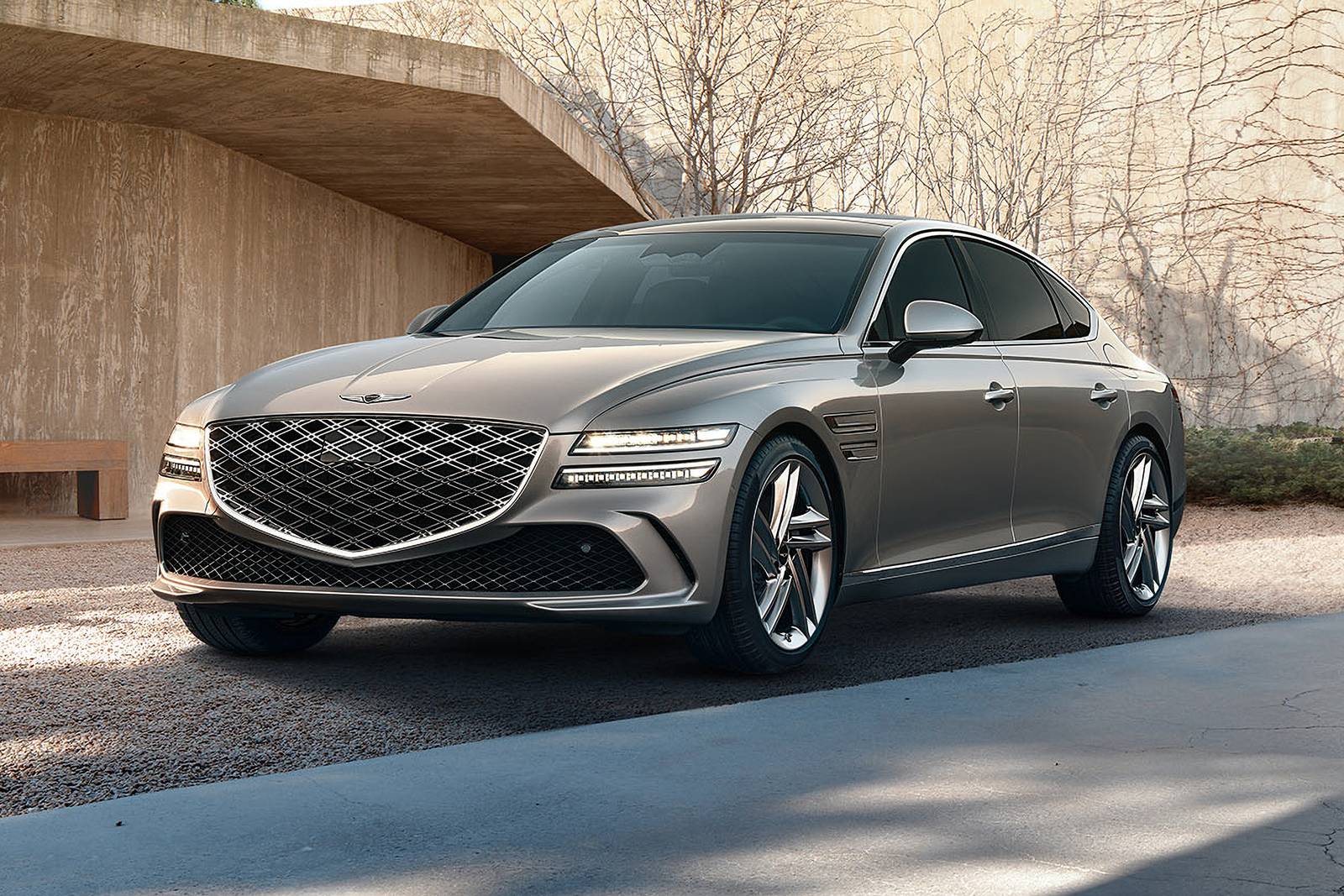
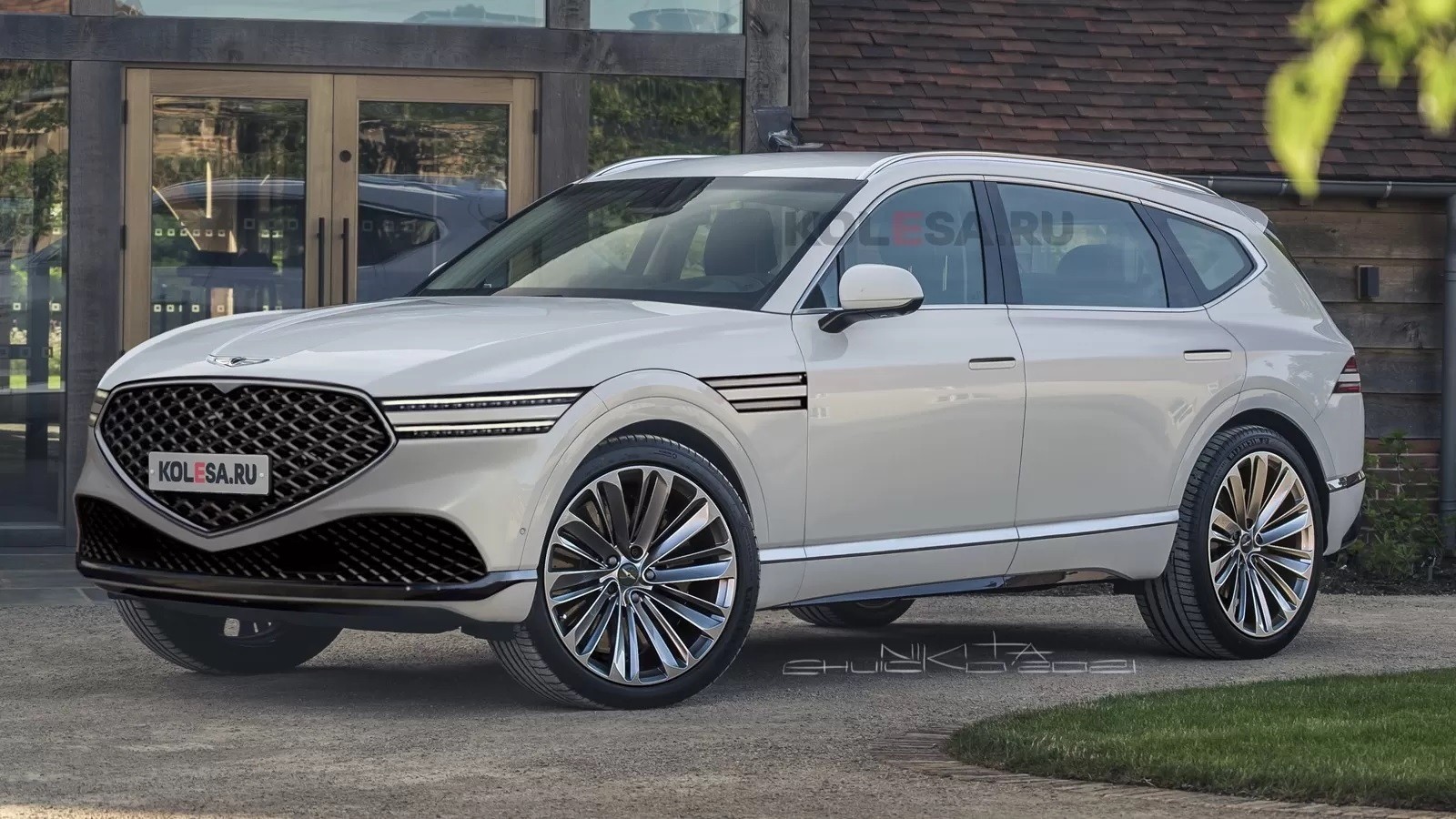
2026 Genesis G80 vs 2025 Lexus ES — if you’re shopping for a midsize luxury sedan in 2026, these two nameplates likely sit at the top of your shortlist. Both deliver world-class refinement, cutting-edge technology, and the kind of quiet confidence that defines modern premium motoring. Yet they approach the segment from fundamentally different philosophies. The Genesis G80 arrives as a bold disruptor with standard all-wheel drive, twin-turbo power, and a cabin that rivals six-figure flagships. The Lexus ES, meanwhile, carries decades of proven reliability, a whisper-smooth hybrid powertrain, and a price advantage that makes luxury accessible to a wider audience.
This comprehensive buyer’s guide breaks down every critical dimension — performance, efficiency, interior quality, technology, safety, pricing, and long-term value — to help you decide which sedan deserves your driveway. Whether you prioritize electrified efficiency or turbocharged thrust, rear-seat executive comfort or driver-centric engagement, this head-to-head comparison delivers the facts you need to make an informed decision.
Table of Contents
- Pricing & Value Proposition
- Powertrain & Performance
- Fuel Economy & Efficiency
- Interior Quality & Comfort
- Technology & Connectivity
- Safety Ratings & Driver Assistance
- Dimensions, Cargo & Practicality
- Warranty & Ownership Costs
- Final Verdict: Which Sedan Should You Buy?
- Frequently Asked Questions
1. Pricing & Value Proposition
When it comes to luxury sedan shopping, the opening price tag often frames the entire conversation. The 2025 Lexus ES enters the market with a remarkably accessible starting MSRP of approximately $43,190 for the ES 250 AWD base trim, stretching to roughly $53,480 for the ES 300h Ultra Luxury hybrid. The gasoline-powered ES 350 starts around $43,215 and climbs to about $54,000 for the F SPORT Handling variant. This broad pricing ladder makes the ES one of the most attainable entry points into true luxury sedan ownership.
The 2026 Genesis G80, by contrast, positions itself as a premium value proposition with a higher floor. The base 2.5T AWD opens at $58,450, while the mid-tier 2.5T Advanced AWD lands at $64,040. The 2.5T Sport Prestige AWD commands $69,950, and stepping into the V6-powered 3.5T Sport Prestige AWD pushes the MSRP to $78,350. The range-topping 3.5T Prestige Black AWD crests at $79,350. While the Genesis demands a steeper entry fee, it arrives with standard all-wheel drive, a more powerful base engine, and a longer equipment list that narrows the perceived value gap.
From a pure dollars-per-feature perspective, the G80 delivers exceptional content density. Every trim includes leather upholstery, a panoramic sunroof (on Advanced and above), a 27-inch OLED integrated display, heated and ventilated front seats, and Genesis Digital Key 2.0. The Lexus ES requires stepping up to Luxury or Ultra Luxury trims to match similar equipment levels, though even the base ES 250 includes the Lexus Safety System+ suite and an 8.0-inch touchscreen with wireless Apple CarPlay and Android Auto.
Resale value historically favors Lexus, with the ES holding its value better than most competitors, thanks to Toyota’s legendary reliability reputation. Genesis, however, has made dramatic strides in residual value as brand recognition grows. For buyers planning to keep their vehicle long-term, the G80’s superior warranty coverage — detailed later — may offset any resale differential.
2. Powertrain & Performance
This is where the philosophical divide between these two sedans becomes impossible to ignore. The 2026 Genesis G80 is unapologetically performance-oriented, while the 2025 Lexus ES prioritizes smooth, efficient, and serene propulsion.
Genesis G80 Powertrain Options
The G80’s base engine is a 2.5-liter turbocharged inline-four producing 300 horsepower at 5,800 rpm and 311 lb-ft of torque at just 1,650 rpm. This engine, paired with an 8-speed automatic transmission and standard all-wheel drive, delivers confident acceleration and ample passing power. The low-end torque figure is particularly impressive — peak twist arrives barely above idle, making the G80 feel effortlessly quick in daily driving.
For enthusiasts, the optional 3.5-liter twin-turbo V6 unleashes 375 horsepower and 391 lb-ft of torque. This engine transforms the G80 into a genuine sports sedan contender, with launch control, a Sport+ driving mode, and an electronic limited-slip differential on select trims. The V6 also brings an electronically controlled suspension with Road Preview functionality and rear-wheel steering, sharpening handling while paradoxically improving low-speed maneuverability.
Lexus ES Powertrain Options
The 2025 Lexus ES offers three distinct powertrain flavors, each serving a different buyer profile. The ES 250 uses a naturally aspirated 2.5-liter inline-four making 203 horsepower and 184 lb-ft of torque, paired with all-wheel drive and an 8-speed automatic. This engine prioritizes reliability and fuel economy over outright speed, with a 0-60 mph time of approximately 8.6 seconds.
The ES 350 upgrades to a 3.5-liter V6 producing 302 horsepower and 267 lb-ft of torque, also routed through an 8-speed automatic but with front-wheel drive. This is the enthusiast’s choice within the ES lineup, delivering a 0-60 mph sprint of roughly 6.6 seconds — respectable, though still trailing the G80’s base engine.
The ES 300h hybrid combines a 2.5-liter Atkinson-cycle four-cylinder with an electric motor for a total system output of 215 horsepower. While not the quickest option, the hybrid’s seamless power delivery and near-silent operation define the Lexus experience. It uses a continuously variable transmission (CVT) optimized for efficiency rather than engagement.
Performance Comparison Table
| Specification | Genesis G80 2.5T | Genesis G80 3.5T | Lexus ES 250 | Lexus ES 350 | Lexus ES 300h |
|---|---|---|---|---|---|
| Engine | 2.5L turbo I4 | 3.5L twin-turbo V6 | 2.5L naturally aspirated I4 | 3.5L V6 | 2.5L hybrid I4 |
| Horsepower | 300 hp | 375 hp | 203 hp | 302 hp | 215 hp |
| Torque | 311 lb-ft | 391 lb-ft | 184 lb-ft | 267 lb-ft | 163 lb-ft |
| Transmission | 8-speed automatic | 8-speed automatic | 8-speed automatic | 8-speed automatic | CVT |
| Drivetrain | AWD standard | AWD standard | AWD | FWD | FWD |
| 0-60 mph (est.) | ~5.9 sec | ~5.0 sec | ~8.6 sec | ~6.6 sec | ~8.1 sec |
| Recommended Fuel | Premium | Premium | Regular | Regular | Regular |
The verdict here is straightforward: if you value acceleration, dynamic handling, and the confidence of standard all-wheel drive, the Genesis G80 dominates. If you prefer a relaxed, vibration-free cruise with adequate power for highway merging, the Lexus ES — particularly the V6-powered ES 350 — satisfies without drama. The hybrid ES 300h trades performance for efficiency, a trade-off many luxury buyers happily accept.
3. Fuel Economy & Efficiency
Fuel economy represents one of the most significant differentiators between these two sedans, and it’s an area where the Lexus ES — especially the hybrid variant — pulls decisively ahead.
The 2025 Lexus ES 300h achieves an EPA-estimated 43 mpg city, 44 mpg highway, and 44 mpg combined. These figures place the ES hybrid among the most fuel-efficient luxury sedans on the market, rivaling compact economy cars while delivering full-size comfort. The ES 250 returns 24 mpg city and 33 mpg highway, while the ES 350 manages 22 mpg city and 32 mpg highway. All ES engines run on regular unleaded gasoline, further reducing operating costs.
The 2026 Genesis G80 2.5T is rated at 20 mpg city and 29 mpg highway for a combined 23 mpg. The 3.5T V6 drops to 15 mpg city and 24 mpg highway. Genesis requires premium unleaded fuel for both engines, adding to the cost-per-mile equation. Over 15,000 miles of annual driving, the ES 300h owner could save approximately $1,200 to $1,500 per year in fuel costs compared to a G80 3.5T owner, depending on local gas prices.
For buyers with long commutes or those who rack up highway miles, the ES 300h’s efficiency advantage compounds quickly. The G80, however, justifies its thirst with substantially more power and the security of all-weather all-wheel drive. Your driving patterns and local climate should heavily influence this portion of your decision.
4. Interior Quality & Comfort
Both the Genesis G80 and Lexus ES deliver interiors that would feel at home in vehicles costing twice as much, but they express luxury through different design languages.
Genesis G80 Interior
Step inside the G80 and you’re greeted by a 27-inch OLED integrated display that spans the dashboard, merging the digital instrument cluster and infotainment touchscreen into one sweeping glass panel. The visual impact is stunning — crisp graphics, deep blacks, and a minimalist aesthetic that feels distinctly modern. Material quality is exceptional, with available Nappa leather seats featuring double-diamond quilting, genuine open-pore wood trim, and a jewelry-inspired crystal shift knob that catches light like a precision-cut gemstone.
The G80’s front seats offer heating, ventilation, and massage functions on higher trims, with 18-way power adjustment. Rear-seat passengers enjoy generous legroom and available heated outboard positions. However, the G80 does not offer the kind of executive rear-seat package found in some competitors — there is no ottoman or extended recline function. The focus remains firmly on the driver and front passenger experience.
Lexus ES Interior
The 2025 Lexus ES emphasizes what the brand calls “artisan craftsmanship.” The dashboard features a 14.0-inch high-definition touchscreen on higher trims (8.0-inch on base models), surrounded by soft-touch surfaces, available semi-aniline leather, and distinctive trim options including 3D-printed faux bamboo. The overall ambiance is warmer and more organic than the G80’s tech-forward aesthetic.
Where the ES truly distinguishes itself is in available rear-seat comfort. The Executive Package — offered on Ultra Luxury trims — adds power-adjustable, heated, and ventilated rear seats with a front passenger-side footrest and outer rear massaging functions. This transforms the ES into a legitimate chauffeur-capable sedan, a credential the G80 cannot match. Ambient lighting with customizable themes further personalizes the cabin atmosphere.
Both vehicles offer dual-zone automatic climate control, power sunroofs (panoramic on G80 Advanced and above), and premium audio systems. The G80’s available 18-speaker Bang & Olufsen surround-sound system competes with the ES’s optional 17-speaker Mark Levinson setup. Both are audiophile-grade and represent the best in their respective classes.
5. Technology & Connectivity
Modern luxury buyers expect their sedans to function as rolling smartphones, and neither the G80 nor the ES disappoints — though their approaches differ.
Genesis G80 Technology
The G80’s 27-inch OLED widescreen is the cabin’s technological centerpiece, running Genesis’s latest infotainment software with wireless Apple CarPlay and Android Auto. The system supports over-the-air updates, ensuring the vehicle improves over time. A 12-inch head-up display projects navigation, speed, and safety alerts onto the windshield, minimizing driver distraction.
Genesis Digital Key 2.0 allows owners to use their smartphone as a vehicle key, share access with up to seven users, and even pay for fuel or parking directly through the vehicle’s interface. The Remote Smart Parking Assist 2 system can autonomously park the G80 in parallel, perpendicular, or diagonal spaces with the driver standing outside — a genuine convenience in tight urban garages. Driver profiles memorize seat positions, climate preferences, audio settings, and navigation history for multiple users.
Lexus ES Technology

The 2025 Lexus ES debuts the latest generation of the Lexus Interface multimedia system, featuring faster response times and deeper personalization. The 14-inch touchscreen (on equipped trims) offers wireless smartphone integration, native navigation, and a standard dash cam. The “Hey Lexus” intelligent voice assistant understands natural language commands for climate, navigation, and media control.
5G network connectivity ensures rapid data speeds for streaming, navigation, and software updates. The Digital Key function similarly allows keyless entry and vehicle sharing. While the ES lacks the G80’s autonomous parking capability, it compensates with a more intuitive user interface and superior voice recognition — areas where Lexus has historically excelled.
Both sedans offer wireless charging pads, multiple USB-C ports, Wi-Fi hotspot capability, and comprehensive smartphone integration. The G80 leans toward automated convenience and visual spectacle, while the ES prioritizes ecosystem depth and ease of use.
6. Safety Ratings & Driver Assistance
Safety is non-negotiable in the luxury segment, and both vehicles deliver comprehensive protection backed by top-tier crash-test performance.
Crash Test Performance
The 2026 Genesis G80 earns a 5-star overall safety rating from the NHTSA, with top marks in frontal crash, side impact, and rollover tests. The 2025 Lexus ES also achieves a 5-star overall NHTSA rating, though with a 4-star rollover score — a minor distinction unlikely to influence real-world safety.
Active Safety Features
Both sedans come standard with full suites of advanced driver-assistance systems (ADAS). The Genesis G80 includes Highway Driving Assist 2, which combines adaptive cruise control with lane-centering for semi-autonomous highway cruising. It also features a Blind-Spot View Monitor that displays a live camera feed of the blind spot in the instrument cluster when the turn signal is activated — a feature borrowed from Hyundai/Kia’s luxury playbook and genuinely useful in heavy traffic.
The Lexus ES counters with Lexus Safety System+ 2.5 (or 3.0 on 2026 models), encompassing pre-collision warning with pedestrian detection, full-speed dynamic radar cruise control, lane departure alert with steering assist, and lane tracing assist. A standout feature is Safe Exit Assist, which uses rear-mounted sensors to warn occupants if a vehicle or cyclist is approaching from behind before they open a door — particularly valuable in urban environments with heavy bike traffic.
Both vehicles include standard automatic emergency braking, blind-spot monitoring, rear cross-traffic alert, and adaptive headlights. The G80 offers a slight edge in available automation with its parking assist and highway driving features, while the ES provides more refined collision-avoidance tuning.
7. Dimensions, Cargo & Practicality
Luxury sedans must balance presence with practicality, and both the G80 and ES navigate this compromise skillfully.
| Dimension | 2026 Genesis G80 | 2025 Lexus ES |
|---|---|---|
| Overall Length | 197.0 inches | 195.9 inches |
| Wheelbase | 118.5 inches | 113.0 inches |
| Width (w/o mirrors) | 75.8 inches | 73.4 inches |
| Height | 57.7 inches | 56.9 inches |
| Curb Weight | 4,211 lbs | 3,737 lbs |
| Front Headroom | 40.9 inches | 37.5 inches |
| Front Legroom | 42.2 inches | 42.4 inches |
| Front Shoulder Room | 58.3 inches | 55.9 inches |
| Rear Headroom | 39.0 inches | 37.8 inches |
| Rear Legroom | 38.7 inches | 39.2 inches |
| Rear Shoulder Room | 57.1 inches | 54.3 inches |
| Passenger Volume | 103.8 cu ft | 99.9 cu ft |
| Trunk Volume | 13.1 cu ft | 13.9 cu ft |
| Fuel Tank Capacity | 17.2 gallons | 14.5 gallons |
| Turning Diameter | 38.1 feet | 38.0 feet |
The Genesis G80 is the larger vehicle in nearly every dimension, with a significantly longer wheelbase (118.5 vs. 113.0 inches) and wider track that translates to a more spacious cabin and a more planted road presence. Front headroom and shoulder room are notably superior in the Genesis, making it the better choice for taller drivers. The G80’s 5.5-inch longer wheelbase also contributes to its smoother ride quality and more stable highway manners.
The Lexus ES counters with slightly more rear legroom (39.2 vs. 38.7 inches) and a larger trunk (13.9 vs. 13.1 cubic feet). The ES is also considerably lighter — nearly 500 pounds less than the G80 — which aids fuel efficiency and nimbleness in tight parking scenarios. However, the ES’s rear seats do not fold down, limiting cargo flexibility for bulky items. The G80 offers a pass-through or folding rear seat on some trims, enhancing practicality.
For families or buyers who frequently transport passengers, the G80’s broader cabin and superior front-seat space provide tangible benefits. For those who prioritize trunk capacity and easier maneuverability, the ES holds advantages.
8. Warranty & Ownership Costs
Warranty coverage is one area where Genesis has disrupted the luxury establishment, and the G80’s protection plan is among the most generous in the industry.
| Warranty Coverage | 2026 Genesis G80 | 2025 Lexus ES |
|---|---|---|
| Basic Warranty | 5 years / 60,000 miles | 4 years / 50,000 miles |
| Powertrain Warranty | 10 years / 100,000 miles | 6 years / 70,000 miles |
| Corrosion Warranty | 7 years / unlimited miles | 6 years / unlimited miles |
| Roadside Assistance | 5 years / unlimited miles | 4 years / unlimited miles |
| Complimentary Maintenance | 3 years / 36,000 miles | Not included |
| Hybrid Component Warranty | N/A | 10 years / 150,000 miles |
The Genesis G80’s 10-year/100,000-mile powertrain warranty and 5-year/60,000-mile comprehensive coverage outpace the Lexus ES’s 6-year/70,000-mile powertrain and 4-year/50,000-mile basic warranties. Genesis also includes 3 years/36,000 miles of complimentary scheduled maintenance — oil changes, tire rotations, and inspections — while Lexus offers no such program. For buyers planning to keep their vehicle beyond the standard warranty period, the G80 provides substantially more long-term protection.
Lexus does offer a 10-year/150,000-mile hybrid component warranty for the ES 300h, covering the battery, inverter, and electric motor. This is industry-leading for hybrid powertrains and provides peace of mind for buyers concerned about long-term battery replacement costs.
Insurance costs typically favor the Lexus ES due to its lower replacement value and excellent safety record, though the difference is usually modest. Maintenance costs during the warranty period are essentially zero for the G80 thanks to the complimentary program, while Lexus owners should budget for routine service.
9. Final Verdict: Which Sedan Should You Buy?
Choosing between the 2026 Genesis G80 and the 2025 Lexus ES ultimately depends on what you value most in a luxury sedan.
Buy the Genesis G80 if you:
- Want the most powerful standard engine in the segment
- Require standard all-wheel drive for snow-belt climates
- Prioritize cutting-edge interior technology and a stunning 27-inch OLED display
- Value the industry’s best warranty coverage and complimentary maintenance
- Prefer a driver-focused, dynamically engaging sedan
- Appreciate bold, distinctive styling that stands apart from German and Japanese rivals
- Have a budget starting around $58,000
Buy the Lexus ES if you:
- Prioritize fuel efficiency, especially the ES 300h’s 44 mpg combined rating
- Want the lowest possible entry price into luxury sedan ownership (starting around $43,000)
- Value decades of proven reliability and strong resale value
- Need the available Executive Package with massaging rear seats and a footrest
- Prefer a smoother, quieter, more isolated ride over sporty handling
- Want to run on regular unleaded gasoline
- Appreciate understated elegance and timeless design over bold statements
The Genesis G80 is the enthusiast’s choice — a sedan that punches above its weight with power, technology, and warranty security. It feels like a $90,000 vehicle at a $60,000 price point. The Lexus ES is the pragmatist’s choice — a sedan that delivers everything most luxury buyers actually need, with unmatched efficiency, lower operating costs, and the confidence of Toyota’s legendary quality control.
For buyers cross-shopping these two, we recommend test-driving both back-to-back. The G80 will impress with its acceleration and interior drama; the ES will seduce with its serenity and efficiency. Neither is the “wrong” choice — they simply serve different masters.
10. Frequently Asked Questions
Is the Genesis G80 more reliable than the Lexus ES?
Lexus holds the historical edge in long-term reliability, backed by decades of J.D. Power and Consumer Reports data. Genesis, however, has made remarkable strides in recent years, with the G80 earning above-average reliability ratings from owners. The G80’s superior warranty coverage (10-year powertrain vs. 6-year) also provides more protection against unexpected repair costs.
Which is faster: the Genesis G80 or Lexus ES 350?
The base Genesis G80 2.5T (300 hp) is significantly faster than the Lexus ES 350 (302 hp) in real-world acceleration due to its turbocharged torque delivery and standard all-wheel-drive traction. The G80 3.5T (375 hp) is in an entirely different performance class. The ES 350’s front-wheel-drive layout limits launch traction, and its naturally aspirated V6 must rev higher to access peak power.
Does the Lexus ES 300h require premium fuel?
No. All 2025 Lexus ES engines, including the ES 300h hybrid, are designed to run on regular unleaded gasoline (87 octane). The Genesis G80 requires premium fuel (91+ octane) for both the 2.5T and 3.5T engines, adding to long-term operating costs.
Which has better resale value: Genesis G80 or Lexus ES?
Historically, the Lexus ES holds its value better than the Genesis G80 due to Lexus’s established reputation and lower depreciation rates. However, Genesis resale values have improved significantly as brand awareness grows. For short-term ownership (3-4 years), the ES likely retains more value. For long-term keepers, the G80’s warranty and lower maintenance costs may offset the difference.
Is the Genesis G80 worth the price premium over the Lexus ES?
For buyers who value performance, technology, all-wheel drive, and warranty coverage, the G80’s approximately $15,000 price premium over a comparably equipped ES is justified. The G80 delivers features and powertrain sophistication typically found in vehicles costing $20,000-$30,000 more. For buyers who prioritize efficiency, reliability, and lower upfront costs, the ES remains the smarter financial choice.
Can the Lexus ES handle snow with front-wheel drive?
The ES 250 comes with all-wheel drive, making it suitable for snowy climates. The ES 350 and ES 300h are front-wheel-drive only, which limits winter capability compared to the standard AWD Genesis G80. FWD with winter tires can handle moderate snow, but the G80’s AWD system provides superior traction and confidence in severe winter conditions.
Which has the better audio system?
Both offer exceptional premium audio. The Genesis G80’s available 18-speaker Bang & Olufsen system delivers crisp, powerful sound with excellent bass response. The Lexus ES’s optional 17-speaker Mark Levinson system is renowned for its concert-hall clarity and balanced staging. Audiophiles may prefer the Mark Levinson’s refined tuning, while bass lovers may favor the Bang & Olufsen’s punchier delivery.
How does the Genesis G80 compare to German rivals?
The G80 competes directly with the BMW 5 Series, Mercedes-Benz E-Class, and Audi A6. It undercuts all three on price while matching or exceeding them in standard equipment, warranty coverage, and interior material quality. The G80’s primary disadvantage is brand prestige — Genesis lacks the century-old heritage of its German competitors. For buyers who care more about value than badge snobbery, the G80 is arguably the smartest choice in the segment.
Should I wait for the 2026 Lexus ES?
The 2026 Lexus ES introduces electrified variants (ES 350e and ES 500e) with pure electric range, updated Lexus Interface software, and refreshed styling. If you’re interested in an EV luxury sedan or want the latest technology, waiting for the 2026 ES may be worthwhile. However, the 2025 ES remains an excellent value with proven reliability and immediate availability.
Which sedan has lower insurance costs?
Insurance premiums typically favor the Lexus ES due to its lower MSRP, excellent safety ratings, and lower repair costs. The Genesis G80’s higher replacement value and more powerful engines may result in slightly higher premiums, though the difference is usually modest — typically $200-$400 annually depending on your location, driving record, and coverage levels.