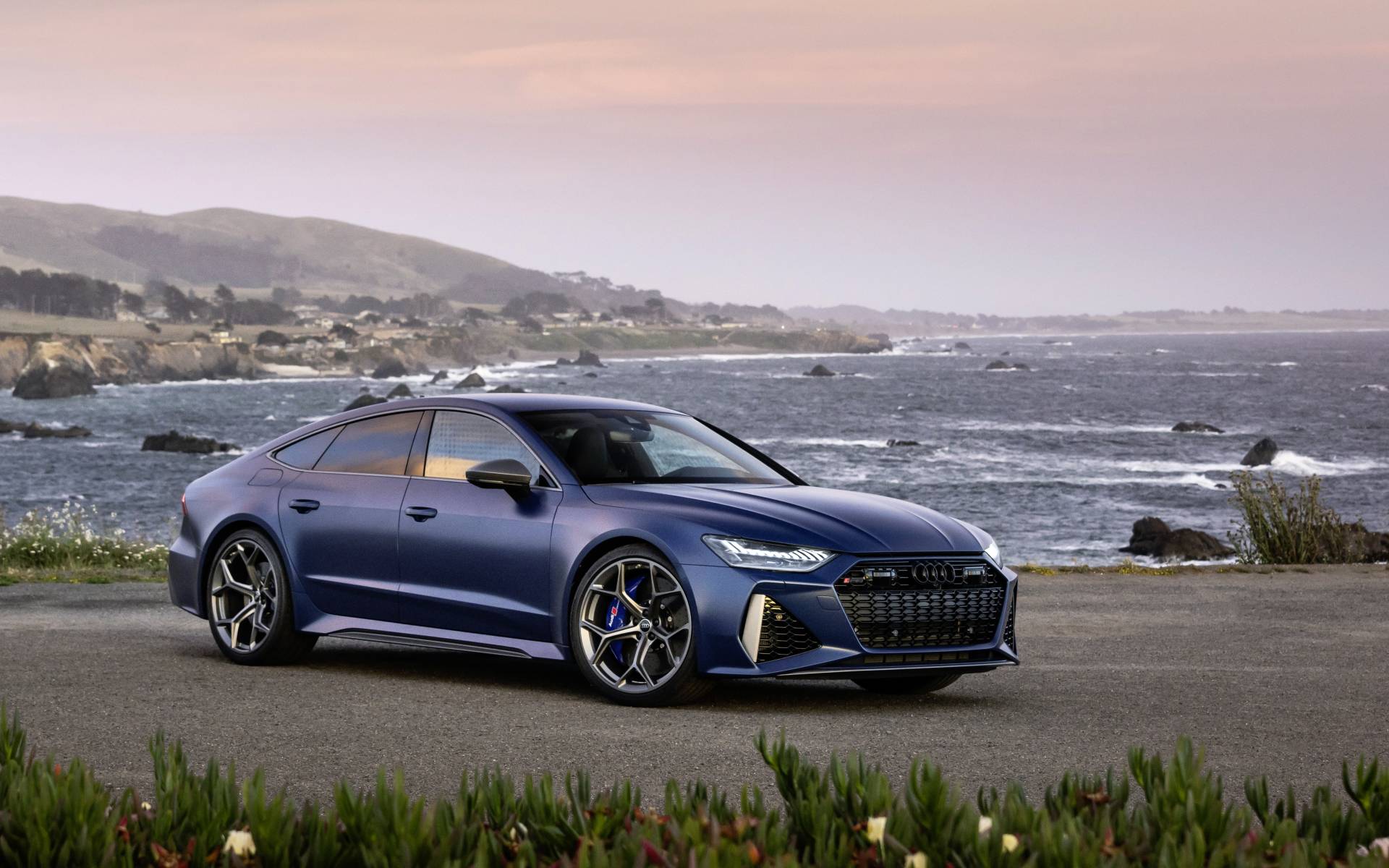
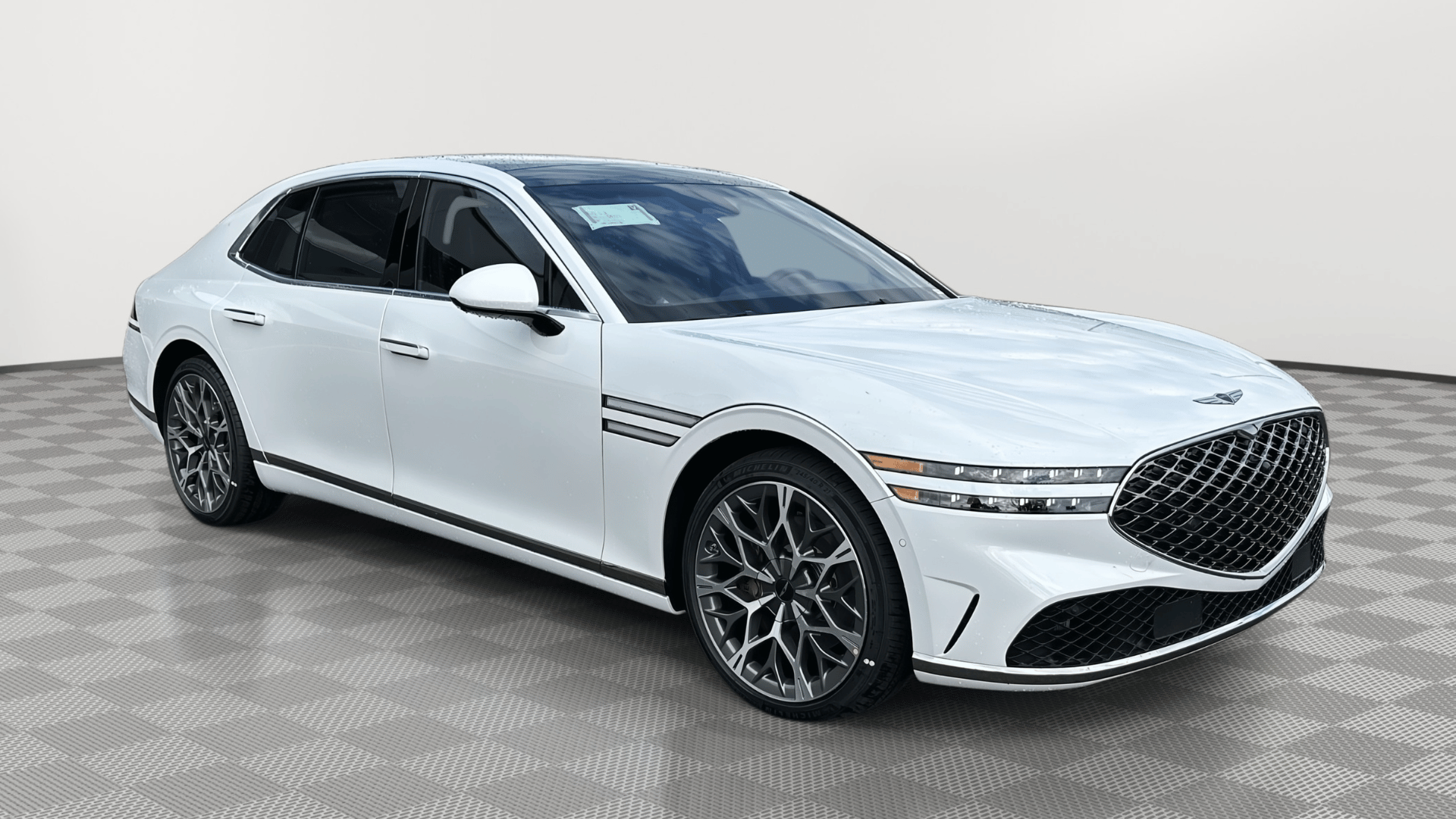
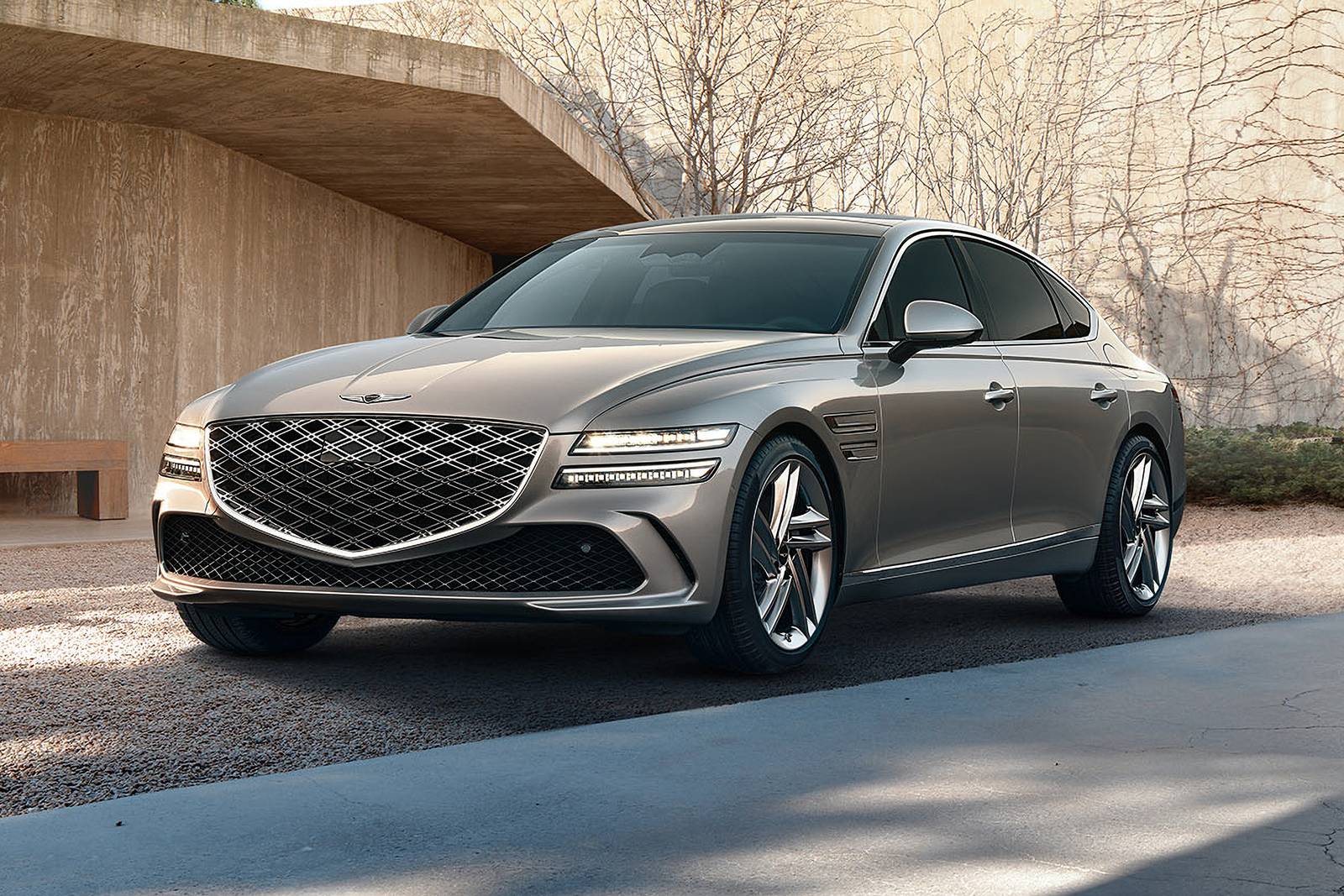
2025 Genesis G90 vs 2025 Audi A7

2025 Genesis G90 vs 2025 Audi A7 — choosing between these two premium luxury sedans is one of the most debated decisions in the $70,000–$100,000 segment today. Whether you are a first-time luxury buyer upgrading from a mainstream sedan or a seasoned enthusiast cross-shopping Korean innovation against German engineering, this comprehensive buyer guide breaks down every critical detail to help you make the right choice. From horsepower and torque figures to real-world fuel economy, safety ratings, warranty coverage, and resale value, we compare the Genesis G90 and Audi A7 head-to-head with data-backed insights you can trust.
In this guide, you will discover which sedan delivers the best value, which offers superior rear-seat comfort, and which powertrain configuration suits your driving style. We also examine the 2025 model year updates, standard features, available technology, and long-term ownership costs. By the end, you will have a clear winner for your specific needs — whether that is chauffeur-driven luxury, spirited daily driving, or maximum cargo versatility.
Quick Comparison Overview: 2025 Genesis G90 vs 2025 Audi A7
| Specification | 2025 Genesis G90 | 2025 Audi A7 |
|---|---|---|
| Starting MSRP | $91,195 | $73,295 |
| Top Trim MSRP | $101,495 | $83,745 |
| Engine | 3.5L twin-turbo V6 (375 hp) / 3.5L twin-turbo V6 + e-Supercharger (409 hp) | 3.0L turbo V6 mild hybrid (335 hp) |
| Torque | 391 lb-ft / 405 lb-ft | 369 lb-ft |
| Transmission | 8-speed automatic | 7-speed S tronic dual-clutch |
| Drivetrain | All-wheel drive | Quattro all-wheel drive |
| 0–60 mph | ~5.0 seconds (E-SC) | ~4.7–5.2 seconds |
| EPA City/Hwy/Combined | 18/26/21 mpg (base) / 17/24/20 mpg (E-SC) | 22/30/25 mpg |
| Length | 207.7 inches | 195.6 inches |
| Wheelbase | 125.2 inches | 115.2 inches |
| Curb Weight | 4,828 lbs | 4,343 lbs |
| Trunk/Cargo Volume | 12.0 cu ft | 24.9 cu ft |
| Passenger Volume | 109.2 cu ft | ~95 cu ft |
| IIHS Safety Rating | Top Safety Pick+ (2024) | Not yet rated for 2025 |
| Basic Warranty | 5 years / 60,000 miles | 4 years / 50,000 miles |
| Powertrain Warranty | 10 years / 100,000 miles | 4 years / 50,000 miles |
| Complimentary Maintenance | 3 years / 36,000 miles | None |
1. Pricing and Value Analysis
2025 Genesis G90 Pricing
The 2025 Genesis G90 enters the market with a starting MSRP of $91,195 for the base 3.5T trim. The range-topping 3.5T E-Supercharger (E-SC) Prestige starts at $101,495. Kelley Blue Book Fair Purchase Pricing suggests buyers can expect to pay approximately $8,995 to $10,095 below MSRP, bringing real-world transaction prices to roughly $82,200 for the base model and $91,400 for the E-SC variant. This aggressive discounting makes the G90 one of the strongest value propositions in the full-size luxury sedan class.
What makes the G90’s pricing compelling is the sheer volume of standard equipment. Even the base 3.5T includes Nappa leather upholstery, 20-inch alloy wheels, a panoramic sunroof, heated and ventilated front seats, heated rear seats, a 12.3-inch digital instrument cluster, a 12.3-inch infotainment touchscreen, wireless Apple CarPlay and Android Auto, a wireless charging pad, and a 23-speaker Bang & Olufsen surround sound system. The E-SC adds an air suspension, 21-inch wheels, massaging front and rear seats, and an upgraded audio system. Genesis also includes three years of complimentary scheduled maintenance and valet service — perks typically reserved for six-figure European flagships.
2025 Audi A7 Pricing
The 2025 Audi A7 is priced from $73,295 for the Premium trim, $78,995 for the Premium Plus, and $83,745 for the Prestige. Kelley Blue Book Fair Purchase Pricing indicates buyers can secure the A7 for roughly $3,000 to $4,230 below sticker, with the Premium Plus and Prestige trims being the most popular choices. The A7’s lower entry price makes it accessible to a broader audience, but the gap narrows once you add options that match the G90’s standard feature set.
Standard features on the base A7 Premium include the turbocharged V6, Quattro all-wheel drive, a 10.1-inch MMI touchscreen, a 12.3-inch Audi virtual cockpit, lane departure warning, and a power panoramic sunroof. However, features like adaptive cruise control, a head-up display, a top-view camera system, massaging seats, and the Bang & Olufsen premium sound system are reserved for higher trims or optional packages. By the time an A7 Prestige is configured to match the G90’s content, the price difference shrinks to roughly $10,000–$15,000 — still meaningful, but not as dramatic as the base MSRP suggests.
Which Offers Better Value?
For buyers who prioritize maximum equipment per dollar, the Genesis G90 is the clear winner. Its standard feature list reads like an options sheet from Mercedes-Benz or BMW, and the included maintenance program adds tangible long-term savings. The Audi A7, however, offers a lower barrier to entry and stronger resale values historically, which can offset some of the upfront price gap over a five-year ownership cycle. If you plan to lease, the G90’s higher MSRP may result in larger monthly payments despite the discounts, while the A7’s stronger residuals could keep lease rates competitive.
2. Engine, Performance, and Driving Dynamics
Genesis G90 Powertrain Options
The 2025 Genesis G90 offers two distinct powertrain configurations, both built around a 3.5-liter V6. The base 3.5T produces 375 horsepower and 391 lb-ft of torque, paired with an eight-speed automatic transmission and standard all-wheel drive. This setup delivers brisk acceleration and a refined, isolated driving experience that prioritizes comfort over aggression. The transmission shifts smoothly and intelligently, though it is not as snappy as a dual-clutch unit.
The headline powertrain is the 3.5T E-Supercharger (E-SC), which adds a 48-volt electric supercharger to the twin-turbo V6. This mild-hybrid system boosts output to 409 horsepower and 405 lb-ft of torque, with peak torque arriving as low as 1,300 rpm. The electric supercharger virtually eliminates turbo lag, providing instant throttle response that rivals naturally aspirated V8s. The E-SC also brings an air suspension with a forward-facing camera that scans the road ahead and preemptively adjusts damping — a feature borrowed from the Mercedes-Benz S-Class. In Chauffeur mode, the suspension softens further to minimize rear-seat disturbance.
Neither G90 is a sports sedan, even in Sport mode. The steering is light and filtered, and the chassis is tuned for serenity rather than corner-carving precision. That said, rear-wheel steering and the adaptive dampers make the G90 surprisingly maneuverable for a 207.7-inch sedan. The ride quality is exceptional — among the best in the class — with road imperfections absorbed silently.
Audi A7 Powertrain and Performance
The 2025 Audi A7 comes exclusively with a 3.0-liter turbocharged V6 mild hybrid, producing 335 horsepower and 369 lb-ft of torque. A 48-volt electrical system assists with stop/start operation and reduces turbo lag, but unlike the G90, it does not add a supercharger for extra boost. Power is routed through a seven-speed S tronic dual-clutch automatic transmission to Audi’s legendary Quattro all-wheel-drive system.
Where the A7 distinguishes itself is in driving engagement. The dual-clutch transmission shifts with rifle-bolt precision, and the Quattro system provides tenacious grip in wet or dry conditions. In Car and Driver testing, an A7 with 20-inch wheels and all-season tires sprinted to 60 mph in 4.7 seconds — quicker than the G90’s estimated 5.0-second time for the E-SC variant. The A7’s suspension strikes a masterful balance between comfort and agility; it feels lighter and more responsive than the G90, despite being only 485 pounds lighter. Steering is linear and adjustable across drive modes, and the car shrinks around you on winding roads.
The A7’s performance advantage is not just about raw numbers. It is about how the car communicates with the driver. The G90 isolates you from the road; the A7 invites you to participate. If your daily commute includes canyon roads or you simply enjoy a more connected driving experience, the A7 is the more rewarding choice.
Performance Comparison Summary
| Metric | Genesis G90 3.5T | Genesis G90 3.5T E-SC | Audi A7 55 TFSI |
|---|---|---|---|
| Horsepower | 375 hp | 409 hp | 335 hp |
| Torque | 391 lb-ft | 405 lb-ft | 369 lb-ft |
| 0–60 mph (est.) | ~5.3 sec | ~5.0 sec | ~4.7–5.2 sec |
| Transmission | 8-speed auto | 8-speed auto | 7-speed dual-clutch |
| Top Speed | ~155 mph (governed) | ~155 mph (governed) | ~130 mph (governed) |
| Driving Character | Luxury cruiser | Luxury cruiser | Luxury sport sedan |
3. Fuel Economy and Efficiency
Fuel economy is a significant differentiator between these two sedans, and the Audi A7 holds a clear advantage. The A7 is EPA-rated at 22 mpg city, 30 mpg highway, and 25 mpg combined. The Genesis G90 base 3.5T manages 18 mpg city, 26 mpg highway, and 21 mpg combined, while the E-SC variant drops to 17/24/20 mpg. Both vehicles require premium unleaded fuel, so the cost gap at the pump is real.
Over 15,000 miles of annual driving, the A7 will consume roughly 600 gallons of fuel versus the G90’s 714 gallons (base) or 750 gallons (E-SC). At current premium fuel prices, that translates to an annual savings of approximately $450–$550 for the A7 owner. Over five years, the cumulative savings could exceed $2,500 — enough to cover a significant portion of the A7’s maintenance costs or optional equipment.
The G90’s thirst is the price of its larger displacement, higher output, and heavier curb weight (4,828 lbs vs. 4,343 lbs). The E-SC’s mild-hybrid system is tuned for performance, not efficiency, so it does not deliver the fuel savings one might expect from electrification. If your priority is minimizing operating costs, the A7 is the pragmatic choice. If you can absorb the fuel premium for the G90’s added power and refinement, the difference is unlikely to be a dealbreaker at this price point.
4. Interior, Comfort, and Technology
Genesis G90 Interior: A Sanctuary on Wheels
The Genesis G90’s interior is arguably its strongest selling point. The cabin is a masterclass in Korean luxury design, blending minimalism with rich materials. Nappa leather wraps the seats, dashboard, and door panels, while genuine wood and metal trim provide tactile satisfaction. The color palettes are harmonious and restrained — no garish contrast stitching or overwrought carbon fiber here. The overall atmosphere is one of tranquility and opulence.
Technology is abundant but not overwhelming. Two 12.3-inch screens dominate the dashboard — one for digital instrumentation and one for infotainment. The infotainment system is intuitive, with less menu diving than German competitors. Wireless Apple CarPlay and Android Auto are now standard for 2025, eliminating a previous pain point. The 23-speaker Bang & Olufsen sound system delivers concert-hall clarity, and the available head-up display keeps vital information in the driver’s line of sight.
Rear-seat comfort is where the G90 truly separates itself. With 37.8 inches of rear legroom and a 125.2-inch wheelbase, there is stretch-out space for adults. The E-SC Prestige adds power-adjustable rear seats with heating, ventilation, and massage functions — features typically found in the Mercedes-Benz S-Class. Acoustic glass on all side windows, combined with active noise cancellation, creates a whisper-quiet cabin that rivals Bentley for serenity. The G90 is the definitive choice if you plan to be driven rather than drive.
Audi A7 Interior: Digital Precision
The Audi A7’s interior is a showcase of digital technology and architectural design. The centerpiece is the MMI touch response system, featuring a 10.1-inch upper screen for infotainment and an 8.6-inch lower screen for climate and vehicle controls. The 12.3-inch Audi virtual cockpit digital gauge cluster is crisp and customizable. The aesthetic is modern and angular — a stark contrast to the G90’s organic warmth.
Material quality is excellent, though the base Premium trim uses leatherette rather than genuine leather unless you opt up. The Premium Plus and Prestige trims add Valcona or Milano leather, four-zone climate control, and massaging front seats. The Bang & Olufsen 3D sound system (available on Premium Plus and up) is superb, though it features fewer speakers than the G90’s standard 23-speaker setup.
Where the A7 wins is cargo versatility. Its Sportback hatchback body style opens to reveal 24.9 cubic feet of cargo space — more than double the G90’s 12.0 cubic feet. The rear seats fold down to accommodate larger items, making the A7 genuinely practical for road trips, golf outings, or IKEA runs. Rear legroom (37.0 inches) is adequate but not generous; the sloping roofline also reduces rear headroom compared to the G90. The A7 is a driver’s car first; the G90 is a passenger’s car first.
Technology Feature Comparison
| Feature | Genesis G90 (Standard) | Audi A7 (Standard) |
|---|---|---|
| Digital Instrument Cluster | 12.3-inch | 12.3-inch Virtual Cockpit |
| Infotainment Screen | 12.3-inch touchscreen | 10.1-inch + 8.6-inch dual touch |
| Apple CarPlay / Android Auto | Wireless | Wireless |
| Head-Up Display | Standard | Prestige only |
| Wireless Charging | Standard | Premium Plus and up |
| Premium Audio | 23-speaker Bang & Olufsen | 10-speaker base / B&O 3D optional |
| Massaging Seats | Front and rear (E-SC) | Front only (Prestige) |
| Rear Seat Adjustments | Power, heated, ventilated (E-SC) | Heated optional |
| Panoramic Roof | Standard | Standard |
| Active Noise Cancellation | Standard | Not available |
| Automatic Parking | Standard | Prestige only |
5. Safety Ratings and Driver Assistance
Genesis G90 Safety Credentials
The Genesis G90 has earned the Insurance Institute for Highway Safety (IIHS) Top Safety Pick+ award for the 2024 model year, and the 2025 model carries over the same architecture and safety suite. It scored Good in the small front overlap, moderate front overlap original test, and updated side impact test. The updated moderate front overlap test rated Acceptable, while headlights and front crash prevention for pedestrians also scored well. The National Highway Traffic Safety Administration (NHTSA) has not yet published a full rating for the G90.
Standard safety features are comprehensive and include forward collision warning, automatic emergency braking, lane-keeping assist, lane departure warning, blind-spot monitoring, rear cross-traffic alert, a 360-degree surround-view camera, and adaptive cruise control with stop-and-go capability. The G90 also offers a highway driving assist system that combines lane centering with adaptive cruise for semi-autonomous highway travel. Ten airbags provide thorough occupant protection, including front, side, side curtain, knee, and rear side-impact airbags.
Audi A7 Safety Features
The 2025 Audi A7 comes standard with Audi pre sense front, which includes forward collision warning and automatic emergency braking. Lane departure warning is also standard across all trims. As you move up to Premium Plus and Prestige, you gain adaptive cruise assist with lane guidance, intersection assist, top-view camera with virtual 360 view, and remote park assist plus. The A7’s safety suite is robust but less generous at the base level than the G90’s.
The A7’s body structure uses a mix of aluminum and high-strength steel, and Audi’s pre sense system can prepare the cabin for impact by closing windows, tightening seat belts, and adjusting seats if a collision is imminent. While the 2025 A7 has not yet been fully rated by IIHS or NHTSA at the time of this writing, the outgoing model has historically performed well in crash tests, and there is no reason to expect a regression.
Both vehicles offer excellent real-world safety, but the G90’s standard inclusion of advanced features like a 360-degree camera and adaptive cruise control — without requiring a trim upgrade — gives it a slight edge for buyers who want maximum protection without parsing options lists.
6. Dimensions, Space, and Practicality
These two sedans occupy different segments in terms of size. The Genesis G90 is a full-size luxury sedan, while the Audi A7 is a midsize luxury Sportback. That distinction is critical for buyers who prioritize interior volume and road presence.
The G90 stretches 207.7 inches long with a 125.2-inch wheelbase — nearly a foot longer than the A7 in both dimensions. This translates to superior rear legroom (37.8 inches vs. 37.0 inches) and shoulder room (57.9 inches vs. 55.9 inches). The G90’s cabin feels palatial, and the rear seats are designed for executive transport. However, the G90’s trunk is a modest 12.0 cubic feet, smaller than many compact sedans. The trade-off is clear: the G90 prioritizes passenger space over cargo space.
The A7 measures 195.6 inches long with a 115.2-inch wheelbase. It is lighter, more city-friendly, and easier to park. The Sportback design yields 24.9 cubic feet of cargo space with the rear seats up — more than many compact SUVs. Fold the rear seats, and the A7 becomes a genuine cargo hauler. This versatility is unmatched in the G90, whose fixed rear seatback and small trunk limit practicality. If you regularly transport bulky items or simply appreciate the flexibility of a hatchback, the A7 is the only logical choice.
| Dimension | Genesis G90 | Audi A7 |
|---|---|---|
| Overall Length | 207.7 in | 195.6 in |
| Wheelbase | 125.2 in | 115.2 in |
| Width | 76.0 in | 75.1 in |
| Height | 58.7 in | 56.0 in |
| Curb Weight | 4,828 lbs | 4,343 lbs |
| Front Legroom | 42.3 in | 41.3 in |
| Rear Legroom | 37.8 in | 37.0 in |
| Front Headroom | 39.4 in | 37.0 in |
| Rear Headroom | 38.0 in | 37.1 in |
| Trunk/Cargo Volume | 12.0 cu ft | 24.9 cu ft |
7. Warranty, Maintenance, and Ownership Costs
Warranty coverage is one of the most decisive factors in this comparison, and Genesis obliterates Audi in this category. The G90 comes with a 5-year/60,000-mile basic warranty and a 10-year/100,000-mile powertrain warranty — the best in the luxury segment. Roadside assistance is included for five years with unlimited mileage, and Genesis provides three years or 36,000 miles of complimentary scheduled maintenance. The brand also offers valet service: Genesis will pick up your car for maintenance and leave a loaner vehicle, eliminating dealership visits.
The Audi A7 carries a 4-year/50,000-mile basic and powertrain warranty, with 4-year/unlimited-mile roadside assistance. There is no complimentary maintenance program. While Audi’s warranty aligns with BMW and Mercedes-Benz, it pales in comparison to Genesis’s industry-leading coverage. For buyers planning to keep their vehicle beyond the four-year mark, the G90’s additional powertrain protection provides significant peace of mind and potential repair cost savings.
Resale value is a different story. The Audi A7 historically retains value better than the Genesis G90, thanks to the strength of the Audi brand and the A7’s unique Sportback body style. Kelley Blue Book notes that the A7’s resale values are among the strongest in its class, while the G90’s depreciation is about average. If you plan to trade in or sell after three to four years, the A7’s stronger residuals may offset its higher operating costs. If you plan to keep the car for eight to ten years, the G90’s warranty and lower maintenance costs make it the smarter financial play.
8. Design, Styling, and Road Presence
The Genesis G90 makes a bold statement with its oversized shield grille, split LED headlights, and long, imposing hood. The rear features a full-width LED light bar and a quasi-fastback silhouette that is distinctive but polarizing. Some critics have noted the proportions feel slightly awkward from certain angles — particularly the rear quarter — but there is no denying its presence. The G90 looks expensive, and in traffic, it commands attention.
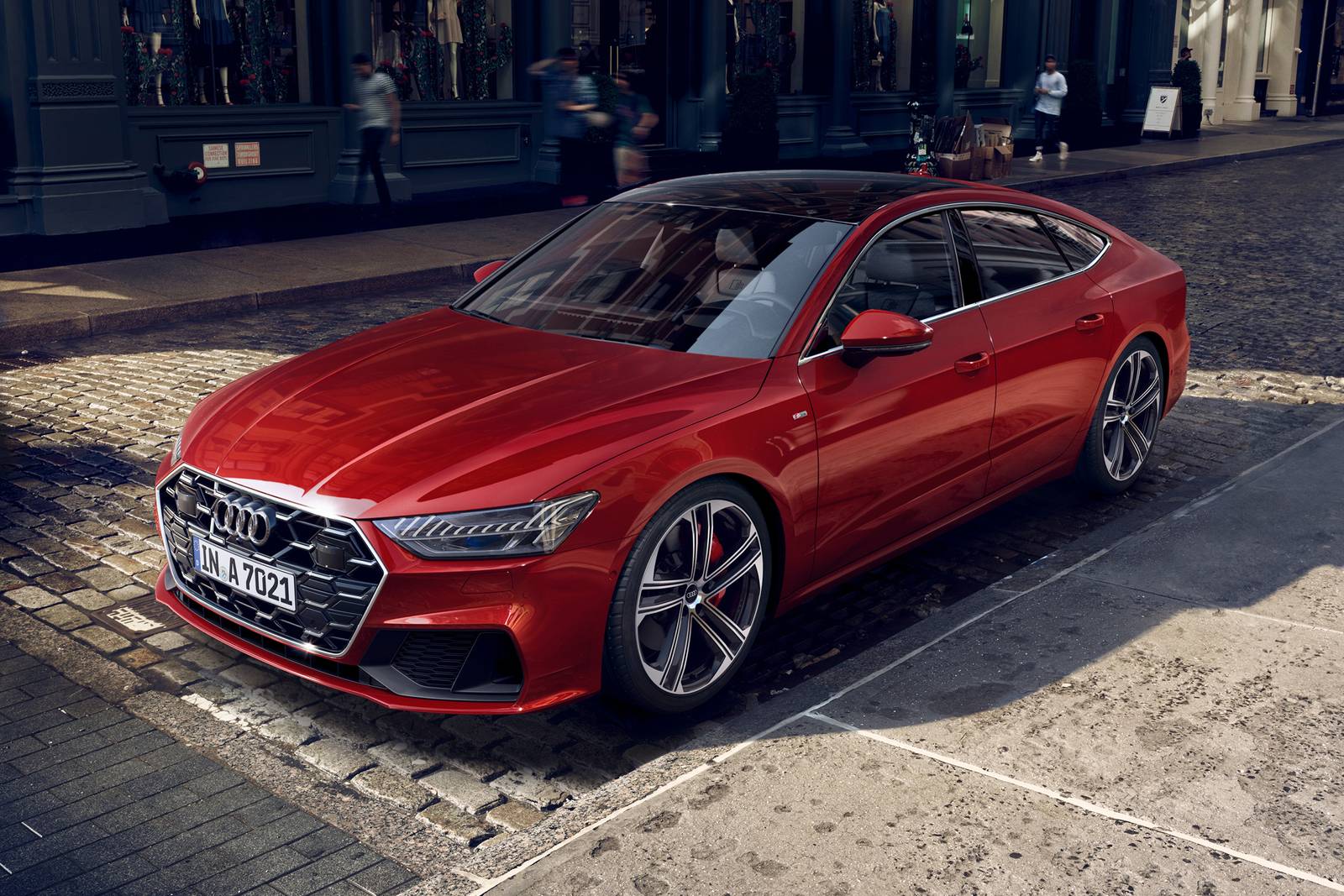
The Audi A7 is the design icon of this pair. Its Sportback silhouette, chiseled character lines, and continuous rear light strip have defined the segment since the first generation debuted. The 2025 model carries forward the same award-winning shape with minor updates to the lighting signatures. The A7 looks athletic, sophisticated, and timeless. It is the safer choice for buyers who want their luxury sedan to age gracefully.
Interior design follows the same philosophy. The G90 is warm, inviting, and reminiscent of a high-end lounge. The A7 is clinical, precise, and futuristic. Neither is objectively better — it depends on whether you prefer emotional design or rational design. The G90 feels like a luxury hotel; the A7 feels like a luxury tech showroom.
9. Who Should Buy Which?
Buy the 2025 Genesis G90 If:
- You want the most equipment for your money and refuse to pay extra for features that should be standard
- Rear-seat comfort is a priority — you transport clients, family, or simply enjoy being driven
- You value a whisper-quiet cabin with active noise cancellation and acoustic glass
- Long-term warranty coverage and complimentary maintenance are important to you
- You prefer a plush, isolated ride over sporty handling
- You want a full-size sedan with true road presence and executive proportions
- You plan to keep the vehicle for 6+ years and want powertrain protection beyond 100,000 miles
Buy the 2025 Audi A7 If:
- You want a lower entry price and stronger resale value over a shorter ownership period
- Driving dynamics and engagement matter — you enjoy spirited cornering and responsive steering
- Cargo versatility is essential — the Sportback hatchback offers SUV-like practicality
- You prefer a dual-clutch transmission and a more connected, European driving feel
- You value Audi’s brand heritage, dealership network, and Quattro all-wheel-drive reputation
- You want better fuel economy without sacrificing turbocharged V6 performance
- You plan to lease rather than buy, where the A7’s residuals may offer competitive payments
10. Final Verdict: 2025 Genesis G90 vs 2025 Audi A7
After evaluating every metric from price and performance to safety, technology, and long-term ownership costs, the 2025 Genesis G90 vs 2025 Audi A7 comparison reveals two exceptional but fundamentally different luxury sedans. The Genesis G90 is the value champion, offering full-size luxury, class-leading warranty coverage, and a standard feature list that embarrasses cars costing $30,000 more. It is the ideal choice for buyers who prioritize comfort, rear-seat space, and worry-free ownership over badge prestige.
The Audi A7 is the driver’s choice — lighter, quicker, more fuel-efficient, and infinitely more practical thanks to its Sportback design. It offers a more engaging driving experience, stronger brand recognition, and better resale value, albeit at the cost of a smaller cabin, fewer standard features, and a shorter warranty. For buyers who lease, enjoy canyon roads, or need cargo flexibility, the A7 is the smarter pick.
Our recommendation: If you are buying to keep long-term and want maximum luxury per dollar, choose the Genesis G90. If you are leasing or prioritizing driving enjoyment and practicality, choose the Audi A7. Both are outstanding vehicles that represent the best of their respective philosophies — Korean value engineering and German driving precision. Test drive both, sit in the back seat of the G90, and open the hatch of the A7. The right choice will become obvious.
Frequently Asked Questions
Is the 2025 Genesis G90 more reliable than the 2025 Audi A7?
Genesis consistently ranks highly in J.D. Power dependability studies, and the G90’s 10-year/100,000-mile powertrain warranty reflects the brand’s confidence. Audi has improved reliability in recent years but still trails Genesis in long-term ownership surveys. The G90’s complimentary maintenance program also reduces the likelihood of deferred service issues.
Does the 2025 Audi A7 have a better infotainment system than the Genesis G90?
The Audi A7’s MMI system is visually stunning and highly customizable, but it has a steeper learning curve. The Genesis G90’s infotainment is simpler and more intuitive, with less menu diving. If you prefer tactile buttons and straightforward navigation, the G90 wins. If you want cutting-edge graphics and dual-screen functionality, the A7 is superior.
Which is faster: the 2025 Genesis G90 or the 2025 Audi A7?
In independent testing, the Audi A7 reached 60 mph in 4.7 seconds, while the Genesis G90 E-SC is estimated at approximately 5.0 seconds. The A7’s lighter weight and dual-clutch transmission give it a slight acceleration advantage despite having less horsepower. The G90 E-SC’s 409 hp and 405 lb-ft of torque provide effortless passing power, but the A7 feels more eager off the line.
Can the 2025 Genesis G90 compete with the Mercedes-Benz S-Class?
Yes. Kelley Blue Book rated the Genesis G90 as tied with the Mercedes-Benz S-Class as the highest-rated full-size luxury car. While the S-Class offers more engine choices and brand cachet, the G90 matches or exceeds it in standard equipment, warranty coverage, and rear-seat comfort — all at a significantly lower price.
Is the 2025 Audi A7 worth the premium over the Audi A6?
The A7 commands a roughly $10,000 premium over the A6 for the same powertrain, but you gain the Sportback body style, more standard power, and a more distinctive design. For buyers who value style and cargo versatility, the premium is justified. For buyers who simply want a conventional luxury sedan, the A6 offers better value.
What is the best trim to buy for the 2025 Genesis G90?
The base 3.5T trim is generously equipped and represents the best value for most buyers. The E-SC Prestige adds meaningful upgrades — air suspension, massaging rear seats, and 21-inch wheels — but the $10,000 premium is only worthwhile if you regularly use the rear seat or demand the absolute best ride quality.
What is the best trim to buy for the 2025 Audi A7?
The Premium Plus trim hits the sweet spot. It adds the Bang & Olufsen 3D sound system, top-view camera, adaptive cruise assist, and wireless charging — features that transform the daily driving experience. The Prestige’s head-up display and remote park assist are nice but not essential for most buyers.