2025 Porsche Cayman vs 2025 BMW M2

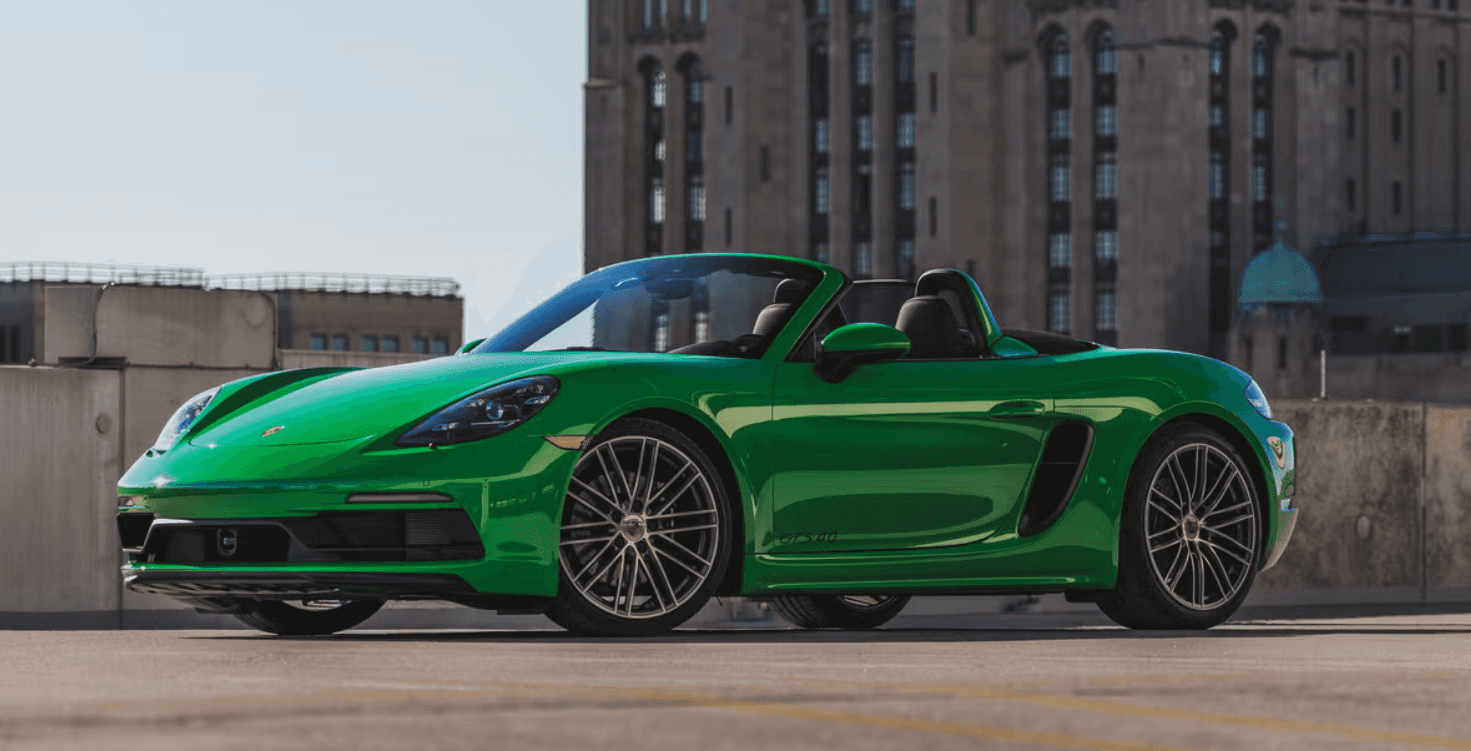
The 2025 Porsche Cayman and 2025 BMW M2 represent two distinct philosophies in the premium sports coupe segment. The Cayman offers a purpose-built mid-engine layout with sublime handling and a choice of four powertrains ranging from 300 to 493 hp, starting at $74,795. The BMW M2 delivers a front-engine, twin-turbo inline-six with 473 hp, a usable back seat, and a more modern tech-laden interior, starting at $65,500. Both are rear-wheel drive, both offer manual transmissions, and both are among the last great analog sports cars you can buy new in 2026.
Table of Contents
- Introduction: Why Compare the 2025 Porsche Cayman vs 2025 BMW M2?
- Pricing and Value Analysis
- Performance, Engine, and Powertrain Comparison
- Handling, Chassis, and Driving Dynamics
- Interior, Technology, and Infotainment
- Practicality, Cargo Space, and Daily Usability
- Fuel Economy and Running Costs
- Reliability, Warranty, and Ownership Costs
- Safety Features and Ratings
- Final Verdict: Which One Should You Buy?
- Frequently Asked Questions (FAQ)
1. Why Compare the 2025 Porsche Cayman vs 2025 BMW M2?
The 2025 Porsche Cayman vs 2025 BMW M2 is one of the most debated matchups in the premium sports car world today. Both vehicles occupy a similar price bracket, both deliver rear-wheel-drive thrills, and both cater to enthusiasts who refuse to settle for ordinary transportation. Yet beneath the surface, these two German coupes could not be more different in their approach to the same fundamental question: What is the ideal sports car?
The Porsche 718 Cayman is a purpose-built mid-engine sports car descended from decades of motorsport engineering. Its flat engines sit behind the driver, its weight distribution is near-perfect, and every component is optimized for one thing above all else: driving pleasure. The BMW M2, by contrast, is a high-performance derivative of the mainstream 2 Series coupe. It packs a muscular twin-turbo inline-six up front, offers a usable back seat, and wraps everything in a more modern, tech-forward package that feels closer to a daily driver than a track-day special.
With Porsche officially ending production of the 718 Cayman and Boxster in October 2025, the 2025 model year represents a final opportunity to own a new, gasoline-powered mid-engine Porsche sports car before the electric transition. Meanwhile, the BMW M2 continues to evolve, with the 2025 model receiving a power bump and updated infotainment. For buyers in 2026, this comparison is not just about choosing between two cars—it is about choosing between two philosophies, two eras, and two definitions of what a sports car should be.
2. Pricing and Value Analysis
Price is often the first filter for sports car buyers, and the gap between these two rivals is significant—though not in the direction you might expect.
2025 Porsche Cayman Pricing (U.S. MSRP)
| Trim | Engine | MSRP (U.S.) |
|---|---|---|
| 718 Cayman | 2.0L turbo flat-4, 300 hp | $74,795 |
| 718 Cayman Style Edition | 2.0L turbo flat-4, 300 hp | $81,195 |
| 718 Cayman S | 2.5L turbo flat-4, 350 hp | $86,795 |
| 718 Cayman GTS 4.0 | 4.0L nat-asp flat-6, 394 hp | $101,695 |
| 718 Cayman GT4 RS | 4.0L nat-asp flat-6, 493 hp | $166,195 |
Source: Kelley Blue Book — The 2025 Porsche 718 Cayman starts at $74,795, with the range-topping GT4 RS kicking off at $166,195. Notably, the 7-speed PDK dual-clutch transmission is now standard across the lineup, with the 6-speed manual offered as a no-cost option on most trims (excluding the GT4 RS, which is PDK-only). Porsche also added 11 new exterior paint colors for 2025 while discontinuing a couple of previous shades.
2025 BMW M2 Pricing (U.S. MSRP)
| Trim | Engine | MSRP (U.S.) |
|---|---|---|
| BMW M2 (Base) | 3.0L twin-turbo inline-6, 473 hp | $65,500 |
| BMW M2 (with 8-speed auto) | 3.0L twin-turbo inline-6, 473 hp / 443 lb-ft | $65,500 + options |
| BMW M2 CS (2026) | 3.0L twin-turbo inline-6, 523 hp | $99,950 |
Source: Edmunds, Car and Driver — The 2025 BMW M2 starts at $65,500, making it roughly $9,000 less expensive than the base Cayman. That gap widens when comparing the M2 to the Cayman S ($86,795) or GTS 4.0 ($101,695). The M2 also includes more standard equipment, such as a larger touchscreen, Apple CarPlay and Android Auto, heated front seats, and a Harman Kardon sound system—features that are often optional on the Porsche.
Value Verdict
On a pure dollar-for-horsepower basis, the BMW M2 is the clear winner. It delivers 473 hp for $65,500, while the base Cayman offers just 300 hp for $74,795. Even the Cayman S, at $86,795, only manages 350 hp—123 hp less than the base M2. However, Porsche buyers are paying for engineering purity, brand prestige, and a chassis that has no equal in this price range. The question is whether that premium is worth the trade-off in raw power and daily usability.
3. Performance, Engine, and Powertrain Comparison
Performance is where the philosophical divide between these two cars becomes most apparent. The M2 is a muscle car in a compact coupe body; the Cayman is a precision instrument with multiple personalities depending on trim.
Engine Specifications
| Specification | 2025 BMW M2 | 2025 Porsche Cayman (Base) | 2025 Porsche Cayman S | 2025 Porsche Cayman GTS 4.0 |
|---|---|---|---|---|
| Engine | 3.0L twin-turbo inline-6 | 2.0L turbo flat-4 | 2.5L turbo flat-4 | 4.0L nat-asp flat-6 |
| Horsepower | 473 hp @ 6,250 rpm | 300 hp @ 6,500 rpm | 350 hp | 394 hp |
| Torque | 406 lb-ft @ 2,650 rpm (manual) 443 lb-ft (auto) |
280 lb-ft @ 1,950 rpm | 309 lb-ft | 309 lb-ft |
| Transmission | 6-speed manual or 8-speed auto | 7-speed PDK (std) or 6-speed manual | 7-speed PDK (std) or 6-speed manual | 7-speed PDK (std) or 6-speed manual |
| Drivetrain | Rear-wheel drive | Rear-wheel drive | Rear-wheel drive | Rear-wheel drive |
| 0–60 mph | 3.9 sec (manual) / 3.5 sec (auto) | ~4.7 sec | ~4.2 sec | ~4.0 sec |
| Top Speed | 177 mph | 171 mph | 177 mph | 179 mph |
| Curb Weight | 3,755 lb | ~2,944 lb | ~3,000 lb | ~3,164 lb |
Sources: Car and Driver, U.S. News, Driving.ca, Kelley Blue Book — The BMW M2’s 3.0L twin-turbo inline-six produces 473 hp and 406 lb-ft of torque (443 lb-ft with the 8-speed automatic). In Car and Driver testing, the manual M2 hit 60 mph in 3.9 seconds and covered the quarter-mile in 12.1 seconds at 120 mph. The automatic version is even quicker, reaching 60 mph in 3.5 seconds and running the quarter in 11.6 seconds at 124 mph.
The base Cayman’s 2.0L turbo flat-four makes 300 hp and 280 lb-ft, while the Cayman S bumps displacement to 2.5 liters for 350 hp and 309 lb-ft. The GTS 4.0 swaps turbos for a naturally aspirated 4.0L flat-six producing 394 hp and 309 lb-ft, with a characterful 7,000-rpm redline that rewards high-rev driving. The range-topping GT4 RS takes the same 4.0L engine to 493 hp and 331 lb-ft, but at $166,195, it competes in an entirely different league.
Transmission Choices
Both cars offer manual transmissions—a rarity in 2026. The M2 comes standard with a 6-speed manual, with an 8-speed automatic as a no-cost option. The Cayman now makes the 7-speed PDK dual-clutch standard on most trims, with the 6-speed manual available as a no-cost option (the GT4 RS is PDK-only). Porsche’s PDK is widely regarded as one of the best dual-clutch transmissions in the world, offering lightning-fast shifts and exceptional refinement. The M2’s 8-speed automatic is no slouch either, but purists will appreciate that both manufacturers still cater to the three-pedal crowd.
4. Handling, Chassis, and Driving Dynamics
This is where the Cayman earns its premium. The mid-engine layout places the mass centrally and low, giving the Cayman a near-perfect weight distribution and a rotational agility that front-engine cars simply cannot match. The M2, despite its wider track, M-specific suspension components, and electronically controlled limited-slip differential, is still fundamentally a front-engine, rear-drive coupe derived from a mainstream platform.
Chassis Architecture
- Porsche Cayman: Mid-engine, rear-wheel drive. The engine sits behind the driver and ahead of the rear axle, creating a low center of gravity and ideal weight distribution. The Cayman uses MacPherson strut front and rear suspension, with Porsche Active Suspension Management (PASM) optional on lower trims and standard on GTS and above. Porsche Torque Vectoring with a mechanical locking differential is also available.
- BMW M2: Front-engine, rear-wheel drive. The M2 uses a strut front and multi-link rear suspension, with adaptive M suspension standard. The electronically controlled M limited-slip differential helps manage the 406 lb-ft of torque, but the 3,755-lb curb weight and 55.2-inch height make it feel taller and heavier than the Cayman.
On-Road Behavior
According to Car Magazine’s twin test of the M2 CS versus the Cayman GTS, the Porsche “delivers the purer, more unfiltered driving experience. Its mid-engine dynamics are sublimely finessed, and its naturally aspirated flat-six remains a benchmark for character and response.” The review notes that the Cayman’s steering is “more linear and organic,” its damping more supple, and its weight distribution “simply feels inherently better—feathery at the front, planted at the rear.”
The M2, by contrast, is described as “more oversteer-biased” and “agility bordering on instability” when pushed hard. Its greater power and torque mean it relies more heavily on electronic intervention to keep things tidy, especially in wet conditions. However, the M2’s 10-stage traction control system allows skilled drivers to progressively dial back assistance, making it a more playful and tail-happy machine for those who enjoy sliding.
Track Performance
On a racetrack, the gap narrows. The M2’s brute power and wider tires (275/35ZR-19 front, 285/30ZR-20 rear) generate impressive grip, and its braking performance is strong (70–0 mph in 153 feet per Car and Driver). The Cayman GTS 4.0, with its lighter weight and more communicative chassis, may ultimately be the faster car around a technical circuit, but the M2’s straight-line speed is undeniable. The M2 CS (2026), with 523 hp and a 0–60 time of 3.3 seconds, would likely outpace any Cayman short of the GT4 RS on most tracks.
5. Interior, Technology, and Infotainment
Step inside these two cars and the difference in design philosophy is immediately apparent. The M2 feels like a modern BMW—big screens, digital everything, and space for four. The Cayman feels like a sports car from a different era—analog gauges, physical buttons, and a cockpit designed around the driver rather than the passenger.
2025 BMW M2 Interior

- Display: 12.3-inch digital instrument cluster + 14.9-inch curved touchscreen running BMW iDrive 8.5
- Connectivity: Apple CarPlay, Android Auto, wireless charging, Wi-Fi hotspot
- Audio: 12-speaker Harman Kardon surround sound (standard)
- Seats: Heated front sport seats with memory function (standard); optional carbon-fiber bucket seats on M2 CS
- Materials: Merino leather, carbon fiber trim, aluminum accents
- Passenger Capacity: 4 seats (rear seats are tight but usable for short trips)
2025 Porsche Cayman Interior
- Display: 7.0-inch touchscreen (PCM) with Porsche Connect; optional upgraded systems
- Connectivity: Apple CarPlay (standard); Android Auto not available
- Audio: 8-speaker base system; optional Bose or Burmester high-end audio
- Seats: Power-adjustable sport seats; optional 18-way adaptive sport seats, heated steering wheel
- Materials: High-quality leather, Alcantara, and aluminum; extensive customization options
- Passenger Capacity: 2 seats only
Source: U.S. News, Driving.ca — The M2’s interior is the more modern and tech-forward of the two. Its iDrive 8.5 system is responsive and feature-rich, though some critics find it overly complex. The Cayman’s PCM system, while functional, lacks the visual flair and responsiveness of BMW’s setup. However, the Cayman’s cockpit is praised for its driver-focused ergonomics, with a center-mounted tachometer and a steering wheel that feels perfectly sized for spirited driving.
One notable omission on the Cayman is Android Auto, which is unavailable across the 718 lineup. For Android users, this is a significant drawback. The M2 offers both Apple CarPlay and Android Auto as standard, along with a Wi-Fi hotspot and wireless charging—features that make it the better choice for tech-savvy buyers.
6. Practicality, Cargo Space, and Daily Usability
If you need to carry passengers or luggage regularly, the BMW M2 is the only viable option. But the Cayman’s two-trunk layout is surprisingly clever for a mid-engine car.
Dimensions and Space
| Dimension | 2025 BMW M2 | 2025 Porsche Cayman |
|---|---|---|
| Length | 180.3 in | 172.4 in |
| Width | 74.3 in | 70.9 in |
| Height | 55.2 in | 51.0 in |
| Wheelbase | 108.1 in | 97.4 in |
| Curb Weight | 3,755 lb | ~2,944 lb (base) |
| Passenger Capacity | 4 | 2 |
| Trunk Volume | 13.8 cu ft | 9.6 cu ft (rear) + 5.3 cu ft (frunk) = ~15 cu ft total |
Sources: U.S. News, Car Throttle — The M2 is significantly larger in every dimension, offering a usable back seat with 33 inches of rear legroom—tight for adults, but fine for children or short trips. Its single 13.8-cubic-foot trunk is practical for grocery runs or weekend bags. The Cayman, despite its compact dimensions, offers a combined cargo capacity of roughly 15 cubic feet split between a 5.3-cubic-foot front trunk and a 9.6-cubic-foot rear hatch area. As Car Throttle noted, “it still has a capacious boot at the rear plus a sizeable frunk big enough to swallow an Alex Kersten, giving more luggage space than the M2 overall.”
However, the Cayman’s cabin storage is minimal, and the cup holders are famously flimsy. The M2, with its four-seat layout and modern interior, is simply the easier car to live with daily. For buyers who need to occasionally transport passengers, the M2’s back seat—however cramped—is a deal-maker.
7. Fuel Economy and Running Costs
Neither of these cars is purchased for fuel efficiency, but running costs matter—especially with premium fuel prices.
EPA Fuel Economy Ratings
| Model | City MPG | Highway MPG | Combined MPG |
|---|---|---|---|
| 2025 BMW M2 (manual) | 16 | 24 | 19 |
| 2025 BMW M2 (automatic) | 16 | 23 | 19 |
| 2025 Porsche Cayman (2.0L PDK) | 21 | 27 | 23 |
| 2025 Porsche Cayman S (2.5L PDK) | 20 | 26 | 22 |
| 2025 Porsche Cayman GTS 4.0 (PDK) | 18 | 24 | 20 |
Sources: U.S. News, EPA estimates — The base Cayman with its 2.0L turbo four-cylinder is notably more efficient than the M2, achieving 21 mpg city and 27 mpg highway. The M2’s twin-turbo inline-six is thirstier, rated at 16 mpg city and 24 mpg highway. However, the gap narrows with the Cayman GTS 4.0, which drops to 18/24 mpg—only marginally better than the M2. Both cars require premium unleaded gasoline.
Real-world fuel economy will vary significantly based on driving style. Enthusiasts who exploit the M2’s 473 hp or the GTS 4.0’s 7,000-rpm redline can expect single-digit mpg during spirited driving. Car and Driver observed 17 mpg during their M2 test, while Car Magazine recorded 18.6 mpg for the Cayman GTS during their twin test.
8. Reliability, Warranty, and Ownership Costs
Warranty Coverage
| Coverage | BMW M2 | Porsche Cayman |
|---|---|---|
| Basic Warranty | 4 years / 50,000 miles | 4 years / 50,000 miles |
| Powertrain Warranty | 4 years / 50,000 miles | 4 years / 50,000 miles |
| Roadside Assistance | 4 years / unlimited miles | 4 years / unlimited miles |
| Maintenance | 3 years / 36,000 miles (included) | 1 year / 10,000 miles (included) |
Source: Driving.ca — Both manufacturers offer identical 4-year/50,000-mile basic and powertrain warranties. BMW edges ahead with 4 years of roadside assistance versus Porsche’s comparable coverage, and BMW includes 3 years/36,000 miles of scheduled maintenance—Porsche only covers the first year/10,000 miles.
Reliability Expectations
Consumer Reports gives the 2025 Porsche 718 a predicted reliability rating of 50/100, describing it as “about average.” In J.D. Power’s 2025 U.S. Vehicle Dependability Study, Porsche ranked 8th among all automakers. The M2, being a newer model with less long-term data, has shown strong initial quality but shares its S58 engine with the proven M3 and M4. Both cars are complex performance machines, and maintenance costs will be higher than those of mainstream vehicles. Expect annual maintenance costs of $1,500–$3,000 for either car, with Porsche parts and labor typically commanding a premium.
Resale Value
Porsche vehicles historically retain value exceptionally well, and with the 718 Cayman production ending in October 2025, late-model examples may become even more desirable. The M2 also holds value strongly, particularly manual transmission models, but Porsche’s brand prestige and the Cayman’s limited production run give it an edge in long-term depreciation resistance.
9. Safety Features and Ratings
Neither the Porsche 718 Cayman nor the BMW M2 has been crash-tested by the NHTSA or IIHS—common for low-volume sports cars. However, both come with a suite of modern safety features.
2025 BMW M2 Safety Features
- Standard: Back-up camera, blind-spot monitoring, lane departure warning, tire pressure monitoring, stability control, pre-collision safety system
- Optional: Adaptive cruise control, heads-up display, automatic parking
- Airbags: Front, side, side curtain (6 total)
2025 Porsche Cayman Safety Features
- Standard: Rearview camera, hill holder, low tire pressure monitor, bi-xenon headlights, front radar parking assistance
- Optional: Adaptive cruise control, blind-spot monitoring
- Airbags: Front, side, knee (6 total)
Sources: Edmunds, Driving.ca, U.S. News — The M2 offers more standard driver-assistance technology, including lane departure warning and blind-spot monitoring. The Cayman’s safety suite is more basic, reflecting its older platform and focus on weight reduction over electronic intervention. Neither car offers advanced semi-autonomous driving features—appropriate for vehicles designed to be driven, not driven for you.
10. Final Verdict: Which One Should You Buy?
The choice between the 2025 Porsche Cayman and 2025 BMW M2 ultimately comes down to what you value most in a sports car.
Buy the 2025 BMW M2 If You Want:
- Maximum horsepower per dollar — 473 hp for $65,500 is unmatched in this segment
- Daily usability — A real back seat, modern infotainment, and Android Auto
- Raw, playful character — Tail-happy dynamics and a muscular inline-six soundtrack
- Better standard equipment — Heated seats, Harman Kardon audio, and memory functions included
- Lower running costs — 3 years of included maintenance and better parts availability
Buy the 2025 Porsche Cayman If You Want:
- The purest driving experience — Mid-engine balance, telepathic steering, and a chassis without compromise
- Engineering pedigree — A car built from the ground up as a sports car, not adapted from a commuter coupe
- Choice of character — Four distinct powertrains, from efficient turbo fours to screaming naturally aspirated flat-sixes
- Brand prestige and resale value — Porsche’s legendary depreciation resistance and collector appeal
- A piece of history — The final gasoline-powered Cayman before electrification
The Bottom Line
For the enthusiast who measures a car by lap times and horsepower figures, the BMW M2 is the rational choice. It is faster, cheaper, better equipped, and easier to live with every day. But for the driver who believes that the journey matters more than the destination, the Porsche Cayman remains the gold standard. Its mid-engine chassis is a masterclass in balance and feedback, its naturally aspirated flat-six is an auditory masterpiece, and its very existence as a purpose-built sports car is increasingly rare in an era of electrification and automation.
As Car Magazine concluded in their twin test: “The Cayman delivers the purer, more unfiltered driving experience… [but] the M2 CS’s cabin and boot are more usable, its interior more modern and its infotainment far superior.” For most buyers in 2026, the M2’s blend of performance, practicality, and value makes it the smarter purchase. But for the purist, the Cayman is the only choice—and with production ending, it may soon be the only choice no longer available.
11. Frequently Asked Questions (FAQ)
Is the 2025 BMW M2 faster than the 2025 Porsche Cayman?
Yes. The base M2 (473 hp) accelerates from 0–60 mph in 3.5 seconds with the automatic transmission, while the base Cayman (300 hp) takes approximately 4.7 seconds. Even the Cayman S (350 hp) is slower to 60 mph than the M2. Only the Cayman GT4 RS (493 hp) can out-accelerate the M2, but it costs more than twice as much.
Which is better for daily driving, the Cayman or the M2?
The BMW M2 is the better daily driver. It offers a usable back seat, a larger trunk, modern infotainment with Android Auto, heated seats, and a more comfortable ride. The Cayman is a strict two-seater with limited cabin storage and a stiffer suspension, making it more of a weekend toy than a commuter.
Does the 2025 Porsche Cayman offer a manual transmission?
Yes, but with a caveat. For 2025, the 7-speed PDK dual-clutch automatic is standard across most of the Cayman lineup, with the 6-speed manual available as a no-cost option. The exception is the GT4 RS, which is PDK-only. This is a reversal from previous years, where the manual was standard, and PDK was optional.
Is the 2025 Porsche Cayman being discontinued?
Production of the gasoline-powered 718 Cayman and Boxster is scheduled to end in October 2025. Porsche has confirmed that the next-generation Cayman will be electric, though high-performance variants may retain internal combustion engines. The 2025 model year is effectively the final opportunity to buy a new, gas-powered mid-engine Porsche sports car.
Which car holds its value better?
Porsche vehicles generally retain value better than BMWs, and with the Cayman entering its final production run, late-model examples are likely to become increasingly collectible. The M2 also holds value well, especially manual transmission models, but the Cayman’s brand prestige and limited availability give it the edge in long-term depreciation resistance.
Can you track the BMW M2 or the Porsche Cayman?
Absolutely. Both cars are track-capable from the factory. The M2’s wider tires, powerful brakes, and adaptive suspension make it a formidable track weapon. The Cayman’s lighter weight, mid-engine balance, and optional carbon-ceramic brakes give it exceptional agility and consistency. For serious track use, the Cayman GTS 4.0 or GT4 RS offer more focused hardware, while the M2 CS bridges the gap with its 523-hp engine and M-specific tuning.