2025 Genesis G90 vs 2026 BMW 7-Series
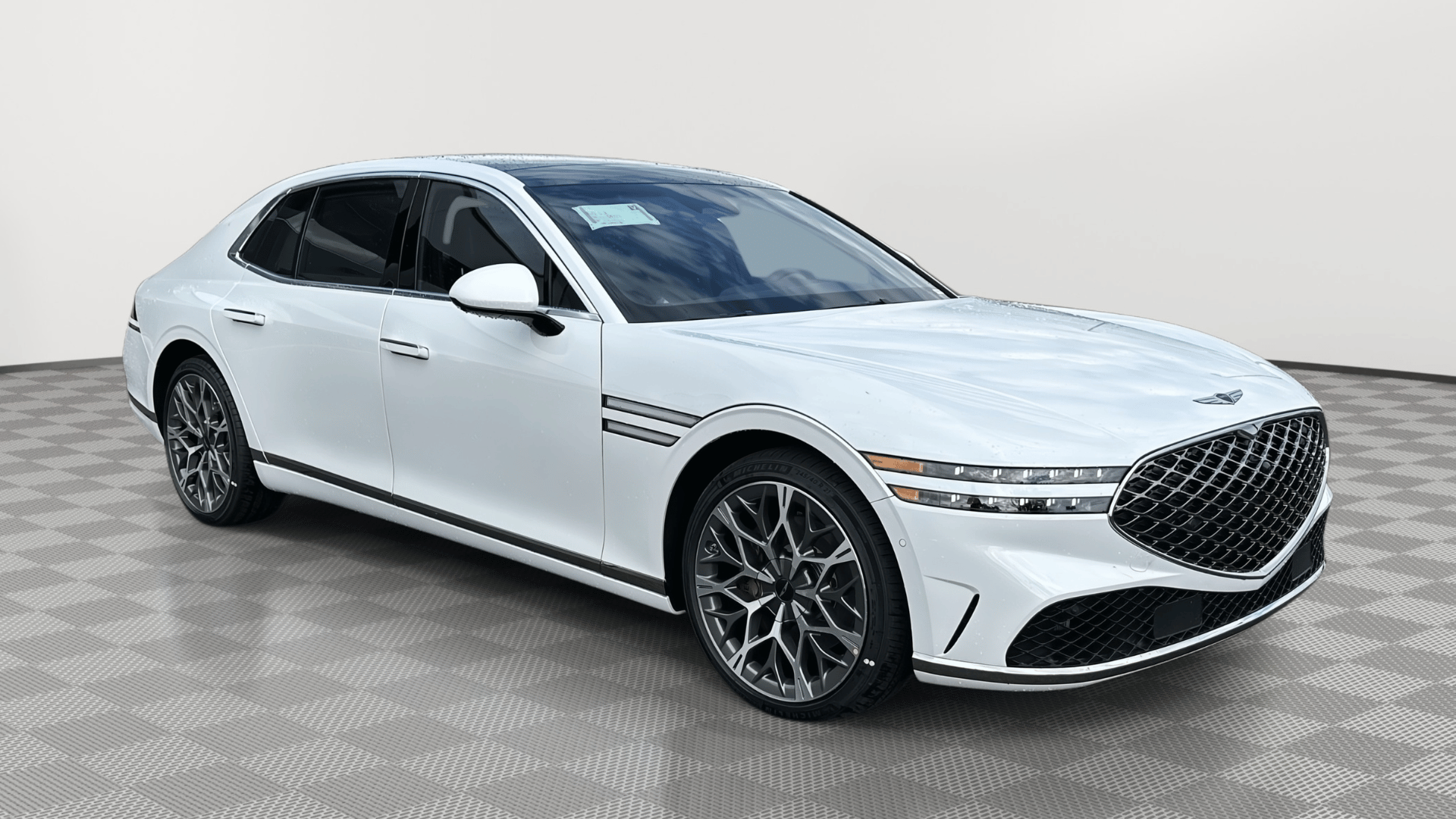
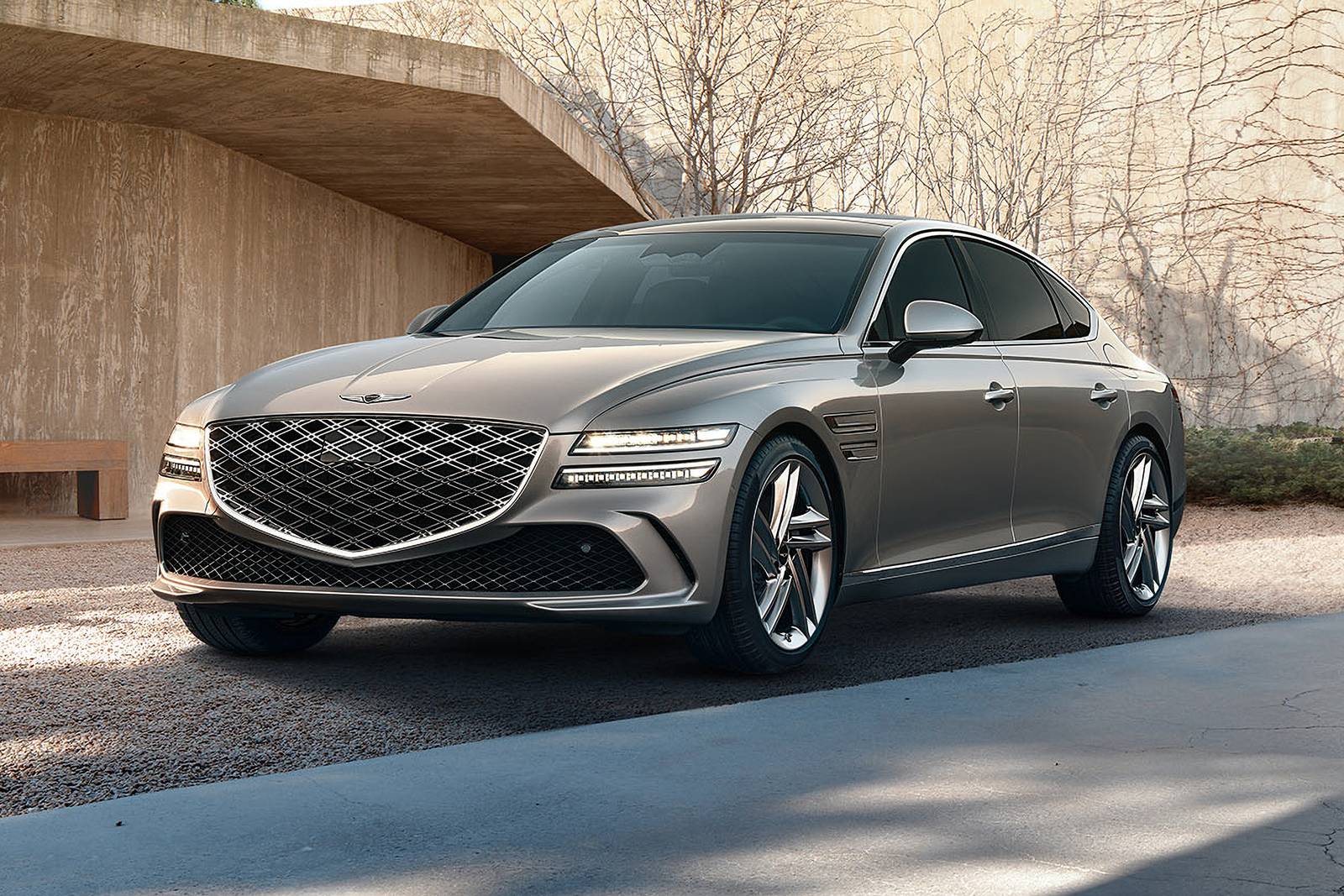
The 2025 Genesis G90 vs 2026 BMW 7-Series represents one of the most compelling showdowns in the full-size luxury sedan segment today. As the Genesis G90 continues to challenge established German dominance with its Korean craftsmanship and value proposition, the BMW 7-Series remains the benchmark for executive-class performance and technological sophistication. This comprehensive buyer guide breaks down every critical factor—from pricing and performance to interior luxury and long-term ownership costs—to help you make the most informed decision in 2026.
Table of Contents
- Overview: The Contenders
- Pricing & Value Analysis
- Performance & Powertrain Options
- Interior Luxury & Technology
- Safety Ratings & Driver Assistance
- Fuel Economy & Efficiency
- Warranty & Ownership Costs
- Final Verdict: Which Should You Buy?
1. Overview: The Contenders
The full-size luxury sedan market has long been dominated by German automakers, but the 2025 Genesis G90 has emerged as a legitimate disruptor. Now in its second generation, the G90 offers a compelling blend of Korean design philosophy, cutting-edge technology, and aggressive pricing that has forced even BMW to take notice. Meanwhile, the 2026 BMW 7-Series continues to evolve its legacy of precision engineering, offering a range of powertrains from efficient inline-six engines to thunderous V8s and all-electric variants.
Both vehicles target the same discerning buyer: someone who demands uncompromising comfort, advanced technology, and a commanding road presence. However, they approach this goal from fundamentally different philosophies. Genesis emphasizes value and serenity, while BMW prioritizes driving dynamics and technological innovation.
Genesis G90: The Korean Challenger
The Genesis G90 entered its second generation in 2023, and the 2025 model year carries forward with minimal changes. Genesis has positioned the G90 as a “value luxury” proposition—delivering S-Class-level amenities at a significantly lower price point. The G90 is available in two trims: the base 3.5T and the upgraded 3.5T E-Supercharger (E-SC), both powered by a twin-turbo 3.5-liter V6 engine with varying levels of hybrid assistance.
BMW 7-Series: The German Benchmark
The current BMW 7-Series (G70 generation) debuted for the 2023 model year and continues into 2026 with evolutionary updates. BMW offers the 7-Series in multiple configurations: the 740i with a turbocharged inline-six, the 750e xDrive plug-in hybrid, the 760i xDrive with a twin-turbo V8, and the all-electric i7 variants. This breadth of powertrain options gives BMW a significant advantage in appealing to diverse buyer preferences, from efficiency-focused executives to performance enthusiasts.
2. Pricing & Value Analysis
Pricing is where the Genesis G90 makes its most compelling case. The value differential between these two flagship sedans is substantial and represents the single biggest factor for many buyers.
2025 Genesis G90 Pricing
| Trim | MSRP (USD) | Key Features |
|---|---|---|
| 3.5T | $90,950 | 375 hp, 20-inch wheels, Nappa leather, heated/cooled front seats, heated rear seats, 12.3-inch touchscreen, wireless Apple CarPlay/Android Auto, Bang & Olufsen 23-speaker audio |
| 3.5T E-SC | $101,250 | 409 hp, 48V mild-hybrid, air suspension, 21-inch wheels, massaging front and rear seats, upgraded audio |
According to Kelley Blue Book, the Genesis G90 3.5T starts at $91,195, while the E-Supercharger trim begins at $101,495. However, KBB Fair Purchase Pricing suggests buyers can expect to pay $81,700 to $91,000, respectively, representing significant discounts below MSRP. The G90’s pricing undercuts the BMW 7-Series by approximately $25,000 to $50,000, depending on configuration.
2026 BMW 7-Series Pricing
| Model | MSRP (USD) | Key Features |
|---|---|---|
| 740i (RWD) | $100,600 | 375 hp inline-six, 48V mild-hybrid, 14.9-inch touchscreen, air suspension, leather upholstery |
| 740i xDrive | $103,600 | AWD version of 740i |
| 750e xDrive PHEV | $117,395 | 483 hp plug-in hybrid, 14.4 kWh battery, ~35 miles electric range |
| 760i xDrive | $142,800 | 536 hp twin-turbo V8, 48V hybrid, standard AWD |
| i7 eDrive50 | $106,875 | 449 hp RWD electric, 321-mile range |
| i7 xDrive60 | $125,375 | 536 hp AWD electric, 311-mile range |
| i7 M70 | $169,675 | 650 hp AWD electric, performance-tuned |
The BMW 7-Series commands a significant premium over the Genesis G90. Even the entry-level 740i costs approximately $10,000 more than the base G90, while the range-topping i7 M70 costs nearly $70,000 more than the fully loaded G90 E-SC. However, BMW offers more powertrain diversity and higher performance ceilings.
Value Proposition Analysis
The Genesis G90 delivers exceptional value by including features that are optional on the BMW. Standard equipment on the G90 includes Nappa leather, heated and ventilated front seats, heated rear seats, a 23-speaker Bang & Olufsen audio system, wireless charging, and a comprehensive driver assistance suite. To achieve similar equipment levels on the BMW 7-Series, buyers must add expensive option packages.
However, BMW counters with superior resale value expectations and brand prestige. The 7-Series also offers technologies not available on the G90, including the 31.3-inch Theater Screen rear entertainment system, electrically powered doors, and a wider range of powertrain choices, including plug-in hybrid and full electric options.
3. Performance & Powertrain Options
Performance characteristics diverge significantly between these two luxury sedans, reflecting their distinct brand philosophies.
2025 Genesis G90 Powertrain
The Genesis G90 offers a single engine with two states of tune:
- 3.5T Base: Twin-turbo 3.5L V6 producing 375 horsepower and 391 lb-ft of torque
- 3.5T E-SC: Same engine with a 48-volt electric supercharger (mild-hybrid) producing 409 horsepower and 405 lb-ft of torque
Both engines pair with an 8-speed automatic transmission and standard all-wheel drive. The E-SC system virtually eliminates turbo lag through its electric supercharger, providing immediate torque from 1,300 rpm. The G90 prioritizes smooth, linear acceleration over raw performance. The E-SC trim includes an air suspension and adaptive dampers that scan the road ahead using a forward-facing camera to prepare for bumps.
Performance estimates place the G90 3.5T at approximately 5.0 seconds for 0-60 mph, while the E-SC version achieves this in roughly 4.5 seconds. The G90 is not a sports sedan—its 5,200+ pound curb weight and comfort-focused tuning prioritize serenity over agility. However, rear-wheel steering enhances maneuverability in tight spaces.
2026 BMW 7-Series Powertrain Options
BMW offers significantly more powertrain diversity:
- 740i: 3.0L turbocharged inline-six with 48V mild-hybrid, 375 hp, 0-60 mph in 4.9 seconds (RWD standard, AWD optional)
- 750e xDrive: 3.0L inline-six plug-in hybrid with electric motor, 483 hp, 516 lb-ft torque
- 760i xDrive: 4.4L twin-turbo V8 with 48V hybrid, 536 hp, 553 lb-ft torque, 0-60 mph in 3.5 seconds
- i7 eDrive50: Single electric motor, 449 hp, RWD, 321-mile range
- i7 xDrive60: Dual electric motors, 536 hp, AWD, 311-mile range, 0-60 mph in 4.1 seconds
- i7 M70: Dual electric motors, 650 hp, AWD, 0-60 mph in 3.3 seconds
The BMW 7-Series demonstrates clear performance superiority, particularly in V8 and electric configurations. The 760i xDrive’s 3.5-second 0-60 time and the i7 M70’s 3.3-second sprint place these variants in genuine sports car territory. BMW’s standard air suspension, adaptive dampers, and rear-wheel steering create a more dynamic driving character while maintaining luxury comfort.
Performance Comparison Summary
| Metric | Genesis G90 3.5T E-SC | BMW 740i | BMW 760i xDrive | BMW i7 xDrive60 |
|---|---|---|---|---|
| Horsepower | 409 hp | 375 hp | 536 hp | 536 hp |
| Torque | 405 lb-ft | 391 lb-ft | 553 lb-ft | 549 lb-ft |
| 0-60 mph | ~4.5 sec | 4.9 sec | 3.5 sec | 4.1 sec |
| Transmission | 8-speed auto | 8-speed auto | 8-speed auto | Single-speed |
| Drivetrain | AWD | RWD/AWD | AWD | AWD |
| Curb Weight | ~5,192 lbs | ~4,848 lbs | ~5,317 lbs | ~6,067 lbs |
The BMW offers superior performance flexibility, with options ranging from efficient to exhilarating. The Genesis provides adequate performance for luxury cruising but cannot match the BMW’s upper-range capabilities.
4. Interior Luxury & Technology
Interior quality and technology integration represent critical battlegrounds in the luxury sedan segment. Both vehicles offer exceptional materials and cutting-edge features, but with different philosophical approaches.
2025 Genesis G90 Interior
The Genesis G90 interior emphasizes warmth and traditional luxury. Standard features include:
- Nappa leather upholstery (standard)
- 12.3-inch digital instrument cluster
- 12.3-inch touchscreen infotainment display
- 23-speaker Bang & Olufsen surround sound system
- Wireless Apple CarPlay and Android Auto (2025 update)
- Wireless charging pad
- Head-up display
- 18-way power-adjustable driver seat with heating, ventilation, and massage
- 16-way power-adjustable passenger seat
- Heated rear seats (standard)
- Acoustic glass on all side windows
- Active noise cancellation
- Three-zone climate control
- Refrigerated center console storage
- Power rear sunshades
- Automatic soft-close doors
The E-SC trim adds massaging rear seats, 21-inch wheels, and an upgraded air suspension. Genesis’s interior design philosophy prioritizes intuitive controls over screen proliferation, maintaining physical buttons for climate and audio functions. The cabin achieves exceptional quietness through laminated glass and active noise cancellation, creating a serene environment that rivals the Mercedes-Benz S-Class.
However, the G90’s trunk capacity is a notable weakness at just 12 cubic feet (approximately 340 liters), significantly smaller than the BMW’s 19 cubic feet and the Audi A8’s 18 cubic feet.
2026 BMW 7-Series Interior

The BMW 7-Series interior represents a technological tour de force:
- Leather or optional cashmere upholstery
- 14.9-inch curved touchscreen display
- 12.3-inch digital instrument cluster
- iDrive 8.5 operating system with enhanced voice control
- 18-speaker Bowers & Wilkins audio (standard)
- 36-speaker Bowers & Wilkins Diamond Surround Sound (optional)
- Wireless Apple CarPlay and Android Auto
- 5G connectivity and Wi-Fi hotspot
- Available 31.3-inch 8K Theater Screen with Amazon Fire TV
- Electrically powered soft-close doors (optional)
- Executive Lounge rear seating with reclining function and footrests
- Four-zone climate control
- Glass and wood trim options
- Available rear-seat massage and ventilation
- Panoramic Sky Lounge LED roof
BMW’s interior philosophy leans heavily into digital integration. The iDrive system, while powerful, presents a steeper learning curve than Genesis’s more intuitive interface. The available Theater Screen transforms the rear cabin into a mobile entertainment center, though this feature adds significant cost. The 7-Series offers greater interior customization through BMW Individual programs, allowing bespoke color combinations and materials.
Interior Comparison Verdict
Both interiors achieve exceptional quality, but cater to different preferences. The Genesis G90 offers a more traditionally luxurious, warm environment with superior standard equipment and intuitive controls. The BMW 7-Series provides greater technological spectacle and customization options but requires navigating complex digital interfaces. For buyers prioritizing rear-seat luxury, BMW’s Executive Lounge package and Theater Screen create an unmatched experience—for a substantial additional cost.
5. Safety Ratings & Driver Assistance
Safety technology is comprehensive in both vehicles, though the Genesis holds a notable advantage in formal crash testing.
2025 Genesis G90 Safety
The Genesis G90 has undergone formal crash testing by the Insurance Institute for Highway Safety (IIHS), earning a Top Safety Pick+ award for 2024 (the highest possible designation). It achieved Good scores in small front overlap, moderate front overlap, and updated side impact tests. The G90 includes a comprehensive suite of standard safety features:
- Forward collision warning with automatic emergency braking
- Blind-spot monitoring with rear cross-traffic alert
- Lane departure warning and lane-keeping assist
- Adaptive cruise control with stop-and-go capability
- Highway Driving Assist (hands-free driving for limited durations)
- 360-degree camera system
- Front and rear parking sensors
- Safe exit assist
- 10 airbags including front, side, side curtain, and knee airbags
2026 BMW 7-Series Safety
The BMW 7-Series has not yet undergone formal crash testing by IIHS or NHTSA, which is common for low-volume luxury vehicles. However, BMW’s safety technology is comprehensive:
- Forward collision warning with automatic emergency braking
- Blind-spot monitoring with rear cross-traffic alert
- Lane departure warning and lane-keeping assist
- Adaptive cruise control with stop-and-go
- Highway Assistant (hands-free driving with gaze-based lane change confirmation)
- 360-degree camera system
- Front and rear parking sensors
- Available Parking Assistant Professional with automated parking
- 8 airbags
BMW’s Highway Assistant represents a technological advancement over Genesis’s system, allowing for gaze-based lane change confirmation rather than requiring manual input. However, the lack of formal crash test ratings creates uncertainty compared to the G90’s proven safety record.
6. Fuel Economy & Efficiency
Fuel efficiency represents a significant differentiator, particularly with BMW’s diverse powertrain options.
2025 Genesis G90 Fuel Economy
The Genesis G90 is not particularly efficient for its class:
- 3.5T Base: EPA estimated 18 mpg city / 26 mpg highway / 21 mpg combined
- 3.5T E-SC: EPA estimated 17 mpg city / 24 mpg highway / 20 mpg combined
Both engines require premium unleaded fuel. The mild-hybrid system in the E-SC is tuned for performance enhancement rather than efficiency, explaining why it achieves lower ratings than the base engine. Real-world testing by Car and Driver observed 20 mpg combined in a 760i xDrive (though this is a different vehicle, the figures illustrate typical luxury sedan consumption).
2026 BMW 7-Series Fuel Economy
BMW offers significantly better efficiency, particularly in non-V8 configurations:
- 740i: EPA estimated 25 mpg city / 31 mpg highway / 28 mpg combined
- 740i xDrive: EPA estimated 24 mpg city / 31 mpg highway / 27 mpg combined
- 750e xDrive: EPA estimated 4.2 Le/100 km equivalent (highly efficient in electric mode)
- 760i xDrive: EPA estimated 18 mpg city / 25 mpg highway / 21 mpg combined
- i7 eDrive50: EPA estimated 87 MPGe city / 95 MPGe highway
- i7 xDrive60: EPA estimated 85 MPGe city / 89 MPGe highway
The 740i demonstrates remarkable efficiency for a full-size luxury sedan, achieving 31 mpg on the highway. The plug-in hybrid 750e offers approximately 35 miles of pure electric range, making it ideal for urban commuting. The i7 electric variants eliminate gasoline entirely, with the eDrive50 offering up to 321 miles of range.
Efficiency Verdict
BMW holds a decisive advantage in efficiency. The 740i achieves approximately 30% better fuel economy than the Genesis G90, while the plug-in hybrid and electric options offer dramatically lower operating costs. For environmentally conscious buyers or those with short daily commutes, the 750e or i7 represent compelling alternatives unavailable in the Genesis lineup.
7. Warranty & Ownership Costs
Long-term ownership costs and warranty coverage represent another area where Genesis dramatically outperforms BMW.
2025 Genesis G90 Warranty
Genesis offers class-leading warranty coverage:
- Basic Warranty: 5 years / 60,000 miles
- Powertrain Warranty: 10 years / 100,000 miles
- Roadside Assistance: 5 years / unlimited miles
- Complimentary Maintenance: 3 years / 36,000 miles
- Corrosion Protection: 7 years / unlimited miles
Genesis also provides complimentary scheduled maintenance for three years, and the brand’s concierge service includes vehicle pickup and delivery for maintenance appointments. This comprehensive coverage significantly reduces ownership costs during the initial years.
2026 BMW 7-Series Warranty
BMW’s warranty coverage is typical for the luxury segment but less generous than Genesis:
- Basic Warranty: 4 years / 50,000 miles
- Powertrain Warranty: 4 years / 50,000 miles
- Roadside Assistance: 4 years / unlimited miles
- Complimentary Maintenance: 3 years / 36,000 miles
- Corrosion Protection: 12 years / unlimited miles
- i7 Battery Warranty: 8 years / 100,000 miles
BMW includes three years of complimentary scheduled maintenance, matching Genesis. However, the shorter basic and powertrain warranties mean higher potential costs in years 4-5 of ownership. BMW’s extended warranty options are available, but they add a high cost.
Maintenance & Reliability Considerations
Consumer Reports predicts the Genesis G90 will have “about average reliability” compared to other new cars, based on brand history and similar models. BMW’s reliability record for the 7-Series is mixed, with complex electronics and air suspension systems presenting potential long-term maintenance concerns.
Genesis’s valet service—where the dealership picks up your vehicle for maintenance and leaves a loaner—adds significant convenience value that BMW does not universally match. This service, combined with the longer warranty, creates a lower-stress ownership experience.
8. Final Verdict: Which Should You Buy?
The choice between the 2025 Genesis G90 and the 2026 BMW 7-Series ultimately depends on buyer priorities and budget.
Buy the Genesis G90 If:
- You prioritize exceptional value and standard equipment
- You want a proven safety record with IIHS Top Safety Pick+
- You prefer intuitive technology over complex digital interfaces
- You value comprehensive warranty coverage and complimentary maintenance
- You desire a serene, quiet cabin for highway cruising
- You want valet-style service and concierge treatment
- You don’t require maximum performance or electric powertrain options
- You can accept a smaller trunk and polarizing exterior styling
Buy the BMW 7-Series If:
- You demand maximum performance (V8 or i7 M70)
- You want plug-in hybrid or full electric powertrain options
- You prioritize cutting-edge technology and rear-seat entertainment
- You value brand prestige and heritage
- You need superior fuel efficiency (740i or electric variants)
- You want extensive customization options
- You prefer a more engaging driving experience
- You have the budget for higher purchase price and potential maintenance costs
Head-to-Head Winner by Category
| Category | Winner | Notes |
|---|---|---|
| Pricing & Value | Genesis G90 | $25,000-$50,000+ lower MSRP with more standard features |
| Performance | BMW 7-Series | V8 and electric options deliver superior acceleration |
| Interior Quality | Tie | Different philosophies; both exceptional |
| Technology | BMW 7-Series | Theater Screen, advanced iDrive, more options |
| Safety (Tested) | Genesis G90 | Only vehicle with a formal IIHS Top Safety Pick+ rating |
| Fuel Economy | BMW 7-Series | 30% better efficiency; PHEV and EV options available |
| Warranty | Genesis G90 | 5-year/60K basic vs. 4-year/50K; 10-year powertrain |
| Ownership Experience | Genesis G90 | Complimentary valet service, longer coverage |
| Brand Prestige | BMW 7-Series | Established luxury heritage and recognition |
| Cargo Space | BMW 7-Series | 19 cu ft vs. 12 cu ft |
Final Recommendation
For the majority of luxury sedan buyers, the 2025 Genesis G90 represents the smarter purchase. It delivers 90% of the BMW experience at 70% of the cost, with superior warranty coverage, proven safety ratings, and a more serene driving character. The value proposition is undeniable—buyers can save $25,000 to $50,000 while still enjoying Nappa leather, massaging seats, premium audio, and advanced driver assistance.
However, the 2026 BMW 7-Series remains the correct choice for buyers who refuse to compromise. If you demand V8 performance, electric efficiency, or the most technologically advanced rear-seat experience available, BMW is the only option. The 7-Series also holds advantages in cargo space, driving dynamics, and brand prestige that matter to certain buyers.
In the 2025 Genesis G90 vs 2026 BMW 7-Series comparison, Genesis wins on value and ownership experience, while BMW wins on performance diversity and technological spectacle. Your choice depends on whether you prioritize smart economics or ultimate capability.
Frequently Asked Questions
Is the Genesis G90 as reliable as the BMW 7-Series?
Consumer Reports predicts average reliability for the Genesis G90, while the BMW 7-Series reliability is historically mixed. Genesis’s significantly longer warranty (10-year/100,000-mile powertrain vs. BMW’s 4-year/50,000-mile) suggests greater manufacturer confidence and provides better owner protection.
Does the BMW 7-Series hold its value better than the Genesis G90?
Kelley Blue Book indicates Genesis G90 resale value is “about average” among competitors, while BMW 7-Series values are expected to hold better, particularly for lower-volume V8 and electric variants. However, the G90’s lower initial purchase price may result in smaller absolute depreciation dollars.
Can the Genesis G90 compete with BMW in terms of luxury?
Absolutely. The Genesis G90 matches or exceeds BMW in material quality, seat comfort, and cabin quietness. Where BMW leads is in technology integration and customization options, not fundamental luxury.
Is the BMW i7 worth the premium over the Genesis G90?
The i7 commands a $15,000+ premium over the fully loaded G90 E-SC. For buyers prioritizing electric powertrain, zero emissions, and cutting-edge EV technology, the premium is justified. For those simply seeking luxury transportation, the G90 offers superior value.
Which vehicle is better for chauffeur-driven use?
The BMW 7-Series with the Executive Lounge package offers superior rear-seat amenities, including reclining seats with footrests and the 31.3-inch Theater Screen. However, the Genesis G90 E-SC includes massaging rear seats and exceptional quietness at a much lower price point, making it a strong value alternative for chauffeur service.