2026 Honda Civic Type R vs 2025 Hyundai Elantra N
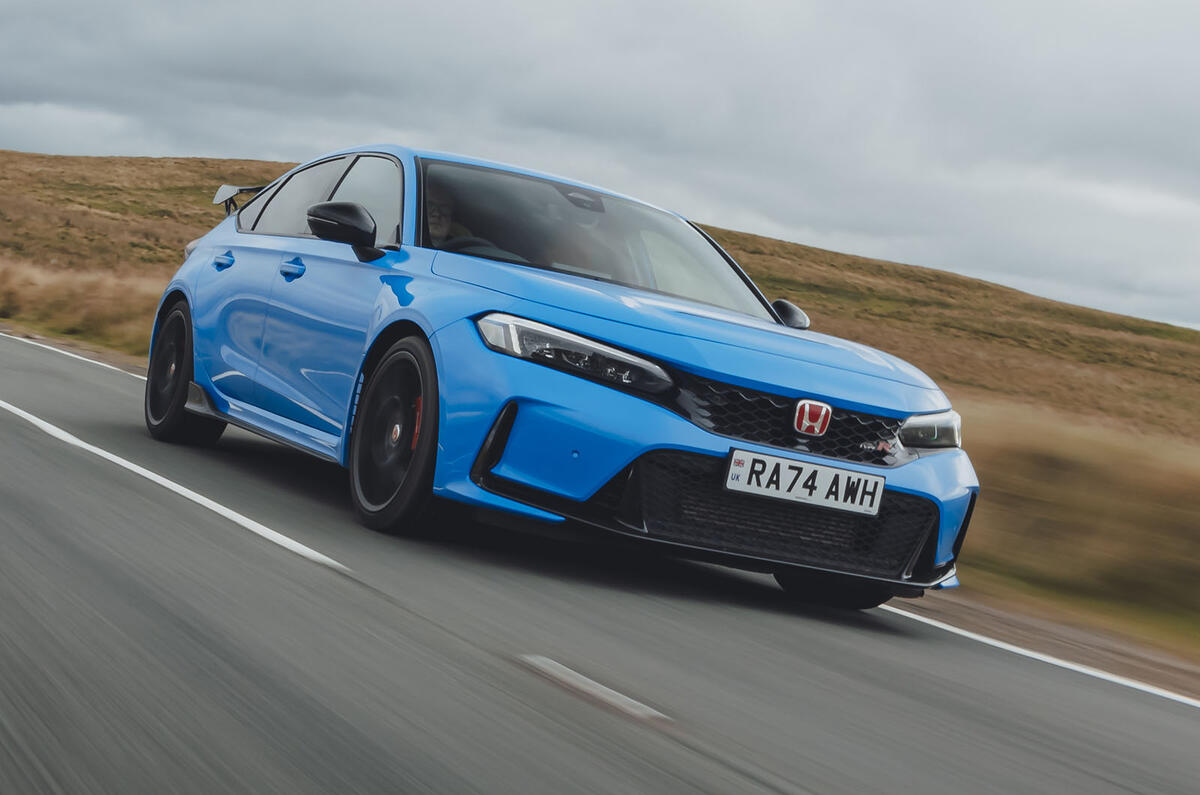
Table of Contents
-
Introduction: Why This Comparison Matters
-
Pricing and Value Proposition
-
Powertrain and Performance
-
Transmission Options
-
Handling, Chassis, and Driving Dynamics
-
Interior Quality and Technology
-
Practicality and Daily Usability
-
Fuel Economy and Running Costs
-
Warranty and Ownership Experience
-
Safety and Driver Assistance
-
Which One Should You Buy?
Why This Comparison Matters
The Civic Type R carries three decades of motorsport heritage, from the original EK9 in Japan to the current FL5 generation, widely regarded as the finest hot hatch ever engineered. Honda’s Type R badge represents precision, obsession, and a singular focus on driver engagement. The 2026 model carries over unchanged from the 2023-2025 FL5, with a starting MSRP of $43,990 in the United States.
The Elantra N, by contrast, is a relative newcomer. Launched in 2021 as Hyundai’s successor to the Veloster N, it delivers 276 horsepower (286 with overboost) for a starting price of just $35,595—nearly $8,500 less than the Honda.
It offers a choice of manual or dual-clutch automatic transmissions, a segment-leading warranty, and genuine track-day capability at a price point that undercuts almost every rival.
Pricing and Value Proposition
2026 Honda Civic Type R: The Premium Hot Hatch

The 2026 Honda Civic Type R starts at $43,990 in the United States, with minimal options available. Championship White paint adds $395, and a carbon-fiber rear wing is available for $5,300.
In Australia, the Type R commands $79,000 drive-away, reflecting its premium positioning in global markets.
At this price, the Civic Type R competes not just with hot hatches but with entry-level German performance sedans like the Audi S3 and BMW M135. Honda justifies the premium through exceptional engineering: a bespoke dual-axis strut front suspension that virtually eliminates torque steer, a hand-built feel to the chassis, and a motorsport-derived interior that includes aluminum shift knobs, red bucket seats, and a digital shift-light indicator.
However, the Type R’s pricing has drawn criticism. For $43,990, you get manually adjustable seats without heating, an unbranded sound system, and a 9.0-inch touchscreen that, while functional, lacks the premium feel of rivals.
The value proposition hinges entirely on whether you prioritize driving purity over creature comforts.
2025 Hyundai Elantra N: The Performance Bargain
The 2025 Hyundai Elantra N starts at $35,595 in the United States, with the eight-speed dual-clutch automatic adding $1,500.
In Canada, pricing ranges from $40,199 to $41,799 plus freight.
This pricing makes the Elantra N the most affordable performance compact in its class. It undercuts the Civic Type R by approximately $8,500, the Subaru WRX by $2,000, and the Toyota GR Corolla by $3,500.
For that money, you get heated sport seats, a Bose premium audio system, dual-zone climate control, a heated steering wheel, and a 10.25-inch touchscreen.
The value equation is undeniable. As CarBuzz noted, “In a world that constantly shows you lustworthy objects you can’t afford, the Elantra N proves that you can sometimes get what you want; it just requires some compromise.”
That compromise primarily manifests in interior material quality—the cabin uses more hard plastics than the Honda—but the feature list is objectively superior for the money.
Value Verdict
Powertrain and Performance
2026 Honda Civic Type R: Precision Over Power
The Civic Type R uses a 2.0-liter turbocharged inline-four producing 315 horsepower at 6,500 rpm and 310 lb-ft of torque from 2,600 rpm.
In European trim, output rises slightly to 324 bhp.
Performance testing by Car and Driver recorded a 0-60 mph time of 4.9 seconds and a quarter-mile of 13.5 seconds at 106 mph.
The top speed is manufacturer-claimed at 169 mph.
On a 300-foot skidpad, the Type R pulled an impressive 1.02 g, demonstrating exceptional mechanical grip.
2025 Hyundai Elantra N: Punchy and Playful
The Elantra N employs a 2.0-liter turbocharged inline-four rated at 276 horsepower at 5,500 rpm and 289 lb-ft of torque at 2,100 rpm.
An overboost function temporarily increases output to 286 horsepower for short bursts.
The Hyundai’s engine is characterful and vocal—widely praised as the best-sounding four-cylinder in the segment thanks to an active exhaust system that pops, crackles, and sings under acceleration.
However, it lacks Honda’s refinement and high-rpm eagerness.
In Car and Driver testing, a manual-equipped Elantra N required 6.1 seconds to reach 60 mph—more than a full second behind the Honda.
The dual-clutch version is quicker, but the gap remains significant. The Elantra N’s front-wheel-drive layout limits launch traction, and its 2,910-pound curb weight (est.) is only marginally lighter than the Civic’s 3,183 pounds.
Performance Verdict
Transmission Options
2026 Honda Civic Type R: The Purist’s Choice
The manual gearbox is a Honda strong suit: short throws, precise gates, and a well-weighted clutch with an intuitive bite point. An auto-rev-matching function assists with downshifts, though purists can disable it. The aluminum shift knob looks spectacular but becomes uncomfortably hot in summer and cold in winter—a classic Type R quirk.
2025 Hyundai Elantra N: Choice Is King
Hyundai offers the Elantra N with two transmissions: a 6-speed manual and an 8-speed dual-clutch automatic (DCT). The manual is standard, while the DCT adds $1,500.
The manual transmission includes rev-matching and a decorative shift knob, but reviewers have noted it lacks the mechanical sweetness of the Honda’s gearbox.
The clutch is heavier, and the shift action is less precise.
The DCT, however, is a standout. As one reviewer noted, “Shifts are crisp as the tachometer needle dances and you’ll enjoy all the power with half the work. There’s nothing wrong with letting the N shift on its own.”
The DCT transforms the Elantra N into a more accessible daily driver while maintaining rapid-fire gear changes for spirited driving.
Transmission Verdict
Handling, Chassis, and Driving Dynamics
2026 Honda Civic Type R: Motorsport Engineering
The Civic Type R’s chassis is the result of decades of Honda motorsport expertise. The headline innovation is the dual-axis strut front suspension, which separates the steering axis from the damper axis to virtually eliminate torque steer. Under hard acceleration, the front end remains composed and precise rather than fighting the driver.
The steering is hydraulic-assisted (unlike the electric systems in most modern cars) and offers genuine feedback. The limited-slip differential is aggressive, locking abruptly under power to maximize traction but occasionally spinning both front wheels in wet conditions.
This is a car that demands precision and rewards skill.
As Evo magazine summarized, “It was astonishingly good… more poised and exciting than a hatchback has any right to be, allowing it to go toe-to-toe with some sports cars.”
2025 Hyundai Elantra N: Surprisingly Capable
The Elantra N’s chassis is built on Hyundai’s N division expertise, honed at the Nürburgring. For 2024, the car received revised suspension tuning and a stiffer front end, which carried over unchanged for 2025.
Ride quality is firmer than a standard Elantra but livable for daily use. The low-profile performance tires contribute to road noise and impact harshness, but the suspension retains enough compliance to avoid punishing occupants.
Steering is crisp if slightly heavy, and the chassis responds eagerly to inputs.
Handling Verdict
Interior Quality and Technology
2026 Honda Civic Type R: Spartan but Purposeful
The Civic Type R’s interior is minimalist by design. Red accents, faux carbon-fiber trim, and deeply bolstered red bucket seats create a racy atmosphere. The seats are brilliantly supportive but manually adjustable and unheated.
The aluminum shift knob is a tactile delight (temperature extremes aside). A digital shift-light indicator sits atop the instrument cluster—a genuine motorsport touch.
Technology includes a 9.0-inch touchscreen with wireless Apple CarPlay and Android Auto, a 12-speaker Bose stereo, and wireless smartphone charging.
However, the system lacks the premium feel of rivals, and the unbranded audio system in some markets is underwhelming for the price.
Rear seating is limited to two passengers (the standard Civic seats three), but cargo space is generous: 25 cubic feet behind the rear seats, expanding to accommodate 20 carry-on suitcases with the seats folded.
2025 Hyundai Elantra N: Feature-Rich but Plastic
The Elantra N’s interior prioritizes features over materials. Standard equipment includes a 10.25-inch touchscreen, heated sport seats with suede inserts, a Bose premium audio system, dual-zone automatic climate control, a heated steering wheel, and wireless charging.
The seats are comfortable and well-bolstered, though ingress and egress require navigating aggressive side bolsters.
The downside is material quality. Hard plastics dominate the dashboard and door panels, and the overall ambiance feels cheaper than the price tag suggests.
This is where Hyundai saved money to hit the $35,595 price point.
Interior Verdict
Practicality and Daily Usability
2026 Honda Civic Type R: Hatchback Versatility
The Civic Type R’s hatchback body style provides exceptional cargo versatility. The 25 cubic-foot trunk is larger than many compact crossovers, and the wide hatch opening accommodates bulky items.
Rear-seat passenger space matches the standard Civic hatchback, making this a genuine dual-purpose family car.
However, the Type R’s firm suspension and loud exhaust (especially in +R mode) can wear on occupants during long highway drives. The 47-liter fuel tank is small, requiring frequent stops during spirited driving.
2025 Hyundai Elantra N: Sedan Practicality
The Elantra N’s sedan body limits cargo flexibility to a 14.1 cubic-foot trunk.
However, the rear seat accommodates three passengers, and the overall cabin is spacious with 42.2 inches of front legroom and 37.9 inches in the rear.
Practicality Verdict
Fuel Economy and Running Costs
2026 Honda Civic Type R: Thirsty When Pushed
The EPA rates the Civic Type R at 22 mpg city, 28 mpg highway, and 24 mpg combined.
In real-world testing, Car and Driver observed 20 mpg overall and 30 mpg on a 75-mph highway loop.
In Australian testing, fuel consumption averaged 9.5L/100km (approximately 24.8 mpg) in regular use but jumped to 12L/100km (19.6 mpg) during spirited driving.
The small 47-liter fuel tank means you’ll visit gas stations frequently if you drive aggressively.
Tire costs are significant: the 265/30ZR-19 Michelin Pilot Sport 4S tires cost approximately $280 each.
2025 Hyundai Elantra N: Slightly More Efficient
The Elantra N is EPA-rated at 21 mpg city, 29 mpg highway, and 24 mpg combined for the manual transmission.
The DCT may vary slightly. Canadian figures quote 9.7L/100km (approximately 24.2 mpg) combined.
Fuel Economy Verdict
Warranty and Ownership Experience
2026 Honda Civic Type R: Average Coverage
Honda provides a 3-year/36,000-mile limited warranty and a 5-year/60,000-mile powertrain warranty, plus one year of complimentary maintenance.
These are industry-average terms and notably less generous than Hyundai’s offerings.
Honda’s legendary reliability is a significant intangible asset. The Type R’s engine is understressed relative to its potential, and Honda’s service costs are reasonable—Australian maintenance runs just $995 for five years.
2025 Hyundai Elantra N: Segment-Leading Protection
Hyundai offers a 5-year/60,000-mile limited warranty and a 10-year/100,000-mile powertrain warranty—the best coverage in the segment.
This is a major selling point for buyers who plan to keep their cars long-term or who simply value peace of mind.
As Car and Driver noted, “Those who want more comprehensive coverage will want to check out Hyundai’s plans, which are better in all three phases.”
Warranty Verdict
Safety and Driver Assistance
Both vehicles come standard with comprehensive safety suites. The Civic Type R includes automated emergency braking, lane-keeping assist, and adaptive cruise control.
The Elantra N matches this equipment, adding Hyundai’s excellent SmartSense suite.
Neither car has been separately crash-tested in its performance variant, but both are based on platforms with strong safety ratings. The Hyundai’s longer warranty and lower insurance costs (estimated at $1,649 annually for a Civic Type R in Australia) may appeal to safety-conscious buyers.
Which One Should You Buy?
Buy the 2026 Honda Civic Type R if:
-
You prioritize the absolute best handling and driver engagement in a front-wheel-drive car
-
You value motorsport heritage and engineering purity
-
You need hatchback cargo versatility
-
You can afford the $43,990+ MSRP and higher running costs
-
You only drive manual transmissions and want the best one available
-
You plan to attend track days regularly
The Civic Type R is a special car—perhaps the finest hot hatch ever built. It justifies its premium through chassis excellence, steering feel, and a sense of occasion that no rival can match. As Evo concluded, “It’s simply the best modern hot hatch out there.”
Buy the 2025 Hyundai Elantra N if:
-
Your budget is under $40,000
-
You want a choice of manual or automatic transmission
-
You value warranty coverage and long-term peace of mind
-
You need a more comfortable daily driver with better features
-
You want the best-sounding exhaust in the segment
-
You prioritize value over absolute performance
The Elantra N is the blue-collar hero of the performance car world. It delivers 80% of the Type R’s thrills at a significantly lower price, with superior warranty coverage and more standard features. As CarBuzz summarized, “The Elantra N proves that you can sometimes get what you want; it just requires some compromise.”
Final Verdict: Two Winners, One Right Choice
2025 Hyundai Elantra N vs 2026 Mazda Mazda3 Buyer Guide
2026 Honda Civic vs 2025 Hyundai Elantra N
2025 Audi A4 vs Mercedes-Benz C-Class Buyer Guide

2026 Acura Integra vs 2025 Audi A4 Buyer Guide

2025 Audi A4 vs 2026 BMW 3-Series Buyer Guide
2026 Honda Civic Type R vs 2026 Mazda Mazda3