2026 Honda Civic vs 2026 Honda Civic Hybrid: The Complete Buyer’s Guide

Table of Contents
-
What’s New for 2026?
-
Trim Levels and Pricing Breakdown
-
Engine Performance and 0-60 Acceleration
-
Fuel Economy: Real MPG vs EPA Ratings
-
Interior Features and Technology Comparison
-
Safety Ratings and Honda Sensing Suite
-
Sedan vs Hatchback: Which Body Style Is Right for You?
-
2026 Honda Civic Hybrid vs Toyota Corolla Hybrid vs Prius
-
Cost of Ownership and Resale Value Analysis
-
Who Should Buy the Gas Civic? Who Should Buy the Hybrid?
-
Final Verdict and Buyer’s Recommendation
What’s New for 2026?
The 2026 Honda Civic carries over unchanged from the 2025 model year, which marked one of the most significant updates in recent Civic history: the return of the hybrid powertrain. Honda made no notable changes to the sedan, hatchback, or Si variants for 2026, with prices increasing by at least $345 across most trims compared to 2025. The 2026 Civic sedan (including the Si) is on sale now, while the hatchback arrives at dealerships later in the model year.
For shoppers comparing the 2026 Honda Civic vs 2026 Honda Civic Hybrid, this carryover status is actually advantageous. The 2025 hybrid reintroduction gave Honda a full model year to refine production and address any first-year issues, meaning the 2026 Civic Hybrid benefits from proven manufacturing processes and established real-world reliability data. The hybrid powertrain, shared with the Honda Accord Hybrid and CR-V Hybrid, uses a 2.0-liter Atkinson-cycle four-cylinder paired with two electric motors to produce a combined 200 horsepower—50 more than the base gas engine and even more torque than the sport-tuned Civic Si.
-
Pricing adjustments: All trims see modest increases ($345+)
-
Hatchback delayed availability: Sport and Type R hatchback pricing TBA at launch
-
Unchanged powertrains: Both gas and hybrid carry over with identical specs
-
Google built-in expansion: Continued availability on Sport Touring Hybrid trims
Trim Levels and Pricing Breakdown
2026 Honda Civic Sedan Pricing (MSRP including $1,150 destination)
Table
| Trim | Engine | Starting Price | Key Features |
|---|---|---|---|
| LX | 2.0L gas (150 hp) | $25,745 | 16-inch wheels, 7-inch touchscreen, Honda Sensing, cloth seats |
| Sport | 2.0L gas (150 hp) | $27,745 | 18-inch black wheels, heated mirrors, remote start, 8 speakers |
| Sport Hybrid | 2.0L hybrid (200 hp) | $30,445 | Moonroof, heated front seats, dual-zone climate, blind spot monitoring |
| Sport Touring Hybrid | 2.0L hybrid (200 hp) | $33,445 | 10.2-inch digital cluster, 9-inch touchscreen, Bose 12-speaker, leather, wireless charging |
| Si | 1.5L turbo (200 hp) | $32,145 | 6-speed manual, limited-slip diff, sport suspension, Si-exclusive styling |
2026 Honda Civic Hatchback Pricing

Table
| Trim | Engine | Starting Price |
|---|---|---|
| Sport | 2.0L gas (150 hp) | TBA |
| Sport Hybrid | 2.0L hybrid (200 hp) | $31,645 |
| Sport Touring Hybrid | 2.0L hybrid (200 hp) | $34,645 |
| Type R | 2.0L turbo (315 hp) | TBA |
Critical pricing insight: The 2026 Honda Civic Hybrid price starts at $30,445 for the sedan and $31,645 for the hatchback—roughly a $4,700 premium over the equivalent gas Sport trim. However, the hybrid includes additional standard equipment (moonroof, heated seats, dual-zone climate) that the gas Sport lacks, partially offsetting the price gap. Kelley Blue Book notes that the Civic Hybrid’s base price is higher than the Toyota Corolla Hybrid or Hyundai Elantra Hybrid because Honda equips it more generously from the entry hybrid trim.
Engine Performance and 0-60 Acceleration
Gas-Powered Civic (LX, Sport, Sport Hatchback)
-
Engine: 2.0-liter naturally aspirated inline-4
-
Power: 150 horsepower @ 6,400 rpm
-
Torque: 133 lb-ft @ 4,000 rpm
-
Transmission: CVT automatic
-
Drivetrain: Front-wheel drive only
-
0-60 mph: 8.9 seconds (sedan)
Civic Hybrid (Sport Hybrid, Sport Touring Hybrid)
-
Engine: 2.0-liter Atkinson-cycle inline-4 with two electric motors
-
Power: 200 horsepower (combined system output)
-
Torque: 232 lb-ft from the electric motor (combined output exceeds gas engine)
-
Transmission: e-CVT (direct-drive for hybrid system)
-
Drivetrain: Front-wheel drive
-
0-60 mph: 6.2 seconds (sedan), 6.1 seconds (hatchback)
Civic Si (Performance Comparison)
-
Engine: 1.5-liter turbocharged inline-4
-
Power: 200 horsepower
-
Torque: 192 lb-ft
-
Transmission: 6-speed manual only
-
0-60 mph: 6.6 seconds
The shocking truth: The 2026 Honda Civic Hybrid 0-60 time of 6.1–6.2 seconds is not only 2.7 seconds quicker than the gas-powered Civic—it is actually 0.4 seconds faster than the enthusiast-focused Civic Si (6.6 seconds). Car and Driver’s instrumented testing confirmed the hybrid hatchback hits 60 mph in 6.1 seconds, making it the quickest non-Type R Civic in the lineup.
Fuel Economy: Real MPG vs EPA Ratings
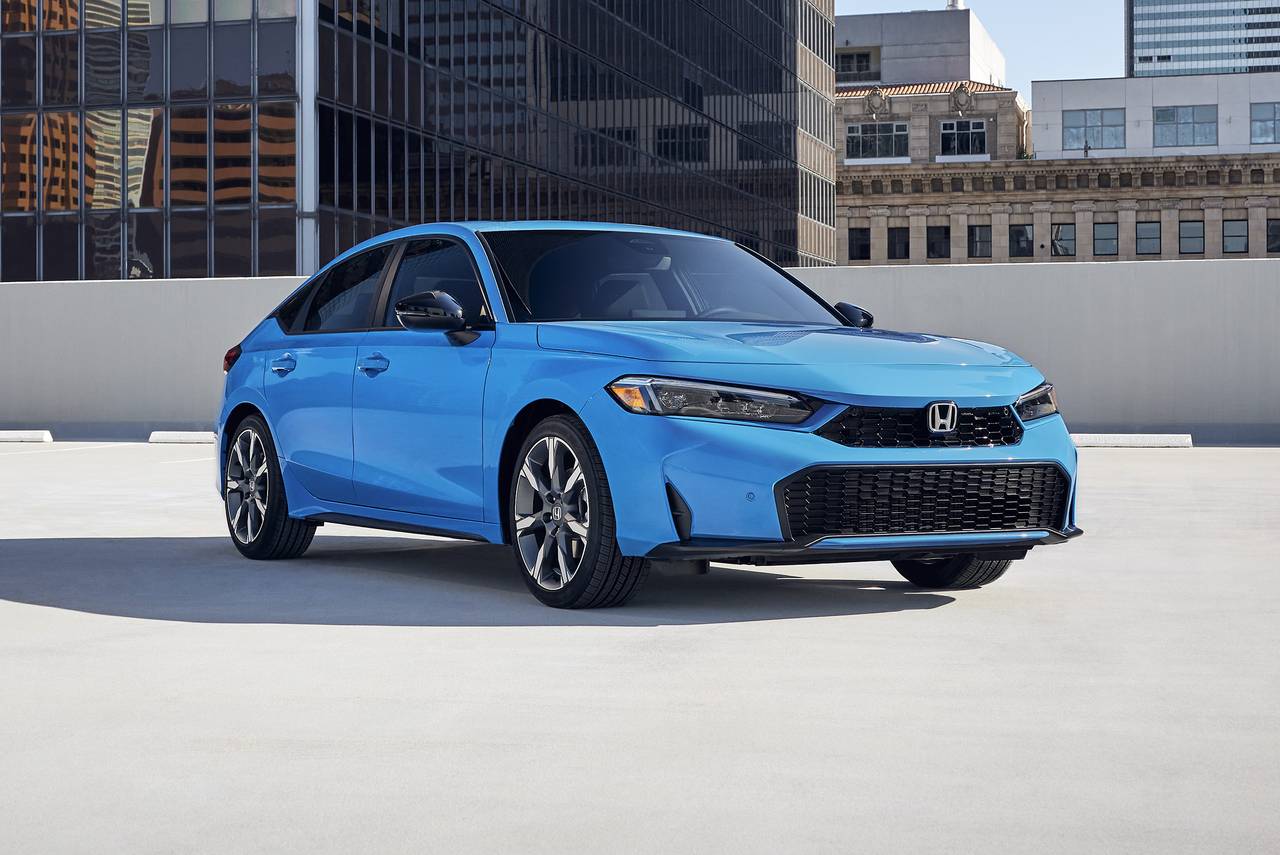
Gas-Powered Civic EPA Ratings
Table
| Variant | City | Highway | Combined |
|---|---|---|---|
| LX Sedan | 32 mpg | 41 mpg | 36 mpg |
| Sport Sedan | 31 mpg | 39 mpg | 34 mpg |
| Sport Hatchback | 30 mpg | 38 mpg | 34 mpg |
Civic Hybrid EPA Ratings
Table
| Variant | City | Highway | Combined |
|---|---|---|---|
| Hybrid Sedan | 50 mpg | 47 mpg | 49 mpg |
| Hybrid Hatchback | 50 mpg | 45 mpg | 48 mpg |
Real-world validation: Car and Driver’s 75-mph highway fuel economy test recorded 47 mpg from a Civic Hybrid Sport Touring sedan—matching the EPA highway rating exactly. This is significant because many hybrids underperform their EPA figures in high-speed cruising. The Civic Hybrid’s ability to maintain efficiency at sustained highway speeds demonstrates the sophistication of Honda’s two-motor hybrid system.
Table
| Powertrain | Annual Fuel Cost | 5-Year Savings (Hybrid) |
|---|---|---|
| Gas Civic (36 mpg combined) | $1,458 | — |
| Civic Hybrid (49 mpg combined) | $1,071 | $1,935 |
Range anxiety elimination: The Civic Hybrid sedan offers a theoretical range exceeding 595 miles on a single tank, virtually eliminating stops on long road trips.
Interior Features and Technology Comparison
Standard Technology (All Trims)
-
Honda Sensing: Forward collision warning, automatic emergency braking, lane-keeping assist, adaptive cruise control, traffic-jam assist, road-sign recognition, automatic high beams
-
Apple CarPlay and Android Auto: Wired on LX and Sport; wireless on Sport Touring
-
7-inch touchscreen: Standard on LX, Sport, and Sport Hybrid
-
Push-button start and keyless entry: Standard on Sport and above
Hybrid-Exclusive or Hybrid-Standard Features
-
Moonroof: Standard on Sport Hybrid and above (not available on gas Sport)
-
Heated front seats: Standard on Sport Hybrid and above
-
Dual-zone automatic climate control: Standard on Sport Hybrid and above
-
Blind spot monitoring and rear cross-traffic alert: Standard on Sport and above (gas Sport gets this too)
-
10.2-inch digital instrument cluster: Sport Touring Hybrid only
-
9-inch touchscreen with Google built-in: Sport Touring Hybrid only (includes Google Assistant, Google Maps, Google Play)
-
Wireless phone charging: Sport Touring Hybrid only
-
12-speaker Bose premium audio: Sport Touring Hybrid only
-
Front and rear parking sensors: Sport Touring Hybrid only
-
Deceleration selectors: Sport Hybrid and Sport Touring Hybrid (steering wheel-mounted regenerative braking controls)
Safety Ratings and Honda Sensing Suite
Standard Honda Sensing Features (All 2026 Civics)
-
Collision Mitigation Braking System (CMBS)
-
Road Departure Mitigation System (RDM)
-
Adaptive Cruise Control (ACC) with Low-Speed Follow
-
Lane Keeping Assist System (LKAS)
-
Traffic Sign Recognition (TSR)
-
Traffic Jam Assist (TJA)
-
Automatic high beams
Additional Safety (Sport and Above)
-
Blind Spot Information System (BSI)
-
Rear Cross-Traffic Monitor (CTM)
Sport Touring Hybrid Additions
-
Front and rear parking sensors
The 2026 Honda Civic safety rating from the Insurance Institute for Highway Safety (IIHS) and National Highway Traffic Safety Administration (NHTSA) carries over from 2025, where the Civic earned a Top Safety Pick+ designation from IIHS. With no structural changes for 2026, these ratings remain applicable.
Notably, Honda added extra sound deadening to the hybrid variant specifically to mask the high-frequency motor whine common in hybrid vehicles, improving the cabin environment during emergency braking scenarios and reducing driver fatigue on long trips.
Sedan vs Hatchback: Which Body Style Is Right for You?
2026 Civic Sedan
-
Length: 184.8 inches
-
Passenger volume: 99 cubic feet (55 front / 44 rear)
-
Trunk volume: 15 cubic feet
-
Availability: LX, Sport, Sport Hybrid, Sport Touring Hybrid, Si
-
Best for: Traditional sedan buyers, commuters, rental fleets, value seekers
2026 Civic Hatchback
-
Length: 179.0 inches (5.8 inches shorter)
-
Passenger volume: 96 cubic feet (52 front / 44 rear)
-
Cargo volume: 25 cubic feet (behind rear seats)
-
Availability: Sport, Sport Hybrid, Sport Touring Hybrid, Type R
-
Best for: Urban parkers, cargo flexibility enthusiasts, driving enthusiasts (Type R)
2026 Honda Civic Hybrid vs Toyota Corolla Hybrid vs Prius
Table
| Model | Starting Price | Combined MPG | Horsepower | 0-60 mph | Cargo Space |
|---|---|---|---|---|---|
| 2026 Honda Civic Hybrid | $30,445 | 49 mpg | 200 hp | 6.2 sec | 15 cu ft (sedan) |
| 2026 Toyota Corolla Hybrid | ~$24,000 | 47 mpg | 138 hp | ~9.0 sec | 13 cu ft |
| 2026 Toyota Prius | $29,845 | 57 mpg | 194 hp | 7.1 sec | 20 cu ft |
| 2026 Hyundai Elantra Hybrid | ~$26,000 | 54 mpg | 139 hp | ~8.0 sec | 14 cu ft |
Kelley Blue Book awards the Civic (including the hybrid) its Best Buy Award for the compact car segment, citing class-leading resale value, spacious interior, and the rare combination of fun driving dynamics with practical efficiency.
Cost of Ownership and Resale Value Analysis
Kelley Blue Book 5-Year Cost-to-Own Highlights
-
Honda Civic resale value: Best in the compact segment, according to KBB
-
Depreciation: Lower than the Toyota Corolla, Hyundai Elantra, and Kia K4
-
Insurance costs: Average for the segment
-
Maintenance: Hybrid requires no traditional transmission service (e-CVT); brake wear is reduced by regenerative braking
-
Battery warranty: Honda covers the hybrid battery for 10 years/100,000 miles, matching industry standards
-
Brake longevity: Regenerative braking reduces pad and rotor wear; deceleration selectors allow driver-adjustable regen levels
-
No plug required: Unlike PHEVs or EVs, the Civic Hybrid is self-charging—no home charging infrastructure needed
-
Insurance premiums: Typically 5–10% higher than gas equivalent due to complex powertrain
Who Should Buy the Gas Civic? Who Should Buy the Hybrid?
Buy the Gas-Powered 2026 Civic If:
-
Your budget is under $28,000: The LX ($25,745) and Sport ($27,745) are your only options
-
You prefer simplicity: No hybrid battery to worry about; traditional 2.0L engine proven for decades
-
You drive fewer than 10,000 miles annually: Fuel savings won’t offset the hybrid premium
-
You want the Si: The 6-speed manual and sport suspension remain gas-only (and Si-only)
-
You plan to keep the car under 5 years: Depreciation curves favor lower purchase prices for short ownership
Buy the 2026 Civic Hybrid If:
-
You drive 15,000+ miles annually: Fuel savings compound quickly for high-mileage drivers
-
You want the best performance: 6.1–6.2 seconds to 60 mph beats the Si and obliterates the gas Civic
-
You value technology: Sport Touring Hybrid is the only way to get the 10.2-inch cluster, Bose audio, and Google built-in
-
You plan to own long-term: 10+ year ownership amortizes the hybrid premium and maximizes fuel savings
-
You prioritize efficiency without compromise: 49 mpg combined with genuine driving enjoyment
-
You want the hatchback: The hybrid hatchback offers the best cargo versatility in the Civic lineup
Final Verdict and Buyer’s Recommendation
-
Best value: Sport Hybrid Sedan ($30,445) — all the performance and efficiency you need without the Sport Touring’s luxury premiums
-
Best overall: Sport Touring Hybrid ($33,445) — if the budget allows, the technology and audio upgrades transform daily driving
-
Best budget pick: LX Sedan ($25,745) — the last truly affordable Civic, but accept the performance limitations
-
Best enthusiast: Civic Si ($32,145) — manual-only, but the hybrid is actually quicker; buy this for engagement, not speed


2025 Audi A4 vs Mercedes-Benz C-Class Buyer Guide
2026 Honda Civic vs 2025 Hyundai Elantra N

2025 Audi A4 vs 2026 BMW 2-Series Buyer’s Guide
2026 Honda Civic Type R vs 2026 Honda Civic
2026 Honda Civic Type R vs 2026 Mazda Mazda3
2025 Hyundai Elantra N vs 2026 Mazda Mazda3 Buyer Guide