2025 Hyundai Elantra N vs 2026 Mazda Mazda3 Buyer Guide
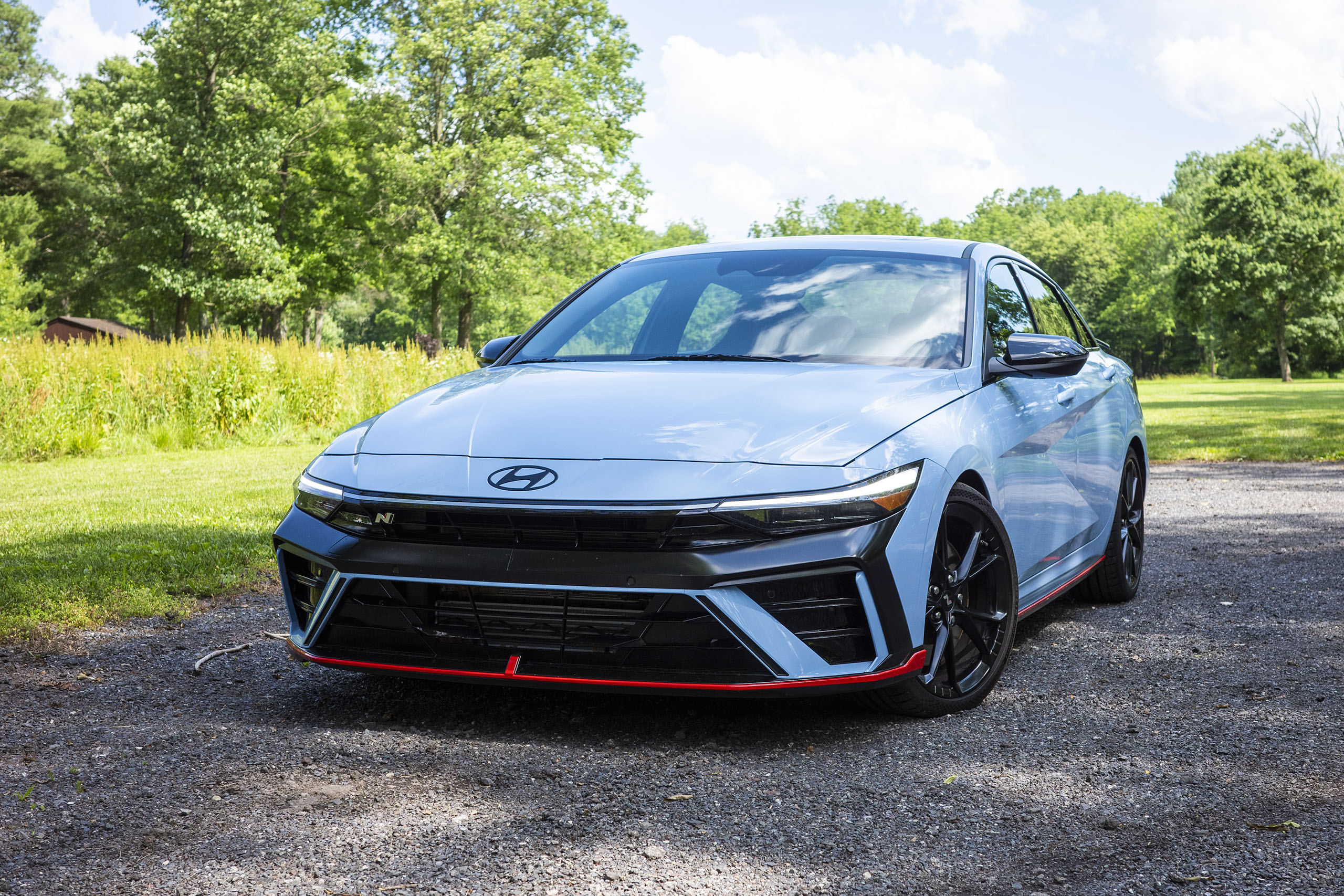
2025 Hyundai Elantra N vs 2026 Mazda Mazda3 — if you are shopping for a high-performance compact sedan in 2026, this is the comparison that matters. Both the Hyundai Elantra N and the Mazda Mazda3 2.5 Turbo Premium Plus deliver serious horsepower, sharp handling, and daily-driver practicality, yet they approach the sport-compact formula from completely different angles. One is a front-wheel-drive, track-bred missile with a manual transmission option and an exhaust that crackles like a rally car. The other is an all-wheel-drive, near-luxury cruiser with a refined turbo engine, a posh cabin, and the kind of driving dynamics that make backroads genuinely enjoyable. This comprehensive buyer guide breaks down every critical detail — engine specs, 0-60 acceleration, pricing, fuel economy, interior quality, safety tech, warranty coverage, and real-world driving impressions — so you can decide which performance compact sedan deserves your garage space in 2026.
Table of Contents
- Introduction: Two Philosophies, One Segment
- Performance & Powertrain Comparison
- 0-60 MPH & Quarter-Mile Times
- Pricing & Value Analysis
- Fuel Economy & Real-World Efficiency
- Handling, Suspension & Driving Dynamics
- Interior Quality, Comfort & Technology
- Safety Features & Crash Test Ratings
- Warranty & Ownership Costs
- Final Verdict: Which One Should You Buy?
- Frequently Asked Questions (FAQ)
1. Introduction: Two Philosophies, One Segment
The compact sport sedan segment is one of the most exciting corners of the automotive world in 2026. Buyers no longer have to choose between practicality and performance — modern engineering has made it possible to own a car that commutes comfortably on Monday morning and carves canyon roads on Saturday afternoon. The 2025 Hyundai Elantra N and the 2026 Mazda Mazda3 2.5 Turbo Premium Plus represent two distinct interpretations of this formula.
The Elantra N is Hyundai’s flagship performance sedan, developed by the same team of former BMW M engineers who shaped the brand’s N division. It is unapologetically hardcore: a 276-horsepower turbocharged engine, an optional 8-speed dual-clutch transmission with launch control, an electronic limited-slip differential, and an exhaust system that pops and bangs like a World Rally Championship car. It is front-wheel drive only, available with a 6-speed manual or an 8-speed DCT, and priced starting at $35,595 — making it one of the best performance-per-dollar values on the market today.
The 2026 Mazda Mazda3, by contrast, takes a more sophisticated approach. The 2.5 Turbo Premium Plus trim pairs a 250-horsepower turbocharged inline-four with standard all-wheel drive, a 6-speed automatic transmission, and a cabin that rivals entry-level luxury brands like Audi and Mercedes-Benz. Mazda’s “Jinba Ittai” philosophy — horse and rider as one — prioritizes steering feel, chassis balance, and ride refinement over raw power numbers. The Mazda3 starts at $25,785 for the base model, but the Turbo Premium Plus sedan commands an MSRP of approximately $37,535, placing it in a similar price bracket to the Elantra N.
So which one is right for you? The answer depends on what you value most: unfiltered track-day aggression or refined all-weather performance with near-luxury appointments. This guide will walk you through every specification, feature, and real-world consideration to help you make the right choice.
2. Performance & Powertrain Comparison
Under the hood, these two sedans tell very different stories. The Hyundai Elantra N is all about maximum output from a small-displacement turbo engine, while the Mazda3 2.5 Turbo emphasizes smooth, linear power delivery and all-weather traction.
2025 Hyundai Elantra N Engine & Transmission
The Elantra N is powered by a 2.0-liter turbocharged inline-four (GDI) that produces 276 horsepower at 5,500-6,000 rpm and 289 lb-ft of torque at 2,100 rpm. This engine is a direct descendant of the powerplant found in Hyundai’s World Rally Championship and TCR racing programs, and it shows in the character of the power delivery — urgent, vocal, and eager to rev. The engine features direct fuel injection, an intercooler, and a flat torque curve that makes the Elantra N feel genuinely quick in everyday driving.
Buyers can choose between two transmissions: a 6-speed manual with automatic rev-matching and a no-lift upshift feature, or an 8-speed wet dual-clutch automatic (DCT) with paddle shifters. The DCT adds $1,500 to the base price but unlocks the N Grin Shift (NGS) overboost function, which temporarily increases output to 286 horsepower for 20-second bursts. The DCT also includes N Track Sense (NTS) for automatic gear selection during track driving and N Power Shift (NPS) to maximize torque during upshifts. Both transmissions drive the front wheels through an electronic limited-slip differential (e-LSD), which helps manage torque steer and improve corner-exit traction.
2026 Mazda Mazda3 2.5 Turbo Engine & Transmission
The Mazda3 2.5 Turbo Premium Plus uses a 2.5-liter turbocharged inline-four (SKYACTIV-G) that produces 250 horsepower at 5,000 rpm and 320 lb-ft of torque at 2,500 rpm when running on 93-octane premium fuel. On regular 87-octane gasoline, output drops to 227 horsepower and 310 lb-ft of torque. This is a larger-displacement engine than the Elantra N’s 2.0L, and it prioritizes low-end torque and smoothness over high-rpm frenzy. The 320 lb-ft torque figure is particularly impressive — it exceeds the Elantra N’s peak torque by 31 lb-ft, and it arrives at a lower rpm, making the Mazda3 feel effortlessly muscular around town.
Unlike the Elantra N, the Mazda3 Turbo comes exclusively with a 6-speed automatic transmission and standard i-ACTIV all-wheel drive. There is no manual transmission option for the turbo model, which may disappoint purists, but the AWD system provides genuine all-weather capability that the front-drive Elantra N cannot match. The 6-speed automatic is not a dual-clutch unit, but Mazda has tuned it to be responsive and well-matched to the turbo engine’s torque curve. Paddle shifters are included for manual control.
Powertrain Specs at a Glance
| Specification | 2025 Hyundai Elantra N | 2026 Mazda Mazda3 2.5 Turbo |
|---|---|---|
| Engine | 2.0L turbo inline-4 | 2.5L turbo inline-4 |
| Horsepower | 276 hp (286 hp w/ NGS) | 250 hp (227 hp on regular) |
| Torque | 289 lb-ft | 320 lb-ft (310 on regular) |
| Transmission | 6-speed manual or 8-speed DCT | 6-speed automatic |
| Drivetrain | Front-wheel drive | All-wheel drive (standard) |
| Limited-Slip Differential | Electronic (e-LSD) | Not equipped |
| Recommended Fuel | Premium (91+ octane) | Premium (93 octane for max power) |
3. 0-60 MPH & Quarter-Mile Times
Acceleration is where these two sedans diverge most dramatically — and where buyer preference becomes crystal clear. The Elantra N, particularly with the DCT transmission, is significantly quicker in a straight line, while the Mazda3 Turbo offers respectable but more relaxed performance.
2025 Hyundai Elantra N Acceleration
Independent testing by Car and Driver recorded a 4.8-second 0-60 mph time for the DCT-equipped Elantra N, making it one of the quickest front-wheel-drive sedans ever tested. The 1/4-mile passes in 13.8 seconds at 103 mph. With the 6-speed manual transmission, 0-60 mph stretches to approximately 5.1-6.1 seconds depending on launch technique and conditions. The N Grin Shift overboost feature can shave a few tenths off the DCT’s time in short bursts, though it requires a 40-second cooldown between activations.
The Elantra N’s launch control system (available on DCT models) is tricky to master — some testers found that a slow clutch release without the system yielded better times than using the built-in launch control, which can panic the ECU and lose boost. Once moving, however, the DCT’s lightning-fast gear changes and the e-LSD’s torque management make the Elantra N feel genuinely rapid.
2026 Mazda Mazda3 2.5 Turbo Acceleration
Car and Driver tested the Mazda3 2.5 Turbo AWD sedan and recorded a 5.6-second 0-60 mph time. While this is nearly a full second slower than the DCT Elantra N, it is still brisk for the compact segment — “no other mainstream compact car’s 60-mph time begins with a five,” as Car and Driver noted. The quarter-mile passes in approximately 14.2 seconds. The Mazda3’s acceleration is characterized by smooth, linear power delivery rather than the Elantra N’s explosive urgency. The abundant low-end torque (320 lb-ft at 2,500 rpm) means the Mazda3 feels effortlessly quick in daily driving, even if it won’t win many drag races against the Hyundai.
Acceleration Comparison
| Metric | 2025 Hyundai Elantra N (DCT) | 2025 Hyundai Elantra N (Manual) | 2026 Mazda Mazda3 2.5 Turbo |
|---|---|---|---|
| 0-60 mph | 4.8 seconds | 5.1-6.1 seconds | 5.6 seconds |
| 1/4-Mile | 13.8 sec @ 103 mph | ~14.5 sec | ~14.2 sec |
| Top Speed | ~155 mph (governed) | ~155 mph (governed) | ~134 mph (governed) |
4. Pricing & Value Analysis
Price is a critical factor for most compact sedan buyers, and both cars occupy the upper end of the mainstream segment while remaining thousands of dollars cheaper than true luxury sport sedans.
2025 Hyundai Elantra N Pricing
The 2025 Hyundai Elantra N starts at $35,595 for the 6-speed manual transmission model. Adding the 8-speed DCT transmission increases the price to $37,095. There are no additional trim levels for the Elantra N — what you see is what you get, which simplifies the buying process. Standard features include 19-inch alloy wheels, Michelin Pilot Sport 4S tires, a 10.25-inch digital instrument cluster, a 10.25-inch touchscreen with Apple CarPlay and Android Auto (wired), heated front seats, dual-zone automatic climate control, and a Bose premium audio system.
For context, the Elantra N undercuts the Honda Civic Type R (starting at $46,895) by over $11,000 and the Toyota GR Corolla (starting at $39,920) by roughly $4,000. It is also significantly more powerful than the Volkswagen Jetta GLI (228 hp, starting around $33,000) and the Subaru WRX (271 hp, starting at $33,995). In terms of raw performance per dollar, the Elantra N is arguably unmatched in the segment.
2026 Mazda Mazda3 2.5 Turbo Pricing
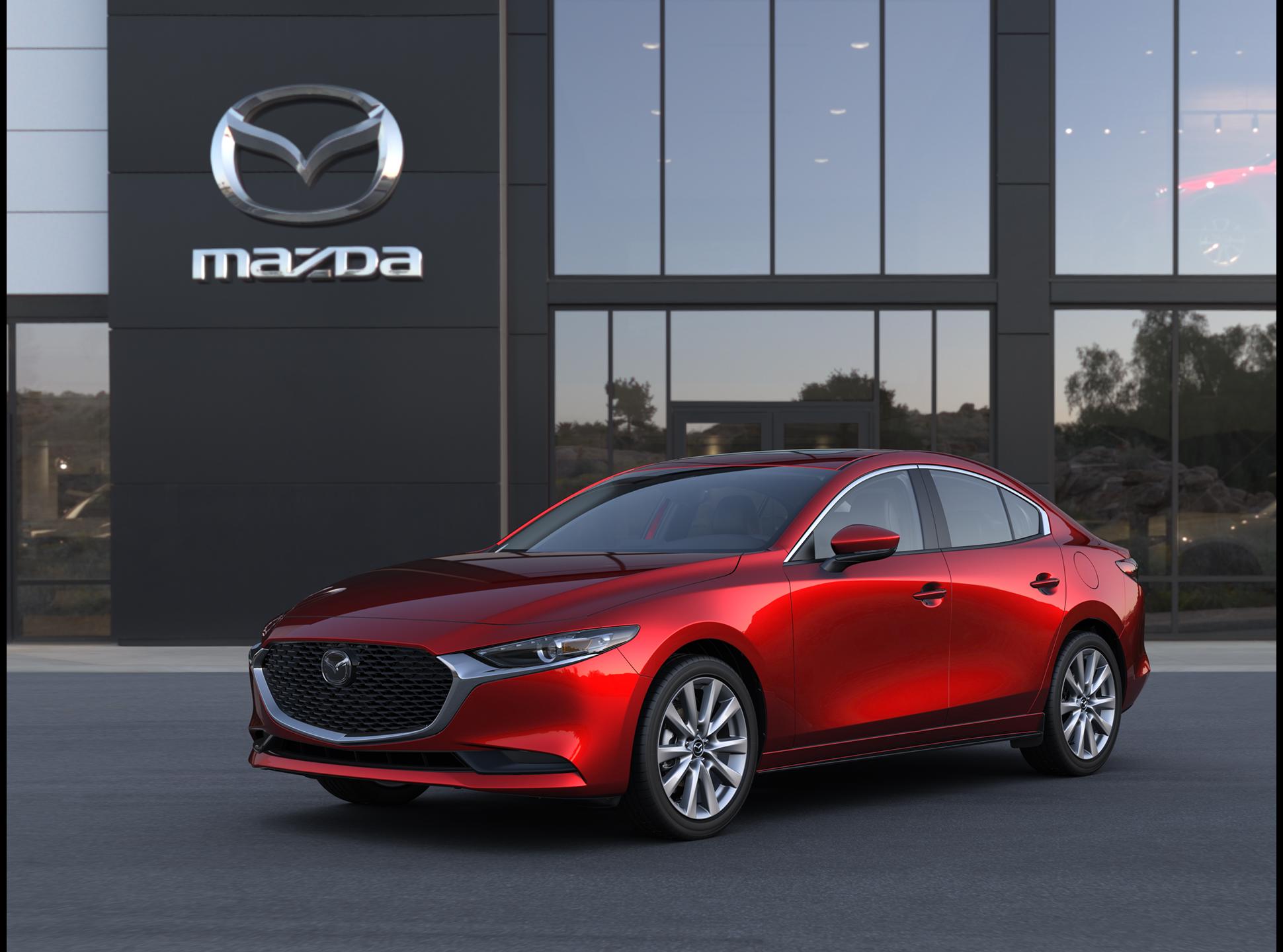
The 2026 Mazda3 lineup starts at $25,785 for the base 2.5 S sedan with the naturally aspirated 186-hp engine. However, the 2.5 Turbo Premium Plus — the only trim that offers the turbo engine — starts at approximately $36,740 for the sedan, with a total MSRP of around $37,535 including the $1,235 destination charge. The hatchback Turbo Premium Plus commands a higher price, starting around $38,090 and reaching over $41,000 with options.
For 2026, Mazda simplified the lineup by eliminating the Carbon Turbo trim, leaving only the 2.5 S and 2.5 Turbo Premium Plus as the main choices. The Turbo Premium Plus includes standard all-wheel drive, 18-inch black metallic alloy wheels, a 10.3-inch infotainment display, wireless Apple CarPlay and Android Auto, a 12-speaker Bose premium audio system, a 360-degree View Monitor, heated front seats, leather upholstery, a head-up display, and Mazda’s full i-Activsense safety suite.
Value Proposition
At first glance, the Elantra N and Mazda3 Turbo appear closely priced. However, the value equation differs significantly. The Elantra N delivers more horsepower, quicker acceleration, a manual transmission option, and track-ready hardware (e-LSD, adaptive dampers, larger brakes) for roughly the same money as the Mazda3 Turbo. If your priority is outright performance and driving engagement, the Elantra N is the clear value winner.
Conversely, the Mazda3 Turbo justifies its price with standard all-wheel drive, a near-luxury interior, superior ride refinement, and a more comprehensive feature set including wireless smartphone mirroring and a 360-degree camera. If you value comfort, all-weather capability, and premium materials over lap times, the Mazda3 offers compelling value.
5. Fuel Economy & Real-World Efficiency
Performance comes at a cost at the pump, and neither of these turbocharged sedans is particularly frugal. However, real-world testing reveals some surprises.
EPA Ratings
| Model | City MPG | Highway MPG | Combined MPG |
|---|---|---|---|
| 2025 Elantra N (Manual) | 21 | 29 | 24 |
| 2025 Elantra N (DCT) | 20 | 27 | 23 |
| 2026 Mazda3 2.5 Turbo (AWD) | 23 | 32 | 27 |
Real-World Fuel Economy
In Car and Driver‘s 75-mph highway fuel economy tests, the Elantra N DCT achieved an impressive 37 mpg — far exceeding its EPA highway rating of 27 mpg. The manual transmission model returned 32 mpg. These results suggest that the Elantra N can be surprisingly efficient during steady-state cruising, though aggressive driving will tank those numbers quickly.
The Mazda3 2.5 Turbo AWD sedan is EPA-rated at 23 mpg city, 32 mpg highway, and 27 mpg combined. In real-world testing, various Mazda3 configurations have met or exceeded EPA estimates by 2-4 mpg, indicating that the ratings are reasonably accurate. The naturally aspirated 2.5 S models are significantly more efficient (up to 27 city/36 highway), but the turbo engine’s thirst for premium fuel is a trade-off for its performance.
Both vehicles require premium unleaded gasoline (91+ octane for the Elantra N, 93 octane for maximum power in the Mazda3). Over 12,000 miles of mixed driving, expect annual fuel costs to be roughly similar, with the Mazda3 holding a slight edge in combined efficiency.
6. Handling, Suspension & Driving Dynamics
This is where the philosophical divide between these two sedans becomes most apparent. The Elantra N is a track weapon disguised as a commuter car, while the Mazda3 is a refined grand tourer with a sporty edge.
2025 Hyundai Elantra N Chassis & Handling
The Elantra N rides on an N-tuned suspension with electronically controlled adaptive dampers, 19-inch wheels wrapped in Michelin Pilot Sport 4S tires, and massive 14.2-inch front ventilated brake rotors (12.4-inch rear). The chassis was developed with input from Hyundai’s Nürburgring testing facility, and it shows. In Car and Driver‘s 300-foot skidpad test, the Elantra N pulled an impressive 0.99 g of lateral grip — territory usually reserved for dedicated sports cars. Braking from 70-0 mph required just 156 feet.
The steering is direct and communicative, and the e-LSD does an admirable job of managing the front wheels’ 276 horsepower. That said, torque steer is still present under hard acceleration, and the ride quality is notably firm — even in Normal mode, the Elantra N transmits more road imperfections than the Mazda3. The variable exhaust valve system allows drivers to adjust the exhaust note from subtle to thunderous, complete with pops, bangs, and crackles that will delight enthusiasts and annoy neighbors.
At Virginia International Raceway during Car and Driver‘s 2025 Lightning Lap event, the Elantra N turned laps quicker than several significantly more expensive sports cars, cementing its reputation as a genuine track-day tool.
2026 Mazda Mazda3 2.5 Turbo Chassis & Handling
The Mazda3 uses a strut front and torsion beam rear suspension — a simpler setup than the Elantra N’s multi-link rear — but Mazda’s engineers have tuned it to deliver exceptional body control and steering feel. The 2.5 Turbo Premium Plus rides on 18-inch black metallic alloy wheels with all-season tires (performance tires are not standard). In Car and Driver testing, the Mazda3 pulled 0.88 g on the skidpad and stopped from 70-0 mph in 164-165 feet — respectable but not class-leading.
Where the Mazda3 shines is in its balance and refinement. The steering is naturally weighted and precise, the chassis feels neutral and composed, and the ride quality is firm but never punishing. The standard all-wheel-drive system provides genuine confidence in wet or snowy conditions, and the car’s lower curb weight (approximately 3,379 lbs for the Turbo sedan vs. 3,296 lbs for the Elantra N DCT) helps it feel agile and responsive. The Mazda3 is not a track car, but it is one of the most engaging mainstream compact sedans for spirited backroad driving.
Driving Dynamics Verdict
- Choose the Elantra N if: You want maximum grip, track-ready brakes, an e-LSD, and an exhaust that makes you grin. You don’t mind a firmer ride or front-wheel-drive torque steer.
- Choose the Mazda3 Turbo if: You prioritize steering feel, chassis balance, ride comfort, and all-weather traction. You want a car that feels special on a canyon road but won’t beat you up on the commute.
7. Interior Quality, Comfort & Technology
The interior experience is perhaps the most dramatic difference between these two competitors. One is a purpose-built performance cockpit; the other is a near-luxury sanctuary.
2025 Hyundai Elantra N Interior
The Elantra N’s cabin is driver-focused and sporty, with aggressively bolstered leather-trimmed sport seats, metal pedals, and a unique steering wheel with the signature red “N” button. The dashboard is canted slightly toward the driver, and a passenger-side grab bar reinforces the performance intent. The standard 10.25-inch digital instrument cluster and matching 10.25-inch touchscreen are crisp and responsive, though Apple CarPlay and Android Auto require a wired connection.
Where the Elantra N truly distinguishes itself is the N Mode menu system. Similar to BMW M or Mercedes-AMG interfaces, this allows drivers to view real-time data including throttle position, oil temperature, brake pressure, G-forces, lap times, and even pre-programmed track maps for circuits like Watkins Glen and Road America. Built-in data recorders can log 0-60 times, quarter-mile runs, and more. It’s a level of performance telemetry usually reserved for cars costing twice the price.
Rear-seat space is generous for the segment, with more legroom than the Honda Civic Type R, Civic Si, VW Golf GTI, and Toyota GR Corolla. The 14.2-cubic-foot trunk is practical for daily use, and the 60/40 split-folding rear seats expand cargo capacity to accommodate larger items.
2026 Mazda Mazda3 2.5 Turbo Interior
The Mazda3’s interior is a masterclass in mainstream near-luxury design. Material quality is a step above virtually every competitor, with soft-touch surfaces, real leather upholstery (in Turbo Premium Plus), and tasteful chrome and piano black accents. The dashboard is minimalist and elegant, with a clean horizontal layout that wouldn’t look out of place in an Audi A3 or Mercedes-Benz CLA.
The Turbo Premium Plus includes a 10.3-inch infotainment display with wireless Apple CarPlay and Android Auto, a 12-speaker Bose premium audio system, a head-up display, heated front seats and steering wheel, and a wireless charging pad. The infotainment system is controlled primarily via a rotary dial on the center console rather than touchscreen inputs — a design choice that reduces distraction but can frustrate users accustomed to tapping icons directly.
Rear-seat legroom is tighter than the Elantra N’s, and the hatchback’s dramatically sloped C-pillars create significant blind spots. The sedan offers 13 cubic feet of trunk space — slightly less than the Elantra N — but the hatchback’s 20 cubic feet (seats up) provides more versatile cargo capacity. However, the sedan can actually hold more carry-on luggage with the rear seats up (six bags vs. five for the hatchback).
Interior Comparison
| Feature | 2025 Hyundai Elantra N | 2026 Mazda Mazda3 2.5 Turbo |
|---|---|---|
| Infotainment Screen | 10.25-inch touchscreen | 10.3-inch display (rotary control) |
| Apple CarPlay/Android Auto | Wired | Wireless (Turbo models) |
| Audio System | Bose 8-speaker | Bose 12-speaker |
| Head-Up Display | Not available | Standard (Turbo Premium Plus) |
| Wireless Charging | Not available | Standard |
| Front Legroom | 42.3 inches | 42.3 inches |
| Rear Legroom | 38.0 inches | Tighter than Elantra N |
| Trunk Volume (Sedan) | 14.2 cu ft | 13.0 cu ft |
| Performance Telemetry | N Mode menus, lap timers, G-force | Not available |
8. Safety Features & Crash Test Ratings
Both sedans come well-equipped with advanced driver-assistance systems, though the Mazda3 offers a more comprehensive standard safety suite.
2025 Hyundai Elantra N Safety
The Elantra N includes standard features such as forward collision-avoidance assist, lane-keeping assist, lane-following assist, blind-spot collision-avoidance warning, rear cross-traffic alert, and parking distance warning (front and rear). However, some advanced features like adaptive cruise control with stop-and-go capability and a surround-view camera are not available on the Elantra N, which prioritizes performance over convenience tech.
2026 Mazda Mazda3 2.5 Turbo Safety
Every Mazda3 comes standard with Mazda’s i-Activsense suite, which includes automated emergency braking (forward and reverse), lane-departure warning, lane-keep assist, blind-spot monitoring, rear cross-traffic alert, traffic sign recognition, adaptive cruise control with stop-and-go, and a reversing camera. The Turbo Premium Plus adds a 360-degree View Monitor, front and rear parking sensors, Cruising and Traffic Support (a hands-on semi-autonomous driving feature), driver attention alert, and an adaptive front lighting system. The Mazda3 has earned a five-star safety rating from the NHTSA and a Top Safety Pick designation from the IIHS in previous model years.
Safety Verdict
The Mazda3 Turbo Premium Plus offers more comprehensive safety technology, including a 360-degree camera and traffic jam assist features that the Elantra N lacks. If advanced driver aids are a priority, the Mazda3 is the safer choice. Both cars, however, provide solid crash protection and essential active safety features.
9. Warranty & Ownership Costs
Long-term ownership costs and warranty coverage can significantly impact the total cost of ownership, and this is where Hyundai’s industry-leading warranty program shines.
2025 Hyundai Elantra N Warranty
Hyundai offers America’s Best Warranty on the Elantra N:
- Basic Limited Warranty: 5 years / 60,000 miles
- Powertrain Limited Warranty: 10 years / 100,000 miles
- Anti-Perforation Warranty: 7 years / unlimited miles
- Roadside Assistance: 5 years / unlimited miles
This powertrain coverage is unmatched in the mainstream segment and provides significant peace of mind for a high-performance vehicle that may see track use. Complimentary maintenance is not included, which is typical for the segment.
2026 Mazda Mazda3 Warranty
Mazda’s warranty coverage is industry-standard but less generous than Hyundai’s:
- Basic Limited Warranty: 3 years / 36,000 miles
- Powertrain Limited Warranty: 5 years / 60,000 miles
- Roadside Assistance: 3 years / 36,000 miles
Mazda does not include complimentary maintenance, and the shorter warranty terms are a notable disadvantage compared to Hyundai’s coverage. According to Kelley Blue Book, the 5-year cost-to-own for the Mazda3 2.5 Turbo Premium Plus is estimated at approximately $71,065, which is higher than many compact car competitors.
10. Final Verdict: Which One Should You Buy?
After analyzing every specification, feature, and real-world performance metric, the choice between the 2025 Hyundai Elantra N and the 2026 Mazda Mazda3 2.5 Turbo Premium Plus comes down to one question: What kind of driver are you?
Buy the 2025 Hyundai Elantra N If…
- You want the fastest 0-60 time in the segment (4.8 seconds with DCT).
- You value a manual transmission option and track-ready hardware.
- You appreciate an aggressive exhaust note and N Mode performance telemetry.
- You want the best warranty coverage in the industry (10-year/100,000-mile powertrain).
- You prioritize outright performance and driving engagement over ride comfort.
- You can live with front-wheel drive and occasional torque steer.
Buy the 2026 Mazda Mazda3 2.5 Turbo Premium Plus If…
- You want standard all-wheel drive for all-weather confidence.
- You prioritize interior quality, refinement, and near-luxury materials.
- You prefer a smoother, more composed ride for daily commuting.
- You value wireless Apple CarPlay, a 360-degree camera, and a head-up display.
- You want a car that feels special and engaging without being exhausting.
- You need the versatility of a hatchback body style (not available on Elantra N).
The Bottom Line
The 2025 Hyundai Elantra N is the enthusiast’s choice — a raw, unfiltered performance sedan that punches well above its weight class. It is faster, louder, and more capable on a racetrack than any car has a right to be at this price point. For under $38,000, you get a vehicle that can embarrass sports cars costing twice as much, backed by a warranty that lets you drive it hard without fear.
The 2026 Mazda Mazda3 2.5 Turbo Premium Plus is the sophisticated choice — a refined, all-wheel-drive sport sedan that proves you don’t need to sacrifice comfort for capability. It may not win drag races, but it wins hearts with its gorgeous interior, balanced chassis, and all-weather versatility. For buyers who want 90% of the performance with 150% of the refinement, the Mazda3 is the smarter daily driver.
Ultimately, both cars are exceptional values in a market where affordable performance is increasingly rare. Test drive them back-to-back, and your heart will tell you which one belongs in your driveway.
11. Frequently Asked Questions (FAQ)
Is the 2025 Hyundai Elantra N faster than the 2026 Mazda Mazda3 Turbo?
Yes. The DCT-equipped Elantra N hits 60 mph in 4.8 seconds, compared to the Mazda3 Turbo’s 5.6 seconds. The Elantra N also has a higher top speed (approximately 155 mph vs. 134 mph).
Does the Mazda3 Turbo come with a manual transmission?
No. The 2.5 Turbo engine is only available with a 6-speed automatic transmission and standard all-wheel drive. A manual transmission is available on the non-turbo Mazda3 2.5 S Premium hatchback, but not with the turbo engine.
Which car has better fuel economy?
The 2026 Mazda Mazda3 2.5 Turbo is more efficient, with EPA ratings of 23 city / 32 highway / 27 combined mpg, compared to the Elantra N’s 20 city / 27 highway / 23 combined mpg (DCT). However, real-world highway testing has shown the Elantra N can exceed its EPA ratings significantly.
Is the Elantra N available with all-wheel drive?
No. The Elantra N is front-wheel drive only, with power managed by an electronically limited-slip differential. The Mazda3 Turbo comes standard with all-wheel drive.
Which car has the better warranty?
The Hyundai Elantra N has a significantly better warranty: 5-year/60,000-mile basic and 10-year/100,000-mile powertrain coverage, compared to the Mazda3’s 3-year/36,000-mile basic and 5-year/60,000-mile powertrain coverage.
Can the Elantra N be used as a daily driver?
Yes, though the firm suspension and loud exhaust may become tiring for some drivers. The DCT transmission is better suited to daily commuting than the manual, and the Elantra N’s spacious interior and practical trunk make it genuinely usable. However, the Mazda3 Turbo offers a more comfortable and refined daily driving experience.
Does the Mazda3 Turbo require premium fuel?
Premium fuel (93 octane) is recommended to achieve the maximum 250 horsepower and 320 lb-ft of torque. On regular 87-octane fuel, output drops to 227 horsepower and 310 lb-ft of torque. The engine will run safely on regular fuel, but performance will be reduced.
How much does each car cost?
The 2025 Hyundai Elantra N starts at $35,595 (manual) or $37,095 (DCT). The 2026 Mazda Mazda3 2.5 Turbo Premium Plus sedan starts at approximately $36,740, with a total MSRP around $37,535 including destination. Hatchback Turbo models start around $38,090.
Which car is better for winter driving?
The 2026 Mazda Mazda3 2.5 Turbo is the clear winner for winter conditions thanks to its standard all-wheel-drive system. The front-wheel-drive Elantra N can handle light snow with winter tires, but the Mazda3’s AWD provides superior traction and confidence in adverse weather.
Is the Elantra N or Mazda3 Turbo better for track days?
The Elantra N is the superior track car, with its e-LSD, adaptive dampers, larger brakes, 0.99 g of lateral grip, and N Mode telemetry. It was designed with direct input from Hyundai’s motorsports programs and has proven its capability at Virginia International Raceway and other tracks. The Mazda3 Turbo is fun on a back road but is not intended for serious track use.
2026 Honda Civic Type R vs 2026 Honda Civic


2026 Honda Civic vs 2025 Hyundai Elantra N
2025 Audi A4 vs 2026 BMW 3-Series Buyer Guide

2025 Audi A4 vs 2026 BMW 2-Series Buyer’s Guide

New IRS Scam Uses AI Voice Cloning to Target Taxpayers