2026 Chevrolet Corvette vs 2025 Porsche Boxster

The 2026 Chevrolet Corvette vs 2025 Porsche Boxster — if you are shopping for a mid-engine sports car in 2026, this is the comparison that matters. Both the Chevrolet Corvette and the Porsche 718 Boxster sit their engines behind the driver, deliver razor-sharp handling, and turn heads everywhere they go. Yet they approach the sports-car formula from opposite ends of the spectrum: the Corvette brings American muscle, supercar acceleration, and unbeatable value, while the Porsche Boxster delivers German precision, timeless roadster charm, and a driver-centric experience that has earned it a permanent spot on enthusiast wish lists.
This comprehensive buyer guide breaks down every critical factor — pricing, performance, design, technology, safety, reliability, and real-world ownership costs — to help you decide which mid-engine masterpiece deserves your garage space. Whether you are a first-time sports-car buyer or a seasoned track-day veteran, this guide delivers the facts, figures, and expert insights you need to make an informed decision.
Table of Contents
- Pricing and Value
- Engine and Performance
- Transmission and Driving Dynamics
- Exterior Design
- Interior and Cabin Quality
- Infotainment and Technology
- Safety and Driver Assistance
- Fuel Economy and Efficiency
- Practicality and Cargo Space
- Reliability and Warranty
- Ownership Costs
- Which One Should You Buy?
- Final Verdict
1. Pricing and Value: American Bargain vs. German Premium
When it comes to pricing, the 2026 Chevrolet Corvette vs 2025 Porsche Boxster comparison reveals one of the most significant gaps in the sports-car segment. The Corvette Stingray starts at approximately $70,000 for the 1LT Coupe, climbing to around $81,750 for the well-equipped 3LT trim. Even the range-topping ZR1X hybrid hypercar variant tops out near $220,595 — a figure that still undercuts many European supercars by six figures. For 2026, Chevrolet has refined the interior with a new three-screen layout, Google Built-In infotainment, 5G connectivity, wireless charging, and fresh interior colorways, making the Stingray feel more premium than ever without inflating the price.
The 2025 Porsche 718 Boxster, by contrast, commands a premium from the moment you step into the showroom. The base Boxster starts at $74,900, the Boxster S at $86,900, the GTS 4.0 at $101,800, and the track-focused Spyder RS at a staggering $164,200. Porsche’s legendary options list can easily push a well-equipped GTS 4.0 past $130,000. While the Boxster’s build quality and badge cachet justify much of that premium, the value proposition heavily favors the Corvette — especially when you consider that a base Stingray out-accelerates a Boxster S for roughly $16,000 less.
| Model | Starting MSRP | Top Trim MSRP | Value Rating |
|---|---|---|---|
| 2026 Chevrolet Corvette Stingray | ~$70,000 | ~$81,750 (3LT) | ★★★★★ |
| 2026 Chevrolet Corvette Z06 | ~$133,745 | ~$143,705 | ★★★★★ |
| 2026 Chevrolet Corvette ZR1X | ~$209,700 | ~$220,595 | ★★★★☆ |
| 2025 Porsche 718 Boxster | $74,900 | $164,200 (Spyder RS) | ★★★☆☆ |
| 2025 Porsche 718 Boxster S | $86,900 | ~$110,000 (equipped) | ★★★☆☆ |
| 2025 Porsche 718 Boxster GTS 4.0 | $101,800 | ~$135,000 (equipped) | ★★★☆☆ |
Verdict on Value: The Corvette wins decisively. You get supercar performance at a sports-car price, a thoroughly updated 2026 interior, and a wider range of powertrains from 490 hp to an astonishing 1,250 hp in the ZR1X. The Boxster asks you to pay more for less power, but you are buying into a legacy of motorsport excellence and hand-finished German craftsmanship.
2. Engine and Performance: V8 Fury vs. Flat-Six Finesse
Performance is where the 2026 Chevrolet Corvette vs 2025 Porsche Boxster rivalry gets truly interesting. The Corvette Stingray is powered by a 6.2-liter naturally aspirated LT2 V8 producing 490 horsepower and 465 lb-ft of torque (495 hp with the optional performance exhaust). Mounted midship, this pushrod V8 delivers explosive acceleration — Car and Driver clocked the Stingray at 3.0 seconds to 60 mph and an 11.4-second quarter-mile at 120 mph. Top speed is claimed at 184 mph for the coupe, with the convertible close behind.
For 2026, the Corvette lineup expands to five distinct variants. The E-Ray adds an electric front-drive motor to the Stingray’s V8, producing 495 hp with electrified all-wheel drive. The Z06 brings a screaming 5.5-liter flat-plane crank V8 good for 670 hp at 8,400 rpm. The ZR1 adds twin turbos to that same engine for 1,064 hp. And the all-new ZR1X hybrid combines the twin-turbo V8 with an electric front-drive unit for a combined 1,250 hp — making it the most powerful production Corvette ever, capable of 0-60 mph in a claimed 1.89 seconds.
The 2025 Porsche 718 Boxster offers four distinct engine choices. The base and Style Edition models use a 2.0-liter turbocharged flat-four with 300 hp and 280 lb-ft of torque. The Boxster S steps up to a 2.5-liter turbo flat-four making 350 hp and 309 lb-ft. The enthusiast-favorite GTS 4.0 swaps forced induction for a naturally aspirated 4.0-liter flat-six producing 394 hp and 317 lb-ft. At the top sits the Spyder RS, which extracts 493 hp and 331 lb-ft from a high-revving 4.0-liter flat-six derived from the 911 GT3.
| Specification | 2026 Corvette Stingray | 2025 Porsche Boxster GTS 4.0 | 2025 Porsche Boxster Spyder RS |
|---|---|---|---|
| Engine | 6.2L V8 (LT2) | 4.0L Flat-6 | 4.0L Flat-6 |
| Horsepower | 490-495 hp | 394 hp | 493 hp |
| Torque | 465-470 lb-ft | 317 lb-ft | 331 lb-ft |
| 0-60 mph | ~3.0 sec | ~3.8 sec (PDK) | ~3.2 sec |
| Quarter Mile | ~11.4 sec @ 120 mph | ~12.0 sec | ~10.9 sec @ 127 mph |
| Top Speed | 184 mph | 179-182 mph | 191 mph |
| Weight | ~3,747 lbs | ~3,241 lbs | ~3,167 lbs |
Performance Verdict: On paper and at the drag strip, the Corvette dominates. Even the base Stingray outruns the Boxster GTS 4.0 to 60 mph by nearly a full second. However, numbers only tell part of the story. The Boxster’s smaller size, lower weight, and telepathic chassis tuning make it feel more alive at legal speeds. The Corvette’s V8 delivers effortless, tsunami-like torque that makes highway passing a non-event, while the Boxster’s flat-six demands you wring it out to the redline to extract its best — and when you do, the reward is one of the most intoxicating engine notes in the automotive world.
3. Transmission and Driving Dynamics: Dual-Clutch Precision vs. Manual Soul
The 2026 Chevrolet Corvette comes exclusively with an 8-speed dual-clutch automatic transmission. There is no manual option, which remains a sore point for purists. That said, the Tremec-sourced DCT is exceptional — shifts are nearly instantaneous in Track mode, and the transmission is smart enough to loaf around in Tour mode for comfortable cruising. Paddle shifters are responsive, and the Corvette’s launch control system is brutally effective. For 2026, Chevrolet has added a new PTM Pro mode that disables stability and traction control while keeping ABS active, giving skilled drivers maximum freedom at the track.
The 2025 Porsche 718 Boxster offers a choice that the Corvette cannot match: a 6-speed manual transmission is standard, with the 7-speed PDK dual-clutch automatic available as a no-cost option on most trims. The manual gearbox is widely regarded as one of the best in the business, with a light, precise shift action and perfectly matched ratios. The PDK, meanwhile, is the benchmark against which all other dual-clutch transmissions are measured — it reads your mind, anticipates your inputs, and delivers shifts that feel telepathic.
Where the two cars diverge most dramatically is in chassis philosophy. The Corvette rides on magnetorheological dampers that provide a surprisingly plush ride in Tour mode and rock-solid body control in Track mode. It feels like a grand tourer that can do supercar impressions — comfortable enough for a cross-country road trip, yet capable of lapping most racetracks faster than cars costing three times as much. The Boxster, by contrast, is a precision instrument. Its suspension communicates every nuance of the road surface directly to your fingertips. The steering is heavier, more tactile, and more communicative. The Boxster feels smaller, lighter, and more eager to change direction — because it is. At 3,241 pounds, the GTS 4.0 is over 500 pounds lighter than the Corvette Stingray.
Driving Dynamics Verdict: If you value raw speed, straight-line acceleration, and everyday comfort, the Corvette is the better choice. If you prioritize chassis feedback, steering feel, and the kind of handling purity that makes every backroad feel like a racetrack, the Boxster is unmatched. Car and Driver put it best: “Few vehicles fulfill their intended mission as well as the Porsche 718 Boxster does.”
4. Exterior Design: Supercar Presence vs. Timeless Roadster Elegance
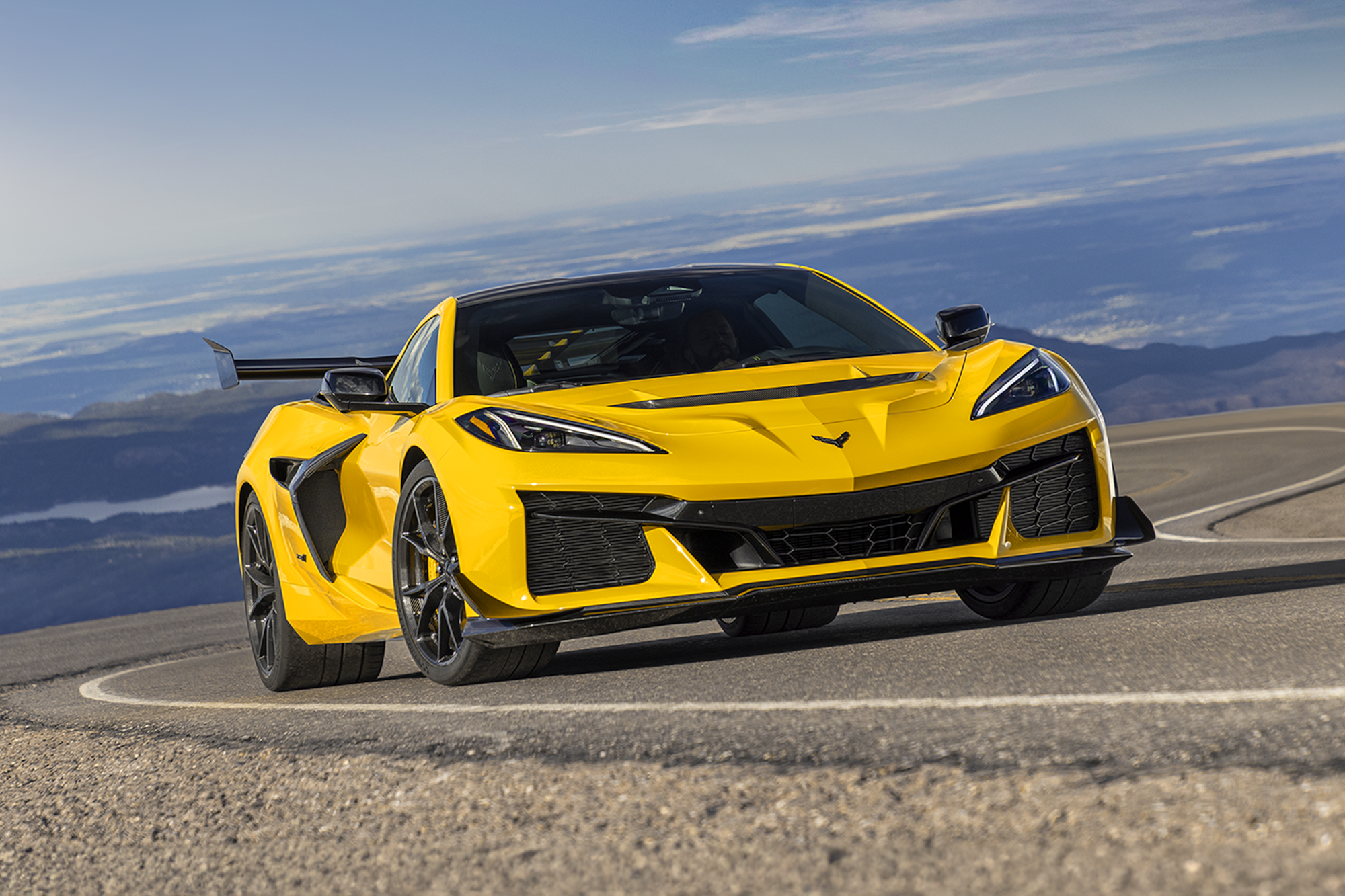
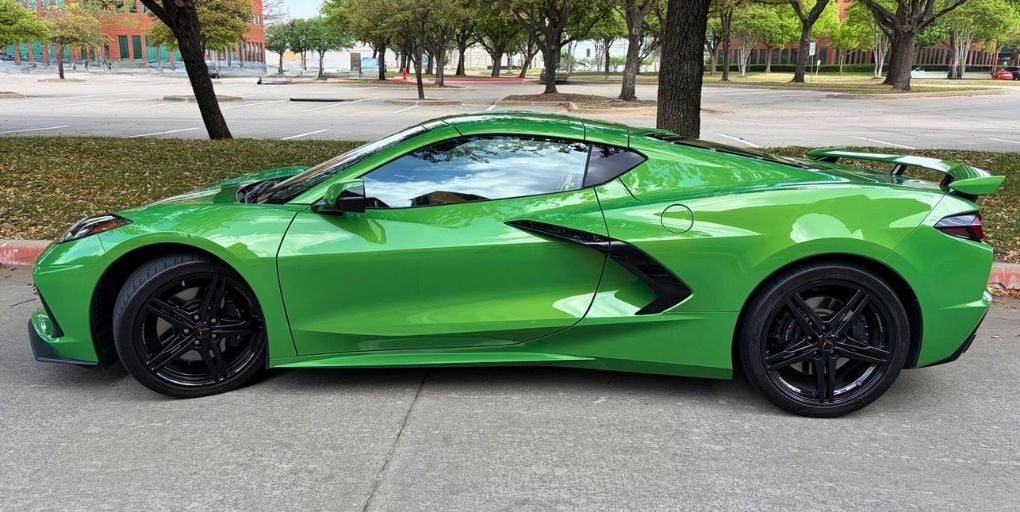
The 2026 Chevrolet Corvette Stingray looks like it costs $200,000. Its mid-engine proportions — short front overhang, cab-forward stance, and aggressive rear haunches — give it a genuine supercar presence. For 2026, Chevrolet adds two new exterior colors: Roswell Green Metallic and Blade Silver Metallic, while discontinuing Rapid Blue and Sea Wolf Gray Tricoat. New asymmetric Adrenaline Red/Carbon Flash full-length dual racing stripes join the options list, along with a front illuminated crossed-flags emblem. The coupe features a removable roof panel (now available with an electrochromic dimming option on 2LT and 3LT), while the convertible uses a power-retractable hardtop that maintains the sleek silhouette.
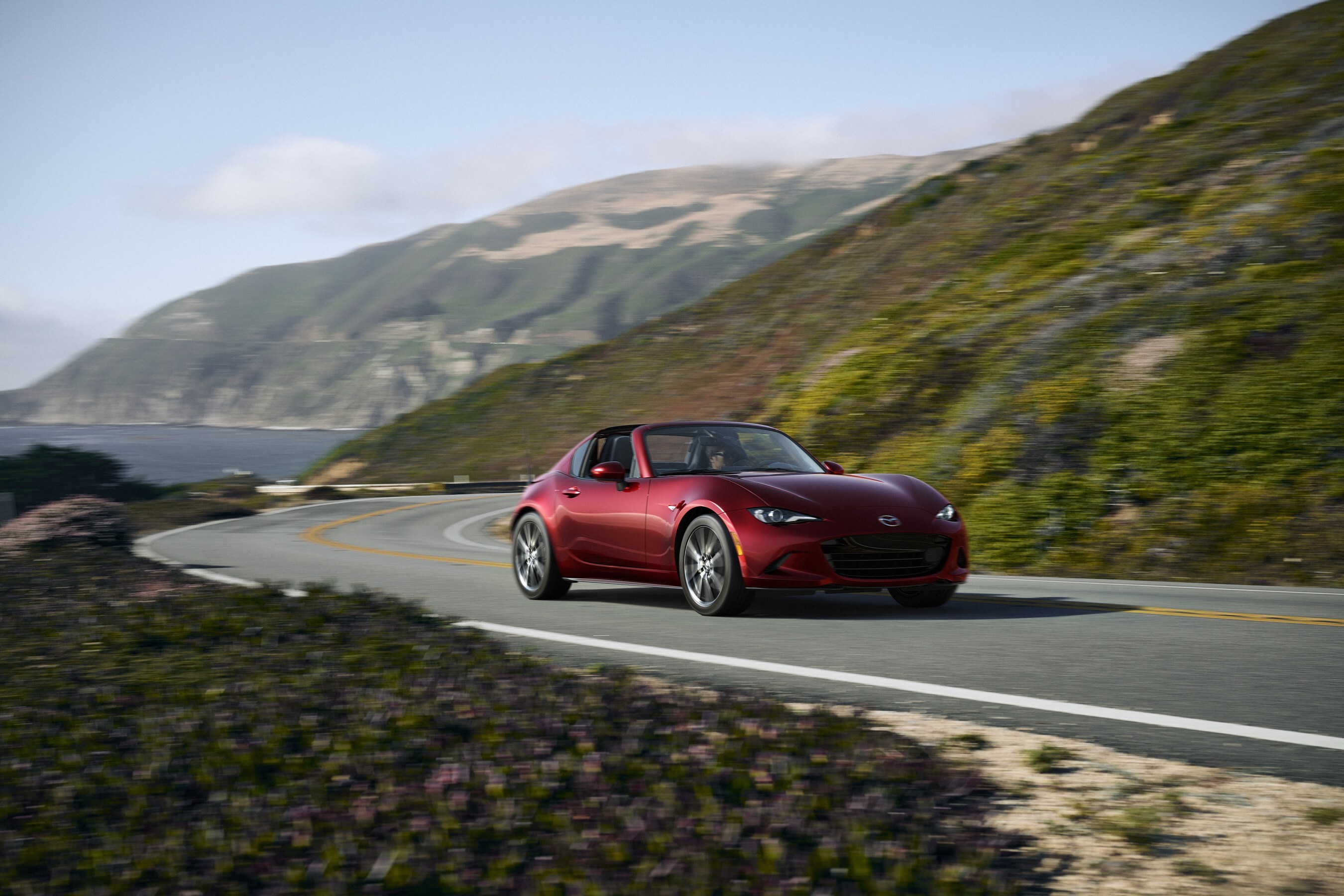
The 2025 Porsche 718 Boxster is the definition of evolutionary design. It is instantly recognizable as a Porsche, with its rounded headlights, sculpted wheel arches, and compact dimensions. The soft-top convertible roof can be operated at speeds up to 31 mph, and when folded, it preserves the classic roadster profile that has defined the Boxster since 1996. At 173.9 inches long and 71.7 inches wide, the Boxster is nearly 10 inches shorter and 4.4 inches narrower than the Corvette — a difference you feel immediately in tight parking spaces and narrow mountain roads. The Spyder RS adds aggressive aerodynamic elements, including a manually operated lightweight soft top and unique bodywork inspired by Porsche’s motorsport programs.
Design Verdict: The Corvette wins on visual impact and supercar drama. The Boxster wins on timeless elegance and everyday usability. If you want to turn heads at Cars and Coffee, buy the Corvette. If you want a design that will still look sophisticated in 20 years, buy the Boxster.
5. Interior and Cabin Quality: The 2026 Corvette’s Biggest Leap Forward
For 2026, the Chevrolet Corvette receives its most significant interior overhaul since the C8 launched in 2020. The controversial “wall of buttons” that divided driver from passenger is gone, replaced by a cleaner, more open layout. The centerpiece is a new three-screen configuration: a 12.7-inch center touchscreen, a 14-inch digital instrument cluster, and an all-new 6.6-inch auxiliary touchscreen to the left of the steering wheel. Google Built-In is now standard across all trims, bringing native Google Maps, Google Assistant, and Google Play apps. Wireless charging is standard — one pad on 1LT, two on 2LT and 3LT. New interior colors include Santorini Blue, Sky Cool/Medium Ash Gray with Habanero accents, Very Dark Atmosphere, and Ultimate Suede Jet Black. A Corvette-first asymmetric interior in Jet Black and Adrenaline Red draws a dramatic line between driver and passenger spaces.
The 2025 Porsche 718 Boxster interior is more traditional but no less driver-focused. An ascending center console, three round instruments with the tachometer front and center, and a compact 7-inch touchscreen define the cabin. Materials are exceptional — leather, Alcantara, and brushed aluminum are standard, and the build quality is impeccable. However, the infotainment system feels dated compared to the Corvette’s new Google-powered setup, and the lack of Android Auto (Apple CarPlay is standard) is a notable omission. The Boxster’s seats are firm and supportive, with options ranging from standard sport seats to $5,910 full bucket seats and $2,940 3D-printed bodyform seats.
Interior Verdict: The 2026 Corvette’s interior leapfrogs the Boxster in technology, screen real estate, and modern design. The Boxster counters with superior materials quality, better ergonomics, and a more intimate, cockpit-like feel. If you want the latest tech, the Corvette wins. If you want the tactile satisfaction of analog controls and hand-finished surfaces, the Boxster wins.
6. Infotainment and Technology: Google Built-In vs. Porsche Connect
The 2026 Chevrolet Corvette now runs a custom infotainment system with Google Built-In as standard. This means native Google Maps navigation, Google Assistant voice control, and access to apps like Google Chrome, HBO Max, Prime Video, and GameSnacks through Google Play. The 12.7-inch center display is sharp and responsive, and the new 6.6-inch auxiliary screen can display Performance Traction Management data, trip information, or propulsion system vitals. Apple CarPlay and Android Auto are both available. The Performance Data Recorder has been completely redesigned for 2026, offering in-car video analysis, automated “speed tips,” side-by-side lap comparisons, and real-time data overlays — no laptop required.
The 2025 Porsche 718 Boxster uses Porsche Communication Management (PCM) with a 7-inch touchscreen. It includes Apple CarPlay, Bluetooth, satellite radio, and USB connectivity. Navigation with Porsche Connect is a $2,310 option. The system works well enough but feels a generation behind the Corvette’s setup. Porsche Connect allows remote vehicle functions via smartphone or Apple Watch, and the available Bose Surround Sound ($990) or Burmester High-End Surround Sound ($4,700) audio systems are excellent.
Technology Verdict: The 2026 Corvette is the clear winner. Google Built-In, three screens, 5G connectivity, and a completely overhauled Performance Data Recorder make it feel like a car from 2026. The Boxster’s tech is functional but dated.
7. Safety and Driver Assistance
Neither the 2026 Chevrolet Corvette nor the 2025 Porsche 718 Boxster is overflowing with advanced driver-assistance systems — these are sports cars, after all, and their buyers typically prefer to do the driving themselves. The Corvette comes standard with a rearview camera, rear camera mirror, and performance traction management. The 2LT and 3LT trims add HD curb-view camera, rear cross-traffic alert, and side blind-zone alert. For 2026, Chevrolet deleted the Following Distance Indicator that was previously standard.
The Boxster includes standard front and rear parking sensors, stability control, traction control, and 4-wheel ABS. Available options include Lane Change Assist ($690) and Adaptive Cruise Control ($1,670). Neither vehicle has been fully crash-tested by NHTSA or IIHS, which is common for low-volume sports cars.
Safety Verdict: It’s essentially a draw. Both cars offer the basics and a little more. The Corvette’s 2LT and 3LT trims add slightly more standard safety tech, but neither car is a leader in this category.
8. Fuel Economy and Efficiency
Given their performance orientation, neither car is particularly fuel-efficient, but the 2026 Chevrolet Corvette Stingray manages respectable numbers for a 490-hp V8 sports car. The EPA rates it at 16 mpg city, 24 mpg highway, and 19 mpg combined. Real-world highway cruising can yield 24-25 mpg thanks to the 8-speed transmission’s tall top gear. The Z06 and ZR1 are thirstier, and the ZR1X hybrid’s efficiency figures have not been fully released.
The 2025 Porsche 718 Boxster varies significantly by engine. The base 2.0-liter turbo four-cylinder achieves 19 mpg city, 24 mpg highway, and 21 mpg combined. The GTS 4.0’s naturally aspirated 4.0-liter flat-six is rated at 14 mpg city, 19 mpg highway, and 16 mpg combined — worse than the Corvette Stingray despite making nearly 100 fewer horsepower. The Spyder RS is even thirstier at 16 mpg combined.
| Model | City MPG | Highway MPG | Combined MPG |
|---|---|---|---|
| 2026 Corvette Stingray | 16 | 24 | 19 |
| 2025 Boxster (2.0L) | 19 | 24 | 21 |
| 2025 Boxster GTS 4.0 | 14 | 19 | 16 |
| 2025 Boxster Spyder RS | 14 | 19 | 16 |
Fuel Economy Verdict: The base Boxster is slightly more efficient, but the Corvette Stingray delivers better real-world highway mileage than the Boxster GTS 4.0 and Spyder RS while making significantly more power. For a daily driver, the Corvette is the more practical choice at the pump.
9. Practicality and Cargo Space

Practicality is not why you buy either of these cars, but the 2026 Chevrolet Corvette is surprisingly usable. Its dual-trunk layout — a front compartment and a rear compartment behind the engine — provides a combined 12.6 cubic feet of cargo space. The front trunk is deep enough for a weekend bag, and the rear compartment can swallow a set of golf clubs. The Corvette’s wider cabin offers more shoulder room, and the removable roof panel (coupe) or power hardtop (convertible) gives you open-air options.
The 2025 Porsche 718 Boxster offers two smaller cargo compartments: a front trunk with 5.3 cubic feet and a rear trunk with 4.4 cubic feet, for a total of 9.7 cubic feet. The rear trunk is shallow and awkwardly shaped due to the convertible top mechanism. The Boxster is significantly easier to park and maneuver in tight spaces thanks to its smaller footprint, but its interior feels more intimate — some might say cramped — compared to the Corvette.
Practicality Verdict: The Corvette wins on cargo capacity and interior space. The Boxster wins on maneuverability and ease of parking. For a weekend getaway, the Corvette can carry more luggage. For a city-dwelling enthusiast, the Boxster’s compact dimensions are a genuine advantage.
10. Reliability and Warranty
The 2026 Chevrolet Corvette is backed by a 3-year/36,000-mile basic warranty and a 5-year/60,000-mile powertrain warranty. Complimentary maintenance is not included. The C8 Corvette has proven reasonably reliable since its 2020 debut, with the LT2 V8 being a well-understood powerplant. The 2026 interior overhaul introduces new electronics, which could present teething issues, but Chevrolet’s warranty coverage is solid.
The 2025 Porsche 718 Boxster comes with a 4-year/50,000-mile basic warranty, a 4-year/50,000-mile powertrain warranty, and one year or 10,000 miles of complimentary maintenance. Porsche’s legendary build quality means fewer issues over time, but when repairs are needed, they are significantly more expensive than Chevrolet’s. The flat-six engines in the GTS 4.0 and Spyder RS are robust, though the earlier turbocharged four-cylinder models have had some reported issues with coolant leaks and timing chain tensioners.
| Warranty | 2026 Chevrolet Corvette | 2025 Porsche 718 Boxster |
|---|---|---|
| Basic Warranty | 3 years / 36,000 miles | 4 years / 50,000 miles |
| Powertrain Warranty | 5 years / 60,000 miles | 4 years / 50,000 miles |
| Rust Warranty | 6 years / 100,000 miles | 12 years / unlimited miles |
| Roadside Assistance | 5 years / 60,000 miles | 4 years / 50,000 miles |
| Complimentary Maintenance | None | 1 year / 10,000 miles |
Reliability Verdict: Porsche offers better basic warranty coverage and complimentary maintenance, but Chevrolet’s longer powertrain warranty provides more long-term peace of mind. Porsche’s higher repair costs are a factor to consider for long-term ownership.
11. Ownership Costs: Depreciation, Insurance, and Maintenance
Owning a sports car is never cheap, but the 2026 Chevrolet Corvette vs 2025 Porsche Boxster comparison reveals meaningful differences in long-term costs. The Corvette’s lower purchase price means lower insurance premiums, lower property taxes (in most states), and less painful depreciation in absolute dollar terms. Chevrolet parts and service are widely available and reasonably priced. The LT2 V8 uses a conventional pushrod design that is relatively simple to service compared to Porsche’s complex flat-six.
The Porsche 718 Boxster, by contrast, commands premium pricing at every turn. Porsche-certified service centers charge significantly more for routine maintenance. The PDK transmission requires specialized service. Options and packages that seem reasonable on the configurator add up quickly — a well-equipped GTS 4.0 can easily exceed $130,000. However, Porsche’s strong resale value means the Boxster may depreciate less as a percentage of its original price, particularly for limited-production variants like the Spyder RS.
Ownership Cost Verdict: The Corvette is the more affordable car to own and operate. The Boxster costs more upfront and more to maintain, but its Porsche badge and limited production may help preserve value over time.
12. Which One Should You Buy? A Decision Matrix
Choosing between the 2026 Chevrolet Corvette and the 2025 Porsche 718 Boxster ultimately comes down to what you value most in a sports car. Here is a quick-reference decision matrix to guide your choice:
| Your Priority | Buy the Corvette If… | Buy the Boxster If… |
|---|---|---|
| Budget | You want supercar performance under $85K | You are comfortable spending $100K+ for a GTS 4.0 |
| Acceleration | You want 0-60 in under 3.0 seconds | You prefer a high-revving, naturally aspirated engine |
| Handling | You want a comfortable grand tourer with track capability | You want the most communicative, precise chassis available |
| Transmission | You are fine with an excellent dual-clutch automatic | You must have a manual transmission |
| Technology | You want Google Built-In, three screens, and 5G | You prefer analog simplicity over digital overload |
| Convertible Experience | You want a powerful hardtop convertible | You want a classic soft-top roadster |
| Daily Driving | You need more cargo space and interior room | You navigate tight city streets and parking garages |
| Brand Cachet | You want the best performance value in the world | You want the prestige of the Porsche crest |
| Track Days | You want Z06 or ZR1 capability | You want a lighter, more tossable track toy |
13. Final Verdict: Two Philosophies, One Passion
The 2026 Chevrolet Corvette vs 2025 Porsche Boxster debate does not have a single correct answer — it has two. These are both exceptional sports cars that deliver on the promise of mid-engine performance, but they speak different languages.
The 2026 Chevrolet Corvette Stingray is a revelation in value. For under $85,000, you get a car that accelerates like a Ferrari, handles like a McLaren, and now — with its thoroughly redesigned 2026 interior — feels like a luxury car inside. The addition of Google Built-In, three screens, 5G connectivity, wireless charging, and new interior colorways addresses the C8’s biggest weakness. With variants ranging from the 490-hp Stingray to the 1,250-hp ZR1X hybrid, the Corvette lineup offers something for every performance appetite. It is the most complete American sports car ever built, and it remains the best performance value on the planet.
The 2025 Porsche 718 Boxster is something rarer: a car that reminds you why you fell in love with driving in the first place. Its smaller size, lower weight, and telepathic chassis deliver a purity of handling that the Corvette — for all its speed — cannot quite match. The available manual transmission, the intoxicating wail of the naturally aspirated flat-six, and the timeless roadster silhouette make the Boxster an emotional purchase as much as a rational one. Yes, it costs more. Yes, it is slower in a straight line. But for the enthusiast who measures a car in smiles per mile rather than stopwatch times, the Boxster is irreplaceable.
Our Recommendation: Buy the 2026 Chevrolet Corvette Stingray if you want the most capable, most technologically advanced, and best-value sports car on the market. Buy the 2025 Porsche 718 Boxster GTS 4.0 (with the manual transmission) if you want the most engaging, most soul-stirring, and most driver-focused roadster experience money can buy. Either way, you are getting one of the finest mid-engine sports cars in the world — and that is a win no matter which badge is on the hood.