2026 Corvette vs 2025 Porsche 911
2026 Chevrolet Corvette vs 2025 Porsche 911 — if you’re shopping for a world-class sports car in 2026, this is the comparison that matters most. Two icons, two philosophies, and two very different paths to driving nirvana. The 2026 Chevrolet Corvette continues its mid-engine revolution with a thoroughly revised interior, expanded powertrain lineup, and performance that rivals million-dollar hypercars. The 2025 Porsche 911, now in its 992.2 generation, refines the rear-engine formula with a new T-Hybrid system, sharper styling, and the unimpeachable handling that has made it the benchmark for over six decades.
Whether you’re a first-time sports car buyer, a track-day enthusiast, or a collector weighing your next garage addition, this comprehensive buyer’s guide breaks down everything you need to know. We’ll compare pricing, performance, design, technology, practicality, and long-term value to help you make the right decision. Let’s dive in.
Table of Contents
- Pricing and Value: Which Gives You More for Your Money?
- Performance: Power, Acceleration, and Top Speed
- Engine and Powertrain: V-8 vs Flat-Six
- Handling and Driving Dynamics
- Interior Design and Technology
- Exterior Design and Styling
- Practicality and Daily Usability
- Fuel Economy and Efficiency
- Safety, Warranty, and Reliability
- Resale Value and Ownership Costs
- Which One Should You Buy?
- Frequently Asked Questions
1. Pricing and Value: Which Gives You More for Your Money?
When it comes to 2026 Chevrolet Corvette vs 2025 Porsche 911 pricing, the gap is staggering — and it’s the single biggest factor for most buyers.
The 2026 Chevrolet Corvette Stingray starts at $72,495 for the 1LT Coupe, with the 2LT at $79,595 and the fully loaded 3LT at $90,745. Even the range-topping Corvette ZR1, with its 1,064 horsepower and 233 mph top speed, starts at approximately $174,995 — a figure that would barely get you into a mid-tier 911. The E-Ray hybrid starts around $122,045, while the Z06 begins at roughly $133,745.
By contrast, the 2025 Porsche 911 Carrera starts at $122,095 — nearly $50,000 more than a base Corvette Stingray. The 911 Carrera GTS T-Hybrid jumps to $166,895, and higher trims like the Turbo and Turbo S push well past $200,000. Option a 911 to the same feature level as a 3LT Corvette, and the price delta can easily exceed $80,000 or more.
What does this mean in practical terms? You could buy a Corvette Stingray with the Z51 Performance Package and still have enough money left over to purchase a well-equipped family sedan. Or you could step up to a Corvette Z06 and still undercut a base 911. The Corvette’s value proposition is simply unmatched in the segment — it’s the reason Car and Driver calls it “one of the best performance-car values of all time” and placed it on their 2026 10Best list.
However, the Porsche commands its premium for a reason: brand prestige, engineering pedigree, and a cabin that feels genuinely bespoke. For buyers where budget is no object, the 911’s exclusivity and resale value may justify the extra cost. But for value-conscious enthusiasts, the Corvette is the clear winner.
2. Performance: Power, Acceleration, and Top Speed
Performance is where the 2026 Chevrolet Corvette vs 2025 Porsche 911 debate gets truly exciting. Both cars deliver supercar numbers, but they arrive at them through very different means.
| Model | Horsepower | Torque | 0-60 mph | Top Speed |
|---|---|---|---|---|
| 2026 Corvette Stingray (Z51) | 495 hp | 470 lb-ft | ~2.8 sec | 184 mph |
| 2026 Corvette E-Ray | 655 hp | 595 lb-ft | ~2.5 sec | ~180 mph |
| 2026 Corvette Z06 | 670 hp | 460 lb-ft | ~2.6 sec | ~195 mph |
| 2026 Corvette ZR1 | 1,064 hp | 828 lb-ft | ~2.2 sec | 233 mph |
| 2025 Porsche 911 Carrera | 388 hp | 331 lb-ft | 3.1 sec | 183 mph |
| 2025 Porsche 911 Carrera GTS T-Hybrid | 532 hp | 449 lb-ft | 2.5 sec | 194 mph |
| 2025 Porsche 911 GT3 | 502 hp | 346 lb-ft | ~3.0 sec | ~200 mph |
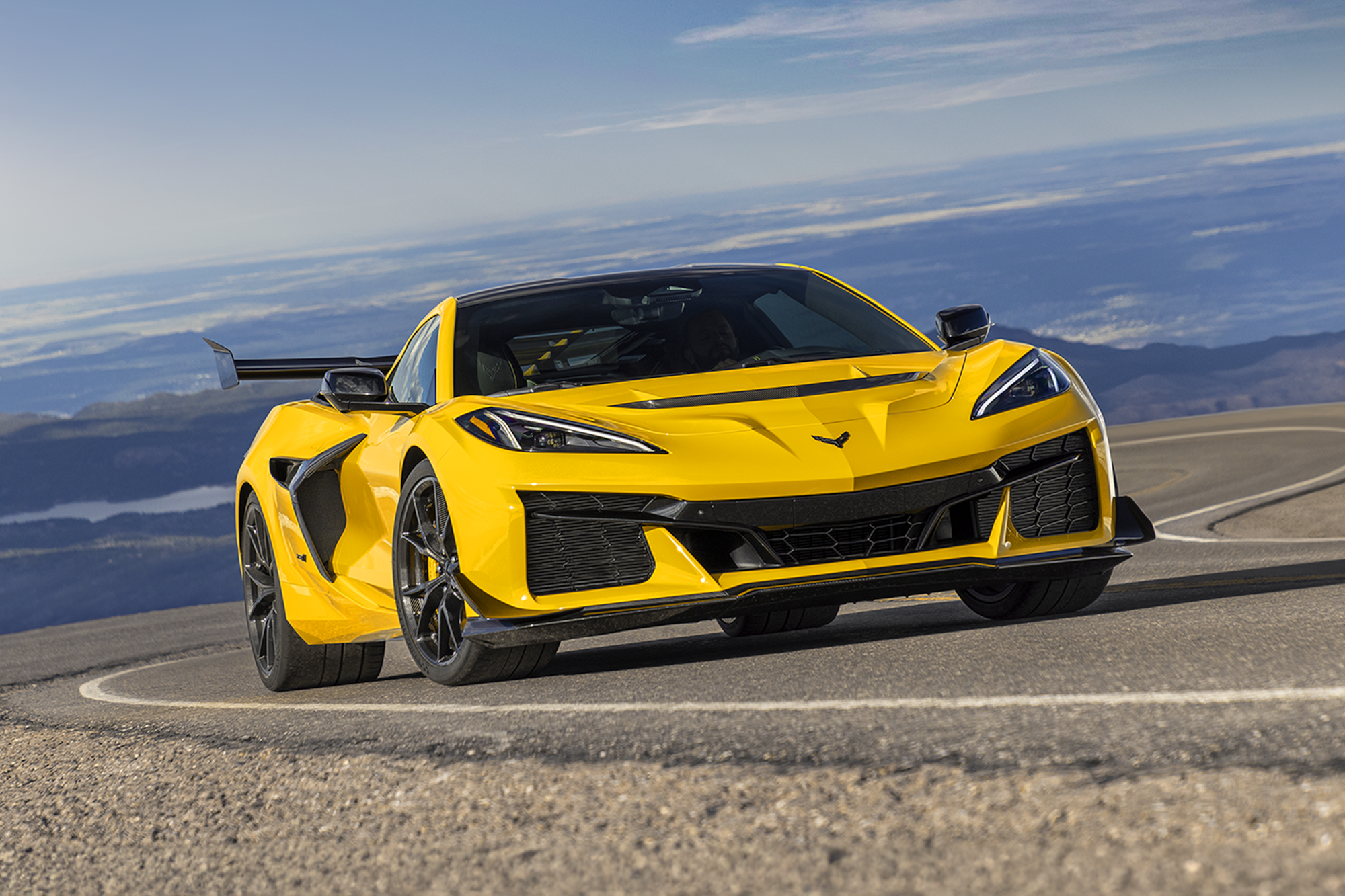
The Corvette ZR1 is in a league of its own. With 1,064 horsepower from a twin-turbo 5.5-liter flat-plane-crank V-8, it’s the most powerful production Corvette ever built. It hits 60 mph in approximately 2.2 seconds and tops out at 233 mph — numbers that rival hypercars costing three to five times as much. Road & Track named the ZR1 their 2026 Performance Car of the Year, calling it “the complete K.O.” and praising its ability to “break into the hypercar space while carrying a supercar sticker.”
Even the “entry-level” Stingray is no slouch. Its naturally aspirated 6.2-liter LT2 V-8 produces 490 hp (495 hp with the Z51 exhaust), launching it to 60 mph in under 3.0 seconds. The E-Ray adds an electric front axle for all-wheel-drive traction, delivering a combined 655 hp and even quicker launches. The Z06, with its 670-hp naturally aspirated 5.5-liter flat-plane-crank V-8, screams to 8,600 rpm and sounds like a race car.
The 2025 Porsche 911 takes a different approach. The base Carrera’s 388-hp twin-turbo 3.0-liter flat-six is down on power compared to the Stingray, but it delivers its thrust with surgical precision. The real star is the GTS T-Hybrid, which pairs a new 3.6-liter turbo flat-six with an electric motor for 532 hp and 449 lb-ft of torque. It hits 60 mph in 2.5 seconds — matching the E-Ray — and the hybrid system fills in torque gaps for seamless acceleration.
On the track, the 911 GT3 remains the handling benchmark. It may not have the ZR1’s brute force, but its 502-hp naturally aspirated 4.0-liter flat-six, rear-engine weight distribution, and motorsport-derived aerodynamics make it one of the finest driver’s cars on the planet. As Road & Track noted, “the GT3 remains one of the finest cars to drive on the market and the best iteration yet of its famous name badge.”
Verdict: If raw power and acceleration are your priorities, the Corvette wins decisively — especially the ZR1. If you value balanced, exploitable performance and track precision, the 911 GT3 and GTS are world-class.
3. Engine and Powertrain: V-8 vs Flat-Six
The 2026 Chevrolet Corvette vs 2025 Porsche 911 powertrain comparison is a study in contrasts: American muscle versus German precision, pushrod simplicity versus DOHC sophistication, naturally aspirated drama versus turbocharged hybrid efficiency.
Corvette Powertrains
The Stingray uses the proven LT2, a 6.2-liter pushrod V-8 with 16 valves, direct injection, and an 11.5:1 compression ratio. It’s an old-school engine in a thoroughly modern package — and it works brilliantly. The LT2 delivers 490 hp at 6,450 rpm and 470 lb-ft at 5,150 rpm, with a soundtrack that Driving.ca described as “screaming like a NASCAR that went to college.” The Z51 package adds a dual-mode exhaust that bumps output to 495 hp.
The Z06 gets the LT6, a 5.5-liter flat-plane-crank DOHC V-8 developed in conjunction with the Corvette Racing C8.R program. It revs to 8,600 rpm, produces 670 hp, and sounds unlike any Corvette before it — high-pitched, shrieking, and unmistakably exotic.
The ZR1 takes things nuclear with a twin-turbo 5.5-liter V-8 producing 1,064 hp and 828 lb-ft. It’s the largest twin-turbo setup on any production car, and it channels everything through massive 345-section-width rear tires.
The E-Ray pairs the LT2 V-8 with an electric front axle for all-wheel drive and a combined 655 hp. It’s the first electrified Corvette, and it uses its hybrid system primarily for traction and launch control rather than fuel efficiency.
Porsche Powertrains
The 2025 911 Carrera uses a twin-turbo 3.0-liter flat-six (9A2 engine family) with 388 hp and 331 lb-ft. It’s smooth, responsive, and pairs beautifully with the 8-speed PDK dual-clutch transmission. However, it’s the least powerful engine in this comparison.
The GTS T-Hybrid introduces a new 3.6-liter single-turbo flat-six paired with an electric motor and a 0.9-kWh lithium-ion battery. Total output is 532 hp and 449 lb-ft. The electric motor fills in low-end torque, and the system is remarkably seamless. Driving.ca noted that the new 3.6-liter engine “projects a gnarlier note than its predecessor” and “floods the cabin with a satisfying wail on its way toward a 7,500-rpm redline.”
The 911 GT3 retains its naturally aspirated 4.0-liter flat-six with 502 hp, offering the purest driving experience in the 911 lineup.
Verdict: The Corvette’s V-8s deliver more power, more character, and better value. The Porsche’s flat-six is more refined and technologically advanced, especially in T-Hybrid form. Choose the Corvette for theater; choose the Porsche for polish.
4. Handling and Driving Dynamics
This is where the 2026 Chevrolet Corvette vs 2025 Porsche 911 comparison gets most interesting — and most subjective.
The Corvette’s mid-engine layout gives it exceptional balance. With the engine behind the driver, weight distribution is near-perfect, and the car rotates willingly through corners. The C8 generation marked a radical departure from the front-engine Corvettes of old, and the result is a car that feels genuinely exotic. Magnetorheological dampers (Magnetic Ride Control) are available and provide a remarkable range of adjustability — the Corvette can ride more comfortably than some sedans in Tour mode, then stiffen dramatically for track duty.
Motor Trend noted that “the Corvette wows me at every speed” and praised its versatility. The E-Ray’s all-wheel-drive system adds a layer of security in wet or cold conditions, making it the most usable Corvette for daily driving. The Z06 and ZR1 add increasingly aggressive aerodynamics, suspension tuning, and tire packages that make them formidable track weapons.
The Porsche 911’s rear-engine layout is, by conventional wisdom, a handling compromise. Yet Porsche has spent 60 years turning that compromise into an art form. The rear-biased weight distribution provides tremendous traction under acceleration, and the 911’s steering is widely regarded as the best in the business — communicative, precise, and alive. Car and Driver praised the 992.2’s “unimpeachable handling characteristics,” and the GT3 remains the gold standard for driver’s cars.
However, Driving.ca found that the GTS T-Hybrid’s suspension “simply doesn’t feel like it offers enough suspension travel to cope with Canada’s imperfect roads” and that the stiff ride “quickly became tiring.” The Corvette’s Magnetic Ride Control, by contrast, was praised for riding “magnitudes more comfortably.”
Verdict: The 911 GT3 is the ultimate handling machine for purists. The Corvette offers a more comfortable, versatile daily driving experience while still delivering world-class track performance. For most buyers, the Corvette’s balance of comfort and capability is the smarter choice.
5. Interior Design and Technology
For 2026, the Corvette receives its most significant interior update since the C8 launched. The controversial “wall of buttons” that divided the cockpit is gone, replaced by a more open, driver-centric layout. This is a major win for usability and aesthetics.
2026 Corvette Interior Highlights
- Three-screen layout: 12.7-inch center touchscreen, 14-inch digital instrument cluster, and a new 6.6-inch auxiliary touchscreen left of the steering wheel
- Google Built-In: Android-based infotainment with Google Maps, Google Assistant, and Google Play apps
- 5G connectivity standard across all trims
- Wireless charging standard (one pad on 1LT, two on 2LT/3LT)
- New interior colorways: Santorini Blue, Sky Cool/Medium Ash Gray with Habanero accents, Very Dark Atmosphere, Ultimate Suede Jet Black, and an asymmetrical Adrenaline Red/Jet Black option
- Performance App: Now standard on all trims, with acceleration timers, G-force gauges, tire temperature monitoring, and propulsion system vitals
- Performance Data Recorder: Completely overhauled UI with real-time data analysis and HD video recording
- Electrochromic dimming roof panel is optional on 2LT/3LT Coupe
- PTM Pro mode: Disables stability and traction control for maximum driver control
GM’s official press release called the 2026 interior “thoroughly reimagined,” and Car and Driver celebrated the removal of the button wall, noting that “the dash now features a trio of screens” and that the volume knob — now bigger with a lit base — “is a win.”
2025 Porsche 911 Interior Highlights
- First-ever fully digital instrument panel (a controversial move for purists)
- 10.9-inch center touchscreen with Porsche Communication Management (PCM)
- Wireless Apple CarPlay and Android Auto
- Burmester high-end surround sound available
- Extensive customization: Porsche’s options list is legendary — paint, leather, stitching, trim, wheels, and more can add tens of thousands to the base price
- 2+2 seating: Small rear seats add a measure of practicality
- Build quality: Unmatched in the segment — every surface, switch, and material feels expensive
The 911’s interior is a masterclass in ergonomics and material quality. As Motor Trend noted, “the 911 is undeniably the better sports car” for those who can afford it, with an “upscale, ergonomic cabin” that “maintains its value.” However, Porsche’s options pricing is notoriously aggressive — a paint color alone can cost more than the difference between a Stingray and an E-Ray.
Verdict: The 911’s interior is more luxurious and better built, but the 2026 Corvette’s updates have closed the gap significantly. The Corvette now offers comparable technology, more screen real estate, and a more open cabin design — all at a fraction of the price.
6. Exterior Design and Styling
The 2026 Chevrolet Corvette vs 2025 Porsche 911 styling debate pits radical modernity against timeless evolution.
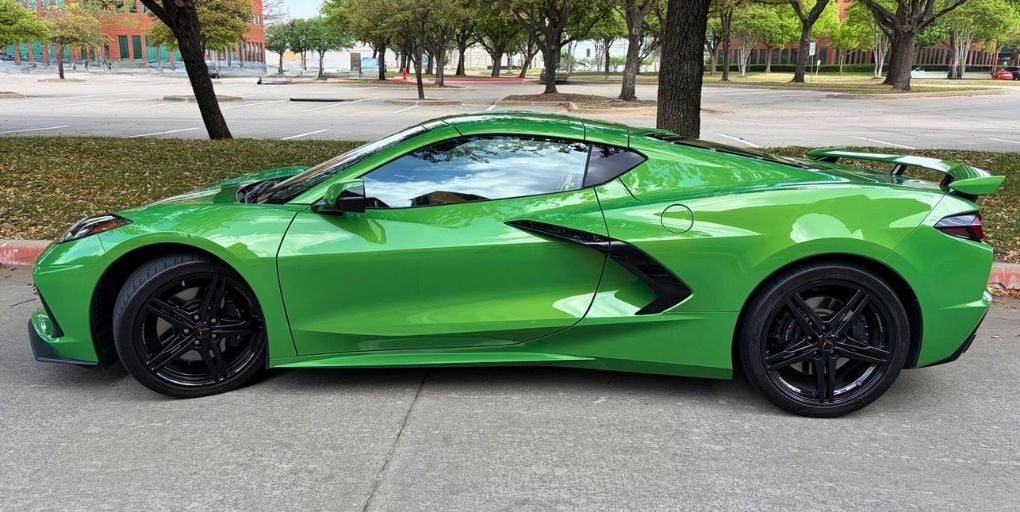
The C8 Corvette looks like a supercar. Its mid-engine proportions — short front overhang, cab-forward stance, aggressive rear haunches — are more McLaren or Lamborghini than traditional Corvette. It’s a head-turner, and Motor Trend praised it for “looking more interesting” than the 911. For 2026, new exterior colors include Roswell Green Metallic and Blade Silver Metallic, plus an asymmetrical center stripe option.
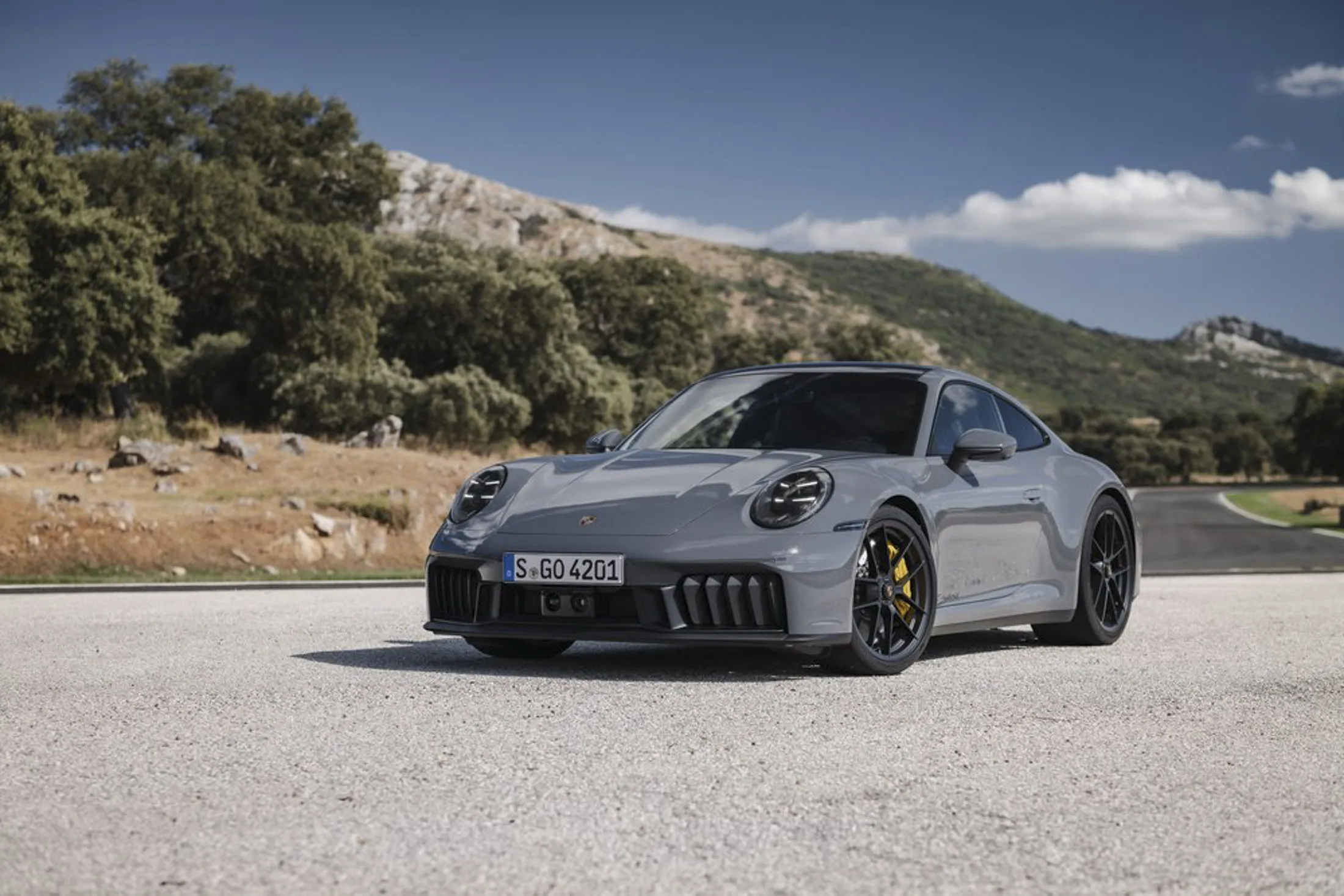
The 2025 Porsche 911 (992.2 generation) refines rather than revolutionizes. New bumpers, wheels, lights, mirrors, and aerodynamic aids give it a sharper look, but the silhouette remains unmistakably 911. The front features five vertical louvers bracketing the lower air intake, and model-specific treatments differentiate Carrera, GTS, and Turbo variants. It’s pretty, classic, and instantly recognizable — but some may find it less exciting than the Corvette’s exotic presence.
The Corvette also offers a removable roof panel on coupes, giving open-air thrills that the 911 coupe can’t match without opting for the heavier convertible.
Verdict: The Corvette wins for visual drama and exotic appeal. The 911 wins for timeless elegance and brand recognition. Personal taste will decide this one.
7. Practicality and Daily Usability
Surprisingly, both cars are more practical than their sports car status suggests — but the Corvette has the edge.
The Corvette offers two trunks: a front trunk (frunk) and a rear trunk behind the engine, totaling approximately 12.6 cubic feet of cargo space. That’s enough for a weekend getaway or a set of golf clubs. The ZR1 loses the frunk to aero ducting but retains the rear cargo area. Visibility is compromised by the mid-engine layout and thick rear pillars, but the 2026 interior updates improve the driving position.
The 911 offers a front trunk of about 4.8 cubic feet and small rear seats that can hold bags (or very small humans in a pinch). Motor Trend noted that “having those back seats is a boon for sports car ownership,” but also pointed out that “you’d invite people you dislike that much to go for a drive” in them. The 911’s rear-engine layout provides better forward visibility, and its compact dimensions make it easier to park and maneuver in tight spaces.
Both cars seat two adults comfortably, with the Corvette offering slightly more interior volume. The 911’s ride quality, especially in GTS T-Hybrid form, can be punishing on rough roads — Driving.ca described it as making one “physically wince at the sight of potholes.” The Corvette’s Magnetic Ride Control provides a more compliant daily driving experience.
Verdict: The Corvette’s dual-trunk layout and more comfortable ride make it the better daily driver for most people. The 911’s small rear seats are a nice bonus, but the Corvette’s cargo advantage is more useful in practice.
8. Fuel Economy and Efficiency
| Model | EPA City | EPA Highway | EPA Combined |
|---|---|---|---|
| 2026 Corvette Stingray | 16 mpg | 25 mpg | 19 mpg |
| 2026 Corvette E-Ray | 16 mpg | 24 mpg | 19 mpg |
| 2026 Corvette Z06 | 12 mpg | 21 mpg | 15 mpg |
| 2026 Corvette ZR1 | 12 mpg | 18 mpg | 14 mpg |
| 2025 Porsche 911 Carrera | 18 mpg | 25 mpg | 21 mpg |
| 2025 Porsche 911 GTS T-Hybrid | 17 mpg | 23 mpg | 19 mpg |
The 911 Carrera is the efficiency winner, returning 21 mpg combined from its smaller, turbocharged flat-six. The Corvette Stingray’s larger V-8 returns 19 mpg combined — respectable for a 495-hp sports car. The E-Ray’s hybrid system doesn’t significantly improve EPA ratings, as it’s tuned for performance rather than efficiency.
The Z06 and ZR1 are thirsty, with combined ratings of 15 and 14 mpg, respectively. Buyers considering these trims should budget accordingly.
Verdict: The 911 Carrera is slightly more efficient, but the difference is minor. Neither car is bought for fuel economy.
9. Safety, Warranty, and Reliability
| Aspect | 2026 Chevrolet Corvette | 2025 Porsche 911 |
|---|---|---|
| Basic Warranty | 3 years / 36,000 miles | 4 years / 50,000 miles |
| Powertrain Warranty | 5 years / 60,000 miles | 4 years / 50,000 miles |
| Rust Warranty | 6 years / 100,000 miles | 12 years / unlimited miles |
| Roadside Assistance | 5 years / 60,000 miles | 4 years / 50,000 miles |
The Porsche 911 offers a longer basic warranty (4 years/50,000 miles vs. 3 years/36,000 miles) and an industry-leading 12-year unlimited-mileage corrosion warranty. The Corvette counters with a longer powertrain warranty (5 years/60,000 miles) and roadside assistance coverage.
Both cars come well-equipped with advanced safety features. The Corvette offers features like blind-spot monitoring, rear cross-traffic alert, and a performance data recorder that doubles as a dashcam. The 911 offers Porsche InnoDrive with adaptive cruise control, active lane keep, night vision assist, and a 3D surround-view camera system — though many of these are costly options.
Reliability data for the C8 Corvette has been generally positive, though some early models experienced minor electrical and trim issues. The 911 has a long-standing reputation for durability, though its complexity — especially the new T-Hybrid system — could pose long-term maintenance challenges.
Verdict: The 911 has a slight edge in warranty coverage and long-term reliability reputation, but the Corvette’s powertrain warranty is more generous. Both are well-built, low-volume sports cars that should prove reliable with proper maintenance.
10. Resale Value and Ownership Costs
This is where Porsche’s premium pricing pays dividends.
The Porsche 911 is legendary for holding its value. Limited production, timeless desirability, and a wealthy buyer base mean that 911s depreciate slowly — and certain models (GT3, GT3 RS, limited editions) actually appreciate. A well-optioned 911 is as much an investment as a purchase.
The Corvette, despite its incredible performance, depreciates more rapidly. High-volume production, a broader buyer base, and the Chevrolet badge’s lower cachet all contribute. However, special editions like the ZR1 and Z06 with the Z07 package tend to hold value better than base Stingrays.
Insurance costs will be high for both, though the Corvette’s lower purchase price may result in slightly lower premiums. Maintenance costs favor the Corvette — Chevrolet dealers are more plentiful and less expensive than Porsche specialists, and the pushrod V-8 is simpler to service than the 911’s complex flat-six.
Verdict: The 911 is the better financial investment. The Corvette is the better value proposition upfront. Over a 5-year ownership period, the total cost difference may be smaller than the sticker price suggests.
11. Which One Should You Buy?
After comparing the 2026 Chevrolet Corvette vs 2025 Porsche 911 across every meaningful metric, here’s our recommendation:
Buy the 2026 Chevrolet Corvette if:
- You want the best performance-per-dollar in the sports car world
- You value raw power, V-8 sound, and exotic styling
- You need a car that’s comfortable enough for daily driving and road trips
- You want the latest technology, including Google Built-In and a three-screen cockpit
- You appreciate the practicality of two trunks and a removable roof
- You want track-day capability without hypercar pricing
- You prefer American muscle with a modern, mid-engine twist
Recommended trim: The 2LT Coupe with the Z51 Performance Package ($79,595) offers the best balance of features, performance, and value. If budget allows, the Z06 ($133,745+) delivers a race-car experience for the street, while the ZR1 ($174,995+) is the ultimate expression of Corvette performance.
Buy the 2025 Porsche 911 if:
- You prioritize handling precision and driving feel above all else
- You value brand prestige, exclusivity, and long-term resale value
- You appreciate German engineering and build quality
- You want a car that feels special every time you drive it
- You have the budget for options and don’t mind paying Porsche’s premium pricing
- You prefer the flat-six’s distinctive sound and character
- You want a car that holds or appreciates over time
Recommended trim: The Carrera GTS T-Hybrid ($166,895) offers the best blend of modern technology, performance, and daily usability. For purists, the GT3 is worth every penny. If the budget is tight, the base Carrera ($122,095) still delivers the essential 911 experience.
12. Frequently Asked Questions
Is the 2026 Corvette faster than the 2025 Porsche 911?
Yes, in most configurations. The base Corvette Stingray (2.8 seconds 0-60) is quicker than the base 911 Carrera (3.1 seconds). The Corvette ZR1 (2.2 seconds, 233 mph) far outpaces any production 911. Only the 911 GT3 can match or exceed the Corvette on a racetrack, thanks to its superior handling balance.
Is the 2026 Corvette more reliable than the 911?
Both cars are well-built, but the 911 has a longer track record of reliability. The C8 Corvette has proven generally reliable, though it’s a newer platform. The 911’s complexity (especially the T-Hybrid) could introduce new maintenance considerations. Chevrolet’s dealer network is more extensive and affordable for service.
Can the Corvette be a daily driver?
Absolutely. The E-Ray, with its all-wheel drive and hybrid-assisted torque, is particularly well-suited to daily driving. Even the Stingray offers a comfortable ride, decent fuel economy, and practical cargo space. The 2026 interior updates — especially the removal of the button wall — make the cabin more livable than ever.
Does the Porsche 911 hold its value better?
Yes. The 911 is one of the best cars in the world for retaining value, and certain models appreciate. The Corvette depreciates more quickly due to higher production volumes, though special editions like the ZR1 and Z06 hold value better than base models.
Which car is better on the track?
The 911 GT3 is widely considered the best track car in this comparison, offering unmatched handling precision and driver engagement. However, the Corvette ZR1 and Z06 are formidable track weapons that deliver faster lap times at many circuits thanks to superior power-to-weight ratios. For amateur track days, the Corvette offers better value; for serious racing, the GT3 is the tool of choice.
Is the 2026 Corvette interior as good as the 911’s?
The 2026 Corvette’s interior updates have closed the gap significantly. The new three-screen layout, Google Built-In, premium materials, and open cockpit design represent a major step forward. However, the 911 still leads in overall material quality, fit-and-finish, and the bespoke feel of its cabin. The Corvette offers more technology for less money; the 911 offers a more luxurious experience.
What are the key differences between the Corvette E-Ray and 911 GTS T-Hybrid?
Both use hybrid technology, but with different goals. The E-Ray uses its electric motor primarily for all-wheel-drive traction and launch performance, with the V-8 doing most of the work (495 of 655 hp is combustion-powered). The 911 GTS T-Hybrid uses its electric motor to fill torque gaps and improve responsiveness, with the flat-six providing 478 of 532 hp. The E-Ray is faster in a straight line; the GTS is more refined and efficient.
Final Verdict
The 2026 Chevrolet Corvette vs 2025 Porsche 911 comparison ultimately comes down to what you value most. The Corvette is the rational choice — more power, more features, more practicality, and dramatically less money. It’s the best performance value on the market, full stop. The 2026 interior updates have addressed the C8’s biggest weakness, making it a more complete package than ever.
The 911 is the emotional choice — a car that transcends mere transportation to become an experience. Its handling precision, build quality, and brand prestige are unmatched, and it will likely hold its value better over time. But you’ll pay dearly for the privilege.
For most buyers, the 2026 Chevrolet Corvette is the smarter purchase. It delivers 90% of the 911’s driving experience at 50% of the cost, with more power, more technology, and more daily usability. But if you can afford it and you prioritize the intangibles — the way a 911 steers, the way it makes you feel, the way it appreciates — the 2025 Porsche 911 remains the sports car benchmark.
Whichever you choose, you’re getting one of the finest sports cars on the planet. The fact that this debate exists at all is a testament to how far the Corvette has come — and how consistently brilliant the 911 remains.