2026 MX-5 vs Nissan Z
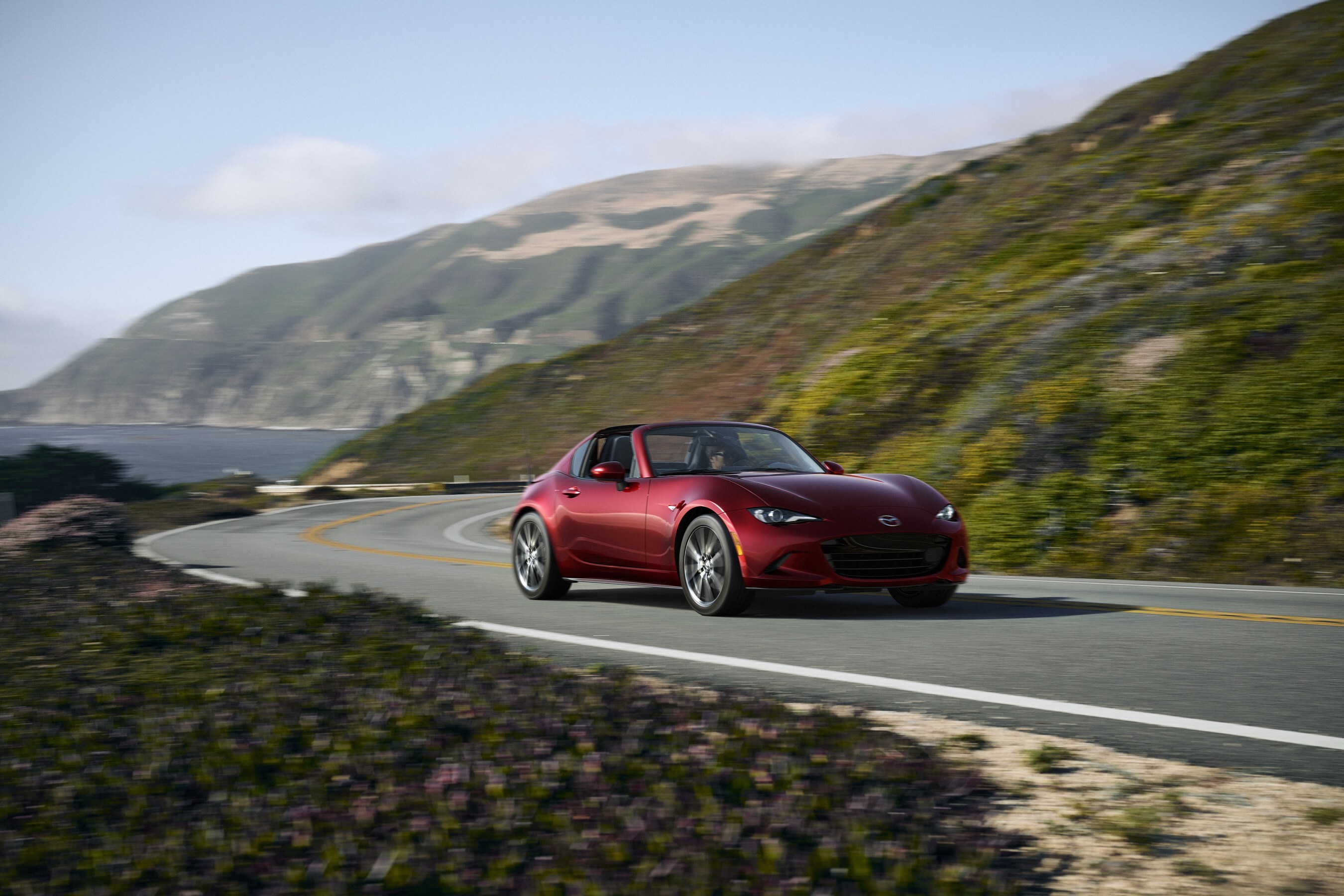
The 2026 MX-5 vs Nissan Z — if you’re shopping for a pure Japanese sports car in 2026, this is the comparison that matters. Both the Mazda MX-5 Miata and the Nissan Z represent decades of motorsport heritage, rear-wheel-drive purity, and enthusiast-focused engineering. But they approach the sports car formula from opposite ends of the spectrum. The MX-5 is a lightweight, open-top roadster built around the philosophy of “jinba ittai” — horse and rider as one. The Nissan Z is a powerful, front-engine coupe that channels the spirit of the original Datsun 240Z with modern twin-turbo muscle.
In this comprehensive 2026 buyer’s guide, we break down every critical difference between these two iconic Japanese sports cars: pricing, performance, handling, daily drivability, fuel economy, technology, safety, and long-term value. Whether you’re a first-time sports car buyer or a seasoned enthusiast looking to add to your garage, this guide will help you decide which machine deserves your driveway — and your hard-earned money.
Table of Contents
- Overview: Two Different Philosophies
- 2026 Pricing and Trim Comparison
- Engine, Powertrain, and Performance
- Handling, Chassis, and Driving Dynamics
- Fuel Economy and Running Costs
- Interior, Comfort, and Technology
- Safety Features and Ratings
- Practicality and Daily Usability
- Reliability, Warranty, and Ownership Costs
- Which One Offers Better Value?
- Final Verdict: Which Should You Buy?
- Frequently Asked Questions
1. Overview: Two Different Philosophies
The 2026 Mazda MX-5 Miata and 2026 Nissan Z are both rear-wheel-drive, two-seat Japanese sports cars — but that’s where the similarities end. The MX-5 is the definition of a lightweight roadster: a 2,366-pound convertible with a naturally aspirated 2.0-liter four-cylinder making 181 horsepower. It prioritizes balance, feel, and driver engagement over outright speed. The Miata isn’t about numbers on a spec sheet; it’s about the sensation of driving.
The 2026 Nissan Z, by contrast, is a muscle-bound coupe with a twin-turbocharged 3.0-liter V6 producing 400 horsepower in standard form and 420 horsepower in the NISMO variant. Weighing over 3,600 pounds, the Z is significantly heavier and more powerful, designed for straight-line acceleration and highway cruising as much as canyon carving. It offers a choice of a six-speed manual or a nine-speed automatic transmission, and for 2026, the NISMO finally gains a manual transmission option — a long-awaited addition for purists.
Understanding this fundamental philosophical difference is key to choosing between them. The MX-5 asks, “How connected do you want to feel to the road?” The Z asks, “How fast do you want to go?”
2. 2026 Pricing and Trim Comparison
Pricing is one of the most dramatic differences between these two cars. The 2026 Mazda MX-5 Miata starts at $30,430 for the Sport soft-top with a manual transmission, making it one of the most affordable new sports cars on the market. The Club trim starts at $33,930, and the range-topping Grand Touring begins at $35,730 for the manual soft-top. The RF (Retractable Fastback) models add approximately $2,500–$3,000 to each trim level. With destination charges, a fully loaded Grand Touring RF automatic can reach around $39,500.
The 2026 Nissan Z, meanwhile, starts at $42,970 for the Sport trim with either the six-speed manual or nine-speed automatic. The Performance trim jumps to $52,970, while the flagship NISMO starts at $65,750 (automatic only, with the manual NISMO expected to carry a slight premium). The new Heritage Edition, available on the Performance trim, adds retro-inspired styling for an additional $2,940. With destination, a loaded NISMO can exceed $67,000.
| Vehicle | Base MSRP | Mid-Range MSRP | Top Trim MSRP |
|---|---|---|---|
| 2026 Mazda MX-5 Miata Sport | $30,430 | $33,930 (Club) | $35,730 (Grand Touring) |
| 2026 Nissan Z Sport | $42,970 | $52,970 (Performance) | $65,750 (NISMO) |
However, real-world pricing tells a different story. Nissan has been offering aggressive incentives on the Z, with some dealerships discounting base Sport models by as much as $9,000–$10,000, bringing effective prices into the low-$30,000 range — directly competitive with the Miata. Meanwhile, the MX-5 holds its value exceptionally well and rarely sees significant discounts. For budget-conscious buyers, a discounted Z Sport may actually undercut a Miata Club on price while delivering more than double the horsepower.
3. Engine, Powertrain, and Performance
Performance is where the 2026 MX-5 vs Nissan Z debate becomes most polarizing. These two cars exist in entirely different leagues when it comes to raw acceleration and power delivery.
2026 Mazda MX-5 Miata Powertrain
The MX-5 uses Mazda’s proven Skyactiv-G 2.0-liter naturally aspirated inline-four, producing 181 horsepower at 7,000 rpm and 151 lb-ft of torque at 4,000 rpm. It’s paired with either a sweet-shifting six-speed manual or a six-speed automatic transmission. Power goes exclusively to the rear wheels through a mechanical, limited-slip differential on Club and Grand Touring trims.
Thanks to the Miata’s featherweight 2,366-pound curb weight (2,454 lb for the RF), the 181 hp is more than adequate. Car and Driver recorded a 0–60 mph time of 5.5 seconds for the RF Club manual, with a quarter-mile time of 14.3 seconds at 96 mph. The top speed is electronically limited to 139 mph. These numbers won’t win drag races, but the MX-5’s real performance metric is how it feels — and it feels fast because you’re so connected to the experience.
2026 Nissan Z Powertrain
The Nissan Z is powered by a 3.0-liter twin-turbo V6 (VR30DDTT) derived from the Infiniti Q50/Q60 Red Sport. In Sport and Performance trims, it makes 400 horsepower at 6,400 rpm and 350 lb-ft of torque at 1,600–5,200 rpm. The NISMO variant bumps output to 420 horsepower and 384 lb-ft of torque. Buyers can choose between a six-speed manual with automatic rev-matching or a nine-speed automatic.
Performance figures are in another universe compared to the Miata. Car and Driver tested the Z Performance at 4.5 seconds to 60 mph, while the NISMO automatic did it in a blistering 3.9 seconds. The quarter-mile passes in 12.4 seconds at 114 mph for the NISMO. Top speed is estimated at 155–165 mph, depending on trim. The Z requires 93-octane premium fuel for maximum performance, though it will run on 91 octane with reduced output.
| Specification | 2026 Mazda MX-5 Miata | 2026 Nissan Z (Sport/Perf) | 2026 Nissan Z NISMO |
|---|---|---|---|
| Engine | 2.0L I4 NA | 3.0L V6 Twin-Turbo | 3.0L V6 Twin-Turbo |
| Horsepower | 181 hp @ 7,000 rpm | 400 hp @ 6,400 rpm | 420 hp @ 6,400 rpm |
| Torque | 151 lb-ft @ 4,000 rpm | 350 lb-ft @ 1,600 rpm | 384 lb-ft @ 2,000 rpm |
| Transmission | 6-speed manual / 6-speed auto | 6-speed manual / 9-speed auto | 9-speed auto / 6-speed manual (new) |
| 0–60 mph | 5.5 seconds | 4.5 seconds | 3.9 seconds |
| Quarter Mile | 14.3 sec @ 96 mph | ~13.0 sec @ ~106 mph | 12.4 sec @ 114 mph |
| Top Speed | 139 mph | 155 mph | 165 mph (est.) |
| Curb Weight | 2,366 lb | ~3,500 lb | 3,673 lb |
4. Handling, Chassis, and Driving Dynamics
This is where the MX-5 vs Z comparison reveals two completely different approaches to the sports car experience. The Miata is widely regarded as one of the best-handling cars ever built at any price. The Z, while competent, takes a more grand-touring approach — with the notable exception of the NISMO.
Mazda MX-5: The Handling Benchmark
The MX-5’s chassis is a masterclass in balance. With a near-perfect 50:50 weight distribution, double wishbone front suspension, multilink rear, and a curb weight under 2,400 pounds, the Miata changes direction with telepathic precision. The steering is hydraulic-assisted (a rarity in 2026) and delivers exceptional feedback. Car and Driver recorded 0.90 g of lateral grip on the skidpad — remarkable for all-season tires.
Mazda’s Kinematic Posture Control (KPC) system, standard on all trims, uses subtle brake intervention on the inner rear wheel during cornering to reduce body roll and improve turn-in response. The Club trim adds a sport-tuned suspension with Bilstein dampers and a limited-slip differential, making it the enthusiast’s choice. The RF adds structural rigidity but also 88 pounds of weight, slightly dulling the reflexes.
The MX-5’s limits are approachable and forgiving. You can drive it at 8/10ths on public roads and feel like a hero. Push beyond the limit, and it communicates clearly through the seat, wheel, and pedals, making it an ideal learning tool for newer enthusiasts.
Nissan Z: Power and Poise
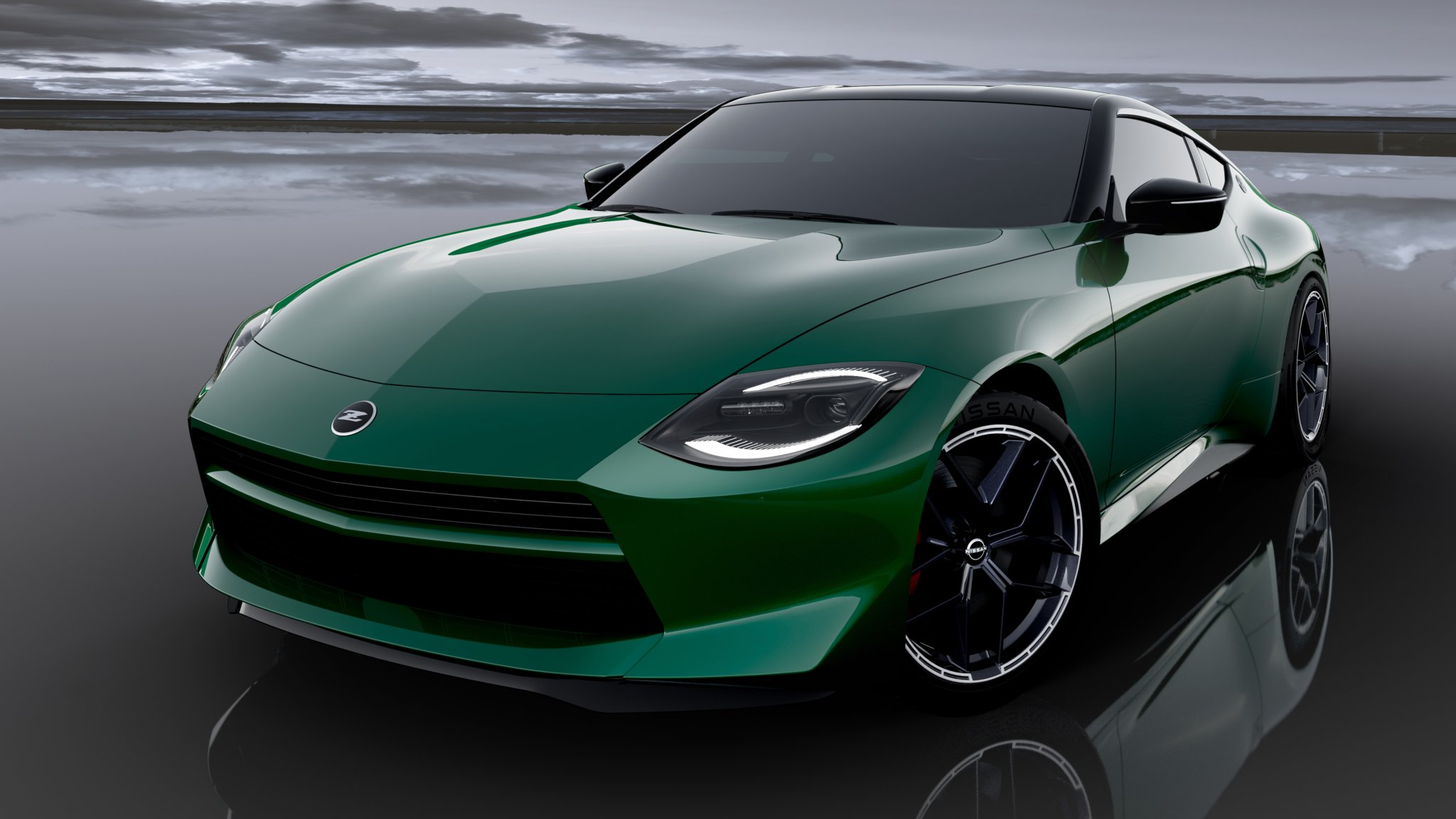
The Nissan Z rides on an updated version of the 370Z’s platform with a longer wheelbase (100.4 inches vs. the Miata’s 90.9 inches) and significantly more mass. The standard suspension is on the softer side, prioritizing comfort over cornering aggression. Edmunds noted that the Z “lacks the acceleration and handling capabilities of rivals like the Toyota GR Supra” in base form, with body control and steering feedback needing refinement near the limit.
The Z NISMO transforms the car completely. It features a NISMO-tuned suspension with larger-diameter shocks, higher spring rates, front and rear crossbars, a reinforced underbody V-brace, and unique RAYS forged-alloy wheels with Dunlop SP Sport Maxx GT600 tires. Braking is handled by Akebono performance calipers with 15-inch front rotors. The NISMO recorded 1.02 g on the skidpad and stops from 70 mph in just 153 feet — genuine supercar territory. However, the trade-off is a punishing ride on imperfect pavement.
For 2026, Nissan has updated the standard Z’s suspension and brakes, with revised shock absorbers and larger rotors. The facelifted front end also improves aerodynamic performance. But even with these updates, the Z remains more of a grand tourer in standard form and a track weapon in NISMO form — with little middle ground.
5. Fuel Economy and Running Costs
Given the massive disparity in engine size and power, fuel economy differences are predictable — but perhaps not as dramatic as you’d expect.
The 2026 Mazda MX-5 Miata is EPA-rated at 26 mpg city / 34 mpg highway / 29 mpg combined with the manual transmission, and 26/35/29 with the automatic. In real-world testing, Car and Driver observed 29 mpg overall and an impressive 36 mpg on their 75-mph highway loop. With an 11.9-gallon fuel tank, the Miata offers a highway range of approximately 420 miles.
The 2026 Nissan Z is rated at 18 mpg city / 24 mpg highway / 20 mpg combined for the manual, and 19/28/22 for the automatic. The NISMO drops to 17/24/19. Real-world observed economy from Car and Driver was 18 mpg overall for the NISMO and 29 mpg on the highway loop for the Performance trim. The Z’s larger fuel tank (approximately 16 gallons) gives it a comparable highway range despite the thirstier engine.
| Fuel Economy | 2026 MX-5 Miata (Manual) | 2026 Nissan Z (Manual) | 2026 Nissan Z NISMO |
|---|---|---|---|
| City MPG | 26 | 18 | 17 |
| Highway MPG | 34 | 24 | 24 |
| Combined MPG | 29 | 20 | 19 |
| Annual Fuel Cost* | ~$1,450 | ~$2,100 | ~$2,200 |
Insurance costs will also differ significantly. The MX-5’s lower price, smaller engine, and excellent safety record typically result in lower premiums. The Z’s 400+ horsepower and higher value mean higher insurance rates, particularly for the NISMO. Maintenance costs are comparable for both, though the Z’s twin-turbo V6 and larger brakes will be more expensive to service over time.
6. Interior, Comfort, and Technology
Interior design and technology reflect each car’s mission statement. The MX-5 is minimalist and driver-focused. The Z is more luxurious and tech-forward — but neither is perfect.
Mazda MX-5 Miata Interior
The MX-5’s cabin is snug — there’s no other word for it. With 37.4 inches of headroom and 43.1 inches of legroom, taller drivers may find themselves brushing the soft top. The RF offers slightly more headroom with the roof closed. Storage is minimal: the trunk holds just 4.6 cubic feet, and interior cubbies are virtually nonexistent. There’s no glovebox, only a small locking storage bin between the seats.
Technology is functional but not flashy. The 2026 MX-5 features an 8.8-inch Mazda Connect infotainment display with Apple CarPlay and Android Auto (wired), Bluetooth, and a six-speaker audio system. Grand Touring adds navigation, a nine-speaker Bose system, and heated leather seats. The instrument cluster is analog with a small digital display — refreshingly simple in an era of massive screens.
Build quality is excellent for the price point, with soft-touch materials and precise panel gaps. The manually operated soft top can be raised or lowered in seconds from the driver’s seat — a party trick that never gets old.
Nissan Z Interior
The Z’s interior is a massive leap forward from the ancient 370Z it replaces. The cabin is roomier, with better materials and a more modern layout. The dashboard features three analog gauges for boost pressure, turbo speed, and battery voltage — a retro touch that enthusiasts love. The seats are power-adjustable and heated on Performance and NISMO trims, with available Alcantara upholstery.
Technology is more advanced than the Miata’s. The Sport trim gets an 8.0-inch touchscreen with wired Apple CarPlay and Android Auto, while Performance and NISMO upgrade to a 9.0-inch screen with wireless connectivity, navigation, and a Wi-Fi hotspot. A 12.3-inch digital instrument cluster is standard across the range. The Bose audio system (optional on Sport, standard on higher trims) delivers significantly better sound than the Miata’s setup.
Storage is better than the Miata but still limited. The hatchback trunk can fit three carry-on suitcases — practical for a weekend getaway but not a Costco run. Interior storage bins behind the seats are awkward to access and too small for meaningful cargo.
7. Safety Features and Ratings
Neither the MX-5 nor the Z has been fully crash-tested by the IIHS or NHTSA for the 2026 model year, but both carry over proven safety architectures from previous years.
Mazda MX-5 Safety
The MX-5 comes standard with Mazda’s i-Activsense suite on all trims, including:
- Blind Spot Monitoring with Rear Cross-Traffic Alert
- Lane Departure Warning
- Smart City Brake Support (low-speed automatic emergency braking)
- High Beam Control
- Traffic Sign Recognition (Grand Touring only)
The MX-5’s small size and light weight are inherent safety advantages in terms of maneuverability and braking distance, though they work against it in collisions with larger vehicles. The RF’s fixed roof structure provides additional rollover protection compared to the soft top.
Nissan Z Safety
The Z includes Nissan’s Safety Shield 360 on all trims:
- Automatic Emergency Braking with Pedestrian Detection
- Blind Spot Warning
- Rear Cross-Traffic Alert
- Lane Departure Warning
- High Beam Assist
- Rear Automatic Braking
The Z’s larger footprint and more robust structure likely provide better protection in side-impact collisions, though official ratings are pending. The NISMO’s larger brakes (15-inch front rotors vs. the Miata’s 11-inch units) provide superior stopping power — 153 feet from 70 mph vs. 176 feet for the Miata.
8. Practicality and Daily Usability
Let’s be honest: neither of these cars is practical. But one is significantly more livable than the other.
The MX-5 Miata is a weekend toy, full stop. The 4.6-cubic-foot trunk won’t fit a standard roll-aboard suitcase without creative packing. The cabin is loud at highway speeds, even with the RF roof closed, and wind buffeting with the top down requires a wind deflector (sold separately) for comfortable cruising. There’s no back seat, no usable storage, and the ride — while compliant for a sports car — can be fatiguing on long trips. If you need one car to do everything, the Miata is not it.
The Nissan Z is more versatile. The hatchback trunk offers real utility for a sports car, and the cabin is quiet enough for daily commuting. The suspension on Sport and Performance trims is genuinely comfortable — Edmunds praised it as “one of the more comfortable sport coupes on the market.” The larger fuel tank means fewer stops on road trips. However, visibility is compromised by thick windshield pillars and large blind spots, and the low seating position makes entry and exit a challenge for less limber drivers.
For buyers who can only own one vehicle, the Z is the more rational choice. For those with a daily driver already in the garage, the Miata’s compromises are part of its charm.
9. Reliability, Warranty, and Ownership Costs
Both Mazda and Nissan offer competitive warranty coverage for 2026:
| Warranty | 2026 Mazda MX-5 Miata | 2026 Nissan Z |
|---|---|---|
| Bumper-to-Bumper | 3 years / 36,000 miles | 3 years / 36,000 miles |
| Powertrain | 5 years / 60,000 miles | 5 years / 60,000 miles |
| Complimentary Maintenance | None | 2 years / 24,000 miles |
The MX-5’s naturally aspirated 2.0-liter engine is one of the most reliable powertrains in production. It has no turbos to fail, no complex direct-injection system to carbon up, and a proven track record over eight years of production. Common issues are limited to minor infotainment glitches and occasional soft-top seal wear. Maintenance is simple and inexpensive.
The Nissan Z’s VR30DDTT twin-turbo V6 is more complex and has a shorter real-world reliability history, though it’s shared with Infiniti models that have proven reasonably durable. The turbos, intercoolers, and direct injection add potential failure points. The nine-speed automatic has been generally reliable, but the NISMO’s track-focused components (stiffer suspension, larger brakes, stickier tires) will wear faster and cost more to replace. Nissan’s complimentary maintenance program for the first two years is a nice perk the Miata doesn’t offer.
Resale value strongly favors the MX-5. Miatas hold their value better than almost any car in their price bracket, with three-year depreciation typically under 25%. The Z, despite its heritage, has depreciated more aggressively due to slower sales and larger incentives. A 2023 Z Sport already trades for under $30,000 used — a staggering drop from its $42,000 MSRP.
10. Which One Offers Better Value?
Value is subjective in the sports car world, but we can break it down by buyer type:
Buy the 2026 Mazda MX-5 Miata If:
- You prioritize handling feel and driver engagement over raw speed
- You want the most affordable new sports car experience
- You already own a practical daily driver
- You love open-air motoring
- You plan to modify or track the car (the aftermarket is enormous)
- You want the best resale value in the segment
- You appreciate simplicity and analog driving dynamics
Buy the 2026 Nissan Z If:
- You want serious straight-line acceleration and highway passing power
- You need a sports car that can double as a daily driver
- You love the Z-car heritage and retro styling
- You can take advantage of current dealer incentives (potentially $9,000+ off)
- You want a more luxurious interior and better technology
- You plan to attend track days and want the NISMO’s capability
- You prefer the security and quiet of a fixed roof
From a pure dollars-per-horsepower perspective, a discounted Z Sport is unbeatable. At roughly $34,000 with incentives, you’re getting 400 horsepower and a usable coupe for the price of a Miata Club. But horsepower isn’t everything — and for buyers who value the intangible qualities of lightweight sports car dynamics, the Miata delivers an experience that no amount of turbo boost can replicate.
11. Final Verdict: Which Should You Buy?
The 2026 MX-5 vs Nissan Z debate doesn’t have a single correct answer — it has two correct answers for two different types of enthusiasts.
The Mazda MX-5 Miata is the spiritual successor to the classic British roadsters of the 1960s, perfected with Japanese reliability and engineering. It’s not fast in absolute terms, but it feels fast because you’re so connected to the machine. Every input — steering, throttle, brake, gearshift — has a direct, mechanical quality that’s increasingly rare in modern cars. At $30,430, it’s also one of the greatest automotive bargains of our time. If you have the means to own a second car for practicality, the Miata is arguably the more rewarding choice for pure driving pleasure.
The Nissan Z is a different animal entirely. It’s a muscle car in a sports car’s clothing — a 400-horsepower statement piece that turns heads and shreds tires. For 2026, the addition of a manual transmission to the NISMO finally addresses the biggest criticism of the performance variant, and the Heritage Edition adds collectible appeal. With aggressive dealer discounts bringing real-world prices into Miata territory, the Z represents extraordinary performance value. If you need one car to do it all — commute, road trip, and carve canyons — the Z is the more rational choice.
Our recommendation: If you’re a driving purist with garage space for a second car, buy the MX-5 Miata Club with the manual transmission and never look back. If you need one sports car that must handle daily life and you can score a discounted Z Performance or Sport, the Nissan is the smarter buy. And if budget is no object and track days are in your future? The Z NISMO with the new manual transmission is the most capable car either company has built in decades.
12. Frequently Asked Questions
Is the 2026 Nissan Z faster than the MX-5 Miata?
Yes, significantly. The base Z does 0–60 mph in 4.5 seconds vs. the Miata’s 5.5 seconds. The Z NISMO hits 60 in just 3.9 seconds — nearly 1.6 seconds quicker than the Miata.
Which is better for daily driving?
The Nissan Z. It has a more comfortable ride, a quieter cabin, better technology, and a more practical trunk. The MX-5 is best suited as a weekend or secondary vehicle.
Can you fit golf clubs in a Miata?
With the top down and creative positioning, yes — but it’s tight. The Z’s hatchback trunk accommodates golf bags much more easily.
Does the 2026 Z NISMO have a manual transmission?
Yes! For 2026, Nissan finally added a six-speed manual option to the Z NISMO, addressing the biggest complaint about the 2024–2025 NISMO models.
Which car holds its value better?
The Mazda MX-5 Miata. It consistently ranks among the best resale value vehicles in its class. The Z has depreciated more rapidly due to larger incentives and slower sales.
Is the MX-5 safe enough for highway driving?
Yes, but with caveats. The MX-5 handles beautifully at highway speeds and has modern safety features, but its small size and light weight are disadvantages in collisions with larger vehicles. Drive defensively.
Which should I buy if I can only have one car?
The Nissan Z. Its combination of performance, comfort, and practicality makes it a more viable single-car solution. The MX-5 is best enjoyed as a second or third vehicle.