2026 Corvette vs 2025 BMW M2

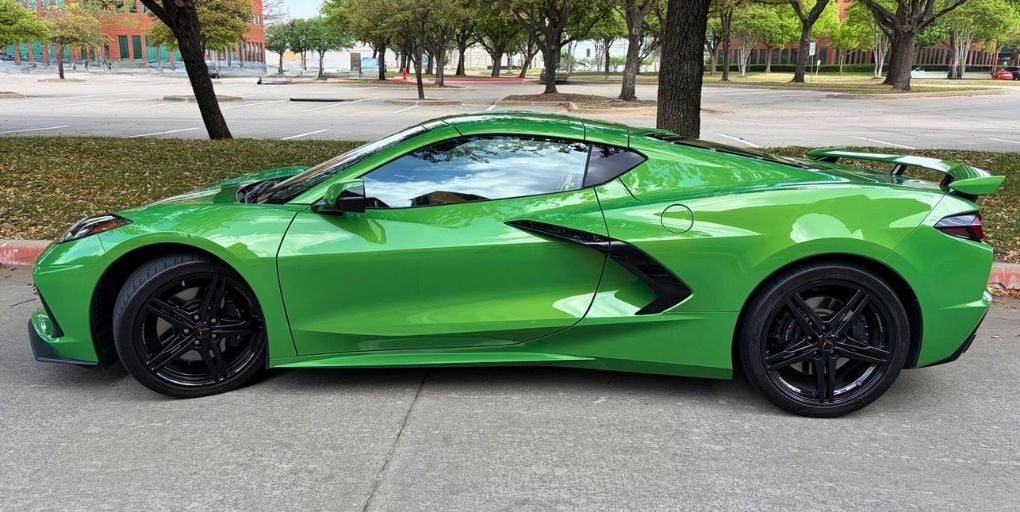
The 2026 Chevrolet Corvette vs 2025 BMW M2 — two of the most exciting performance machines on the market today, each representing a radically different philosophy of what a modern sports car should be. On one side, you have America’s mid-engine supercar slayer, the Corvette C8 Stingray, with its exotic proportions and naturally aspirated V8 thunder. On the other hand, Germany’s compact rear-wheel-drive coupe, the BMW M2, is a precision instrument built around a twin-turbo inline-six and an available six-speed manual transmission. Whether you are cross-shopping these two for a daily driver, a weekend track toy, or your next garage centerpiece, this comprehensive buyer guide breaks down every detail you need to know.
Table of Contents
- Introduction: Two Philosophies, One Goal
- Pricing and Value Comparison
- Performance, Engine, and Drivetrain
- Acceleration and Quarter-Mile Times
- Handling, Chassis, and Track Capability
- Interior, Comfort, and Technology
- Practicality, Cargo, and Daily Drivability
- Fuel Economy and Running Costs
- Reliability, Warranty, and Ownership
- Final Verdict: Which One Should You Buy?
- Frequently Asked Questions
Introduction: Two Philosophies, One Goal
The 2026 Chevrolet Corvette vs 2025 BMW M2 debate is more than a simple spec-sheet comparison. It is a clash of ideologies. The Corvette represents the American approach to performance: big displacement, dramatic styling, and a price tag that undercuts European exotics by six figures. The BMW M2, meanwhile, embodies the German engineering ethos of compact dimensions, turbocharged efficiency, and a driver-focused chassis that rewards precision over brute force.
For 2026, the Corvette Stingray continues with its revolutionary mid-engine C8 platform, now featuring a thoroughly redesigned interior that replaces the controversial “wall of buttons” with a cleaner, more intuitive 12.7-inch center touchscreen and a 14-inch digital gauge cluster. Chevrolet has also expanded the color palette and refined the cabin materials, making the Stingray feel more premium than ever.
The 2025 BMW M2, meanwhile, received a significant mid-cycle refresh that bumped power from 453 to 473 horsepower, with torque increasing to 443 lb-ft for the automatic transmission variant (406 lb-ft for the manual). For 2026, BMW introduces the M2 CS, a track-focused special edition with 523 horsepower, carbon-fiber body panels, and a 0.2-inch lower ride height. The M2 remains one of the last bastions of the manual transmission in the performance car world, a feature that resonates deeply with driving purists.
Both cars are rear-wheel-drive coupes (except the Corvette E-Ray and the upcoming 2027 M2 M xDrive), both start in the low-$70,000 range, and both deliver sub-4-second 0-60 mph acceleration. Yet they could not feel more different behind the wheel. This guide will help you understand which one aligns with your driving style, budget, and lifestyle.
Pricing and Value Comparison
One of the most compelling arguments for both the Corvette and the M2 is their exceptional value proposition. In a world where a base Porsche 911 Carrera starts north of $120,000, both of these cars deliver supercar-grade performance at a fraction of the cost.
2026 Chevrolet Corvette Stingray Pricing
| Trim | Starting MSRP (Coupe) | Starting MSRP (Convertible) |
|---|---|---|
| 1LT | $70,000 | $78,995 |
| 2LT | $77,100 | $86,095 |
| 3LT | $81,750 | $90,745 |
The Z51 Performance Package, which is highly recommended for anyone who plans to track their Corvette or simply wants the full performance experience, adds approximately $6,345 and includes an electronic limited-slip differential, performance-ratio rear axle, upgraded brakes, summer tires, and a dual-mode performance exhaust that bumps output from 490 to 495 horsepower.
2025 BMW M2 Pricing
| Variant | Starting MSRP | Transmission |
|---|---|---|
| M2 (Manual) | $66,675 | 6-speed manual |
| M2 (Automatic) | $66,675 | 8-speed automatic |
| M2 CS | $99,950 | 8-speed automatic only |
The base M2 undercuts the Corvette Stingray 1LT by roughly $3,000 to $4,000, making it the more affordable entry point into this tier of performance. However, the Corvette’s standard equipment list is more generous, and the M2’s option sheet can quickly inflate the price. The Carbon Package ($9,900), which adds a carbon-fiber roof, interior trim, and aggressive bucket seats, is a popular but pricey add-on. The M2 CS, at nearly $100,000, competes more directly with the Corvette Z06 than the base Stingray.
Value Verdict: The base M2 offers a lower entry price, but the Corvette Stingray delivers more standard performance and a more exotic ownership experience for a modest premium. If budget is your primary concern, the M2 wins. If you are looking for the most performance per dollar, the Corvette is nearly impossible to beat.
Performance, Engine, and Drivetrain
The heart of any sports car is its powertrain, and the 2026 Chevrolet Corvette vs 2025 BMW M2 comparison reveals two very different approaches to making speed.
Corvette Stingray: Naturally Aspirated American Muscle
The 2026 Corvette Stingray is powered by the LT2, a 6.2-liter naturally aspirated pushrod V8 mounted behind the cabin. This engine produces 490 horsepower at 6,450 rpm and 465 lb-ft of torque at 5,150 rpm. With the Z51 Performance Package and its dual-mode exhaust, output rises slightly to 495 horsepower and 470 lb-ft of torque. The LT2 is a torque-rich, linear powerplant that delivers its thrust with the kind of immediacy and soundtrack that only a large-displacement naturally aspirated V8 can provide.
Power is sent to the rear wheels exclusively through an eight-speed dual-clutch automatic transmission (DCT). There is no manual transmission option for the Corvette, a decision that has disappointed some purists but aligns with the car’s supercar aspirations. The DCT shifts with rifle-bolt precision and is perfectly suited to both spirited canyon carving and full-throttle drag-strip launches.
BMW M2: Turbocharged Inline-Six Precision
The 2025 BMW M2 uses the S58, a twin-turbocharged 3.0-liter inline-six that is one of the finest engines BMW has ever produced. In the refreshed M2, it makes 473 horsepower at 6,250 rpm. Torque varies by transmission: the six-speed manual produces 406 lb-ft at 2,650 rpm, while the eight-speed automatic benefits from 443 lb-ft at 2,700 rpm. The extra torque in the automatic is a deliberate engineering choice to protect the manual transmission and clutch from the stresses of the engine’s full output.
The M2 CS takes this engine to another level, extracting 523 horsepower and 479 lb-ft of torque. This variant is automatic-only and features extensive carbon-fiber weight reduction, including the roof, trunk lid, mirror caps, and rear diffuser. The CS also sits 0.2 inches lower on unique springs and dampers, with revised stability control programming.
Unlike the Corvette, the M2 offers a choice of transmissions. The six-speed manual is a zero-cost option and is widely regarded as one of the best in the business, with closely stacked ratios, a mechanical shift feel, and none of the rev hang that plagues many modern manual transmissions. The eight-speed automatic is quicker and more efficient, but the manual is the soul of the M2 experience.
Engine Comparison Table
| Specification | Corvette Stingray (Z51) | BMW M2 (Auto) | BMW M2 CS |
|---|---|---|---|
| Engine | 6.2L LT2 V8 | 3.0L Twin-Turbo I6 | 3.0L Twin-Turbo I6 |
| Aspiration | Naturally Aspirated | Twin-Turbo | Twin-Turbo |
| Horsepower | 495 hp | 473 hp | 523 hp |
| Torque | 470 lb-ft | 443 lb-ft | 479 lb-ft |
| Redline | 6,450 rpm | 7,200 rpm | 7,200 rpm |
| Transmission | 8-speed DCT | 8-speed auto / 6-speed manual | 8-speed auto |
| Drivetrain | RWD | RWD | RWD |
| Engine Layout | Mid-engine | Front-engine | Front-engine |
Acceleration and Quarter-Mile Times
Raw acceleration is where both of these cars shine, and the numbers are remarkably close despite their different approaches.
Corvette Stingray Performance Figures
With the Z51 package, the 2026 Corvette Stingray launches from 0 to 60 mph in approximately 2.8 to 2.9 seconds, making it one of the quickest rear-wheel-drive cars on the market. The quarter-mile passes in 11.2 seconds at 122 mph. Top speed is rated at 194 mph. These figures place the base Stingray firmly in supercar territory, a remarkable achievement for a car starting at $70,000.
BMW M2 Performance Figures

The 2025 BMW M2 with the automatic transmission hits 60 mph in 3.5 seconds and covers the quarter-mile in 11.6 seconds at 124 mph. The manual transmission is slightly slower, with a 0-60 time of 3.9 seconds and a quarter-mile of 12.1 seconds at 120 mph. The M2 CS, with its additional 50 horsepower and weight reduction, manages 0-60 in just 3.3 seconds and runs the quarter in 11.3 seconds at 128 mph.
While the Corvette has a clear edge in straight-line acceleration, the gap narrows significantly with the M2 CS. More importantly, the M2’s acceleration feels different — the twin-turbo inline-six delivers a surge of mid-range torque that pins you to your seat, while the Corvette’s V8 provides a more linear, ever-building rush of power that crescendos as it approaches its 6,450-rpm redline.
Acceleration Comparison Table
| Metric | Corvette Stingray Z51 | BMW M2 (Auto) | BMW M2 (Manual) | BMW M2 CS |
|---|---|---|---|---|
| 0-60 mph | 2.8 sec | 3.5 sec | 3.9 sec | 3.3 sec |
| Quarter-Mile | 11.2 sec @ 122 mph | 11.6 sec @ 124 mph | 12.1 sec @ 120 mph | 11.3 sec @ 128 mph |
| Top Speed | 194 mph | 177 mph | 177 mph | 188 mph |
| 60-0 Braking | 149 ft | 149 ft | 153 ft | 155 ft |
| Skidpad (g) | 1.03 g | 1.02 g | 1.00 g | 1.05 g |
Handling, Chassis, and Track Capability
This is where the 2026 Chevrolet Corvette vs 2025 BMW M2 comparison becomes truly interesting, as both cars offer world-class handling but achieve it through different means.
Corvette: Mid-Engine Magic
The Corvette’s mid-engine layout is its defining characteristic. By placing the LT2 V8 behind the cabin, Chevrolet has achieved a near-perfect 40/60 front-to-rear weight distribution. This configuration provides exceptional traction out of corners, incredible braking stability, and a level of agility that front-engine cars struggle to match. The Corvette’s center of gravity is remarkably low — the car stands just 48.6 inches tall — and the suspension uses double wishbones at all four corners for precise wheel control.
The Z51 package adds Magnetic Ride Control 4.0, an electronic limited-slip differential, and larger Brembo brakes. On the track, the Corvette is devastatingly fast. It rotates willingly under braking, grips tenaciously through corners, and puts down power with remarkable efficiency. The DCT keeps the engine in the heart of its powerband, and the steering, while not as communicative as some enthusiasts would like, is accurate and well-weighted.
However, the mid-engine layout does have drawbacks. The Corvette’s limits are extremely high, and when you exceed them, the transition from grip to slip can be abrupt. This is not a car that forgives ham-fisted inputs. It demands respect and skill to extract its full potential.
BMW M2: Traditional Sports Car Dynamics
The M2 sticks to the classic front-engine, rear-wheel-drive formula that has defined sports cars for decades. Its 108.1-inch wheelbase and compact 180.3-inch overall length make it significantly smaller and lighter than the Corvette, with a curb weight of approximately 3,755 lb for the manual and 3,813 lb for the automatic. The M2 CS shaves that down to 3,725 lb through extensive use of carbon fiber.
The M2’s suspension uses struts up front and a multilink rear, with M-specific tuning that prioritizes driver engagement over outright grip. The steering is more communicative than the Corvette’s, and the chassis balance is delightfully adjustable. With the M Dynamic Mode engaged, the M2 will happily slide its tail out on corner exit, rewarding skilled drivers with one of the most entertaining handling experiences available at any price.
The M2’s limits are lower than the Corvette’s, but they are more accessible. You can explore the edge of adhesion on a public road without immediately risking a trip to the tire wall. The manual transmission adds another layer of involvement, allowing you to modulate power delivery with precision. For drivers who value the journey as much as the lap time, the M2 is arguably the more satisfying car.
Track Day Considerations
Both cars are more than capable of handling a track day, but they approach it differently. The Corvette is faster in raw terms — its lap times will embarrass cars costing twice as much — but it generates more heat in its brakes and tires due to its higher speeds and weight. The M2, particularly the CS with its optional carbon-ceramic brakes, is more forgiving and easier to drive at the limit for extended sessions. The M2’s smaller size also makes it less intimidating on tight, technical circuits.
Interior, Comfort, and Technology
Modern sports cars are expected to do more than just go fast. They must also serve as comfortable, tech-laden daily drivers. Here is how the Corvette and M2 compare.
Corvette Interior: Supercar Ambiance
For 2026, the Corvette’s interior has been thoroughly updated. The controversial center console button array — a hallmark of the C8 since its 2020 debut — has been replaced with a cleaner layout centered around a 12.7-inch touchscreen. A 14-inch digital instrument cluster sits ahead of the driver, and a 6.6-inch auxiliary touchscreen is positioned to the side for climate and vehicle controls. Google Built-In is now standard, bringing native Google Maps, Google Assistant, and the Google Play Store to the Corvette for the first time.
The cockpit is wrapped around the driver in true supercar fashion. The seats, steering wheel, and controls are all angled toward the pilot, creating an immersive experience. Upper trims (2LT and 3LT) add heated and ventilated seats, a head-up display, a wireless charging pad, a 14-speaker Bose Performance Series audio system, and premium leather upholstery. The 3LT trim offers 14 interior color options and custom leather-wrapped instrument panels.
However, the Corvette is strictly a two-seater. There is no rear seat, no matter how small, which limits its practicality for anyone who occasionally needs to carry more than one passenger.
BMW M2 Interior: Compact Luxury
The M2 shares its basic interior architecture with the standard 2 Series coupe, which means it is more conventional than the Corvette but also more practical. The centerpiece is BMW’s curved display, combining a 12.3-inch digital instrument cluster with a 14.9-inch touchscreen running BMW Operating System 8.5. All climate controls have been moved to the touchscreen, though they can also be operated via voice command — a change that has drawn criticism from some users who prefer physical buttons.
Front-seat space is generous, with excellent sport seats that provide support without sacrificing comfort. The rear seats, however, are best described as “emergency use only.” Legroom and headroom are severely limited, making the M2 a de facto two-seater for adults, though children and smaller passengers can fit in a pinch.
The M2 offers a 12-speaker Harman/Kardon surround-sound audio system, Apple CarPlay, Android Auto, navigation, and a head-up display as options. The Carbon Package adds carbon-fiber trim throughout the cabin and swaps the standard sport seats for aggressive carbon-fiber bucket seats that save 24 pounds but may be too confining for larger drivers.
Interior Comparison Highlights
| Feature | Corvette Stingray 3LT | BMW M2 (Loaded) |
|---|---|---|
| Seating | 2 passengers | 4 passengers (tight rear) |
| Infotainment | 12.7″ + 14″ + 6.6″ displays | 12.3″ + 14.9″ curved display |
| Audio System | 14-speaker Bose | 12-speaker Harman/Kardon |
| Head-Up Display | Standard (2LT+) | Optional |
| Wireless Charging | Standard (2LT+) | Optional |
| Apple CarPlay/Android Auto | Wireless | Wireless |
| Seat Materials | GT2 Napa Leather (3LT) | Merino Leather |
| Interior Design | Driver-focused, supercar-style | Traditional, luxury-oriented |
Practicality, Cargo, and Daily Drivability
Surprisingly, both of these performance coupes are more practical than their aggressive styling suggests.
Corvette: Two Trunks Are Better Than One
One of the most clever aspects of the C8 Corvette’s design is its dual-trunk layout. Because the engine sits behind the cabin, Chevrolet was able to fit a cargo compartment in the rear (behind the engine) and another in the front, where the engine would traditionally reside. Combined, these two compartments offer 12.6 cubic feet of cargo space — enough for a weekend getaway for two, a set of golf clubs, or a modest grocery run.
The Corvette’s ride quality, even with the Z51 suspension, is compliant enough for daily commuting. Magnetic Ride Control adapts to road conditions in milliseconds, smoothing out imperfections when you are cruising and stiffening up when you attack a corner. Ground clearance is low at approximately 5 inches, so speed bumps and steep driveways require caution.
BMW M2: Compact but Usable
The M2 offers 13.8 cubic feet of trunk space — slightly more than the Corvette’s combined total — accessed through a traditional sedan-style trunk lid. The rear seats fold down, expanding cargo capacity significantly. In testing, reviewers have managed to fit five carry-on suitcases in the trunk and a total of 14 with the seats folded.
The M2’s compact dimensions (180.3 inches long vs. the Corvette’s 182.3 inches) make it easier to park and maneuver in tight urban environments. Its ride height is more practical for daily driving, and the availability of a manual transmission makes stop-and-go traffic more engaging rather than more tedious. The M2 also offers the peace of mind of a rear seat, even if it is small — you can legally transport four people in a pinch, something the Corvette cannot do.
Daily Drivability Verdict
For pure daily usability, the M2 has a slight edge. Its smaller size, single large trunk, and token rear seats make it more versatile for errands and commuting. The Corvette, however, counters with superior ride comfort (thanks to Magnetic Ride Control) and the undeniable thrill of its mid-engine layout. If your daily drive involves a lot of highway cruising, the Corvette’s refined ride and long-distance comfort may win you over.
Fuel Economy and Running Costs
Performance cars are rarely purchased for their fuel efficiency, but running costs matter — especially when both of these cars require premium unleaded fuel.
EPA Fuel Economy Ratings
| Vehicle | City MPG | Highway MPG | Combined MPG |
|---|---|---|---|
| Corvette Stingray | 16 | 25 | 19 |
| BMW M2 (Manual) | 16 | 23 | 19 |
| BMW M2 (Automatic) | 16 | 23 | 19 |
| BMW M2 CS | 16 | 23 | 19 |
Both cars carry an identical 19 mpg combined EPA rating, though the Corvette edges ahead on the highway thanks to the LT2 V8’s ability to cruise at low rpm with cylinder deactivation. In real-world testing, the Corvette has returned up to 26 mpg on highway runs, while the M2 manual has achieved 26 mpg in similar conditions. These are impressive figures for cars with this level of performance.
Insurance costs will be high for both vehicles, though the Corvette’s higher replacement value and supercar status may push premiums slightly higher. Maintenance costs favor the BMW in the short term, thanks to BMW’s complimentary scheduled maintenance program covering the first three years or 36,000 miles. Chevrolet does not offer free maintenance, though the Corvette’s pushrod V8 is mechanically simple and relatively inexpensive to service.
Reliability, Warranty, and Ownership
Long-term ownership prospects are a critical factor when investing in a performance car.
Warranty Comparison
| Coverage | Chevrolet Corvette | BMW M2 |
|---|---|---|
| Basic Warranty | 3 years / 36,000 miles | 4 years / 50,000 miles |
| Powertrain Warranty | 5 years / 100,000 miles | 4 years / 50,000 miles |
| Roadside Assistance | 5 years / 100,000 miles | 4 years / unlimited miles |
| Complimentary Maintenance | None | 3 years / 36,000 miles |
| Corrosion Warranty | 6 years / 100,000 miles | 12 years / unlimited miles |
BMW offers a longer basic warranty and the significant advantage of complimentary scheduled maintenance for the first three years. Chevrolet counters with a longer powertrain warranty and roadside assistance program. For buyers who plan to keep their car beyond the warranty period, the Corvette’s simpler pushrod V8 may prove less expensive to maintain than the M2’s complex twin-turbo inline-six with its intercoolers, multiple radiators, and sophisticated engine management systems.
Both cars have strong reliability records for their class, though turbocharged engines like the S58 generally face more potential points of failure over the long term. The Corvette’s DCT transmission, shared with high-end European sports cars, has proven durable but can be expensive to service if issues arise outside of warranty.
Final Verdict: Which One Should You Buy?
The 2026 Chevrolet Corvette vs 2025 BMW M2 decision ultimately comes down to what you value most in a sports car.
Buy the Corvette Stingray If:
- You want the fastest car for the money — sub-3-second 0-60 is genuinely supercar territory
- You are drawn to exotic styling and the mid-engine layout
- You prioritize straight-line acceleration and track-day lap times above all else
- You do not need a rear seat and rarely carry more than one passenger
- You want the most dramatic ownership experience and the highest performance ceiling
- You appreciate the raw, linear power delivery of a naturally aspirated V8
Buy the BMW M2 If:
- You want a manual transmission — the M2 is one of the last great manual sports cars
- You prefer a more engaging, adjustable chassis that rewards driver skill
- You need occasional rear-seat capacity for children or small adults
- You value compact dimensions and easier urban maneuverability
- You want a more refined, luxury-oriented interior with better daily usability
- You appreciate the turbocharged torque surge and high-revving inline-six character
- You are considering the M2 CS for track-focused performance that rivals the Corvette
The Bottom Line
The Corvette is the faster, more dramatic, and more exotic choice. It delivers supercar performance at a sports car price, and its mid-engine layout provides a driving experience that nothing else under $100,000 can match. For buyers who want maximum speed, maximum presence, and maximum value, the Corvette is the clear winner.
The M2, however, is the more involving, more nuanced, and more practical choice. Its manual transmission, communicative chassis, and compact dimensions make it a joy to drive on any road, not just the racetrack. For purists who believe that driving pleasure matters more than lap times, the M2 is the better car.
If you can afford the M2 CS at $99,950, the decision becomes even more difficult. The CS narrows the performance gap significantly while retaining the M2’s superior driver engagement. At that price point, you are no longer comparing base models — you are choosing between two different definitions of automotive excellence.
Whichever you choose, you cannot go wrong. Both the 2026 Chevrolet Corvette and the 2025 BMW M2 represent the pinnacle of what their respective countries can build — and they prove that the golden age of the internal combustion engine is not over yet.
Frequently Asked Questions
Is the 2026 Corvette faster than the BMW M2?
Yes. The 2026 Corvette Stingray with the Z51 package accelerates from 0 to 60 mph in approximately 2.8 seconds, while the BMW M2 automatic does it in 3.5 seconds and the manual in 3.9 seconds. The M2 CS closes the gap with a 3.3-second 0-60 time, but the Corvette remains quicker in a straight line.
Which is better for daily driving, the Corvette or the M2?
The BMW M2 is slightly better for daily driving due to its more compact size, larger single trunk, token rear seats, and available manual transmission. However, the Corvette offers superior ride comfort with Magnetic Ride Control and a more refined highway cruising experience.
Does the 2026 Corvette offer a manual transmission?
No. The 2026 Chevrolet Corvette is available exclusively with an eight-speed dual-clutch automatic transmission. There is no manual transmission option for any Corvette trim level.
Is the BMW M2 CS worth the extra money over the base M2?
For dedicated track enthusiasts and collectors, yes. The M2 CS adds 50 horsepower, extensive carbon-fiber weight reduction, unique suspension tuning, and optional carbon-ceramic brakes. It is significantly faster and more capable on track. However, for road use, the base M2 with the manual transmission offers 90% of the experience at $30,000 less.
Which car holds its value better?
Both cars have strong resale value in the performance car segment. The Corvette benefits from its iconic status and limited production relative to demand, while the M2, particularly the manual transmission and CS variants, appeals to a dedicated enthusiast community. Limited-production models like the M2 CS may appreciate over time.
Can you track the base Corvette Stingray, or do you need the Z06?
The base Corvette Stingray with the Z51 package is more than capable of handling track days. The Z51 adds an electronically limited-slip differential, upgraded brakes, summer tires, and performance suspension. The Z06 is faster and more focused, but the Stingray Z51 will satisfy most amateur track-day enthusiasts.
How does the Corvette E-Ray compare to the M2?
The 2026 Corvette E-Ray is a hybrid all-wheel-drive model with 655 horsepower and a 0-60 time of 2.5 seconds. It is significantly faster and more expensive (starting around $108,600) than the M2. The E-Ray competes more directly with high-end sports cars and supercars rather than the M2.
Which car has better technology and infotainment?
Both cars offer modern, feature-rich infotainment systems. The Corvette’s 2026 update brings Google Built-In, a 12.7-inch touchscreen, and a 14-inch digital cluster. The M2 uses BMW’s Operating System 8.5 with a curved display. BMW’s iDrive is generally regarded as more intuitive, while the Corvette’s Google integration offers superior voice control and app ecosystem.
Is the BMW M2 reliable?
The BMW M2 has a strong reliability record for a high-performance vehicle. The S58 engine is well-engineered and has proven durable in the M3 and M4 as well. BMW’s complimentary maintenance program for the first three years helps manage ownership costs. As with any turbocharged performance car, proper maintenance and warm-up/cool-down procedures are essential for longevity.
What are the main competitors to these cars?
The Corvette Stingray competes with the Porsche 718 Cayman, Toyota GR Supra, and Nissan Z. The BMW M2 faces competition from the Audi RS3, Mercedes-AMG CLA 45, Toyota GR Supra, and Ford Mustang Dark Horse. Both cars also cross-shop with each other, as this guide demonstrates.