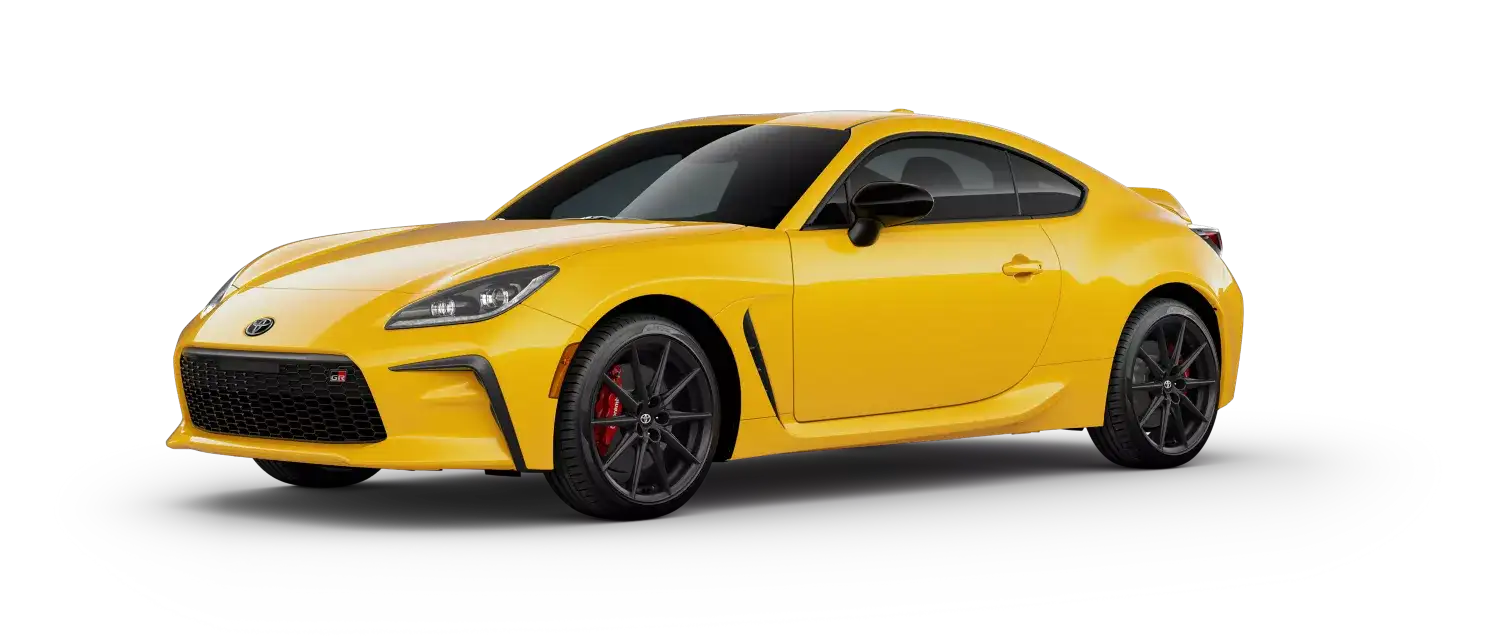
2026 Toyota GR86 vs 2026 Mazda MX-5 Miata
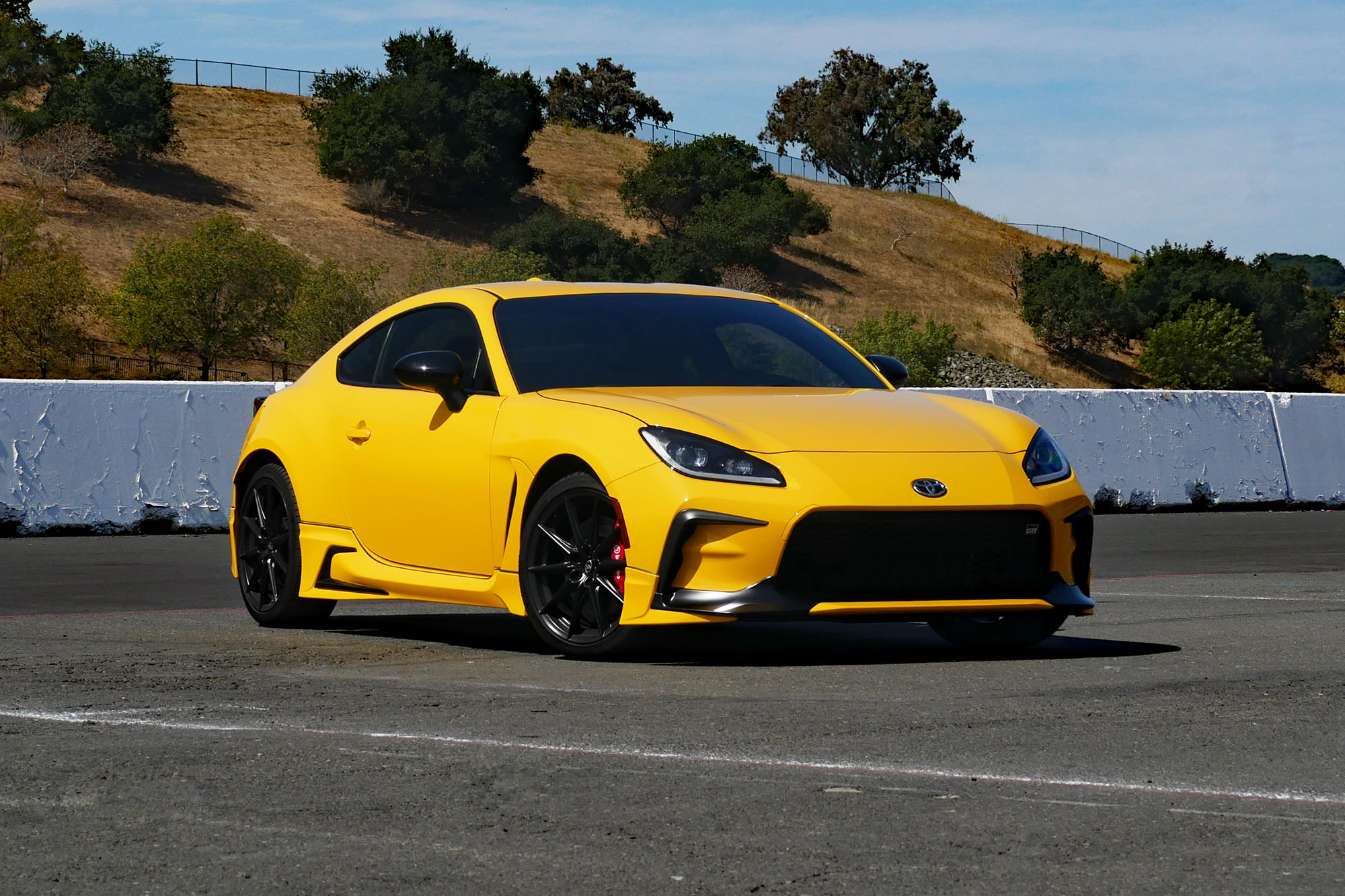
2026 Toyota GR86 vs 2026 Mazda MX-5 Miata — if you are shopping for an affordable, driver-focused sports car in 2026, these two names sit at the very top of your shortlist. Both deliver rear-wheel-drive thrills, razor-sharp handling, and manual-transmission purity at a price point that undercuts most European alternatives by tens of thousands of dollars. Yet they approach the lightweight sports-car formula from fundamentally different angles: the GR86 is a fixed-roof 2+2 coupe born from the Toyota-Subaru partnership, while the MX-5 Miata remains the quintessential two-seat roadster that has defined open-top driving joy for more than three decades.
In this comprehensive 2026 buyer guide, we break down every critical dimension — pricing, performance, interior comfort, safety technology, fuel economy, warranty coverage, and real-world ownership experience — to help you decide which budget sports car deserves your garage space. Whether you are a first-time sports-car buyer, a weekend track-day enthusiast, or a daily driver seeking maximum smiles per gallon, this head-to-head comparison delivers the facts you need to make an informed decision.
2026 Toyota GR86 vs 2026 Mazda MX-5 Miata
Before diving into the details, here is a snapshot of how these two icons stack up on paper.
| Specification | 2026 Toyota GR86 | 2026 Mazda MX-5 Miata |
|---|---|---|
| Starting MSRP | $31,200 – $31,995 | $30,170 – $30,430 |
| Engine | 2.4L naturally aspirated flat-4 (boxer) | 2.0L naturally aspirated inline-4 (Skyactiv-G) |
| Horsepower | 228 hp @ 7,000 rpm | 181 hp @ 7,000 rpm |
| Torque | 184 lb-ft @ 3,700 rpm | 151 lb-ft @ 4,000 rpm |
| Transmission | 6-speed manual or 6-speed automatic | 6-speed manual or 6-speed automatic |
| Drivetrain | Rear-wheel drive | Rear-wheel drive |
| 0–60 mph (manual) | 5.4 – 6.1 seconds | ~5.5 – 6.5 seconds |
| Curb Weight | ~2,850 – 2,900 lb | ~2,350 – 2,450 lb |
| Seating | 4 (2+2) | 2 |
| EPA Fuel Economy (manual) | 20 city / 26 hwy / 22 combined | 26 city / 34 hwy / 29 combined |
| Trunk Volume | 6.0 cu ft | 4.6 cu ft (soft top) / 4.0 cu ft (RF) |
| Body Style | Fixed-roof coupe | Soft-top roadster or RF retractable hardtop |
Pricing and Trim Levels: Which One Fits Your Budget?
2026 Toyota GR86 Pricing and Trims
The 2026 Toyota GR86 carries a starting MSRP of approximately $31,200 for the base manual model, with the Premium trim stepping up to around $33,800–$34,595. For 2026, Toyota introduces the exclusive Yuzu Edition — a limited-production special edition priced near $37,560 that bundles the Performance package (Sachs dampers, Brembo brakes, 18-inch matte-black wheels with Michelin Pilot Sport 4 tires) with vibrant Yuzu Yellow paint and yellow-accented Ultrasuede interior stitching. Only 860 Yuzu Edition units are earmarked for the U.S. market, making it an instant collector’s piece for enthusiasts.
All GR86 trims share the same 2.4-liter Subaru-sourced boxer engine and rear-wheel-drive layout. The Premium trim adds LED adaptive headlights, a duckbill rear spoiler, heated front seats with suede and leather accents, an eight-speaker audio system, and 18-inch alloy wheels. The Performance package — available on Premium and standard on the Yuzu Edition — is the must-have upgrade for track-day warriors, delivering noticeably sharper damping and superior braking performance.
2026 Mazda MX-5 Miata Pricing and Trims
The 2026 Mazda MX-5 Miata starts at roughly $30,170–$30,430 for the Sport soft-top roadster, making it the slightly more affordable entry point. The Club trim — the enthusiast’s choice — begins around $33,930–$35,760 and adds Bilstein dampers, a front shock tower brace, an asymmetric limited-slip differential, a nine-speaker Bose audio system with headrest speakers, and wireless Apple CarPlay and Android Auto. The Grand Touring trim tops the range at approximately $35,730–$37,560, bringing leather upholstery, automatic climate control, adaptive front lighting, traffic sign recognition, and the full i-Activsense safety suite.
Mazda also offers the MX-5 RF (Retractable Fastback) variant, which replaces the manual soft top with a power-operated hardtop. RF models command a premium, with Club RF starting around $41,900 and Grand Touring RF near $38,450–$40,015. The RF delivers superior NVH isolation and security but adds weight and complexity. For purists, the soft-top roadster remains the lighter, more visceral choice.
Engine and Performance: Power vs. Poise
Toyota GR86: The Boxer Advantage
The GR86’s 2.4-liter naturally aspirated flat-four boxer engine produces 228 horsepower at 7,000 rpm and 184 lb-ft of torque at 3,700 rpm. Co-developed with Subaru, this engine sits extremely low in the chassis, contributing to the GR86’s remarkably low center of gravity and balanced 53:47 front-to-rear weight distribution. The result is a coupe that changes direction with telepathic precision and maintains exceptional composure at the limit.
In independent testing, the manual-transmission GR86 has recorded 0–60 mph times as quick as 5.4 seconds, with quarter-mile runs in the 14.0-second range at approximately 101 mph. The six-speed automatic adds roughly 0.7 seconds to the 0–60 sprint. Toyota claims a 0–60 time of 6.1 seconds, but real-world magazine tests consistently beat that figure. The engine’s broad torque curve — peaking at a relatively low 3,700 rpm — means the GR86 pulls strongly from mid-range revs, reducing the need to constantly wring it out to the redline.
Every GR86 comes standard with a Torsen limited-slip differential, and manual-transmission models gain a dedicated Track driving mode that sharpens throttle response and relaxes stability control intervention. The available Performance package adds Sachs dampers and Brembo brakes, transforming the GR86 into a legitimate track-day weapon straight from the dealership.
Mazda MX-5 Miata: Lightweight Mastery
The MX-5 Miata’s 2.0-liter Skyactiv-G inline-four generates 181 horsepower at 7,000 rpm and 151 lb-ft of torque at 4,000 rpm. On paper, those numbers trail the GR86 by a significant margin. But the Miata’s secret weapon is weight — or rather, the lack of it. With a curb weight hovering around 2,350 to 2,450 pounds, depending on trim and transmission, the Miata is roughly 400 to 500 pounds lighter than the GR86. That translates to a power-to-weight ratio that is far more competitive than the raw horsepower figures suggest.
Independent tests have recorded 0–60 mph times for the manual Miata in the 5.5- to 6.5-second range, with quarter-mile passes in approximately 14.3 seconds at 96 mph. While the GR86 is quicker in a straight line, the Miata’s advantage lies in its willingness to dance. The engine loves to be revved to its 7,500-rpm redline, and the six-speed manual transmission — widely regarded as one of the best in the automotive world — delivers rifle-bolt precision with every shift.
Mazda’s Kinematic Posture Control (KPC) system, introduced in recent model years, subtly brakes the inside rear wheel during hard cornering to help rotate the car into the apex. Club and Grand Touring trims also feature an asymmetric limited-slip differential on manual models, enhancing traction and predictability when powering out of corners. The Miata’s double-wishbone front suspension and multilink rear setup deliver a fluid, communicative ride that makes every back road feel like a personal racetrack.
Handling and Driving Dynamics: Two Philosophies, One Goal
Both the GR86 and MX-5 Miata are rear-wheel-drive sports cars designed to prioritize driver engagement above all else. Yet they deliver that engagement through distinctly different philosophies.
The GR86 feels like precision engineering incarnate. Its stiffer chassis, wider track, and longer wheelbase (101.4 inches versus the Miata’s 90.9 inches) create a planted, confidence-inspiring platform that encourages you to push harder with every corner. The steering is ultra-responsive at 2.5 turns lock-to-lock, and the Michelin Pilot Sport 4 tires (on Premium and above) deliver tremendous grip. The GR86 rewards smooth, deliberate inputs and rewards skilled drivers with neutral, throttle-adjustable handling. However, some testers note that the GR86 can feel slightly edgy at the limit, with a tendency toward gentle understeer when you get greedy with the throttle.
The MX-5 Miata, by contrast, is all about flow. It rolls, dips, and slides through corners with an organic, almost alive quality that makes you feel connected to the road in a way few modern cars can replicate. The softer suspension setup (especially on non-Club trims) allows more body roll, but that movement is communicative rather than sloppy. The Miata flatters aggressive driving, letting you adjust your line mid-corner with the throttle or brakes. It is the definition of a momentum car — you learn to carry speed rather than rely on brute force, and the reward is one of the most satisfying driving experiences available at any price.
One notable trade-off: the Miata’s soft-top roadster body lacks the torsional rigidity of the GR86’s fixed-roof coupe. Over broken pavement, the steering wheel can shimmy in your hands as the chassis flexes — a characteristic that adds to the roadster’s charm for some but can feel unsettling for others. The RF hardtop mitigates this somewhat, though it still cannot match the GR86’s structural stiffness.
Interior, Comfort, and Practicality
Cabin Design and Quality
The Mazda MX-5 Miata’s cabin is a masterclass in minimalist design. You do not sit in a Miata so much as wear it. Premium materials — including available leather upholstery, suede inserts, and body-color door trim — give the interior an upscale feel that belies its affordable price. The leather-wrapped steering wheel (with its delightfully large diameter) and precise control placement reinforce the driver-centric focus. However, the cabin is snug. Taller drivers may find headroom and legroom tight, and there is virtually no storage space beyond a small bin between the seats and the token trunk.
The Toyota GR86 offers a more conventional sports-car interior with seating for four — though the rear seats are best described as “occasional use only.” Front-seat occupants enjoy excellent support from the available heated Ultrasuede sport seats, and the driving position is spot-on for spirited driving. The 8.0-inch touchscreen infotainment system is straightforward, and the 7.0-inch digital instrument cluster offers Normal, Sport, and Track display modes. Where the GR86 wins decisively is practicality: the 6.0-cubic-foot trunk and fold-down rear seats create enough cargo space for a weekend getaway or even a set of four track-day tires.
Infotainment and Technology
The 2026 Mazda MX-5 Miata features an 8.8-inch touchscreen infotainment system controlled via a center-console rotary dial and hard buttons — a setup that is intuitive once learned but lacks touchscreen functionality while driving. Apple CarPlay and Android Auto are standard, with wireless connectivity available on Club and Grand Touring trims. The optional nine-speaker Bose audio system includes speakers embedded in the headrests, a clever solution for delivering music over road and wind noise.
The 2026 Toyota GR86 counters with an 8.0-inch touchscreen that supports both wired Apple CarPlay and Android Auto. SiriusXM satellite radio is included with a three-month trial, and the Premium trim upgrades to an eight-speaker audio system. The GR86’s digital gauge cluster is a highlight, offering crisp graphics and useful performance data in Track mode. Both cars prioritize driving over digital distraction, so do not expect the massive screens or advanced voice assistants found in mainstream sedans and SUVs.
Practicality and Daily Usability
If you need your sports car to serve as your only vehicle, the GR86 holds a significant advantage. Its rear seats, though cramped, provide emergency passenger capacity and fold flat to expand cargo space. The larger trunk and fixed roof make the GR86 a more viable year-round daily driver, especially in climates with harsh winters. The Miata, with its two-seat layout and minimal cargo capacity, demands more compromise. The soft top is manually operated and can be raised or lowered in seconds from the driver’s seat, but it offers less insulation and security than the GR86’s steel roof. The RF hardtop addresses some of these concerns but at a cost premium and with a slight weight penalty.
Fuel Economy: The Miata’s Secret Weapon
For a sports car, fuel economy might seem like a secondary concern. But when you are driving enthusiastically every day, the difference at the pump adds up.
The 2026 Mazda MX-5 Miata delivers exceptional efficiency for a performance vehicle. EPA estimates for the manual-transmission soft top are 26 mpg city, 34 mpg highway, and 29 mpg combined. Real-world testing has validated these figures, with some drivers reporting highway numbers in the mid-30s during relaxed cruising. The Miata’s smaller engine, lighter weight, and aerodynamic design all contribute to its frugal nature.
The 2026 Toyota GR86 is thirstier by comparison. The manual transmission is rated at 20 mpg city, 26 mpg highway, and 22 mpg combined, while the automatic improves slightly to 21 city / 30 highway. In real-world mixed driving, expect to average in the low 20s if you drive spiritedly. The GR86 requires premium unleaded fuel (91 octane or higher), and its larger 2.4-liter engine simply consumes more gasoline when pushed hard. If fuel costs are a major concern, the Miata’s efficiency advantage is undeniable.
Safety Features and Driver Assistance
2026 Toyota GR86 Safety
The GR86 comes equipped with Toyota’s suite of active safety technologies. Standard features include automated emergency braking, lane-departure warning, and adaptive cruise control (on automatic-transmission models). The GR86 also includes seven airbags, vehicle stability control with a Full-Off mode for track use, and a reversing camera. Higher trims add blind-spot monitoring and rear cross-traffic alert. The GR86’s fixed roof and more modern platform provide inherent structural advantages in crash protection, though official NHTSA and IIHS ratings should be consulted for the most current data.
2026 Mazda MX-5 Miata Safety

The MX-5 Miata comes standard with Mazda’s i-Activsense safety suite, which includes Smart Brake Support (automatic emergency braking with pedestrian detection), blind-spot monitoring, rear cross-traffic alert, lane-departure warning, and driver attention alert. Grand Touring trims add traffic sign recognition, adaptive front lighting, and Mazda Radar Cruise Control with Stop & Go (automatic transmission only). All trims include dual front airbags, side-impact airbags, and side-impact door beams.
It is worth noting that the MX-5’s small size and low ride height create inherent visibility challenges in traffic dominated by large SUVs and trucks. The standard blind-spot monitoring system is particularly valuable given the Miata’s diminutive footprint. Additionally, the MX-5’s ANCAP five-star safety rating (based on 2016 testing protocols) expired in December 2023, and the vehicle is currently unrated under newer protocols — a consideration for safety-conscious buyers.
Warranty, Maintenance, and Ownership Costs
Both Toyota and Mazda offer competitive warranty coverage for their sports cars, but Toyota holds a distinct advantage in maintenance.
- 2026 Toyota GR86: Three-year/36,000-mile limited warranty and five-year/60,000-mile powertrain coverage. ToyotaCare provides complimentary maintenance for two years or 25,000 miles, including oil changes, tire rotations, and multi-point inspections. All buyers also receive a free one-year membership to the National Auto Sport Association (NASA), including admission to one High-Performance Driving Event (HPDE).
- 2026 Mazda MX-5 Miata: Three-year/36,000-mile limited warranty and five-year/60,000-mile powertrain coverage. Mazda does not offer complimentary maintenance, meaning owners must budget for routine service out of pocket.
Over a five-year ownership period, the GR86’s included maintenance could save owners $1,000 or more compared to the Miata. Both vehicles use naturally aspirated engines that are generally reliable, though enthusiasts who frequent track days should plan for more frequent oil changes than the manufacturer’s recommended intervals.
Pros and Cons: At a Glance
2026 Toyota GR86 Pros and Cons
| Pros | Cons |
|---|---|
| 228 hp — significantly more powerful than the Miata | Lower fuel economy (20/26 mpg manual) |
| Fixed roof provides better security and NVH | Rear seats are essentially decorative |
| Usable cargo space with folding rear seats | The ride can feel stiff on rough pavement |
| Complimentary 2-year/25,000-mile maintenance | Less “special” feeling than a convertible |
| Track-ready Performance package available | Interior is functional but not premium |
| Free NASA membership with HPDE admission | Requires premium fuel |
2026 Mazda MX-5 Miata Pros and Cons
| Pros | Cons |
|---|---|
| An open-top driving experience is unmatched | Only two seats with minimal cargo space |
| Exceptional fuel economy (26/34 mpg manual) | Significantly less powerful than the GR86 |
| Legendary manual transmission feel | Chassis flex is noticeable on rough roads |
| Lightest sports car in its class | The cabin is tight for taller drivers |
| Timeless design and strong resale value | No complimentary maintenance program |
| Available RF hardtop for year-round use | Road and wind noise can be fatiguing |
Which One Should You Buy? Our Verdict
Choosing between the 2026 Toyota GR86 and the 2026 Mazda MX-5 Miata ultimately comes down to how you plan to use your sports car and what kind of driving experience you prioritize.
Buy the 2026 Toyota GR86 if: You want the more powerful, faster, and more practical option. The GR86’s 228-hp boxer engine delivers stronger acceleration, its fixed roof and folding rear seats make it a viable daily driver, and the complimentary ToyotaCare maintenance program reduces ownership costs. If you plan to attend track days, the available Performance package with Sachs dampers and Brembo brakes transforms the GR86 into a legitimate circuit car. The GR86 is the rational enthusiast’s choice — a precision tool that rewards skill and delivers measurable performance advantages.
Buy the 2026 Mazda MX-5 Miata if: You value emotion, connection, and the open-air experience above all else. The Miata’s lightweight chassis, world-class manual transmission, and convertible top create a driving experience that is simply irreplaceable. It is more fuel-efficient, arguably more beautiful, and carries a heritage that spans 35 years of continuous production. The Miata is the heart-over-head choice — the car that makes you grin every time you drop the top on a sunny morning and find a winding back road. If you can live with two seats and minimal cargo space, the Miata delivers a purity of purpose that no coupe can match.
For buyers who can only own one car and need to balance sports-car thrills with real-world practicality, the GR86 is the smarter buy. Its additional power, cargo capacity, and maintenance coverage make it a more well-rounded package. But for enthusiasts who already have a daily driver and want a weekend toy that embodies the very essence of driving joy, the MX-5 Miata remains the gold standard.
Final Thoughts: Two Winners, One Decision
The 2026 Toyota GR86 and 2026 Mazda MX-5 Miata represent the best of affordable performance driving in an era where such cars are increasingly rare. Neither is perfect — the GR86 sacrifices some character for capability, while the Miata demands compromise in exchange for its singular charm. But both deliver on the fundamental promise of the lightweight sports car: they put the driver first, they reward skill and commitment, and they prove that you do not need six figures to experience automotive nirvana.
Whichever you choose, you are buying into a community of passionate enthusiasts, a legacy of motorsport heritage, and a driving experience that will remind you why you fell in love with cars in the first place. Test drive both. Trust your instincts. And welcome to the club.
Frequently Asked Questions
Is the 2026 Toyota GR86 faster than the 2026 Mazda MX-5 Miata?
Yes. The GR86’s 228-hp engine and quicker 0–60 times (5.4 seconds versus the Miata’s ~5.5–6.5 seconds) give it a straight-line performance advantage. However, the Miata’s lighter weight makes it feel just as quick on winding roads.
Which is better for daily driving, the GR86 or MX-5 Miata?
The GR86 is the better daily driver thanks to its fixed roof, four-seat configuration (with fold-down rear seats), larger trunk, and superior NVH isolation. The Miata can be daily-driven but requires more compromise.
Does the 2026 Mazda MX-5 Miata require premium fuel?
The Miata’s 2.0-liter engine runs on regular unleaded (87 octane), though Mazda recommends premium (91+ octane) for maximum performance. The GR86 requires premium fuel.
Can you fit a golf bag in the MX-5 Miata trunk?
No. The Miata’s 4.6-cubic-foot trunk is too small for a standard golf bag. The GR86’s larger trunk and fold-down seats offer more versatility.
Is the GR86 or Miata better for track days?
Both are excellent track cars, but the GR86 has the edge due to its more powerful engine, stiffer chassis, and available Performance package with upgraded brakes and dampers. The Miata is also capable on track but requires more momentum-based driving.
2026 Ford Mustang vs 2026 Nissan Z
2026 Mazda MX-5 Miata vs 2025 Subaru BRZ

2026 Toyota GR86 vs 2025 Subaru BRZ
2025 Audi A7 vs 2025 Audi A8
2026 BMW 7-Series vs 2025 Audi A8
2025 Subaru BRZ vs 2026 Nissan Z

2026 Mazda MX-5 Miata vs Ford Mustang

2025 Subaru BRZ vs 2026 Ford Mustang