2026 Acura Integra vs 2026 BMW 3-Series Buyer Guide
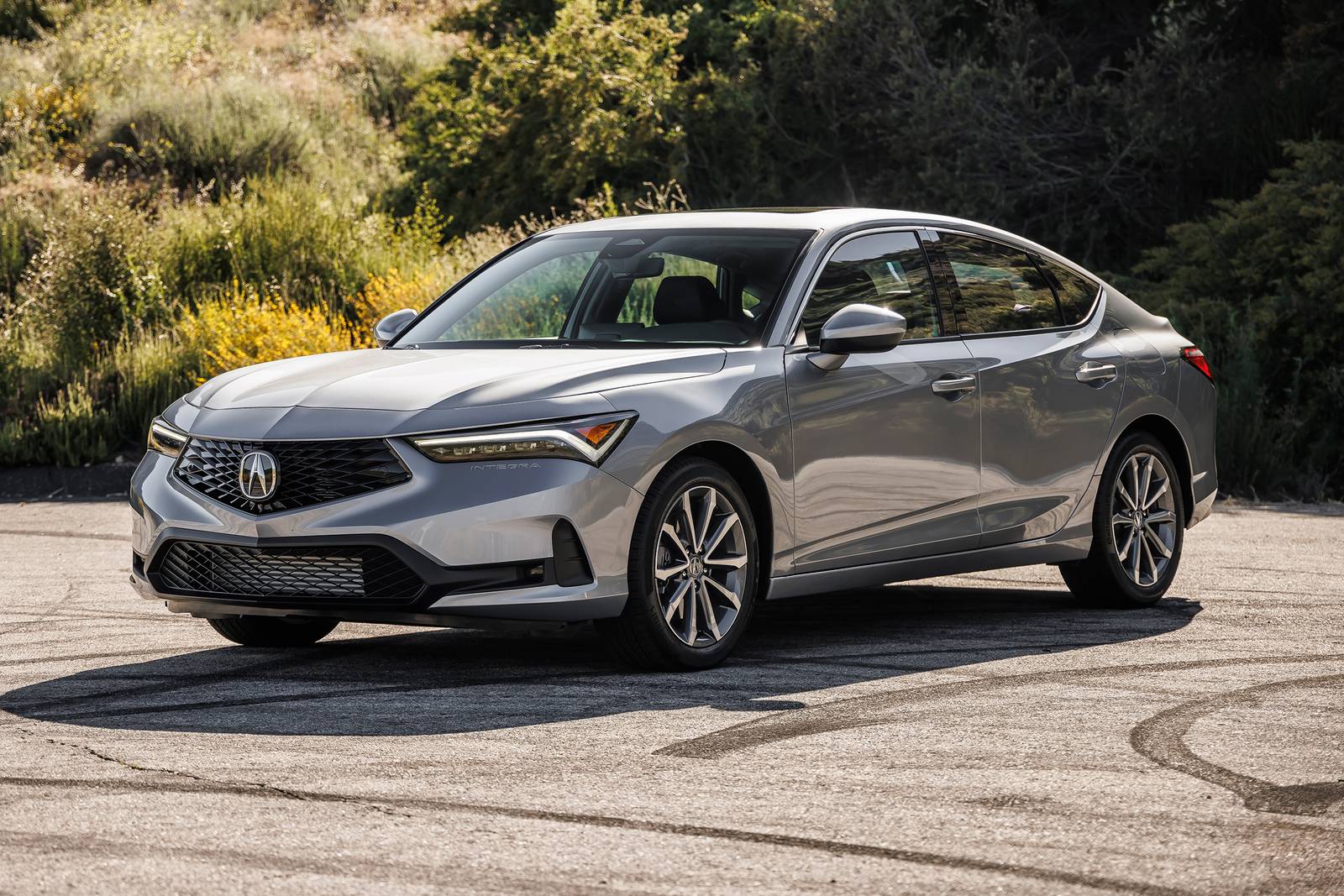
The 2026 Acura Integra vs 2026 BMW 3-Series — if you are shopping for a premium sport sedan or compact luxury car in 2026, this head-to-head comparison is exactly what you need. Both vehicles sit at the intersection of performance, technology, and everyday usability, yet they approach the luxury sport sedan formula from very different angles. The Acura Integra returns for 2026 as a subcompact hatchback with premium aspirations, while the BMW 3-Series continues its reign as the benchmark compact luxury sedan. In this comprehensive buyer guide, we break down every critical category — pricing, performance, fuel economy, interior quality, safety, technology, reliability, and value — to help you decide which car deserves your driveway.
Table of Contents
- Pricing and Value
- Engine, Transmission, and Performance
- Fuel Economy and Efficiency
- Interior, Comfort, and Cargo
- Infotainment and Technology
- Safety and Driver-Assistance Features
- Reliability and Warranty
- Driving Dynamics and Handling
- Trim Level Comparison
- Which One Should You Buy?
1. Pricing and Value: Where the Battle Begins
When comparing the 2026 Acura Integra vs 2026 BMW 3-Series, the first thing most buyers notice is the significant price gap. The 2026 Acura Integra starts at an MSRP of $33,400 for the base 1.5T trim, climbing to $34,695 for the A-Spec, $40,495 for the A-Spec with Technology Package, and topping out at $54,695 for the high-performance Type S. The 2026 BMW 3-Series, by contrast, opens at $49,350 for the 330i sedan, with the 330i xDrive (all-wheel drive) starting at $51,350. The performance-oriented M340i begins at $63,650, and the M340i xDrive commands $65,650.
That means the entry-level BMW 3-Series costs roughly $14,700 more than the base Acura Integra. Even when comparing the Integra A-Spec with Technology Package ($40,495) against the base 330i ($49,350), the BMW still carries an approximately $8,850 premium. For buyers focused purely on value, the Integra delivers a luxury-branded experience at a significantly lower entry point. However, the 3-Series justifies its higher price with a more powerful base engine, rear-wheel-drive architecture, and a larger, more premium cabin.
It is also worth noting that Acura frequently offers aggressive incentives. For 2026, Acura is providing a $1,000 sales credit on Integra models (excluding Type S), a $2,000 loyalty/conquest offer for owners of competing brands, special APR financing as low as 2.99% for 24–60 months, and featured lease deals starting at $369 per month for 36 months with $3,799 due at signing. BMW incentives vary by region and dealer, but the 3-Series generally does not discount as aggressively at the entry level.
2. Engine, Transmission, and Performance
Performance is where the 2026 Acura Integra vs 2026 BMW 3-Series comparison gets interesting, because both vehicles offer multiple powertrain options that cater to different driving styles.
2026 Acura Integra Powertrains
The standard 2026 Acura Integra is powered by a 1.5-liter turbocharged inline-4 engine producing 200 horsepower at 6,000 rpm and 192 lb-ft of torque from 1,800 to 5,000 rpm. This engine is shared with the Honda Civic Si and features VTEC variable valve timing, direct fuel injection, and a 10.3:1 compression ratio. Front-wheel drive is standard across all trims. Transmission choices include a continuously variable automatic transmission (CVT) with paddle shifters on base and A-Spec models, or a six-speed manual transmission paired with a limited-slip differential on the A-Spec with Technology Package and Type S trims.
For enthusiasts seeking maximum performance, the 2026 Acura Integra Type S upgrades to a 2.0-liter turbocharged inline-4 delivering 320 horsepower at 6,500 rpm and 310 lb-ft of torque from 2,600 to 4,000 rpm. This engine is essentially the same powerplant found in the Honda Civic Type R, but wrapped in a more refined Acura package. The Type S features a 9.8:1 compression ratio, 25.2 psi of boost pressure, and a 7,000-rpm redline. It is exclusively paired with a six-speed manual transmission and front-wheel drive.
In Car and Driver testing, the A-Spec manual accelerated from 0–60 mph in 6.8 seconds, while the CVT-equipped A-Spec needed 7.1 seconds. The Type S is significantly quicker, though official 0–60 times for the 2026 model have not been independently published. Based on the Civic Type R platform, estimates place it in the low-5-second range.
2026 BMW 3-Series Powertrains
The 2026 BMW 3-Series offers two distinct internal combustion architectures, both enhanced with 48-volt mild-hybrid integration. The entry-level 330i utilizes the B48B20 2.0-liter inline-4 engine, producing 255 horsepower from 4,700 to 6,500 rpm and 295 lb-ft of torque from 1,550 to 4,400 rpm. This twin-scroll turbocharged engine features a closed-deck block for maximum rigidity and an 11.0:1 compression ratio. The 330i is available with rear-wheel drive or BMW’s xDrive all-wheel-drive system, both paired with an 8-speed Steptronic automatic transmission.
Stepping up to the M340i brings BMW’s celebrated B58 3.0-liter inline-6 engine, generating 386 horsepower from 5,200 to 6,250 rpm and 398 lb-ft of torque from 1,900 to 4,800 rpm. This turbocharged inline-6 delivers near-M3 levels of performance without the full M-car price tag. In Car and Driver testing, the M340i xDrive ripped to 60 mph in just 3.7 seconds, while the 330i xDrive needed 5.2 seconds. The rear-drive 330i managed 0–60 in approximately 5.6 seconds.
Unlike the Integra, which offers a manual transmission only on its top trims, the 2026 BMW 3-Series does not offer a manual gearbox on any 330i or M340i variant. Manual transmission enthusiasts must step up to the full M3, which starts at $80,650. The 3-Series also offers the 330e plug-in hybrid, combining a 2.0-liter four-cylinder with an electric motor for a combined output of 249 horsepower (or 289 horsepower with XtraBoost), plus an electric-only range of up to 63 miles.
| Specification | Integra 1.5T | Integra Type S | BMW 330i | BMW M340i |
|---|---|---|---|---|
| Engine | 1.5L turbo I-4 | 2.0L turbo I-4 | 2.0L turbo I-4 | 3.0L turbo I-6 |
| Horsepower | 200 hp | 320 hp | 255 hp | 386 hp |
| Torque | 192 lb-ft | 310 lb-ft | 295 lb-ft | 398 lb-ft |
| Transmission | CVT or 6MT | 6MT only | 8-speed auto | 8-speed auto |
| Drivetrain | FWD | FWD | RWD/AWD | RWD/AWD |
| 0–60 mph | 6.8–7.1 sec | ~5.0 sec (est.) | 5.2–5.6 sec | 3.7–4.4 sec |
| Top Speed | 135 mph (est.) | ~160 mph (est.) | 130–155 mph | 155 mph |
3. Fuel Economy and Efficiency
Fuel efficiency is a critical consideration for daily drivers, and here the 2026 Acura Integra vs 2026 BMW 3-Series comparison reveals some surprising results.
The standard 2026 Acura Integra with the CVT achieves an EPA-estimated 29 mpg city, 37 mpg highway, and 32 mpg combined. The A-Spec with CVT matches those figures. However, opting for the six-speed manual transmission on the A-Spec with Technology Package drops efficiency to 26 mpg city, 36 mpg highway, and 30 mpg combined. The high-performance Type S, with its larger 2.0-liter engine and manual transmission, is rated at 21 mpg city, 28 mpg highway, and 24 mpg combined. In Car and Driver’s real-world 75-mph highway testing, the Integra A-Spec manual returned an impressive 40 mpg.
The 2026 BMW 330i with rear-wheel drive earns an EPA rating of 28 mpg city, 35 mpg highway, and 31 mpg combined. Adding xDrive all-wheel drive reduces those figures slightly to 26 mpg city, 34 mpg highway, and 29 mpg combined. The more powerful M340i is rated at 27 mpg city, 33 mpg highway, and 29 mpg combined in rear-drive form, with xDrive dropping highway mileage to 33 mpg. In Car and Driver’s highway fuel-economy test, the rear-drive 330i achieved an outstanding 42 mpg, while the all-wheel-drive M340i returned 33 mpg.
For buyers prioritizing maximum efficiency, the BMW 330e plug-in hybrid offers up to 63 miles of electric-only range and can achieve diesel-rivaling efficiency when charged regularly. Real-world testing on an 800-mile highway journey with periodic charging sessions averaged 50 mpg. However, once the battery is depleted, the 330e’s fuel economy drops to approximately 40 mpg.
Both vehicles require premium unleaded gasoline. The Integra holds 12.4 gallons of fuel, while the 3-Series carries 15.6 gallons, giving the BMW a longer cruising range despite similar efficiency figures.
4. Interior, Comfort, and Cargo
Interior quality and practicality are major differentiators in the 2026 Acura Integra vs 2026 BMW 3-Series debate. The Integra is a subcompact hatchback, while the 3-Series is a compact sedan, and those size categories create meaningful differences in cabin space and cargo versatility.
2026 Acura Integra Interior
The 2026 Acura Integra offers seating for five passengers with 95.8 cubic feet of EPA passenger volume. Front-row occupants enjoy 42.3 inches of legroom and 37.6 inches of headroom, while the second row provides 56.0 inches of shoulder room and 48.9 inches of hip room. The Integra’s standout feature is its liftback design, which provides a spacious cargo opening and 24.3 cubic feet of cargo volume behind the rear seats. With the 60/40 split-folding rear seats lowered, cargo capacity expands significantly. The Integra’s hatchback practicality gives it a major advantage over traditional sedans for buyers who regularly haul bulky items.
For 2026, Acura has upgraded the Integra’s interior with a now-standard 9.0-inch infotainment touchscreen featuring a faster processor that reduces input lag. New patterned trim panels adorn the dashboard, and the A-Spec trim receives extended ambient lighting. Wireless Apple CarPlay and Android Auto are now standard across all trims, as is a wireless phone charger. The Type S adds sportier touches including bespoke stitching on bolstered sport seats and red interior accents.
However, critics note that the Integra’s cabin does not feel as luxurious as true entry-luxury rivals like the Mercedes-Benz CLA-Class or Audi A3. Road noise is more pronounced than expected for a luxury-branded vehicle, and many desirable features — including the adaptive suspension, 10.2-inch digital instrument cluster, 16-speaker ELS audio system, and head-up display — are reserved for the top Technology Package trim.
2026 BMW 3-Series Interior
The 2026 BMW 3-Series sedan offers a more traditional three-box sedan layout with 16.9 cubic feet of trunk space — large enough to fit six carry-on bags. Folding the rear seats expands capacity to accommodate 11 carry-on bags. The 3-Series’ cabin is widely praised for its excellent materials, well-placed controls, and supportive sport seats wrapped in standard leatherette. The driver’s position is widely regarded as one of the best in the segment, with excellent visibility and adjustability.
Standard interior features include the BMW Curved Display combining a digital instrument cluster and central touchscreen, BMW Operating System 8.5 with QuickSelect functionality, and ambient lighting. Higher trims and option packages add Extended Merino leather upholstery, a Harman Kardon surround sound system, a head-up display, and heated front seats. The 3-Series interior feels genuinely premium, with nothing feeling cheap or out of place.
Rear-seat comfort in the 3-Series is adequate for two adults, though the middle seat remains a challenge for longer journeys — a longstanding 3-Series trait. Child seats fit well, but rear-facing infant seats may limit front-row seat travel. The 330e plug-in hybrid sacrifices trunk space to 375 liters (approximately 13.2 cubic feet) due to battery packaging.
| Dimension | 2026 Acura Integra | 2026 BMW 3-Series |
|---|---|---|
| Overall Length | 185.8 in | 185.9 in |
| Width | 72.0 in | 71.9 in |
| Height | 55.5 in | 56.7 in |
| Wheelbase | 107.7 in | 112.2 in |
| Curb Weight | 3,073–3,219 lbs | 3,500–4,008 lbs |
| Cargo Volume | 24.3 cu ft | 16.9 cu ft |
| Passenger Volume | 95.8 cu ft | ~97 cu ft |
| Fuel Capacity | 12.4 gal | 15.6 gal |
5. Infotainment and Technology

Modern buyers expect cutting-edge technology, and both the 2026 Acura Integra and 2026 BMW 3-Series deliver, though with different philosophies.
The 2026 Acura Integra features a standard 9.0-inch touchscreen infotainment system for 2026, upgraded from the previous 8.0-inch base screen. The system now uses a faster processor that significantly reduces input lag. Wireless Apple CarPlay and Android Auto are standard across all trims, as is a wireless phone charger. The A-Spec with Technology Package adds a 10.2-inch digital instrument cluster, a 16-speaker ELS Studio 3D premium audio system, and an available head-up display. The Integra also offers AcuraLink connected services with a 36-month complimentary trial for Security and Remote packages.
The 2026 BMW 3-Series counters with the BMW Curved Display, which combines a digital instrument cluster and central infotainment screen into one sweeping panel running BMW Operating System 8.5. The system features QuickSelect for direct access to frequently used functions, natural voice control, and over-the-air update capability. BMW’s iDrive controller remains one of the best in the industry, allowing drivers to operate the system via touchscreen, voice, or the rotary controller without taking their eyes off the road. The available Harman Kardon surround sound system delivers exceptional audio quality.
Both vehicles offer comprehensive smartphone integration, but the BMW’s system feels more sophisticated and responsive. The Integra’s infotainment, while improved for 2026, can still feel a generation behind compared to the best systems in the class. Where the Integra wins is simplicity — its interface is more intuitive for first-time users, while BMW’s iDrive has a steeper learning curve but greater depth once mastered.
6. Safety and Driver-Assistance Features
Safety is non-negotiable for family buyers and daily commuters alike. The 2026 Acura Integra vs 2026 BMW 3-Series comparison reveals a significant advantage for Acura in terms of standard safety equipment.
2026 Acura Integra Safety
Every 2026 Acura Integra comes standard with the comprehensive AcuraWatch suite of advanced safety and driver-assistive technologies. Standard features include:
- Collision Mitigation Braking System (CMBS) with pedestrian detection
- Road Departure Mitigation (RDM)
- Adaptive Cruise Control (ACC) with Low-Speed Follow
- Lane Keeping Assist System (LKAS)
- Lane Departure Warning (LDW)
- Traffic Sign Recognition
- Traffic Jam Assist
- Blind Spot Information System (BSI)
- Rear Cross Traffic Monitor (CTM)
- Auto High-Beam Headlights
- Multi-angle rearview camera with dynamic guidelines
- Post-Collision Braking (CVT models)
- Vehicle Stability Assist (VSA) with Traction Control
- Advanced Compatibility Engineering (ACE) body structure
The Integra has earned a 5-star overall safety rating from the National Highway Traffic Safety Administration (NHTSA) and has received “Good” ratings in most Insurance Institute for Highway Safety (IIHS) crash tests, including small overlap front driver-side and passenger-side tests, moderate overlap front tests, and side impact tests.
2026 BMW 3-Series Safety
The 2026 BMW 3-Series also performs well in crash testing, earning a full 5-star overall rating from NHTSA and “Good” marks across the board from IIHS. However, where BMW falls short is in the generosity of its standard safety equipment. Many features that are standard on the Integra are locked behind expensive option packages on the 3-Series. Standard safety features on the 330i include:
- Automatic emergency braking
- Automatic high-beam headlights
Features that require additional packages on the BMW include:
- Adaptive cruise control
- Blind-spot monitors
- Lane keeping assist
- Semi-autonomous traffic assist
- Surround-view camera
- Parking sensors
For safety-conscious buyers who want comprehensive driver assistance without paying extra, the Acura Integra delivers significantly more value. The BMW’s safety technology is excellent when equipped, but the nickel-and-diming approach to features that should be standard at this price point is a legitimate drawback.
7. Reliability and Warranty
Long-term ownership costs and peace of mind matter just as much as the purchase price. In the 2026 Acura Integra vs 2026 BMW 3-Series reliability comparison, Acura holds a clear advantage backed by both warranty coverage and historical data.
The 2026 Acura Integra is backed by a 4-year/50,000-mile limited warranty and a class-leading 6-year/70,000-mile powertrain warranty. Acura also includes 2 years/24,000 miles of complimentary scheduled maintenance. The Integra benefits from Honda’s legendary reliability reputation, with the 1.5-liter turbo engine and CVT transmission being well-proven powertrain components shared with the Civic. The Type S’s 2.0-liter engine, while more highly strung, is based on the same architecture as the Civic Type R, which has demonstrated strong reliability in enthusiast use.
The 2026 BMW 3-Series carries a 4-year/50,000-mile limited warranty and a 4-year/50,000-mile powertrain warranty — notably shorter than Acura’s powertrain coverage. BMW offers 3 years/36,000 miles of complimentary scheduled maintenance, which is longer than Acura’s program. However, out-of-warranty repair costs for BMWs are historically higher than for Acura vehicles, and the complexity of the 48-volt mild-hybrid system and turbocharged engines can lead to expensive repairs once warranty coverage expires.
Consumer Reports recommends both the BMW 3-Series and the Acura Integra based on reliability, safety, and performance. However, owner forums and long-term reliability studies consistently show Acura/Honda products requiring fewer unscheduled dealer visits than BMW vehicles. For buyers planning to keep their vehicle beyond the warranty period, the Integra’s lower long-term maintenance costs and simpler mechanical layout represent a significant advantage.
8. Driving Dynamics and Handling
This is where the 2026 Acura Integra vs 2026 BMW 3-Series comparison gets most interesting for driving enthusiasts. Both vehicles offer engaging dynamics, but they deliver their performance in fundamentally different ways.
The 2026 Acura Integra is built on a front-wheel-drive architecture shared with the Honda Civic, but Acura has tuned the suspension, steering, and throttle response to feel more premium and engaging. The standard Integra with CVT prioritizes comfort and efficiency, while the A-Spec with Technology Package adds an adaptive damper system and the six-speed manual transmission with a limited-slip differential for more spirited driving. The Type S takes this further with a dual-axis strut front suspension (to reduce torque steer), larger brakes, and 19-inch wheels wrapped in high-performance tires. In Car and Driver testing, the Integra A-Spec manual pulled 0.93 g on the 300-foot skidpad and stopped from 70 mph in 167 feet — impressive numbers for a front-drive car.
However, the Integra’s front-wheel-drive layout means torque steer is still present under hard acceleration, and the CVT transmission — while efficient — lacks the engagement of a traditional automatic or manual gearbox. The Type S mitigates some of these issues with its more sophisticated suspension and limited-slip differential, but it cannot overcome the fundamental physics of sending 320 horsepower through the front wheels alone.
The 2026 BMW 3-Series, by contrast, benefits from rear-wheel-drive architecture (or optional xDrive all-wheel drive) that delivers superior weight distribution and handling balance. The 330i has won multiple comparison tests against other sports sedans thanks to its ability to transition from a relaxed cruiser to a sharp canyon carver. The M340i elevates this further with its inline-6 engine, adaptive M suspension, and M Sport differential. Car and Driver praised the 3-Series for its “poise and nimbleness” and “exceptionally well-balanced chassis.” The BMW’s steering, while slightly lighter than in previous generations, remains more communicative than most competitors.
For pure driving enjoyment, the BMW 3-Series retains its crown as the sports sedan benchmark. The Integra is genuinely fun — especially the Type S with its manual transmission — but the 3-Series’ rear-drive balance, superior powertrain refinement, and more sophisticated chassis give it the edge for enthusiasts who prioritize handling above all else.
9. Trim Level Comparison
Understanding the trim hierarchy is essential when comparing the 2026 Acura Integra vs 2026 BMW 3-Series. Both vehicles offer multiple configurations that cater to different budgets and priorities.
2026 Acura Integra Trims
- Integra 1.5T — $33,400: Base model with 200-hp 1.5L turbo, CVT, 9.0-inch touchscreen, wireless Apple CarPlay/Android Auto, AcuraWatch safety suite, 18-inch wheels, and cloth upholstery.
- Integra A-Spec — $37,245: Adds A-Spec styling package, sport seats, leatherette upholstery, LED fog lights, and integrated turn signal mirrors.
- Integra A-Spec with Technology Package (CVT) — $40,495: Adds adaptive dampers, 10.2-inch digital instrument cluster, 16-speaker ELS audio, head-up display, parking sensors, and rain-sensing wipers.
- Integra A-Spec with Technology Package (6MT) — $40,495: Same as above but swaps CVT for a six-speed manual with a limited-slip differential. Drops some features like Low-Speed Follow and Traffic Jam Assist.
- Integra Type S — $54,695: Flagship performance model with 320-hp 2.0L turbo, six-speed manual, limited-slip differential, adaptive dampers, 19-inch wheels, Brembo brakes, and exclusive Type S styling.
2026 BMW 3-Series Trims
- 330i — $49,350: Base model with 255-hp 2.0L turbo, 8-speed automatic, RWD, BMW Curved Display, synthetic leather upholstery, ambient lighting, and basic safety features.
- 330i xDrive — $51,350: Adds xDrive all-wheel drive to the 330i package.
- M340i — $63,650: Performance model with 386-hp 3.0L inline-6, M Sport suspension, M Sport brakes, and upgraded styling.
- M340i xDrive — $65,650: Adds xDrive AWD to the M340i package.
- M340i xDrive 50 Jahre Edition — $76,375: Limited-edition celebrating 50 years of the 3-Series, featuring exclusive BMW Individual paint, Extended Merino leather, carbon fiber trim, M Performance exhaust, and special badging. Limited production.
10. Which One Should You Buy? The Final Verdict
After exhaustive analysis across every major category, the 2026 Acura Integra vs 2026 BMW 3-Series decision ultimately comes down to your priorities, budget, and driving preferences.
Buy the 2026 Acura Integra If:
- You want maximum value: The Integra costs $14,000+ less than the base 3-Series while delivering a genuine luxury-branded experience.
- Hatchback versatility matters: With 24.3 cubic feet of cargo space and a liftback design, the Integra is far more practical for hauling gear than the 3-Series sedan.
- You prioritize standard safety tech: AcuraWatch includes comprehensive driver assistance as standard, while BMW charges extra for similar features.
- Manual transmission is a must: The Integra offers a six-speed manual on its top trims, while the 3-Series does not (outside of the $80,000+ M3).
- Long-term reliability is important: Acura’s 6-year/70,000-mile powertrain warranty and Honda-derived mechanicals promise lower ownership costs.
- Fuel efficiency is a priority: The base Integra achieves up to 37 mpg highway, beating the base 330i.
Buy the 2026 BMW 3-Series If:
- Performance is paramount: Even the base 330i outguns the standard Integra by 55 horsepower, and the M340i’s 386 hp leaves the Type S in the dust.
- You want rear-wheel-drive dynamics: The 3-Series’ RWD architecture delivers superior handling balance and driving engagement.
- Interior luxury matters most: The BMW’s cabin materials, build quality, and overall refinement are a clear step above the Integra’s.
- All-wheel drive is necessary: BMW offers xDrive on both the 330i and M340i, while the Integra is front-wheel drive only.
- You want a plug-in hybrid option: The 330e offers up to 63 miles of electric range — the Integra has no electrified variant.
- Brand prestige is important: The BMW roundel carries more cachet than the Acura logo in most social and professional circles.
The Bottom Line
The 2026 Acura Integra is the smarter financial decision for most buyers. It delivers 80% of the BMW experience at 65% of the price, with superior standard safety equipment, better warranty coverage, hatchback practicality, and the availability of a manual transmission. The Type S, in particular, offers a compelling enthusiast package that the 3-Series simply cannot match at its price point — a 320-hp manual sport compact for $54,695 when the cheapest manual BMW sedan costs $80,650.
The 2026 BMW 3-Series remains the sports sedan king for a reason. Its rear-drive balance, superior powertrain refinement, more luxurious interior, and broader range of performance options (including the exceptional M340i and plug-in 330e) make it the better choice for buyers who can afford the premium and prioritize driving dynamics above all else. If your budget allows and you want the most complete luxury sport sedan experience, the 3-Series is still the benchmark.
For the value-conscious buyer seeking a premium daily driver with a fun side, the 2026 Acura Integra A-Spec with Technology Package ($40,495) represents the sweet spot. For the driving enthusiast with a larger budget, the 2026 BMW M340i ($63,650) delivers an experience that justifies every penny of its higher price. Either way, both vehicles represent excellent choices in their respective segments — it simply depends on which side of the luxury sport sedan equation matters most to you.
2026 Acura Integra vs 2026 BMW 2-Series Buyer Guide

2026 Acura Integra vs 2025 Audi A4 Buyer Guide
2026 Honda Civic Type R vs 2026 Honda Civic
2025 Audi A4 vs 2026 BMW 3-Series Buyer Guide


2026 Honda Civic vs 2025 Hyundai Elantra N
