2026 Mazda MX-5 Miata vs Nissan Z

2026 Mazda MX-5 Miata vs 2026 Nissan Z — if you are shopping for an affordable, driver-focused sports car in 2026, these two iconic nameplates sit at the top of nearly every enthusiast’s shortlist. Both deliver rear-wheel-drive thrills, manual transmission availability, and decades of motorsport heritage, yet they approach the sports-car formula from radically different angles. The Mazda MX-5 Miata remains the undisputed champion of lightweight, open-top simplicity, while the Nissan Z brings twin-turbo V6 muscle and a fixed-roof coupe silhouette to the table. In this comprehensive buyer guide, we break down every critical detail — pricing, performance, design, technology, safety, fuel economy, and real-world ownership — to help you decide which 2026 sports car deserves your garage space.
Table of Contents
- Introduction: Two Philosophies, One Goal
- 2026 Pricing and Trim Levels
- Performance and Powertrain Comparison
- Handling, Chassis, and Driving Dynamics
- Exterior Design and Styling
- Interior, Comfort, and Technology
- Safety Features and Driver Assistance
- Fuel Economy and Running Costs
- Practicality and Daily Usability
- Reliability, Warranty, and Ownership Costs
- Which One Should You Buy? Final Verdict
- Frequently Asked Questions (FAQ)
1. Introduction: Two Philosophies, One Goal
The 2026 Mazda MX-5 Miata and the 2026 Nissan Z represent two distinct interpretations of what a sports car should be. Mazda’s roadster adheres to the classic “add lightness” philosophy championed by Colin Chapman. With a curb weight hovering around 2,300 pounds, the Miata prioritizes agility, balance, and driver engagement over outright horsepower. It is a car that proves you do not need 400 horsepower to have fun — you need 400 pounds less weight.
Conversely, the 2026 Nissan Z embraces the American muscle-car ethos translated through a Japanese lens. Its twin-turbo 3.0-liter V6 produces 400 horsepower in standard form and 420 horsepower in the range-topping NISMO variant. The Z is heavier, more powerful, and more visually aggressive. It appeals to buyers who want straight-line acceleration, a muscular presence, and the ability to dominate highway on-ramps.
Both cars are rear-wheel drive. Both offer six-speed manual transmissions. Both seats only hold two passengers. And both carry price tags that undercut European rivals by tens of thousands of dollars. Yet they serve different drivers. This guide will help you determine which philosophy aligns with your needs, budget, and driving style.
2. 2026 Pricing and Trim Levels
Price is often the first filter for sports-car buyers, and the gap between these two models is significant. Understanding what each trim level offers is essential to making an informed decision.
2026 Mazda MX-5 Miata Pricing
For 2026, the Mazda MX-5 Miata receives a price increase across the lineup, with the base Sport soft-top now starting at $30,430 (plus $1,235 destination). This marks the first time the Miata has crossed the $30,000 threshold before destination charges, though it remains the most affordable new convertible in America by a margin of approximately $4,000.
| Trim | Body Style | Transmission | Starting MSRP |
|---|---|---|---|
| Sport | Soft Top | 6-Speed Manual | $30,430 |
| Club | Soft Top | 6-Speed Manual | $33,930 |
| Club | RF (Hardtop) | 6-Speed Manual | $41,900 |
| Grand Touring | Soft Top | 6-Speed Manual | $35,730 |
| Grand Touring | Soft Top | 6-Speed Automatic | $36,650 |
| Grand Touring | RF (Hardtop) | 6-Speed Manual | $38,450 |
| Grand Touring | RF (Hardtop) | 6-Speed Automatic | $39,420 |
Note: Premium paint colors (Soul Red Crystal Metallic, Snowflake White Pearl Mica, Machine Gray Metallic, Aero Gray Metallic) add $595. The Brembo/BBS/Recaro package on Club models adds $5,050.
2026 Nissan Z Pricing
The 2026 Nissan Z commands a significantly higher entry price but delivers substantially more power and standard equipment. The lineup spans three core grades: Sport, Performance, and NISMO, with a new Heritage Edition package available exclusively on the Performance grade.
| Trim | Transmission | Starting MSRP |
|---|---|---|
| Sport | 6-Speed Manual / 9-Speed Auto | $42,970 |
| Performance | 6-Speed Manual / 9-Speed Auto | $52,970 |
| Heritage Edition | 6-Speed Manual / 9-Speed Auto | $55,910 |
| NISMO | 9-Speed Auto Only | $65,750 |
Note: Premium two-tone paint adds $1,295, standard two-tone paint adds $895, and premium solid paint adds $450. Destination and handling are $1,245 on all trims.
3. Performance and Powertrain Comparison
This is where the philosophical divide between the Miata and the Z becomes most apparent. One car celebrates efficiency and balance; the other celebrates raw power and acceleration.
Engine Specifications
| Specification | 2026 Mazda MX-5 Miata | 2026 Nissan Z (Sport/Performance) | 2026 Nissan Z NISMO |
|---|---|---|---|
| Engine | 2.0L Skyactiv-G Inline-4 | 3.0L VR30DDTT Twin-Turbo V6 | 3.0L VR30DDTT Twin-Turbo V6 |
| Horsepower | 181 hp @ 7,000 rpm | 400 hp @ 6,400 rpm | 420 hp @ 6,400 rpm |
| Torque | 151 lb-ft @ 4,000 rpm | 350 lb-ft @ 1,600–5,600 rpm | 384 lb-ft @ 2,000–5,200 rpm |
| Redline | 7,500 rpm | 6,800 rpm | 6,800 rpm |
| Transmission | 6-Speed Manual (std) / 6-Speed Auto (GT only) | 6-Speed Manual / 9-Speed Auto | 9-Speed Auto Only |
| Drivetrain | Rear-Wheel Drive | Rear-Wheel Drive | Rear-Wheel Drive |
| Recommended Fuel | Premium Unleaded | Premium Unleaded | Premium Unleaded |
Acceleration and Top Speed
Independent testing reveals a dramatic performance gap between these two sports cars. The Mazda MX-5 Miata accelerates from 0 to 60 mph in approximately 5.5 seconds, with a quarter-mile time of 14.3 seconds at 96 mph. Its top speed is electronically limited to 139 mph. These figures are respectable for a sub-2,500-pound roadster, but they are not designed to win drag races.
The Nissan Z, by contrast, is a legitimate performance weapon. The standard Z Performance trim reaches 60 mph in roughly 4.5 seconds, while the Z NISMO trims that figure down to an astonishing 3.9 seconds. The NISMO variant covers the quarter-mile in 12.4 seconds at 114 mph and boasts an estimated top speed of 165 mph. For buyers who prioritize acceleration and highway passing power, the Z is in a different league entirely.
Transmission Feel and Engagement
Both cars offer six-speed manual transmissions, but they deliver distinctly different experiences. The Miata’s manual gearbox is widely regarded as one of the best in the automotive world — short throws, precise gates, and a light clutch pedal make it a joy to row through gears. The Miata’s naturally aspirated engine rewards high-rpm operation, encouraging drivers to wring out every last horsepower.
The Nissan Z’s manual transmission features SynchroRev Match on Performance and Heritage Edition trims, automatically blipping the throttle on downshifts for seamless heel-toe action. The clutch is heavier, and the gear throws are longer, reflecting the Z’s more muscular character. The optional nine-speed automatic in the Z is responsive and offers Launch Control on automatic models, though enthusiasts will likely prefer the manual for maximum engagement. Notably, the Z NISMO is automatic-only — a disappointment for purists seeking the most hardcore Z with three pedals.
4. Handling, Chassis, and Driving Dynamics
Numbers only tell half the story. How a car feels on a winding road often matters more than how fast it accelerates in a straight line.
Weight and Balance
The 2026 Mazda MX-5 Miata is a masterclass in lightweight engineering. With a curb weight of approximately 2,366 pounds for the soft-top Sport model, the Miata achieves a near-perfect 50:50 front-to-rear weight distribution. This low mass allows the Miata to change direction instantaneously, rotate willingly under braking, and recover from slides with minimal drama. It is a car that flatters novice drivers while still offering depth for experienced track-day veterans.
The 2026 Nissan Z is substantially heavier, weighing in at 3,486 pounds for the manual Sport model and up to 3,673 pounds for the NISMO. Despite the extra mass, the Z maintains a front-engine, rear-wheel-drive layout with double-wishbone front suspension and multi-link rear suspension. On smooth pavement, the Z feels planted and confidence-inspiring. However, some reviewers note that the standard Z’s suspension can feel slightly too soft during aggressive cornering, while the NISMO’s stiffer setup can be punishing on imperfect road surfaces.
Suspension and Braking
Miata Club and Grand Touring manual models benefit from Bilstein dampers, a front shock tower brace, and an asymmetric limited-slip differential — hardware that significantly sharpens handling without ruining ride quality. The Brembo/BBS/Recaro package available on Club models adds four-piston front Brembo brakes, forged BBS wheels, and heated Recaro sport seats, transforming the Miata into a capable weekend track toy.
The Nissan Z Performance grade adds a mechanical, limited-slip differential, 19-inch RAYS forged wheels, and Akebono four-piston front brakes with two-piston rears. The NISMO takes things further with 15.0-inch front rotors, NISMO-tuned suspension, unique stabilizer bars, stiffer springs, retuned dampers, and Dunlop SP Sport Maxx GT600 tires. In instrumented testing, the Z NISMO achieved an impressive 1.02 g on the 300-foot skidpad and stopped from 70 mph in just 153 feet.
Real-World Driving Impressions
On a tight, technical canyon road, the Miata’s lower weight and smaller dimensions give it a distinct advantage. It requires less braking before corners, carries more speed through apexes, and allows the driver to use full throttle earlier on corner exit. The sensation of speed is heightened by the open-top experience and the engine’s proximity to the redline.
The Z excels on faster, more open roads where its horsepower advantage can be fully exploited. The twin-turbo V6 delivers a massive wave of torque from just 1,600 rpm, making highway passing effortless. The Z’s wider track and larger contact patches provide tremendous grip at high speeds, though its larger footprint can feel less nimble in narrow lanes or tight parking structures.
5. Exterior Design and Styling
Both the Miata and the Z draw heavily from their respective histories, yet they interpret retro inspiration through modern lenses.
2026 Mazda MX-5 Miata Design
The fourth-generation ND Miata has been on sale since 2016, and its design has aged remarkably well. The 2026 model carries forward the same sleek, cab-rearward proportions that evoke classic roadsters from the 1960s. The soft-top version features a manually operated cloth roof that can be lowered in seconds from the driver’s seat — a party trick that never gets old. The RF (Retractable Fastback) variant adds a power-operated hardtop with a distinctive targa-like profile, offering coupe-like refinement with the option of open-air motoring.
For 2026, the Club Brembo/BBS/Recaro package receives subtle interior trim updates, including black Alcantara with light gray contrast stitching, piano black lower bezel accents, and black interior accents. The exterior remains largely unchanged, which is not a complaint — the Miata is already one of the most handsome cars in its segment.
2026 Nissan Z Design

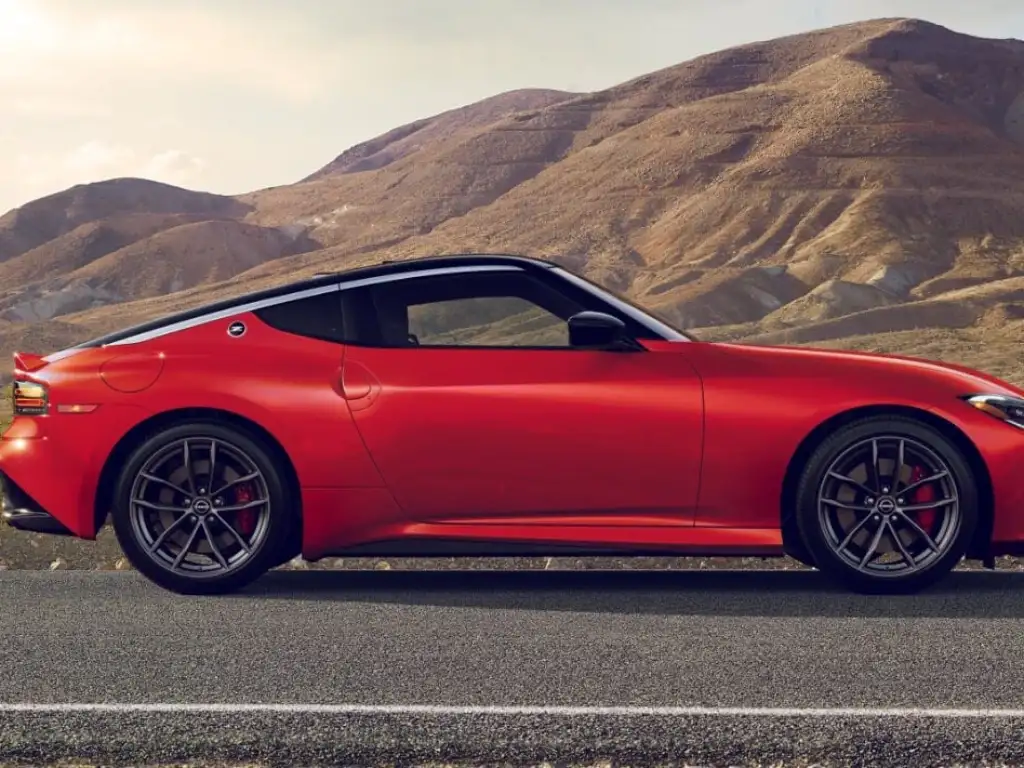
The seventh-generation Nissan Z made its debut as a 2023 model, and the 2026 edition continues its retro-modern design language. The long hood, short rear deck, and pronounced “Z bulge” on the hood pay direct homage to the original 240Z. The LED headlights feature twin crescent-shaped running lights that reference the 240ZG’s glass-covered headlights, while the elongated oval taillights are a clear nod to the Z32 300ZX.
The 2026 model year introduces the Z Heritage Edition, a $2,940 package exclusive to the Performance grade that pays tribute to the Z32 300ZX. Limited to just 500 units, the Heritage Edition features Midnight Purple paint — a color previously reserved for the Nissan GT-R — bronze 19-inch RAYS wheels, a carbon-fiber ducktail spoiler with a retro “Twin Turbo” badge, bronze “Twin Turbo” side graphics, and commemorative interior details. It is arguably the most collectible Z variant since the model’s return.
The Z NISMO differentiates itself with a restyled grille, taller three-piece rear spoiler, front canards, NISMO red accents, exclusive Stealth Gray paint, and wider wheels. It looks every bit the track weapon it claims to be.
6. Interior, Comfort, and Technology
Sports cars are not typically purchased for their interior luxury, but daily drivability depends heavily on cabin quality, technology, and ergonomics.
Cabin Space and Seating
The Mazda MX-5 Miata’s interior is cozy by design. With only 48 cubic feet of passenger volume, taller drivers may find the cockpit snug, particularly with the top raised. Headroom measures 37.4 inches, and legroom is 43.1 inches — adequate for most adults under six feet, but potentially claustrophobic for larger occupants. The seats are supportive for spirited driving, and Grand Touring models add heated leather upholstery. The Club’s optional Recaro seats provide excellent bolstering for track use but sacrifice some comfort on long highway stints.
The Nissan Z offers a more spacious cabin with 51.4 cubic feet of passenger volume, 38.2 inches of headroom, and 42.9 inches of legroom. The Z’s seats are wider and more generously padded, making it the better choice for larger drivers or longer road trips. Performance and NISMO models offer heated, leather-appointed power seats with synthetic suede inserts, while the NISMO adds manually adjustable Recaro seats with leather and Alcantara upholstery.
Infotainment and Connectivity
The 2026 Miata utilizes an 8.8-inch center display with Mazda’s infotainment interface. While the screen supports touch functionality when using Apple CarPlay or Android Auto, most interactions require the rotary controller on the center console — a point of contention for some users. The system includes Alexa Built-in integration, HD Radio, and Bluetooth streaming. A Bose nine-speaker audio system is available on Grand Touring models. Navigation is optional.
The Nissan Z offers an 8-inch touchscreen on Sport models and upgrades to a 9-inch display with navigation on Performance and above. Apple CarPlay and Android Auto are standard across the lineup, with wireless CarPlay available on Performance and NISMO grades. The Performance and NISMO models also include an eight-speaker Bose audio system with Active Noise Cancellation and Active Sound Enhancement, NissanConnect Services with a Wi-Fi hotspot, and Amazon Alexa connectivity. The Z’s interface is generally more responsive and user-friendly than Mazda’s aging system.
Instrumentation and Driver Information
Mazda equips the Miata with a traditional analog tachometer and speedometer, supplemented by a small digital display for trip information and vehicle settings. It is clean and legible, if unexciting.
The Nissan Z features a fully digital 12.3-inch instrument cluster with three display modes: Normal, Enhanced, and Sport. A signature touch is the trio of analog-style gauges mounted atop the dashboard — displaying turbocharger boost pressure, turbine speed, and battery voltage — a direct callback to Z cars of the past. The NISMO adds exclusive TFT meter graphics with a red-accented theme.
7. Safety Features and Driver Assistance
Modern sports cars must balance performance with safety, and both manufacturers have made meaningful investments in driver-assistance technology.
2026 Mazda MX-5 Miata Safety
Despite its compact size and open-top design, the Miata includes a comprehensive suite of i-Activsense safety features. Standard equipment includes Blind Spot Monitoring with Rear Cross-Traffic Alert, Smart Brake Support (automatic emergency braking), Lane Departure Warning, Driver Attention Alert, Vehicle Exit Warning, and Secondary Collision Reduction. The Miata also features dual front airbags, side-impact airbags, and side-impact door beams. However, the Miata lacks adaptive cruise control and lane-keeping assist — features increasingly common even in affordable vehicles.
2026 Nissan Z Safety
The Nissan Z offers a more robust safety portfolio. Standard features include Automatic Emergency Braking with Pedestrian Detection, Intelligent Forward Collision Warning, Blind Spot Warning, Lane Departure Warning, Rear Cross Traffic Alert, and Intelligent Cruise Control. The Z also includes front and rear parking sensors, a RearView Monitor, and a full complement of airbags including roof-mounted curtain side-impact supplemental airbags. The NISMO adds enhanced stability control programming and larger brakes for superior stopping performance.
For buyers who prioritize advanced driver assistance or plan to use their sports car for regular commuting, the Z’s more comprehensive safety suite provides greater peace of mind.
8. Fuel Economy and Running Costs
Sports car ownership is rarely about saving money at the pump, but fuel economy and operating costs remain practical considerations — especially for daily drivers.
| Metric | 2026 Mazda MX-5 Miata | 2026 Nissan Z Sport (Manual) | 2026 Nissan Z NISMO (Auto) |
|---|---|---|---|
| EPA City MPG | 26 | 18 | 18 |
| EPA Highway MPG | 34 | 24 | 24 |
| EPA Combined MPG | 29 | 20 | 20 |
| Fuel Tank Capacity | 11.9 gallons | 16.4 gallons | 16.4 gallons |
| Est. Highway Range | ~420 miles | ~440 miles | ~440 miles |
The Mazda MX-5 Miata’s lightweight design and small-displacement naturally aspirated engine deliver a significant fuel economy advantage. With a combined rating of 29 mpg, the Miata is genuinely efficient for a sports car — especially one that runs on premium unleaded. Real-world testing by Car and Driver yielded 29 mpg overall and an impressive 36 mpg during 75-mph highway cruising.
The Nissan Z’s twin-turbo V6 is considerably thirstier. The manual Sport model is rated at 18 mpg city and 24 mpg highway, while the automatic Performance model improves slightly to 19 city / 28 highway. The NISMO returns 18/24 mpg. In real-world testing, Car and Driver observed just 18 mpg overall. However, the Z’s larger 16.4-gallon fuel tank provides a comparable highway range to the Miata despite the lower efficiency.
Both vehicles require premium unleaded gasoline, and both manufacturers recommend against using lower-octane fuel to prevent engine knock and preserve performance.
9. Practicality and Daily Usability
No one buys a two-seat sports car for its cargo capacity, but the differences in day-to-day livability between the Miata and Z are worth examining.
Storage and Cargo Space
The Mazda MX-5 Miata offers a minuscule 4.6 cubic feet of trunk space — enough for a weekend duffel bag or a modest grocery run, but insufficient for larger luggage or golf clubs. The trunk is also deeply shaped, making it difficult to load bulky items. The RF hardtop’s trunk is similarly sized, and the folding roof mechanism does not intrude significantly on cargo capacity.
The Nissan Z, being a hatchback coupe, provides a more usable cargo area. While Nissan does not publish an official cubic-foot measurement, the hatchback design and fold-flat rear partition allow the Z to swallow larger items — think carry-on luggage, a week’s worth of groceries, or even a set of track-day wheels and tires. The Z’s larger footprint and fixed roof also make it feel more secure when parked and more stable in inclement weather.
Weather and Seasonal Considerations
The Miata soft-top is well-insulated for a cloth roof, but it cannot match the security and noise isolation of the Z’s fixed roof. The Miata RF addresses this concern for buyers willing to spend more, though it adds weight and complexity. In snowy climates, the Miata’s light weight can be an advantage with winter tires, but its low ground clearance (under 5 inches) makes it vulnerable to driveway scraping and snow accumulation.
The Z’s higher ride height and enclosed cabin make it the more practical year-round choice for buyers in northern climates. Its heavier weight and wider tires provide better traction on cold pavement, and the fixed roof eliminates concerns about top wear or leaks.
Visibility and Parking
The Miata’s compact dimensions (154.1 inches long, 68.3 inches wide) make it exceptionally easy to park in tight urban spaces. However, the soft-top creates significant blind spots when raised, and the small rear-quarter windows limit over-the-shoulder visibility. The RF’s thick C-pillars exacerbate this issue.
The Z’s larger size (172.4–173.2 inches long, 72.6–73.6 inches wide) demands more attention in parking garages and narrow streets. Its long hood can make front-end placement challenging, though the standard front and rear parking sensors on all trims help mitigate this. Rear visibility through the hatchback glass is decent, and the Z’s larger mirrors provide a better view of adjacent traffic.
10. Reliability, Warranty, and Ownership Costs
Long-term ownership satisfaction depends on more than just the driving experience — reliability, warranty coverage, and maintenance costs all factor into the total cost of ownership.
Warranty Coverage
| Coverage | 2026 Mazda MX-5 Miata | 2026 Nissan Z |
|---|---|---|
| Limited Warranty | 3 years / 36,000 miles | 3 years / 36,000 miles |
| Powertrain Warranty | 5 years / 60,000 miles | 5 years / 60,000 miles |
| Complimentary Maintenance | None | 2 years / 24,000 miles (3 oil changes) |
Nissan holds a clear advantage in complimentary maintenance. The Nissan Maintenance Care program includes up to three complimentary oil changes within the first two years or 24,000 miles — a small but meaningful savings for a car that requires synthetic oil and frequent changes under hard use. Mazda offers no complimentary maintenance.
Reliability Expectations
The Mazda MX-5 Miata enjoys a stellar reputation for reliability. The Skyactiv-G 2.0-liter engine is naturally aspirated, meaning fewer components to fail compared to a turbocharged powerplant. The Miata consistently ranks among the most reliable sports cars in owner surveys and long-term tests. Common issues are rare and typically limited to minor electrical gremlins or soft-top wear after many years of use.
The Nissan Z’s VR30DDTT twin-turbo V6 is a more complex engine with greater potential for expensive repairs. While the VR30 has proven reasonably robust in other Nissan and Infiniti applications, turbocharger wear, intercooler issues, and cooling system maintenance are long-term concerns. The Z’s nine-speed automatic transmission is also relatively new to the lineup, and long-term reliability data is still emerging. Buyers planning to keep their Z beyond the warranty period should budget for potentially higher maintenance costs compared to the Miata.
Insurance and Resale Value
Insurance premiums for the Miata are surprisingly affordable given its sports-car status. Its low power output, strong safety ratings, and low theft rates keep premiums manageable for most drivers. The Z’s higher horsepower and more aggressive styling may trigger higher insurance rates, particularly for younger drivers. The limited-production Heritage Edition could command strong resale values due to its exclusivity, while the Miata’s consistent demand ensures it retains value better than most convertibles.
11. Which One Should You Buy? Final Verdict
Choosing between the 2026 Mazda MX-5 Miata and the 2026 Nissan Z ultimately comes down to your priorities, budget, and intended use.
Buy the 2026 Mazda MX-5 Miata If:
- You prioritize handling purity and driving engagement over straight-line speed.
- You want the only sub-$35,000 new convertible on the market.
- You value lightweight simplicity and the sensation of speed at legal limits.
- You plan to attend autocross events, track days, or canyon carving sessions.
- You appreciate excellent fuel economy and low running costs.
- You are comfortable with a snug cabin and minimal cargo space.
- You want a car with legendary reliability and a massive aftermarket support community.
Best Trim: The Club with the Brembo/BBS/Recaro package ($38,980 including destination) offers the best balance of performance hardware and value. It adds the limited-slip differential, Bilstein dampers, upgraded brakes, forged wheels, and Recaro seats — transforming the Miata into a legitimate track-day weapon without sacrificing daily drivability.
Buy the 2026 Nissan Z If:
- You want genuine muscle-car acceleration in a Japanese sports car wrapper.
- You prefer a fixed-roof coupe for security, noise isolation, and year-round usability.
- You need more interior space and cargo capacity for weekend trips or daily commuting.
- You value a more comprehensive technology and safety feature set.
- You are drawn to the Z’s retro styling and motorsport heritage.
- You want the exclusivity of the limited-run Heritage Edition.
- You plan to modify your car for additional power (the VR30DDTT responds well to tuning).
Best Trim: The Performance grade ($54,215 including destination) is the sweet spot. It includes the mechanical limited-slip differential, RAYS forged wheels, Akebono brakes, Bose audio, 9-inch touchscreen, and heated power seats. For enthusiasts seeking maximum collectibility, the Heritage Edition ($57,155) adds stunning Midnight Purple paint and unique graphics for just $2,940 more.
The Bottom Line
The 2026 Mazda MX-5 Miata and 2026 Nissan Z are not direct competitors — they are complementary choices for different types of driving enthusiasts. The Miata is the spiritual successor to the classic British roadster: light, simple, and joyous. The Z is the modern interpretation of the Japanese grand tourer: powerful, stylish, and capable. If your idea of automotive nirvana involves winding mountain roads, top-down motoring, and the mechanical purity of a high-revving four-cylinder, the Miata is unmatched at its price point. If you crave tire-smoking acceleration, turbocharged torque, and a cabin that coddles you on long drives, the Z delivers a level of performance and presence that the Miata cannot match.
Neither car is perfect. The Miata is underpowered by modern standards and lacks advanced safety tech. The Z is heavy, expensive, and less involving at everyday speeds. But both are honest sports cars in an era of electrified crossovers and autonomous pods. Whichever you choose, you are buying into decades of heritage, engineering passion, and the irreplaceable joy of driving.
12. Frequently Asked Questions (FAQ)
Is the 2026 Mazda MX-5 Miata faster than the 2026 Nissan Z?
No. The Nissan Z is significantly faster in every acceleration metric. The Z Performance reaches 60 mph in approximately 4.5 seconds, while the Miata takes 5.5 seconds. The Z NISMO is faster still at 3.9 seconds. The Miata’s advantage lies in handling and agility, not straight-line speed.
Can you daily drive a Mazda MX-5 Miata?
Yes, many owners daily drive their Miatas. However, the limited cargo space, snug cabin, and soft-top security concerns make it less practical than the Nissan Z for year-round commuting. The RF hardtop mitigates some of these issues but adds cost and weight.
Does the 2026 Nissan Z NISMO come with a manual transmission?
No. The 2026 Nissan Z NISMO is available exclusively with a nine-speed automatic transmission. The six-speed manual is reserved for Sport, Performance, and Heritage Edition models. This is a significant drawback for purists seeking the most hardcore Z with a manual gearbox.
How many 2026 Nissan Z Heritage Editions will be built?
Nissan is building exactly 500 units of the 2026 Z Heritage Edition for the United States market. The package is exclusive to the Performance grade and features Midnight Purple paint, bronze RAYS wheels, a carbon-fiber spoiler, and retro “Twin Turbo” graphics. Given the GT-R’s discontinuation, this is the only way to buy a new Nissan in the iconic Midnight Purple color.
Which car is better for track days?
Both cars are capable on track, but they excel in different areas. The Miata Club with the Brembo/BBS/Recaro package is lighter, more tossable, and cheaper to run — making it ideal for novice and intermediate track-day drivers. The Z NISMO offers superior power, grip, and braking performance but is more expensive to operate and harder on consumables (tires, brakes, fuel). For casual track use, the Miata is the smarter choice. For serious lap-time chasing, the Z NISMO is faster but requires greater skill to extract its full potential.
Is the Mazda MX-5 Miata reliable?
Yes. The MX-5 Miata consistently ranks as one of the most reliable sports cars on the market. The naturally aspirated Skyactiv-G engine has few known issues, and the car’s simple mechanical layout makes maintenance straightforward and affordable. Regular oil changes, brake fluid flushes, and soft-top care are the primary maintenance concerns.
What is the fuel economy difference between the Miata and Z?
The Miata achieves 26 mpg city and 34 mpg highway (29 combined), while the Nissan Z Sport manual is rated at 18 city and 24 highway (20 combined). Over 12,000 miles of mixed driving, the Miata would consume approximately 414 gallons of premium fuel versus 600 gallons for the Z — a difference of roughly 186 gallons annually. At $4.00 per gallon, that’s approximately $744 per year in fuel savings for the Miata.
Can the Nissan Z tow anything?
No. Neither the Mazda MX-5 Miata nor the Nissan Z is rated for towing. Their lightweight construction, short wheelbases, and performance-focused suspensions make them unsuitable for trailer duty.
Which car holds its value better?
Both cars hold value well relative to the broader market, but for different reasons. The Miata benefits from consistent demand, low depreciation rates for convertibles, and a reputation for reliability. The Z Heritage Edition may appreciate due to its 500-unit limitation and collectible status. Standard Z models are likely to depreciate at a rate typical for Japanese sports coupes — better than American muscle cars but not as strong as limited-production specials.
2025 Subaru BRZ vs 2026 Nissan Z
2026 Toyota GR86 vs 2026 Mazda MX-5 Miata

2026 Mazda MX-5 Miata vs 2025 Subaru BRZ
2025 Audi A7 vs 2025 Audi A8
2026 Ford Mustang vs 2026 Nissan Z
2026 Toyota GR86 vs 2026 Nissan Z

2026 Toyota GR86 vs 2025 Subaru BRZ

2026 Mazda MX-5 Miata vs Ford Mustang